
Boundary survey, subdivision and area check are three different services
People call them all surveying and arrive at the land office without knowing what they actually want, which wastes the trip.
A boundary survey confirms the limits of an existing plot without splitting or merging anything. What you get is boundary markers reset in the correct positions and the area as actually measured.
A subdivision survey turns one plot into several, which is a different matter with its own procedure, covered in subdividing and consolidating land titles.
An area check measures how much land there actually is without resetting all the markers. Faster and cheaper, but it does not make the boundary any clearer.
If your problem is not knowing where the line runs, what you need is a boundary survey, not either of the other two.
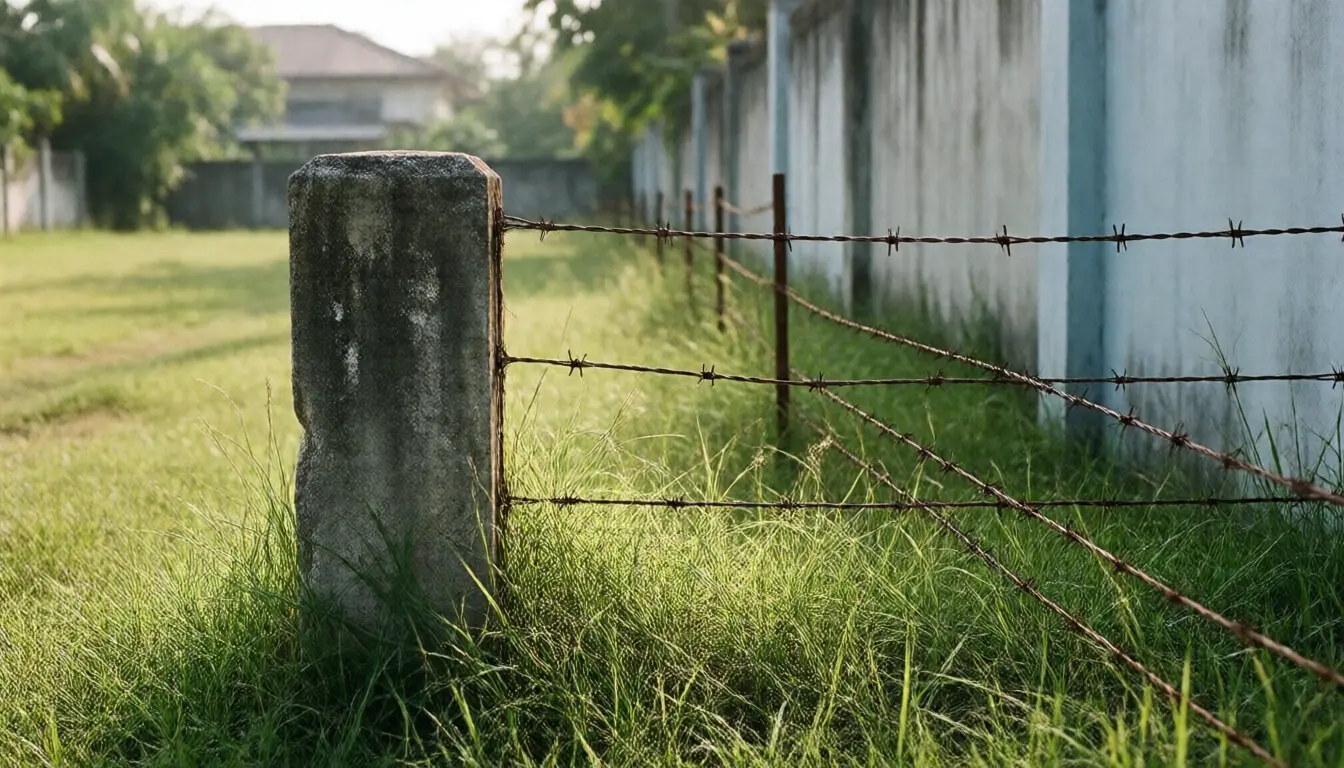
Five situations where you should survey before it is too late
- Before selling, because an informed buyer will ask whether the boundary matches the fence, and an answer with documents behind it is much harder to negotiate the price down against.
- Before building a wall or fence, because a wall built in the wrong place has to come down along its whole length, at several times the cost of the survey.
- When a neighbour starts construction, particularly when they dig foundations near the line, because objecting while it is still a hole is far easier than after three storeys are up.
- When you inherit land nobody has looked after for years, because land left empty for a decade or two often has a neighbour's fence that has crept in with nobody saying anything.
- When the current fence has been there since your father's day and nobody knows who put it there, which is the most common situation in older neighbourhoods.
All five have one thing in common: they are situations that can still be fixed, unlike finding out when somebody tells you that part of the land is now theirs.
The reason to hurry is a ten-year clock
Section 1382 of the Civil and Commercial Code provides that a person who possesses another's property peacefully and openly with the intention of ownership, for ten years in the case of immovable property, acquires ownership of it.
In practice, if a neighbour builds a fence two metres inside your land and uses that area openly as their own continuously for ten years while you say nothing, they may acquire ownership of that strip.
It must be stressed that this does not happen automatically. The possessor has to petition the court and prove every element, which is not easy. But that it is possible at all is why you should not leave a boundary question alone.
What stops the clock is objecting, because possession that leads to ownership has to be peaceful. Disputing it in writing removes that element.
So if you can see something encroaching, what to do today is write to the neighbour and keep a copy, rather than waiting for a survey to finish. Encroachment is covered in a neighbour encroaching on your land.
An area that does not match the deed does not mean someone took it
What alarms people beyond reason is a survey returning less area than the deed states, and the immediate conclusion that a neighbour has encroached.
There are two possibilities, and they must be separated before arguing with anybody.
The first is genuine encroachment, which shows itself in the position of surviving original markers compared with where a fence or building actually stands.
The second is imprecision in the original survey, because deeds issued long ago were surveyed with instruments and methods of different accuracy from today's. The area printed on the deed may therefore have been slightly out from the beginning, with nobody having done anything wrong.
To tell them apart, look at whether the original markers are all still there, and whether the newly measured line is consistent on every side or skewed on one. Area lost evenly all round is usually imprecision. Area lost on one side only, matching exactly where the neighbour's fence sits, is another matter.
Ask the surveyor directly on the day what they can see, because the person standing there with the instrument is best placed to answer, and asking then is easier than going back later.

The actual steps and what to prepare
Apply at the land office where the land sits, with the original title deed and the ID card and house registration of every owner. Where there are several owners, all must attend or grant a proper power of attorney.
The office sets the survey date according to the local queue, which is the variable that makes the timescale differ so much between provinces. Phone and ask about the queue before applying if you are working to a deadline.
On the day, the adjoining owners are called to confirm the boundary, and that step decides whether this goes quickly or slowly.
If they do not attend, the officer sends notice by registered post with acknowledgement, requiring them to sign in confirmation or object within 30 days. Once that passes with no objection, and the applicant has certified that the survey does not encroach on the adjoining land, it proceeds.
If they object, it becomes a dispute that must be settled first, and that is where the timescale changes from months to years.
Speak to the neighbours first, do not let an official letter tell them
This is the most effective advice in this article, and it costs nothing.
Tell the neighbours before you apply that you are having a boundary survey done. Give the real reason, whether building a new fence or selling, and tell them they will receive a letter from the land office.
This matters because a great many objections come from alarm rather than a real dispute. An official letter arriving with nobody having explained anything first makes people assume something is being done to them, and the first reaction is to object as a precaution.
And if you already know the current fence does not follow the deed, raise that too, because knowing in advance gives the neighbour time to think, unlike learning about it while a surveyor is driving a marker into their garden.
In many cases the conversation ends in an arrangement both sides can accept, such as leaving the fence where it is with a written acknowledgement that this is not a gift of the land, which stops the ten-year clock and keeps the relationship at the same time.
Frequently asked questions
What is the difference between a boundary survey and a subdivision?
A boundary survey confirms the limits of an existing plot without splitting or merging. A subdivision turns one plot into several. If the problem is not knowing where the line runs, you want a boundary survey.
The survey shows less area than the deed. Have I been encroached on?
Not necessarily. It may be imprecision in an older survey done with instruments of different accuracy. Look at whether the area is lost evenly all round or only on one side matching the neighbour's fence.
Can I leave it for now to avoid trouble?
It is risky, because section 1382 gives ownership to someone possessing another's immovable property peacefully and openly with the intention of ownership for ten continuous years. Objecting in writing removes the peaceful element.
What if the neighbour does not come to confirm the boundary?
The officer notifies them by registered post with acknowledgement, giving 30 days to sign or object. If the period passes with no objection and the applicant certifies no encroachment, it proceeds.
Should I tell the neighbours first?
Very much so, because most objections come from alarm at an official letter rather than a real dispute. Telling them costs nothing and reduces the risk of this dragging on for a year.
Should I survey before selling?
Yes, because an informed buyer will ask whether the boundary matches the fence, and an answer with documents behind it is much harder to negotiate against than saying you are not sure.
In short
- A boundary survey confirms an existing plot's limits, which is a different service from subdivision or an area check.
- Do it before selling, before building a fence, when a neighbour starts building, and on inherited land left alone for years.
- Section 1382 gives ownership after ten continuous years of peaceful, open possession with the intention of ownership.
- Objecting in writing is what stops that clock, and it should be done today, not after the survey.
- Less area than the deed can be old survey imprecision rather than encroachment.
- Tell the neighbours before applying, because most objections come from alarm, not from a dispute.