
A house pays for units. A warehouse pays for units and for peak power
This is the difference that shocks business owners when the first bill arrives, and it can be explained in a paragraph.
A residential customer pays for the number of units consumed. Use more, pay more. Use less, pay less. That is all.
A business whose demand reaches the threshold is billed on two things: the energy consumed, plus a demand charge based on the highest power drawn during the month, priced in baht per kilowatt.
In practice this means that with identical total consumption for the month, switching everything on at once one morning makes your bill higher than the factory next door that staggered its start-up. That is money you can save without producing one item less.

Which category you fall into is not your choice
Customers are classified by what the meter measures, not by what they declare, and the main criterion is the highest 15-minute average demand.
- Small business is below 30 kW, paying only for energy with no demand charge.
- Medium business is 30 to 999 kW with a three-month average consumption not exceeding 250,000 units a month. This is where the demand charge begins.
- Large business is 1,000 kW and above, or a three-month average exceeding 250,000 units a month.
- Specific business covers hotels and accommodation rental with demand of 30 kW or more.
The 30 kW line is where people get caught, because a business growing gradually crosses it without noticing and one day the bill has a line on it that was never there before.
If you are about to take a warehouse and do not yet know what you will draw, estimate from the equipment you intend to install, particularly air conditioning, pumps, compressors and forklift chargers, which are the four that most often push the figure up in an ordinary warehouse.
Why fifteen minutes decides the whole month
A business meter does not only count accumulated units. It records the average power drawn in each 15-minute interval and keeps the highest one for the month.
That maximum is multiplied by the rate per kilowatt to become the month's demand charge, which means one short window sets a cost for thirty days.
The picture is a warehouse where staff arrive at eight and, within a few minutes of each other, the office air conditioning goes on, the whole shed is lit, the compressor starts and every forklift is put on charge. The month's peak happens in that quarter of an hour, and you pay for it all month.
The fix costs nothing. Stagger the start: lights and air conditioning first, machinery twenty minutes later, and move forklift charging to the evening after the shift. Those three reduce the peak without changing the amount of work done.
The minimum bill, tied to your worst month
This is the rule that costs the most to be unaware of.
The minimum monthly charge cannot be lower than 70 percent of the highest demand charge over the previous 12 months.
So if in March you drew unusually high power because a big order came in, that figure follows you as the floor of your bill for another twelve months, even through quiet months when the machinery barely runs.
Two situations feel this most. A seasonal business with two heavy months and ten quiet ones pays close to full demand charge all year. And commissioning new machinery by running everything simultaneously to see whether it holds is a test that carries a twelve-month cost, which nobody mentions.
Knowing the rule in advance changes how you plan commissioning and how you take on peak work, and it makes you careful about setting a maximum you did not need to set.
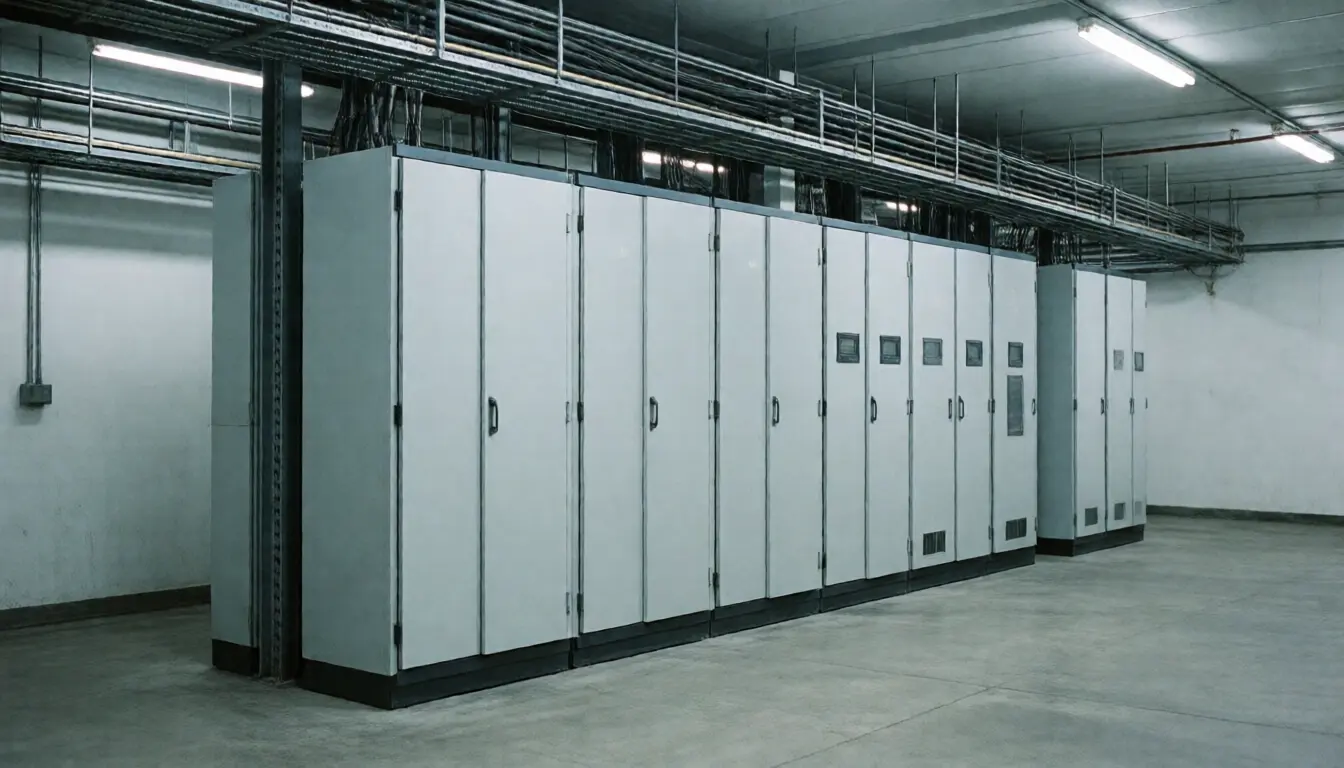
The power factor line nobody reads
Bills for medium business and above carry a line most people skip, and it is money leaving every month for nothing in return.
Motors, transformers and the ballasts in older lighting draw reactive power, which does no work for you but which the supply network must still carry, so the authority charges for it.
The rule is that the portion of kVAR exceeding 61.97 percent of kW is charged at 56.07 baht per kVAR, and it applies to medium business, large business and specific business customers.
The remedy is a capacitor bank to compensate, a one-off investment that pays back quickly in a plant with many motors. Pull six months of bills and see what that line comes to per year before deciding.
What surprises people is a factory that has just fitted solar finding the power factor charge has gone up. The reason is that solar reduces the kilowatts bought from the authority but does nothing about the kVAR the motors demand, so the ratio worsens even though the total bill falls. If you are about to put solar on a factory roof, raise this with the installer at the design stage.
Time-of-use: who it suits and who it does not
Both households and businesses may opt for time-of-use pricing. Peak is Monday to Friday from 09:00 to 22:00; everything else, including weekends and public holidays, is off-peak.
Peak energy costs noticeably more than the standard rate and off-peak considerably less, so whether it pays depends entirely on when your work happens.
It pays if you run a night shift, if weekends are your main working days, if you run a cold store that can pull temperature down overnight, or if vehicles and equipment can be charged at night.
It does not if you are an office or a warehouse working nine to five, Monday to Friday, because almost all your consumption lands squarely inside the peak window.
Before applying to switch, split your actual units into peak and off-peak using your own working timetable and price both ways. The same logic applies at home, explained in the smart meter and the TOU decision.
If you rent, find out whose meter the power comes through
This is what a warehouse tenant must read most carefully in the lease, and it is usually written far too briefly.
In the first case you hold your own meter with the electricity authority. That is straightforward: you pay the authority's rate and see every line of the bill yourself.
In the second the landlord holds the main meter and submeters each tenant. Here you need three answers: what rate per unit is charged, how the demand charge and the power factor charge are apportioned to you, and whether you may see the main meter's bill.
You need those because under a submetered system the building's peak is created by all tenants together. If your neighbour in the same shed starts heavy machinery in the morning, the demand charge that results may be shared with you although you did nothing.
Get the method written into the lease rather than agreed verbally, and ask to see real historical bills for the unit before signing. The rest of what to check is in what to check before renting a warehouse.
What you can do this month with no investment
- Stagger the morning start instead of switching everything on together, because the peak quarter hour is what you pay for.
- Move forklift and equipment charging to after the shift, which cuts both the peak and the energy cost if you are on time-of-use.
- Lay out six months of bills and read three lines: demand charge, power factor charge and units, so you know where the money goes.
- Write down your highest demand over the last twelve months, because that is the floor of the minimum bill you are paying now.
- Check whether the warehouse lighting is still the old type, since those ballasts waste energy and worsen the power factor at the same time.
Frequently asked questions
Why is the warehouse bill high when we hardly use any electricity?
Because a business at or above the threshold pays a demand charge on top of the units, calculated from the highest 15-minute power of that month rather than from the total consumed.
What does 30 kW of demand actually mean?
It is the average power drawn during the highest 15-minute interval of the month. Below 30 kW you are a small business paying only for units; from 30 kW the demand charge begins.
We barely produced this month. Why is the bill still large?
Because the minimum monthly charge cannot be below 70 percent of the highest demand charge in the previous 12 months, so an earlier peak becomes the floor of every bill that follows.
How is the power factor charge calculated?
The portion of kVAR exceeding 61.97 percent of kW is charged at 56.07 baht per kVAR, for medium, large and specific business customers. A capacitor bank corrects it.
Why did our power factor charge rise after fitting solar?
Solar cuts the kilowatts bought from the authority but not the kVAR the motors need, so the ratio worsens. Discuss compensation with the installer at the design stage.
Is time-of-use worth it for a warehouse?
Yes if you run at night or work weekends. No if you work nine to five Monday to Friday, because peak is Monday to Friday from 09:00 to 22:00.
In short
- Homes pay for units. Businesses at the threshold pay for units plus a demand charge.
- Your category is set by what the meter measures, and the line that matters is 30 kW.
- The month's highest 15-minute average is what you pay for, so staggering start-up saves money immediately.
- The minimum bill is tied to 70 percent of the highest demand in the last 12 months, so one peak follows you all year.
- The power factor charge takes the kVAR above 61.97 percent of kW at 56.07 baht per kVAR.
- If you rent on a landlord's submeter, get the apportionment of the demand charge written into the lease.