
The belief that sells the wrong filter is that a water filter fixes hard water
It does not. At least not the kind most houses fit.
Hardness is not dirt floating in the water. It is calcium and magnesium already dissolved in it.
Dissolved means it has become part of the water. A sediment cartridge that catches particles cannot catch it, and the carbon that removes chlorine taste does nothing to it either.
Water that has passed through a three-stage filter is exactly as hard as it was before.
The other thing sold heavily is a magnetic or electronic device clamped onto the pipe, claiming to soften the water. The evidence for these is not strong and the reported results are inconsistent, so they are not something to plan a budget around.
This article covers what hardness is, where scale forms and why, the four routes that actually address it, who each suits, and what to establish before spending.
What hardness is
Rain arrives with almost no minerals in it. As it soaks through soil and rock, it dissolves minerals out of whatever it passes through.
Where that rock is limestone, what it dissolves most is calcium and magnesium.
The amount of those two in the water is what we call hardness, usually reported as calcium carbonate equivalent.
Worth noticing: groundwater is usually harder than surface water, because it has sat in rock longer and had more time to dissolve minerals.
Houses that switch from mains supply to a borehole often notice hardness symptoms immediately, without having changed anything else.
And one reassurance: at the levels usually found, hardness is not a health risk. Its problem is with your fittings and your money, not with your body.
Where scale forms, and why there
This is the part that explains everything you see around the house.
Calcium carbonate behaves unlike most substances: it becomes less soluble as water gets hotter.
Most things dissolve better hot, like sugar in hot water. This one does the opposite.
So the moment hard water is heated, dissolved calcium begins separating out and settling as a solid.
Which is why scale is always thickest at the hottest point.
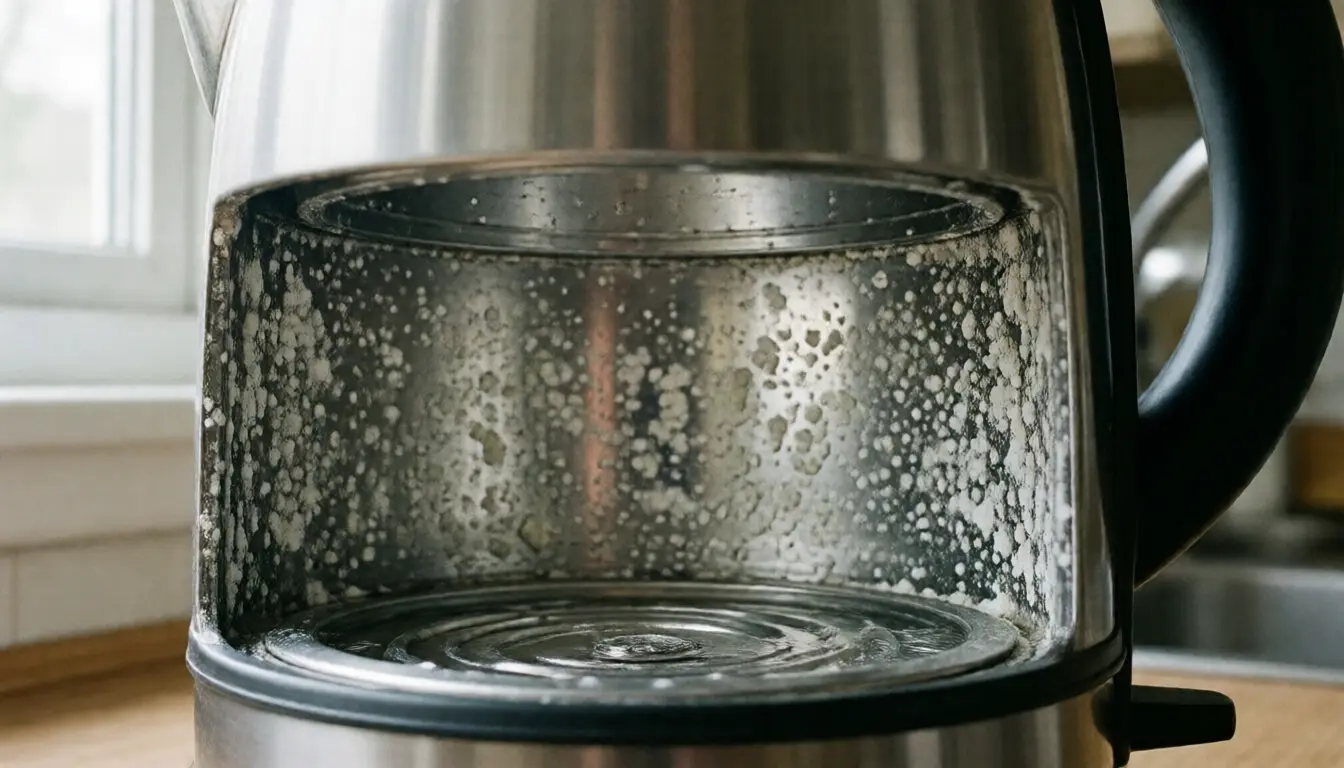
- The element in a kettle, the most visible example in any house.
- The element in water heaters, the most expensive one to lose.
- The heater in a washing machine that heats its own water.
- Shower heads and tap outlets, where water evaporates in the small holes.
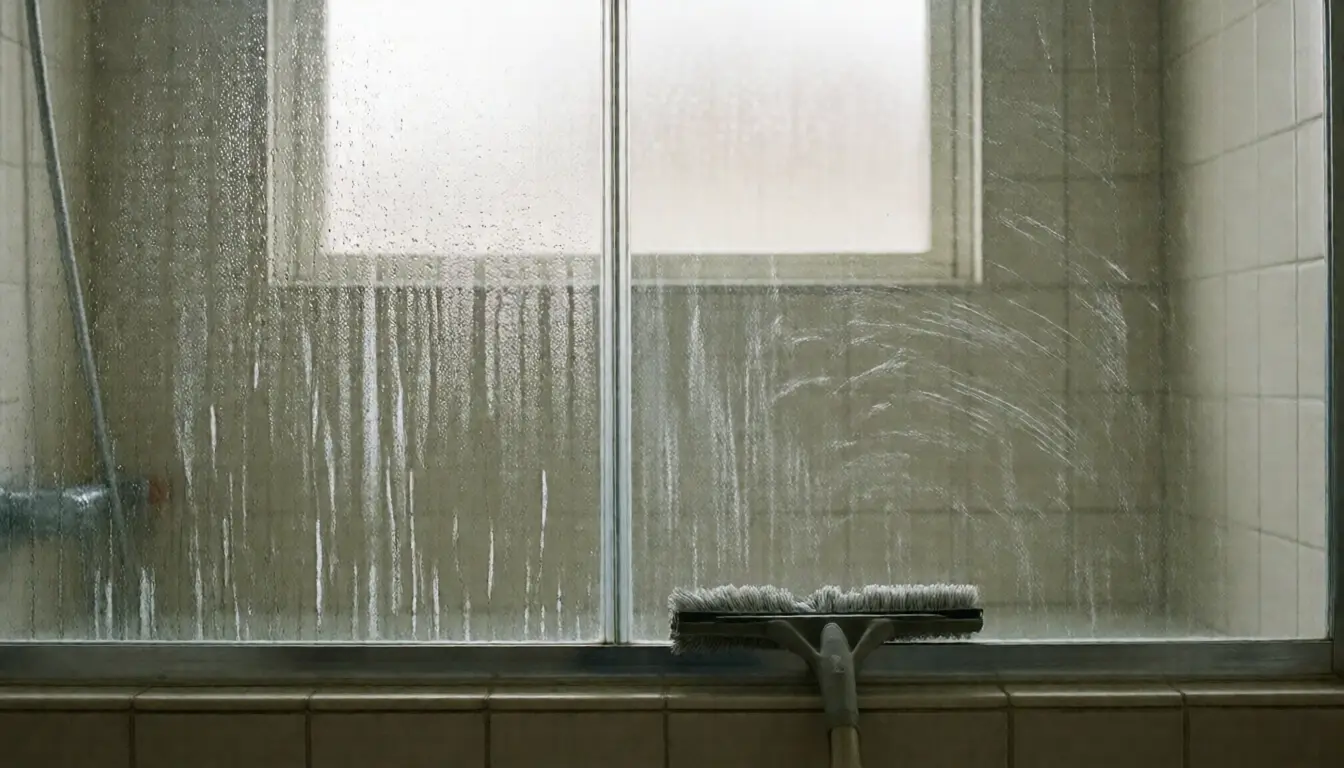
- Shower glass and taps, which is evaporation rather than heat, with the same result: minerals left behind.
Once that is clear, it becomes obvious why wiping the white marks off every week fixes nothing. It tidies the result rather than dealing with the cause.
What hard water actually costs
People treat it as cosmetic until the repair bill arrives.
Water heaters die younger, because scale insulates. An element wrapped in scale has to run hotter to deliver the same heat, and that extra heat consumes its own life.
More electricity, unnoticed, for the same reason: part of the energy goes into heating a layer of scale instead of the water.
Water pressure falls as shower holes and aerators gradually block, which usually gets blamed on the pump.
More soap and detergent, because calcium reacts with soap to form scum instead of lather, so everybody in the house adds more automatically.
Stiff laundry and colours fading faster, from deposits left in the fibres.
Tight dry skin after a shower, from soap scum that never fully rinses off.
Together it is money leaking out every month with no receipt to show for it, which is why plenty of households live with it for a decade.
Before fixing it, find out how hard it is
This is the step people skip, and then buy a system that is too big or too small.
The right way is to send a sample for testing and get hardness back as a number, rather than estimating from the marks you can see.
Testing is available at regional Groundwater Resources offices, regional health centres, provincial public health offices, university laboratories, and accredited private laboratories.
Ask for at least four figures: hardness, total dissolved solids, iron and manganese.
The reason for asking about iron and manganese while fixing hardness is that they usually travel together in groundwater, and fitting a softener where iron is high without dealing with the iron first destroys the resin very quickly.
How to take and submit a sample properly is in a borehole at home, the licence and whether the water is drinkable.
Four routes, and what each one actually does
One, an ion exchange softener is the only route that genuinely removes hardness from the whole house.
Water passes through resin beads holding sodium. Calcium and magnesium are captured onto the resin and sodium is released in their place.
When the resin fills, the unit backwashes with brine to flush the calcium out and reload sodium, which is called regeneration.
What you accept if you choose this:
- Topping up salt periodically, for the life of the unit.
- Waste water from every backwash, which needs somewhere to drain.
- Space for two vessels, the resin tank and the brine tank.
- Slightly more sodium in the water, which is why many houses keep a separate drinking tap outside the softened supply.
Two, reverse osmosis removes nearly all hardness, along with other dissolved substances.
But it produces good water alongside a reject stream, and its output is far too slow to supply a whole house, so it belongs at drinking and cooking points.
Somebody who fits reverse osmosis under the sink and thinks the house is sorted will still find scale in the bathroom, because the shower water never went through it.
Three, scale inhibitors such as polyphosphate do not remove hardness. They keep calcium from forming hard crystals that stick to surfaces.
Cheaper, simple to fit, no waste water, no added sodium.
The limitation is that the water is still hard: soap still will not lather, scum still forms, and the media needs replacing periodically.
It suits a house whose main problem is scale in heaters and pipes, not one that is tired of soap and laundry.
Four, magnetic and electronic devices clamped onto the pipe.
Plainly: the academic evidence supporting this group is not strong, reported test results are inconsistent, and nothing is actually removed from the water.
If you want to try one, try it with money you can afford to lose, and measure the result by retesting or by looking at actual scale rather than by impression.
Matching the route to your actual problem
If the pain is heaters and kettles, start with a scale inhibitor at the inlet. Low outlay, and it genuinely addresses the heat-related damage.
If the pain is soap, laundry, skin and marks everywhere, it has to be a softener, because those symptoms come from hardness itself rather than from scale crystals.
If you want to drink it too, keep the drinking point separate with reverse osmosis at the sink, whichever route you choose for the rest.
If iron or manganese are also high, deal with the iron first and hardness second. That order cannot be reversed, because iron coats the resin and ruins it.
What to ask before paying
- Do they ask to see your water analysis? A supplier who answers instantly without looking is selling the same package to every house.
- What does it cost per year to run? Salt, media and cartridges, as an annual figure rather than a per-item price.
- Does it produce waste water, and where does that go? A house with no drain at the installation point discovers the problem on the first backwash.
- Does it need electricity, and what happens in a power cut?
- How often does it backwash, and can it be scheduled? Backwashing at three in the morning and at midday feel very different to the household.
- What happens if the salt runs out? The answer is that the water quietly goes back to being hard with no warning, which is why checking the brine tank has to become a habit.
What to do today without buying anything
- Soak shower heads and aerators in vinegar overnight and brush the holes clear, once a quarter. The pressure comes back noticeably.
- Boil diluted vinegar in the kettle and leave it half an hour before rinsing. Effective and the cheapest thing on this list.
- Squeegee the shower glass after every use, because the marks come from water evaporating and leaving minerals. Do not let it evaporate and there are no marks.
- Lower the set temperature on a storage water heater as far as still feels comfortable, because hotter water scales faster.
- Use a detergent rated for hard water, and resist adding more than the dose.
None of these address the cause, but they buy you time to decide on a system without rushing.
Frequently asked questions
What is hard water?
Water carrying a lot of dissolved calcium and magnesium, taken up from the rock it passed through, especially limestone. Groundwater is usually harder than surface water.
Will an ordinary water filter fix it?
No. Sediment and carbon cartridges catch suspended matter and odours, but hardness is already dissolved and passes straight through.
Why does scale build up on heating elements most?
Because calcium carbonate becomes less soluble as water gets hotter, unlike most substances, so it separates out at the hottest point.
Is hard water bad for your health?
At the levels usually found, no. Its cost is in fittings, electricity and repairs rather than in health.
What does a softener need looking after?
Salt topped up periodically, and a drain for the backwash water. If the salt runs out, the water goes back to being hard with no warning.
Do magnetic pipe devices work?
The evidence is not strong and reported results are inconsistent, and nothing is removed from the water. If you try one, treat the cost as money you can lose and measure the result properly.
The house has both hard water and iron. Which first?
Iron first, always, then hardness, because iron coats the softener resin and shortens its life dramatically.
In short
- Hardness is dissolved calcium and magnesium, not dirt that a filter can catch.
- Scale is worst at the hottest point, because calcium carbonate is less soluble hot.
- The real cost is heater life, electricity, water pressure and detergent.
- Test first and get a number, and always ask for iron and manganese too.
- An ion exchange softener is the only route that removes hardness house-wide.
- Reverse osmosis belongs at the drinking and cooking points, not whole house.
- Scale inhibitors stop deposits forming but leave the water hard.
- Magnetic devices lack evidence strong enough to budget around.
- Where iron is high, treat the iron first. The order cannot be reversed.
- Meanwhile, soak the shower head and squeegee the glass. Immediate and free.