
The belief that sells a new pump every year is that a bigger pump means stronger water
Sometimes true. Usually not.
Weak water in a Thai house has several causes, and only one of them is something a pump can fix.
People who replace the pump and still have weak water paid to fix something that was not the problem.
What to do first is always measure, which takes under twenty minutes and needs almost nothing bought.
This article shows how to tell whether your problem is pressure or flow, because those are not the same thing and the fixes go in completely different directions.
Pressure against flow rate
Pressure is the force pushing water out, measured in bar or pounds per square inch. It decides how hard the water comes out and how high it can climb.
A number that makes it concrete: one bar lifts water about ten metres. So a tank standing two metres above the ground gives roughly 0.2 bar, which is very little compared with what modern fittings expect.
Flow rate is how much water arrives per unit of time, measured in litres per minute. It decides whether the supply keeps up when several outlets are open.
They really do come apart. A house can have good pressure with poor flow, and another can have plenty of flow at low pressure.
A shower throwing thin but sharp jets has good pressure and poor flow, which usually means a blockage.
A tap producing plenty of water that simply falls out without any force has flow but low pressure, which usually means the problem is upstream.
So before buying anything, find out which one you have.
Measuring flow with a bucket and a clock
This costs nothing.
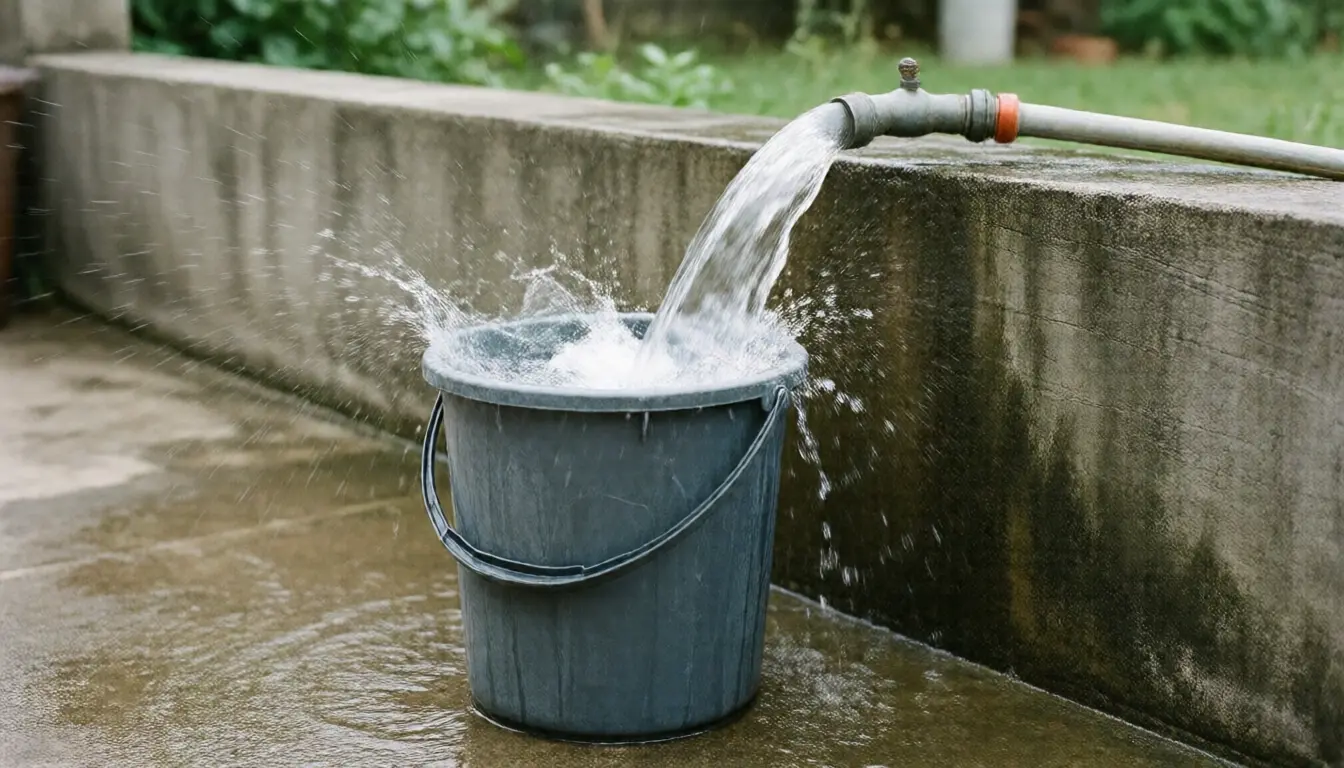
- Find a bucket of known capacity, say ten litres. If you do not know, fill it from a bottle and count.
- Open the tap fully and time how many seconds it takes to fill.
- Divide the capacity by the seconds and multiply by 60 for litres per minute.
Do it first at the garden tap or whichever outlet is closest to where the supply enters, because that is the best figure your house can produce.
Then repeat at the problem outlet, such as the upstairs shower.
The difference between the two is the most valuable number you will get, because it says the problem lies between them rather than at the source.
Then do it once more with two outlets open at the same time. If the flow collapses, the main pipe is too small or too long for simultaneous use.
Measuring pressure with an inexpensive gauge
A threaded water pressure gauge screws straight onto a garden tap, costs very little at any builders' merchant, and is one of the better tools a house can own.
How to use it:
- Fit it to the garden tap, open fully, and read it with nobody else using water. That is static pressure.
- Then have somebody open a shower or another tap and read it again. That is pressure under demand.
The figure that matters more than either reading is the gap between them.
If pressure collapses the moment another outlet opens, the system cannot supply fast enough, which is a pipe or pump problem rather than a tap problem.
If pressure barely moves and the far outlet is still weak, the problem is at that outlet.
Reading what you measured
Good pressure, poor flow at one outlet only. A blockage there: the shower head, the aerator at the tap, or an isolation valve under the basin that is not fully open.
Low pressure and poor flow everywhere equally. An upstream problem: the tank, the pump, or the main pipe.
Fine downstairs, weak upstairs. Height is consuming the pressure, which is ordinary physics, fixed with a pump or by raising the source.
Fine with one outlet, collapsing with two. The pipe is too small, or the pump's flow rate is insufficient.
Slowly getting weaker over years. Scale or rust building up inside the pipes, common in houses with old steel pipe or hard water.
Seven causes, easiest to fix first
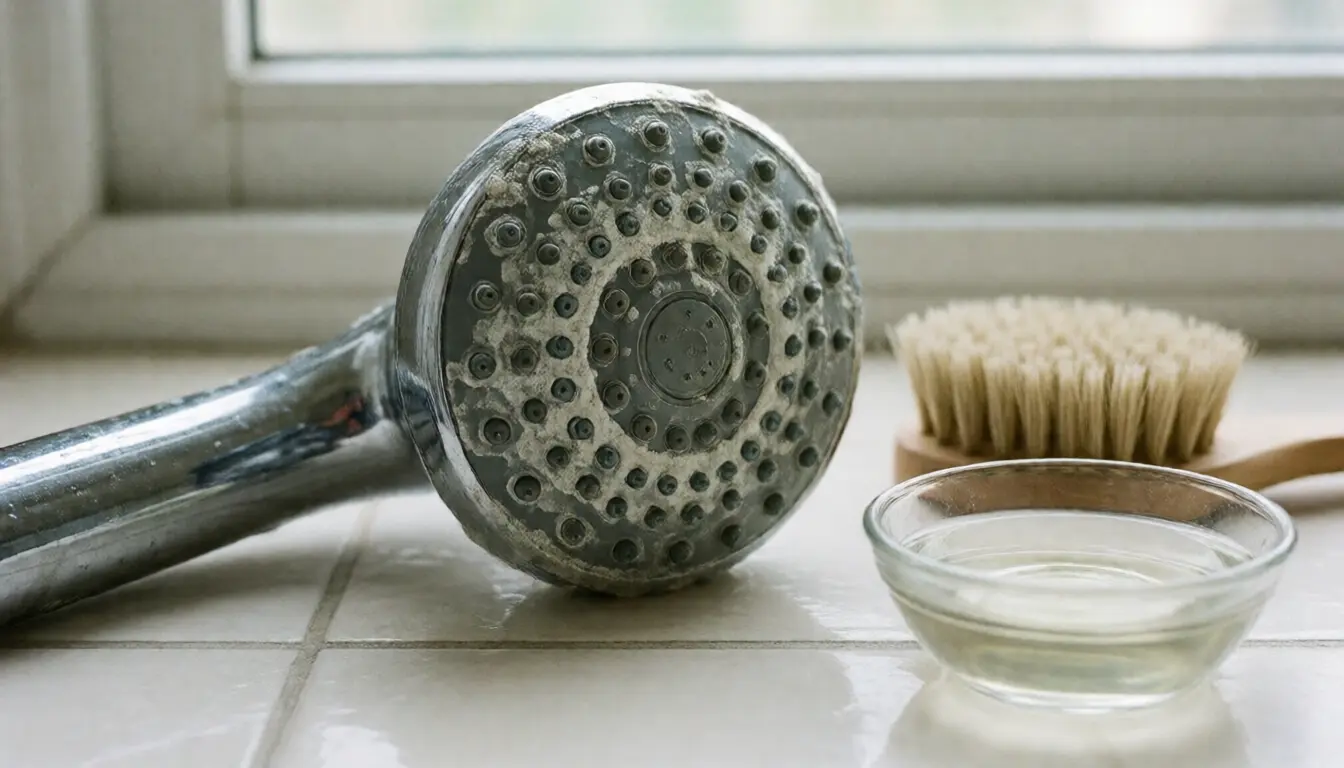
One, a blocked shower head. Take it off, soak it in vinegar overnight, and brush the holes clear. The most common cause of all, and free to fix.
Two, the aerator at the tap outlet. Unscrews by hand. Rinse out the grit and scale.
Three, a valve not fully open. Under basins, behind toilets, and the main valve, some of which were left half closed by a previous plumber and never opened again.
Four, a blocked filter cartridge. A house with whole-house filtration and cartridges nobody has changed loses pressure everywhere at once, and it is the cause people forget most often.
Five, a tank mounted too low. With no pump, height is all the pressure you have, and two metres is very little.
Six, blocked or undersized pipework. Everything weak at once, getting worse with the years. The hardest to fix, because it means repiping.
Seven, a pump or pressure vessel problem. A failed pressure vessel makes the pump cycle constantly and the pressure swing, which people usually read as a weak pump.
Six of those seven are not solved by buying a new pump.
Three things to do before buying a pump
One, clean every shower head and aerator in the house, then measure again.
Two, check every valve is genuinely fully open, and change the filter cartridges if you have filtration.
Three, measure flow at the outlet nearest where the supply enters. If it is already poor there, a new pump will not help at all, because a pump raises pressure but cannot increase how much water arrives at the property.
That last point is the most misunderstood one. A pump does not make water. It only pushes harder on the water already there.
If little water arrives to begin with, what you need is enough storage, not a stronger pump, which is covered in an above-ground tank against an underground one.
Sizing a pump so it does not short cycle is in sizing a water pump, and if the problem is specifically upstairs, read weak water pressure upstairs.
Frequently asked questions
What is the difference between pressure and flow rate?
Pressure is the force pushing water out, measured in bar, deciding how hard it comes out and how high it climbs. Flow rate is volume per unit of time, in litres per minute, deciding whether supply keeps up with demand.
How do I measure flow rate myself?
Fill a bucket of known capacity with the tap fully open, time it in seconds, divide the capacity by the seconds and multiply by 60 for litres per minute.
Do I need a pressure gauge?
Not essential but worthwhile. A tap-mounted gauge costs very little and shows how far pressure drops when another outlet opens, which the bucket test alone cannot tell you.
How much pressure does a tank two metres up give?
About 0.2 bar, since one bar lifts water roughly ten metres, which is less than most modern fittings expect.
Will a bigger pump make the water stronger?
Only if pressure really is the problem. A pump does not make water, so if little arrives at the property to begin with, a bigger one changes nothing.
The shower throws thin but sharp jets. What does that mean?
Good pressure with poor flow, which is nearly always a blocked shower head. Soak it in vinegar overnight and brush the holes clear.
It is only weak when two outlets are open.
The main pipe is undersized or the pump's flow rate is insufficient. Measure the flow with one outlet open and then with two, and see how far it falls.
It has weakened gradually over the years.
Usually scale or rust inside the pipes, common with old steel pipe and hard water, and only fixable at the pipework.
Pressure dropped after fitting whole-house filtration.
Check the cartridges before anything else. A blocked cartridge drops pressure everywhere at once, and it is the most commonly forgotten cause.
In short
- Weak water has several causes, and a pump addresses only one of them.
- Establish first whether the problem is pressure or flow, because the fixes differ entirely.
- Measure flow with a bucket and a clock. It costs nothing.
- Measure pressure with a tap-mounted gauge and watch the drop when another outlet opens.
- Always measure at the outlet nearest the supply first, to learn your house's ceiling.
- The most common cause is a blocked shower head or aerator, and it is free to fix.
- Whole-house filter cartridges nobody changed drop pressure everywhere at once.
- One bar lifts water about ten metres, so a tank two metres up gives very little.
- A pump raises pressure but cannot increase how much water reaches the property.