
There are four kinds of pump noise, and each comes from a different cause
Most people call it all a noisy pump and end up buying a new one, after which the noise is often still there.
Because what you hear at two in the morning does not all come from the same place.
A whine or a sound like gravel inside the pump means it cannot draw water fast enough.
A bang when the water stops is shock in the pipework.
Clicking on and off all night is short cycling, which can come from the pressure vessel or from a leak.
A hum that shakes the whole wall is an installation problem, not a problem with the pump.
Work out which one you are hearing, and this article takes you to the place that actually needs fixing.
A whine or gravel sound means the suction side is struggling
This is the one that sounds like sand inside the pump, and it is the most urgent of the four.
It happens when the suction side has too much resistance, pressure inside the water drops very low, and bubbles form. Those bubbles collapse on reaching the higher pressure side, which makes the noise and erodes the impeller a little at a time.
Real causes:
- A blocked suction strainer, which is always the first thing to open up.
- A dirty or failed foot valve, letting air into the system.
- Suction pipe too small or too long, particularly with several bends.
- Water level in the tank below what the pump can lift comfortably.
- A tiny leak at a suction-side joint, which does not drip but does let air in.
That last one is the hardest to find and explains cases where everything looks fine and the noise persists.
To find it, brush soapy water over every suction-side joint while the pump runs. Anywhere bubbles get sucked in is your leak.
Do not leave this noise alone, because it eats the impeller and the seal until the pump fails early.
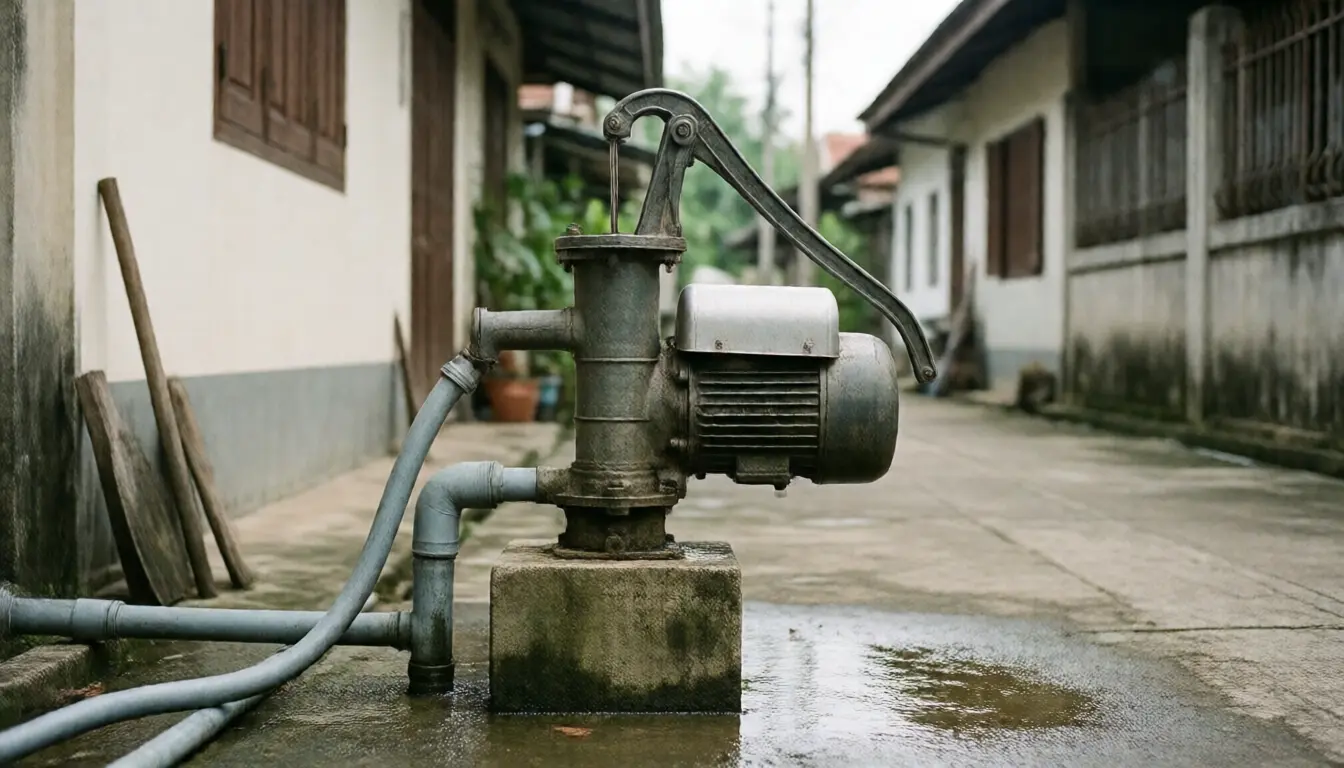
A bang when water stops is shock in the pipework
Closing a tap and hearing a thud in the wall, or a single knock after the pump cuts out, is moving water being stopped suddenly with that energy having to go somewhere.
It is not merely annoying. It is a force applied to every joint and fitting each time it happens, and a cause of burst pipes that people rarely connect to it.
What makes it worse:
- Long straight runs with nothing to absorb the shock.
- Pipes clipped loosely, so they move and strike the structure.
- Valves that close very fast, such as a washing machine solenoid.
- No pressure vessel, or one that has failed.
Remedies run from clipping the pipes properly, through fitting an arrestor near the fastest-closing valve, to checking the pressure vessel, which the next section covers.
Clicking on and off all night is short cycling
A pump should run when somebody uses water. If nobody is and it still starts, something is wrong.
There are two groups of causes, and separating them is easy.
Group one, water leaving the system. A leak somewhere drops the pressure and the pump starts to top it up.
Group two, a failed pressure vessel. With nowhere to store pressure, the pump starts and stops rapidly every time even a little water is drawn.
Separating them takes five minutes: close the pump's outlet valve and wait.
If it stops starting, the problem is downstream, which means a leak past that valve.
If it keeps starting, the problem is the pump or the pressure vessel.
Hunting a leak with the water meter is in find a water leak with your meter in ten minutes, and sizing is in sizing a water pump so it stops short cycling.
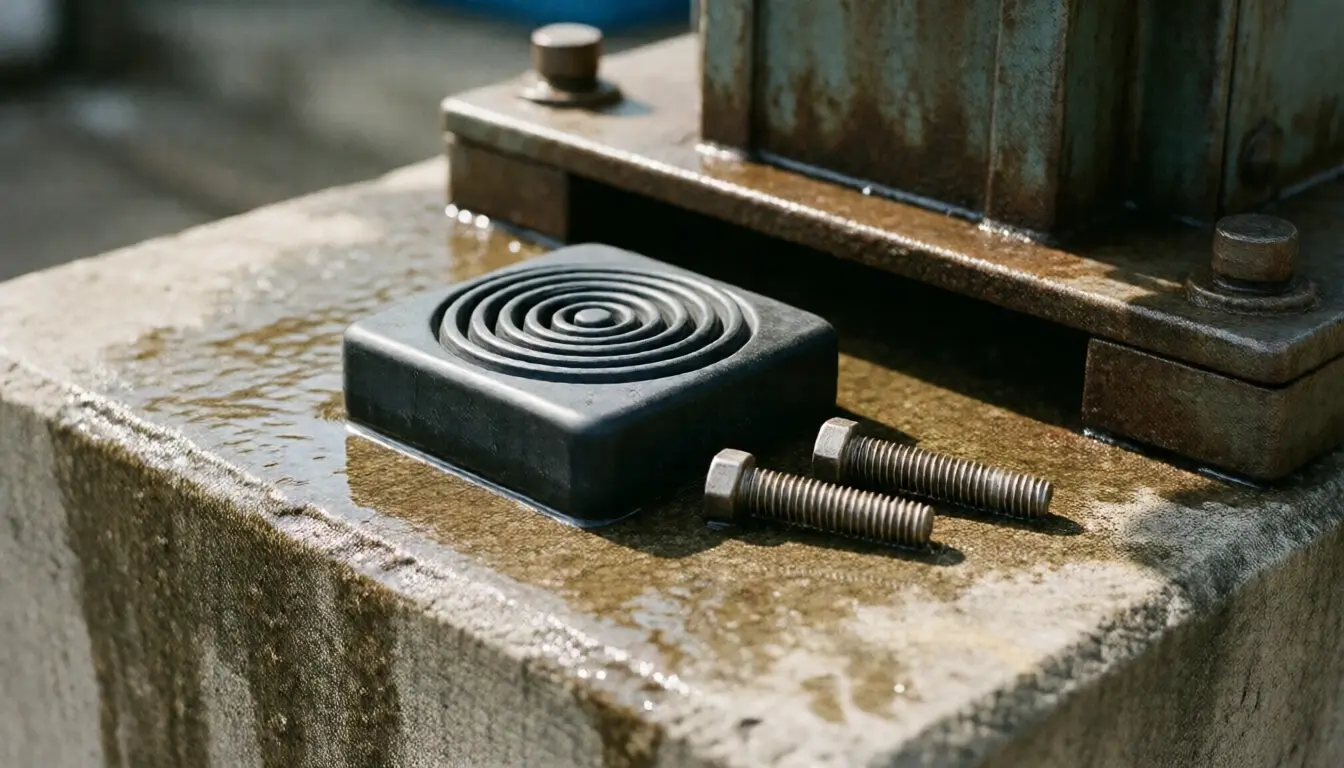
A hum that shakes the wall is purely installation
This is the cheapest group to fix and the most satisfying, and it is where people buy a new pump and hear exactly the same noise.
Because what you hear is not coming from the pump directly. It is coming from whatever the pump is making vibrate.
What to check:
- What the pump stands on. A timber floor, a raised deck or a thin plinth acts as a sounding board. A thick concrete plinth, separate from the house structure, is what you want.
- Whether there are anti-vibration pads, and whether they have gone hard, because hardened rubber does nothing at all.
- Whether the base bolts are tight. Loose bolts produce a rattle far louder than the motor.
- Whether the pipes connect rigidly. Plastic pipe joined straight to the pump carries the vibration along its whole length. A short flexible connector makes a large difference.
- How close the pump is to the house wall. A pump against a bedroom wall is always the loudest one, whatever the specification says.
Try them in order: tighten the bolts, replace the pads, add a flexible connector, and only then think about relocating it.
The first three cost little and usually bring the noise down to something acceptable.
The noises that mean the pump is failing
Not every noise is an installation matter. Some are the sound of something wearing out.
- A continuous grinding while running is usually a failing bearing, and it gets louder.
- Something solid striking the impeller means debris has got in, and it must be stopped at once.
- A motor running unusually hot with a low groan means switching the breaker off and calling somebody.
- Water dripping from the pump at the motor joint is a failed seal, which will reach the motor if left.
These four differ from the earlier sections in that the repair should not be postponed.

Why it sounds louder at night
This convinces people the pump only misbehaves after dark.
The truth is that the noise is the same and the background noise has gone, and human hearing is very sensitive to a continuous sound in silence.
The other half is that nobody is using water at night, so a pump starting stands out. Which is actually useful, because that is the most accurate time to detect a leak.
Use it: on a night you hear the pump start, get up and note the water meter reading, then note it again in the morning before anybody uses water. A difference is proof of a leak.
What to do tonight
- Close the pump's outlet valve and see whether it still starts, to separate a leak from the pump itself.
- Tighten the base bolts, which often reduces the noise immediately.
- Open and clean the suction strainer, if the noise is a whine or gravel.
- Note the meter at bedtime and at dawn, to confirm whether water is disappearing.
- If the motor is very hot or smells of burning, switch the breaker off and deal with it tomorrow.
Frequently asked questions
Does a noisy pump need replacing?
Usually not, because several of these noises come from installation or from a leak rather than from the pump. Replacing it without fixing the cause usually sounds the same.
What is the gravel sound inside the pump?
Too much resistance on the suction side causing bubbles to form and collapse. Check the strainer, the foot valve, the tank water level, and small leaks at suction joints.
What does it mean if the pump starts by itself at night?
Water is leaving the system with no tap open, which is almost always a leak, or else a failed pressure vessel.
How do I tell a leak from a failed pressure vessel?
Close the pump's outlet valve. If it stops starting, the leak is downstream. If it keeps starting, the problem is the pump or the vessel.
Is the bang when closing a tap harmful?
It applies a force to every joint each time, and it is a cause of burst pipes people rarely connect to it. Clip the pipes properly and check the pressure vessel.
What should the pump stand on to be quietest?
A thick concrete plinth separated from the house structure, with anti-vibration pads that have not gone hard, and not against a bedroom wall.
Why is it louder at night?
The noise is the same, but the background is gone and hearing is very sensitive to continuous sound in silence. And with nobody using water, a pump starting stands out.
Which noises mean stop using it now?
Something solid striking the impeller, a motor running very hot with a low groan, or a burning smell. Switch the breaker off and call somebody.
In short
- First identify whether it is a whine, a bang, rapid cycling, or vibration.
- A whine or gravel sound means the suction side is struggling, and it eats the impeller.
- A bang when water stops is pipe shock, and it bursts pipes.
- Rapid cycling is a leak or a failed pressure vessel, separated by closing the outlet valve.
- Vibration noise is installation, and it is the cheapest to fix.
- Tighten bolts, replace pads, add a flexible connector, before considering relocation.
- Bearing noise, debris on the impeller, and burning smells must not be postponed.
- Use the quiet of night: note the meter at bedtime and at dawn.