
Which automation actually pays for itself in a let property
Three things pay for themselves: a digital lock, a water leak sensor, and per-circuit energy measurement. All three either remove a trip the owner would otherwise make in person, or prevent damage that cannot be undone once it has happened.
A digital lock removes the key handover appointment and the re-keying every time a tenant moves out. A leak sensor costing a few hundred baht warns you before water reaches the unit below, which is damage worth hundreds of times the sensor. And per-circuit metering shows which air conditioner has started drawing more than it should, before the bill arrives.
What usually does not pay for itself in a rented unit is the smart speaker and voice control, because it is tied to one person's account and has to be set up again with every new tenant. What voice assistants can and cannot do in Thailand is in our article on AI in the home.
A quick test settles most decisions: if the device still works when the internet is down and the owner is away, it belongs to the house. If it does not, it belongs to whoever configured it.
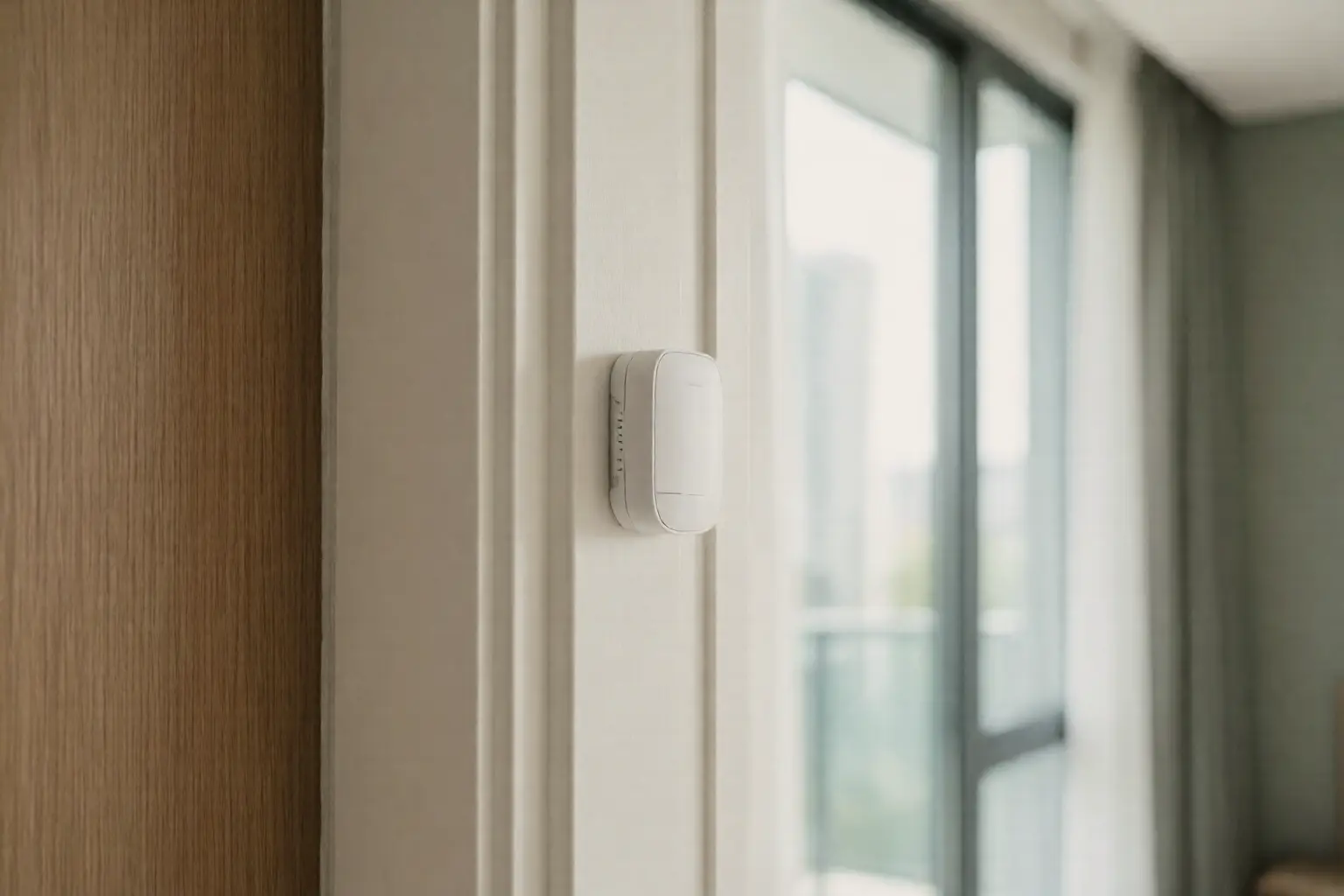
The digital lock and handover day
The real benefit of a digital lock in a rental is not novelty. It is being able to issue a separate code to each tenant and revoke that code on the day they leave without changing the cylinder.
Three things have to be prepared alongside it: a mechanical backup key that works when the batteries die, a plan for who changes the batteries and how often, and a clause in the lease saying who pays if the unit fails.
One more thing belongs in the lease: the access log. If the lock records when the door opens and closes, state what the record is for, who may look at it, and how long it is kept, because that data describes the tenant's daily movements directly.
The thing not to try is locking a tenant out remotely to force payment of rent. That is not enforcement of a contract. It removes the tenant's right to use the property under the lease and turns the party in the right into the party in the wrong.
Three things automation cannot do in place of the law
First, cutting power or water remotely. The Contract Committee Announcement on residential building rental as a contract-controlled business B.E. 2568 requires a landlord letting three or more units to charge for electricity and water at no more than the rate the electricity and water authorities actually charge, and any contract term conflicting with the announcement has no legal effect even if the tenant signed it.
Second, terminating a lease by switching the system off. The same announcement sets the process: a landlord terminating for a material breach must give written notice of not less than 7 days, and a tenant leaving early must give written notice of not less than 30 days.
Third, replacing the deposit refund. The deposit must be returned within seven business days of the lease ending and the unit being handed back. Camera footage and sensor logs do not extend that window. Both sides' rights are set out in our article on the rental contract control law.
The penalty under that announcement is imprisonment of up to one year or a fine of up to THB 100,000 or both, which costs more than the rent anyone is trying to collect by pressing a button.
Cameras and the PDPA: the line is who is in possession
A camera in your own home is a different matter from a camera in a unit you have let. The Personal Data Protection Committee's PDPA guide for the public states that a CCTV camera installed inside a home does not require a warning sign where it is there to prevent crime and keep the householder safe.
Once the unit is let, the person in possession and use of it is the tenant. A camera pointing into the living space is no longer looking after your own home, and recording identifiable people makes whoever installed it a data controller under the Personal Data Protection Act B.E. 2562, meaning the person with authority to decide on the collection, use or disclosure of personal data.
The safe practice for a landlord has three parts: no cameras inside the let unit; cameras at the building entrance or in shared areas are a matter for the condominium juristic person under its by-laws; and the lease should state plainly what devices are present and what they record.
The point people forget is the smart speaker or camera left in the unit with the furniture. If it is not removed or reset, it is still tied to the owner's account and still sees what happens in the room, which is a problem both legally and for trust.
The automation that genuinely helps the electricity bill is measurement
What lowers a bill is not switching things on and off from a phone. It is knowing what the electricity went into and at what time of day, which is exactly what a smart meter and energy-measuring plugs provide.
The benchmark to compare against for September to December 2026 is an average charge of THB 3.95 per unit excluding VAT, under the Energy Regulatory Commission's resolution of 22 July 2026. Reading time-of-day consumption and deciding on the TOU tariff is covered in our article on smart meters.
In a rental, the numbers from an energy-measuring plug have a second use: showing the tenant that the electricity charged reflects real units rather than a flat rate, which is what the rule against charging above the authority's rate requires anyway.
The schedules that pay in a Thai home are the air conditioning and the water heater. Lighting pays less than people expect, because in a house with air conditioning the lighting share of consumption is small next to the cooling load.
Changing tenants and selling: the devices have to be handed over too
Every smart device is tied to an account. Left alone, that account still belongs to the previous person after the home has changed hands.
Four things belong on the handover list: factory reset every device, remove each device from the old account, hand over a list of devices with models and locations, and pass on the manuals and warranty information.
For a seller, devices still locked to the old account are something a buyer will use on price, because a lock that cannot be reset means replacing the whole unit. Preparing a home for sale is on the house selling service page.
For an owner letting the property, a device list attached to the lease with photographs from handover day helps at both the move-out inspection and the damage assessment. If you would rather have the screening through to the final inspection handled for you, see the rent-out service page.
Choosing devices that stay with the house
The first criterion is working without the cloud. A device that still responds inside the house when the internet is down is the device that still works on the day the manufacturer retires the app.
The second is a standard that crosses brands. Protocols such as Matter and Thread, and how to plan a whole-home system, are covered in our smart home article, which sets out what should be wired and what can stay wireless.
The third is electrical work and installation. Anything wired into the home's circuits belongs to an electrician, and if the work touches structure or changes floor area, the permit question in our article on whether a home extension needs a permit applies as well.
The last is basic security: change every default password, keep device traffic on a separate network from the one you work on, and turn off remote access you are not actually using.
Frequently asked questions
Can I put a camera inside a unit I rent out?
You should not, and it risks breaking the law, because the tenant is in possession and recording identifiable people makes the installer a data controller under the Personal Data Protection Act B.E. 2562. A camera in the home you live in for crime prevention is a different case.
Does a camera in my own home need a warning sign?
The Personal Data Protection Committee's PDPA guide for the public says no sign is required where the camera is inside the home to prevent crime and keep the householder safe.
Can I cut the power or lock the door remotely to collect rent?
No. Terminating for a tenant's material breach requires written notice of not less than 7 days under the Contract Committee Announcement B.E. 2568, and contract terms conflicting with the announcement have no effect.
Can I bill electricity from my own sub-meter?
You may charge no more than the rate the electricity authority actually charges, and the rate must be stated in the contract. A sub-meter can divide the units; it cannot add a margin.
What happens when the digital lock's batteries die at night?
There has to be a backup: a mechanical key and whatever emergency power the model supports, and the lease should say who pays when the device fails.
Do IoT devices really raise the rent a unit achieves?
The ones that show up are the digital lock and controllable air conditioning. Devices tied to the owner's personal account usually do not, because the tenant cannot use them fully and they become a problem at handover.
Do devices have to be reset before handover?
Yes. A device still tied to the old account can still reach into the home, which is both a privacy problem and a price negotiation point when selling.
How much does automation cut the electricity bill?
There is no standard figure, because it depends on the household's behaviour and load. What it reliably does is show the real units used by time of day, and the scheduling and tariff decisions follow from that data.
Summary
- In a rental the devices that pay back are the digital lock, the leak sensor and energy measurement; devices tied to a personal account usually do not.
- A digital lock needs a mechanical backup key, a battery plan, and a lease clause on who pays when it fails.
- Cutting power or water or locking a tenant out remotely is not a remedy the law allows; termination needs written notice of at least 7 days.
- Electricity may be charged at no more than the authority's actual rate, so a sub-meter divides units but cannot add margin.
- A camera in the home you live in is a different case from a camera inside a unit you have let, where the tenant is in possession.
- Before a new tenant or a sale, reset the devices, remove them from the old account, and hand over the list and the manuals.