

What a presence sensor is, and how it differs from a motion sensor
They detect different things. A PIR motion sensor detects changes in infrared radiation, which means it sees movement rather than people. A presence sensor uses radar and picks up movement as small as a chest rising and falling, so it still sees someone sitting perfectly still.
That is why the bathroom light goes out while you are sitting there, and why extending the delay never really fixes it.
Two different working principles
| PIR motion sensor | Radar presence sensor | |
|---|---|---|
| What it detects | Changes in heat within its field of view | Reflected radio waves, including very small movement such as breathing |
| A person sitting still | Invisible to it, so the light goes off | Still detected |
| Needs a clear view | Yes, and obstructions block it | Passes through some materials, which is both an advantage and a problem |
| Cost | Low | Several times higher |
| Power | Very low, batteries last a year or more | Higher, usually needs permanent power |
| First response | Fast | Can be slightly slower |
Put shortly, PIR answers "is something moving?" and radar answers "is anyone in the room?". Those are different questions, and most houses want the answer to the second one.
The PIR weakness that is worse in a Thai house
A PIR works by comparing the heat of whatever moves across it against the heat of the background. The greater that difference, the more clearly it detects.
In a room at 33 degrees, the difference between skin and the wall behind it narrows considerably, so range and sensitivity genuinely fall. That is physics rather than a faulty sensor, and it is why the same device works well in an air conditioned room and badly in the carport in the afternoon.
- Poor at slow movement. Walking straight towards the sensor is harder for it to catch than walking across its view.
- Easily blocked. A wardrobe, a curtain, even glass will cut the view.
- Fooled by heat that is not a person. Warm air from an air conditioning vent, sunlight moving across the floor, or a pet.
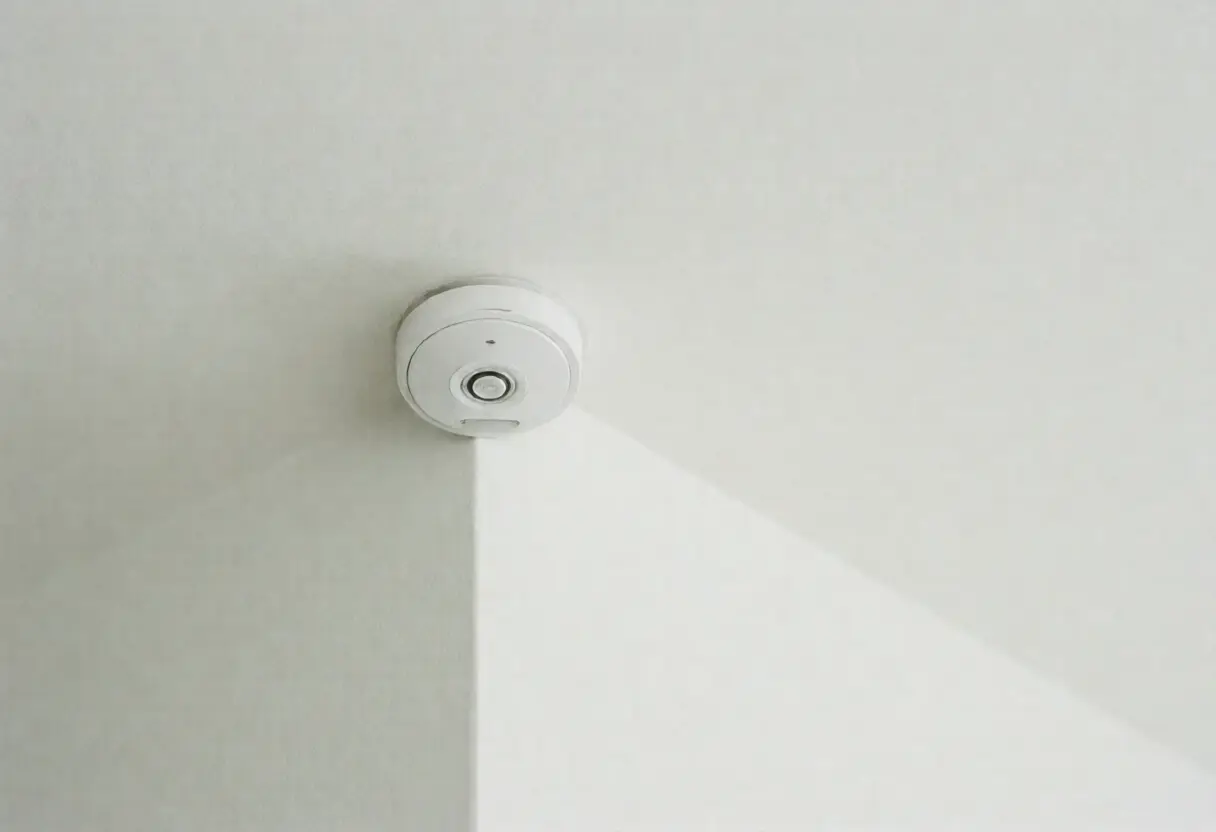
The radar problems buyers rarely hear about first
- It sees through light partitions. Fitted in a bedroom, it can count someone walking in the corridor outside as presence in the room.
- Fans, moving curtains and a spinning washing machine are all movement it can see, and can be read as a person if it is not configured properly.
- It needs more configuration than people expect. Range, sensitivity and excluding unwanted zones are work to be done after installation, not plug and forget.
- It draws more power, so it is usually a poor fit for batteries, and a supply point should be planned in with the wiring.
- The cost per position is much higher, so fitting them throughout a house rarely makes sense. Use them where the problem actually is.
Planning power and signal runs during construction is covered in home cabling in the Wi-Fi 7 era.
Which one belongs in which room
| Space | Use | Why |
|---|---|---|
| Corridors, stairs, carport | PIR | People pass through, nobody stands still, and it is cheap and fast enough |
| Bathroom | Radar | People stay still for long periods, which is exactly where PIR fails most |
| Desk or study | Radar | Sitting still and working is the worst case for a PIR |
| Living room with a television | Radar, carefully zoned | People sit still, but fans and curtains produce false signals |
| Store room, laundry | PIR | Short visits, not worth the price of radar |
| Bedroom | Think first | A light that comes on when you turn over at night creates more problems than it solves |
What works best in many houses is using both: PIR to switch on, because it is fast and cheap, and radar to confirm that someone is still there. The light comes on the moment you walk in and does not go off while you sit still.
Fitting it so you do not have to redo it
- Ceiling beats wall where you want to cover a whole room, because the view from above is obstructed less.
- Do not point it at an air conditioning vent. Both types are disturbed by moving air and fast temperature changes.
- Do not point it at a window or glass door, or it will detect people outside.
- Test before closing the ceiling. Walk in, walk out, then sit still for a few minutes. If the light goes off while you sit, either the type or the position is wrong.
- Keep the delay sensible. Extending the delay hides the symptom rather than fixing the cause. If you need twenty minutes, radar was the right answer from the start.
If you are planning a whole system, the platform overview is in the smart home guide for Thailand, and the effect on the bill is in does a smart electrical system cut the bill.
Frequently asked questions
How does a presence sensor differ from a motion sensor?
A PIR motion sensor detects changes in infrared radiation, so it sees movement only. A presence sensor uses radar and detects movement as small as breathing, so it still sees someone sitting still.
Why does the bathroom light go off while I am sitting there?
Because a PIR needs movement to know someone is present. Sitting still, it concludes the room is empty. A longer delay postpones the problem without solving it.
Why does a PIR work worse in a hot room?
Because it compares a person's heat against the background. As the room warms, that difference narrows, so range and sensitivity fall by the way the device works.
Do radar sensors really see through walls?
They pass through some materials, so they can count someone outside the room as presence inside it. Range and zone exclusions have to be set after installation.
Which type for which room?
PIR is enough for corridors, stairs, the carport and store rooms. Bathrooms, desks and living rooms where people sit still call for radar.
Can both be used together?
Yes, and it usually works best. PIR switches on, being fast and cheap, and radar confirms that someone is still there.
Ceiling or wall?
Ceiling, where you want to cover a whole room, because furniture obstructs the view from above far less.
Should I fit one in a bedroom?
Think first. A light that comes on when you turn over during the night usually creates more problems than it solves.
Key takeaways
- PIR detects movement. Radar presence sensors detect that a person is there, including one sitting still.
- A light going out while you sit still is a sign of the wrong sensor type, not the wrong delay.
- PIR genuinely performs worse in a hot room, because the heat difference between a person and the background narrows.
- Radar sees through some materials, so range and zones have to be configured after installation.
- Corridors and carports are fine with PIR. Bathrooms and desks call for radar.
- Using both works best: PIR switches on, radar confirms someone is still there.
- Test by sitting still for a few minutes before the ceiling is closed, because fixing it later costs far more.