
Which home extensions need a permit?
Anyone constructing, altering or relocating a building must obtain a permit from the local official, or notify the local official and proceed under Section 39 bis, under Section 21 of the Building Control Act B.E. 2522.
The word alteration has its own definition in the same Act: changing, extending, adding, reducing or expanding the character, extent, form, shape, proportion, weight or area of the structure of a building, or of parts of a building already built, so that it differs from the original, and which is not a repair or an alteration prescribed by ministerial regulation.
So the dividing line is not the budget or the size of the job. It is whether the work touches the structure and changes the area from the approved drawing.
Repair is defined differently: repairing or replacing parts of a building to keep it in its original condition. Repainting, replacing a cracked tile or swapping a sanitary fitting for the same model is therefore not an alteration.
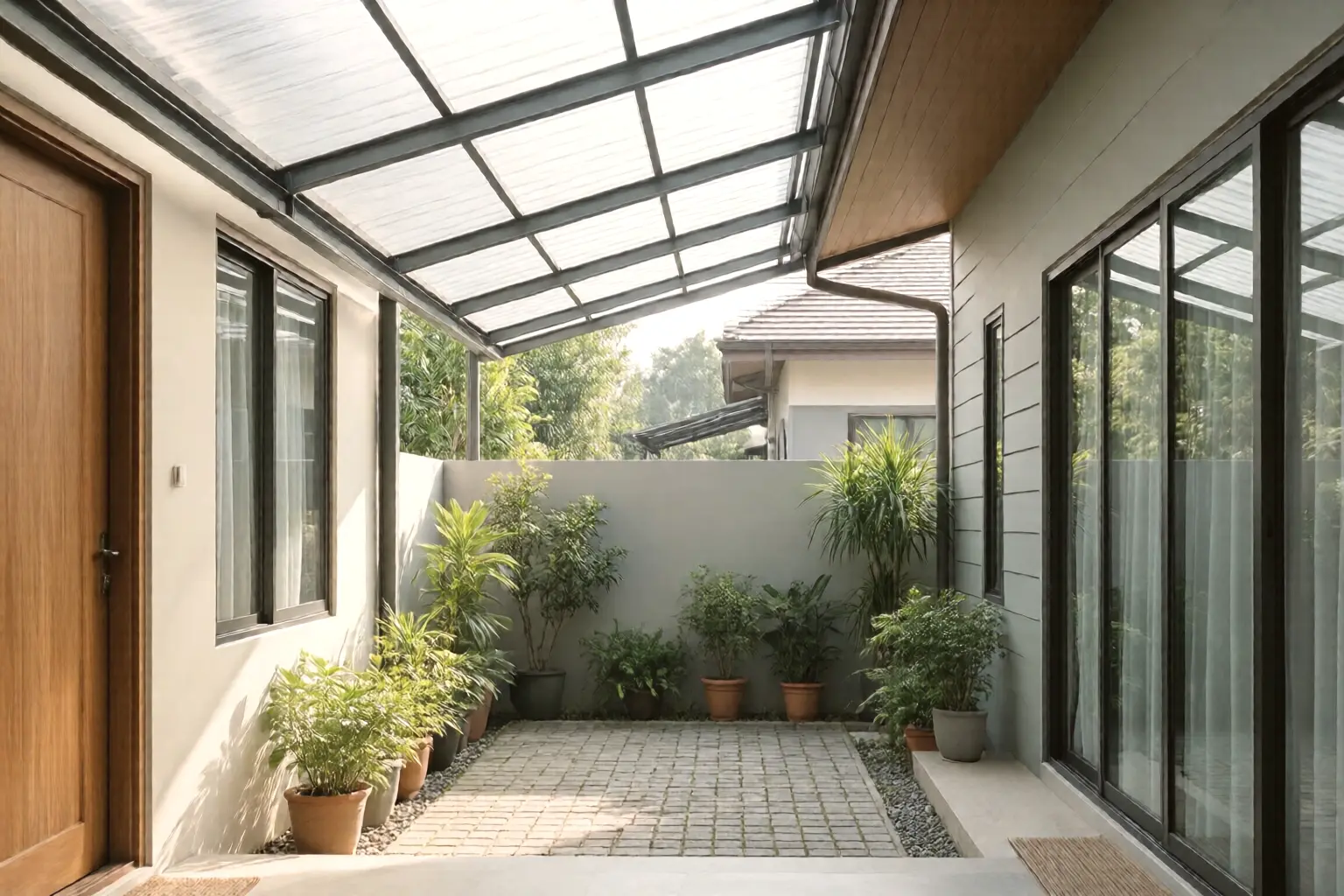
The five things the ministerial regulation says are not alterations
Ministerial Regulation No. 11 B.E. 2528, issued under the Building Control Act, lists five acts that do not count as altering a building.
- Replacing the building's structure using material of the same size, number and type as the original, except structures of reinforced concrete, prestressed concrete or structural steel.
- Replacing non-structural parts using the same type of material, or another type that does not add more than 10% to the weight carried by any part of the existing structure.
- Changing, extending, adding, reducing or expanding non-structural parts without adding more than 10% to the weight on any part of the existing structure.
- Reducing or expanding the floor area of any one floor by a combined total of not more than 5 sqm, without reducing or adding columns or beams.
- Reducing or expanding the roof area by a combined total of not more than 5 sqm, without reducing or adding columns or beams.
The first exemption is the one most often misread. Almost every Thai house is reinforced concrete, and the regulation excludes reinforced concrete structures from that exemption in terms.
And the 5 sqm ceiling is a combined ceiling, not a per-job one. A 6 sqm kitchen extension at the back is an alteration requiring a permit even if it never touches an existing column.
All five also have to be consistent with ministerial regulations issued under Section 8, local ordinances under Sections 9 and 10, and ministerial announcements under Sections 13 and 59.
Building up to the neighbour's wall needs written consent
Ministerial Regulation No. 55 B.E. 2543 requires a building wall to stand not less than 50 cm from the land boundary, unless it is built on the boundary line, in which case the wall must be blank and the written consent of the adjoining landowner on that side is required.
That is why extending a kitchen or a carport up to the neighbour's wall becomes a dispute even when the neighbour said out loud that they did not mind. The law wants a document, not a conversation.
Extensions with openings such as windows or vents have different clearances from blank walls, so have an architect or engineer check the drawing against this regulation before you order materials.
What happens if the work was done without a permit
Breaching Section 21 carries imprisonment of not more than three months or a fine of not more than THB 60,000 or both, plus a further fine of not more than THB 10,000 per day for as long as the breach continues or until it is put right, under Section 65.
Before the penalty stage the law offers a chance to fix it. If the work can be corrected, the local official may order the owner to apply for a permit or notify under Section 39 bis, or to correct the work within a period of not less than 30 days, under Section 41.
If it cannot be corrected, or the owner ignores the order, the local official may order demolition under Section 42, and failing to demolish carries a heavier penalty again: imprisonment of not more than six months or a fine of not more than THB 100,000 or both, plus up to THB 30,000 per day until the order is complied with, under Section 66 bis.
The other consequence people miss arrives at resale. An unpermitted extension means the drawing the bank has on file does not match the house, and that is something a buyer will always use on price.
A permit or a Section 39 bis notification?
Section 21 offers two routes: apply for a permit, or notify the local official and proceed under Section 39 bis.
The first means filing and waiting. Section 25 requires the local official to consider and either issue the permit or give written reasons for refusal within 45 days of receiving the application, extendable not more than twice by not more than 45 days each time, with written notice of the reason before the deadline passes.
The second means notifying with the documents the law requires and starting work, with an engineer or architect licensed under the professional legislation supervising the job. That is why it is faster and why more of the responsibility sits with the supervisor.
For a condominium unit there is one more layer: the by-laws of the juristic person. Work touching structural walls, floors or shared pipework normally needs the juristic person's approval first, and the position on common fees and the use of common property is in our article on condominium common fees.
The order to follow before hiring a contractor
Four steps that keep an extension out of court.
- Measure the area you are actually adding in square metres and compare it with the 5 sqm ceiling in Ministerial Regulation No. 11.
- Establish whether the work touches columns, beams, floors or load-bearing walls. If it does, treat it as an alteration from the start.
- Measure from the new wall to the land boundary. Under 50 cm means you need the written consent of the neighbour on that side.
- Have an architect or engineer sign the drawing and supervise, then either apply for the permit or notify under Section 39 bis at the district office or municipality.
For a larger renovation of an older house, the sequencing and budgeting are in our old-house renovation guide, and if cracks appear during demolition, check them against which cracks are dangerous before going further.
If you already have an unpermitted extension and are thinking of selling, clearing the paperwork before listing removes a discount the buyer would otherwise ask for. Our approach is on the house selling service page.
Frequently asked questions
Does every extension need a permit?
No. The five acts listed in Ministerial Regulation No. 11 B.E. 2528 are not alterations, such as reducing or expanding a floor by a combined total of not more than 5 sqm without reducing or adding columns or beams. Anything beyond those needs a permit or a Section 39 bis notification.
Can I really extend by 5 sqm without a permit?
Only if every condition is met: not more than 5 sqm combined, no reduction or addition of columns or beams, and no conflict with other ministerial regulations or local ordinances. The ceiling is cumulative, not per job.
What about painting, flooring or changing sanitary fittings?
Those are repairs under the Act's definition, keeping the building in its original condition, so they are not alterations and need no permit.
Can I build right up to the neighbour's boundary?
A wall must stand at least 50 cm from the boundary unless it is built on the line, in which case it must be a blank wall and the adjoining landowner's written consent is required, under Ministerial Regulation No. 55 B.E. 2543.
What is the penalty for extending without a permit?
Imprisonment of not more than three months or a fine of not more than THB 60,000 or both, plus up to THB 10,000 per day for as long as the breach continues, under Section 65 of the Building Control Act B.E. 2522.
What if I am ordered to demolish and do not?
Imprisonment of not more than six months or a fine of not more than THB 100,000 or both, plus up to THB 30,000 per day until the local official's order is complied with, under Section 66 bis.
How long does a permit take?
Section 25 requires the local official to issue the permit or give written reasons for refusal within 45 days of the application, extendable not more than twice by not more than 45 days each, with notice before the deadline.
Can an existing unpermitted extension be legalised?
If the work can be corrected, the local official may order an application or correction within not less than 30 days under Section 41. If it cannot be corrected, demolition may be ordered under Section 42.
Summary
- Construction or alteration requires a permit, or a notification and compliance under Section 39 bis, under Section 21 of the Building Control Act B.E. 2522.
- Ministerial Regulation No. 11 B.E. 2528 exempts five cases, including reducing or expanding a floor or roof by not more than 5 sqm combined without touching columns or beams.
- The exemption for replacing structure with identical material does not apply to reinforced concrete, prestressed concrete or structural steel.
- A wall must be at least 50 cm from the boundary; on the line it must be blank and the neighbour's written consent is required.
- Breach carries up to three months in prison or a THB 60,000 fine, plus up to THB 10,000 per day while it continues.
- Correctable work gets at least 30 days to be put right; work that cannot be corrected can be ordered demolished.