

How much does a smart electrical system really cut the bill?
It cuts it, but not from where the sales pitch points. Replacing switches so the lights answer to a phone barely moves the bill, because every LED in the house together draws less than a single air conditioner. The savings that are real come from stopping the air conditioning, the water heater and the water pump from running when nobody is using them, plus per-circuit measurement that shows you where the money actually goes.
All of which you can prove with primary school arithmetic rather than taking anyone's word for it.
Do the arithmetic before buying anything
One formula covers it: watts multiplied by hours used, divided by 1,000, gives units of electricity. Multiply that by the rate per unit on your bill.
| Device | Assumed use | Units per month |
|---|---|---|
| One 9 watt LED downlight | 6 hours a day | About 1.6 |
| Twenty LED lights, the whole house | 6 hours a day | About 32 |
| A 12,000 BTU bedroom unit at SEER 20, about 600 watts | 8 hours a night | About 144 |
| A 3,500 watt water heater | 30 minutes a day in total | About 53 |
| Ten devices on standby at 2 watts | Continuously | About 14 |
Those are assumptions to show the proportions rather than figures from your house. The proportions are the point.
If smart switches let you catch half the lights left on, you save around 16 units a month. Stopping the bedroom air conditioner two hours after everyone left the room saves around 36 units in the same month, from one device.
That is why a whole-house lighting system costing tens of thousands of baht never pays for itself out of the electricity bill. How to read a SEER figure and estimate an air conditioner's draw is in even cooling and a sane power bill.
The three places automation actually returns money
- Air conditioning and real occupancy. What works is not a timer. It is switching off after nobody has been in the room for a set period, and refusing to run while a window is open.
- Water heater scheduling. A high-wattage appliance kept hot all day is electricity paid for a few minutes of convenience.
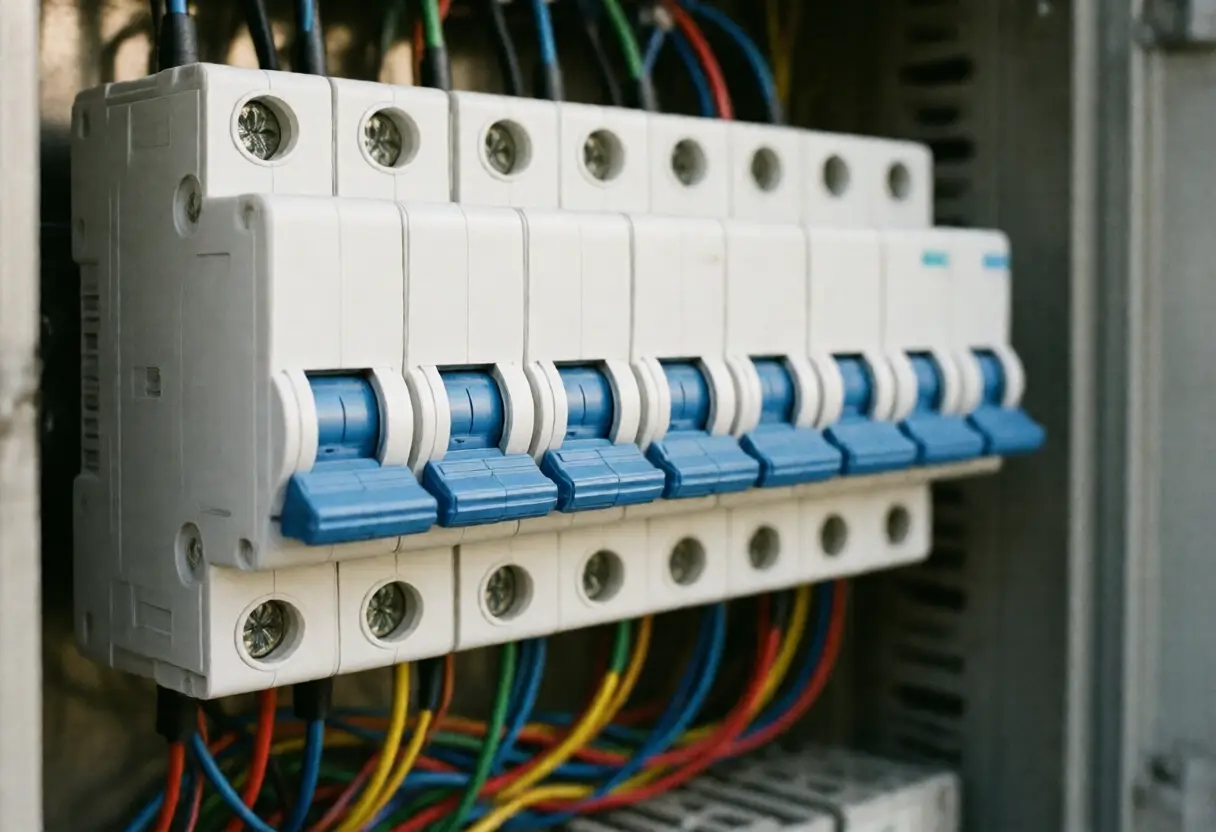
- Per-circuit measurement. This saves nothing by itself. It tells you where the money is going, which is information a single combined bill can never give you.
The third is the one most people skip and the one that usually pays most in the first month, because a great many houses have one appliance drawing far more than it should without anyone knowing. A pump that never quite shuts off and cycles all night, or an old second refrigerator in a Thai kitchen that is barely used.
What people most often expect wrongly
| The expectation | What is true |
|---|---|
| Replacing every switch produces a visible drop | Lighting has been a small share of the bill since LEDs arrived |
| Smart bulbs use less than ordinary LEDs | At the same wattage they use the same. The difference is convenience, not units |
| Scheduling everything off overnight is good | Some appliances draw more starting up than running, so cutting too frequently does not always help |
| Standby power is the main culprit | It is real but small. Ten devices at 2 watts total less than two nights of air conditioning |
The second row costs people the most money. A smart bulb at three times the price using the same electricity is not a scam. It sells convenience and light control rather than savings, and should be bought for that reason.
The order to spend in, if the goal is the bill
- First, measure. Fit metering at the consumer unit, or energy-measuring plugs on the large appliances, for one month before deciding anything.
- Second, deal with the air conditioning. The set temperature, switching off when the room empties, and cleaning the filters on schedule.
- Third, the water heater and the pump. Both are high wattage and both tend to run unnoticed. The pump side is in inverter pump versus pressure tank.
- Fourth, lighting, using sensors in corridors, bathrooms and the carport, which are where lights get left on.
- Last, convenience. Scenes, voice control and dimming are worth buying, as convenience.
If you are building or renovating, the cheapest moment is while the walls are open, particularly for running a neutral to every switch position, which most smart switches require. The platform overview is in the smart home guide for Thailand.
Frequently asked questions
Does a smart electrical system really cut the bill?
Yes, but not through lighting. The real savings come from stopping the air conditioning, water heater and pump running when nobody is using them.
How do I calculate what a device costs to run?
Watts multiplied by hours used, divided by 1,000, gives units, then multiply by the rate per unit on your own bill.
Do smart bulbs use less than ordinary LEDs?
No. At the same wattage they use the same. What differs is convenience and light control, not units consumed.
Why does a whole-house switch system not pay back?
Because all the LEDs in a house together draw less than one air conditioner, so the lighting saving is small next to the cost of the equipment.
Is standby power a major cause?
Real but not major. Ten devices at 2 watts continuously come to about 14 units a month, less than two nights of air conditioning.
Where should I start on a limited budget?
With measurement. Meter the large appliances for a month and then invest according to what the numbers show.
Should I schedule everything off overnight?
Not always. Some appliances draw more at start-up than while running, so frequent switching does not help in every case.
Do smart switches need extra wiring?
Most need a neutral at the switch position, which many older houses do not have. If you are building or renovating, run it while the walls are open.
Key takeaways
- Lighting has been a small share of the bill since LEDs arrived, so replacing every switch barely moves it.
- Twenty LED lights at six hours a day come to around 32 units a month. One bedroom air conditioner is around 144.
- The real savings are the air conditioning, water heater and pump running when nobody is using them.
- Smart bulbs do not use less than LEDs of the same wattage. They sell convenience.
- Per-circuit measurement saves nothing by itself but shows where the money goes.
- Spend in this order: measure, then air conditioning, then water heater and pump, then lighting.
- Most smart switches need a neutral at the switch position, so run it while the walls are open.