

Selling with a tenant in place or selling empty: which do investors prefer?
Investors prefer a property that is already let, because income starts on transfer day with no letting to arrange. But selling tenanted removes the owner-occupier buyers entirely, and they are most of the market.
So the real question is not which is better. It is whether the rent locked into the lease is high enough to make up for the buyers you just excluded.
What the law says
Section 569 of the Civil and Commercial Code provides that a lease of immovable property is not terminated by a transfer of ownership of the leased property, and that the transferee assumes all the rights and obligations of the transferor towards the tenant.
The buyer therefore takes the lease whole: the agreed rent, the remaining term, and the landlord's obligations. They cannot tell the tenant they are the new owner and put the rent up, and they cannot evict on the grounds that ownership changed.
Which is why the lease becomes part of the asset you are selling, rather than a matter between you and the tenant that ends at transfer.
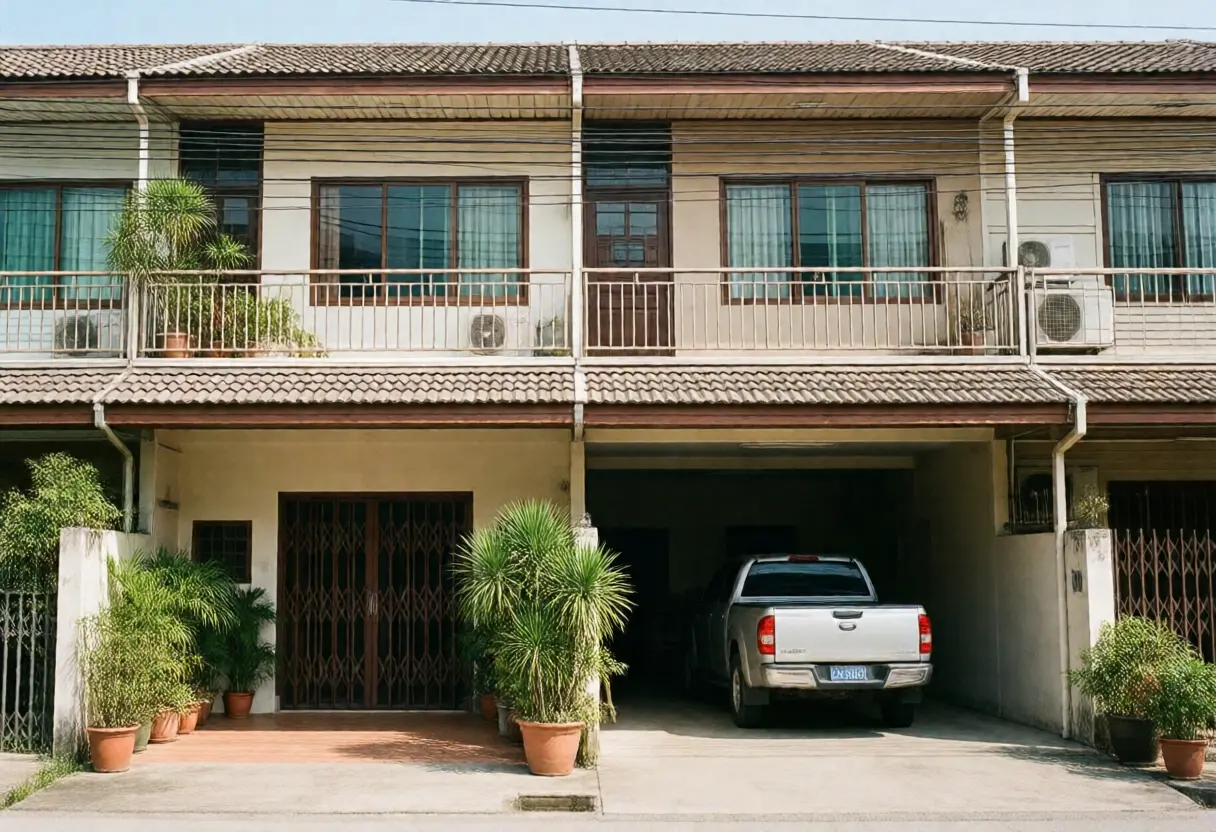
The two buyer groups price differently
| Owner-occupier | Investor | |
|---|---|---|
| Prices from | What similar homes sold for, plus personal preference | The return the current rent produces |
| A tenant in the house | An obstacle, because they cannot move in | An advantage, because income starts immediately |
| Share of the market | The majority | The minority |
| Sensitivity to condition | High. A nice kitchen and a new bathroom matter | Low. The numbers matter more |
That table explains everything else. Selling tenanted changes you from selling to the whole market into selling only to the group that prices with a calculator.
The arithmetic
Take a condominium where comparable units sell at 3,000,000 baht and market rent in the building is 15,000 a month.
| Let at market | Locked below market | |
|---|---|---|
| Rent in the lease | 15,000 a month | 11,000 a month |
| Annual rent | 180,000 | 132,000 |
| What an investor targeting a 6 per cent gross yield will pay | 3,000,000 | 2,200,000 |
Four thousand baht a month below market takes 800,000 baht off what an investor will pay, because they are not buying the unit. They are buying the income stream it is already tied to.
How to work gross and net yield properly is in the return you see and the return you get.
When selling tenanted gets a better price
- The rent is at market or above, so an investor can value it fully on that figure.
- The remaining term is not too long. Six months to a year works well: income immediately, with the ability to reset the rent soon.
- The tenant pays on time with a clear record. Twelve months of receipts or statements is the document that sells the property for you.
- The property is in an easy letting location, near mass transit, a university or an industrial estate.
When it destroys value
- Below market rent with a long term remaining, because the buyer inherits that constraint in full under section 569.
- Arrears or an unresolved dispute. Nobody wants to buy an unfinished argument.
- A detached house or townhouse in an owner-occupier location, because the group you have excluded is the one that pays most.
- A tenant who will not allow viewings. A property that cannot be photographed or shown is harder to sell than one with a low rent.
The third point is where houses differ most from condominiums. Condominiums have a far higher share of investor buyers, so selling tenanted costs fewer of them. For detached houses and townhouses in a housing estate, almost every buyer is buying to live in it, so a sitting tenant removes nearly the whole market.
The detailed approach for a tenanted condominium is in selling a condo with a tenant in place.

If you decide to sell tenanted, prepare this
- The full lease, its annexes, and at least twelve months of rent payment records.
- A statement of the deposit held, and a clear agreement with the buyer on whether it transfers with the property or is deducted from the price.
- Notice to the tenant and an agreed arrangement for viewings, because possession is theirs, not yours.
- A summary of who has been paying the common fee, land tax and repairs, and how much.
- If the rent is well below market, a serious look at whether waiting for the lease to end and selling empty pays better.
If you are preparing to sell, see the house selling service and the condominium selling service.
Frequently asked questions
Can I sell a house with a tenant living in it?
Yes, and the lease is not terminated by the transfer. Under section 569 of the Civil and Commercial Code the transferee assumes all the rights and obligations of the previous landlord.
Can the buyer evict the tenant after transfer?
Not on the grounds of a change of ownership. The lease continues to bind until it expires, and the buyer inherits the landlord's obligations in full.
Do investors really prefer tenanted property?
Yes, because income starts on transfer day. But they price from the rent locked into the lease rather than from what comparable units sold for.
How much does a below market rent affect the price?
Considerably. A condominium that should fetch 3 million, let at 11,000 rather than 15,000 a month, is worth about 2.2 million to an investor targeting a 6 per cent gross yield.
How much remaining term makes a sale easiest?
Around six months to a year, because the buyer gets income immediately while still being able to reset the rent or move in before long.
Do houses and condominiums differ here?
Considerably. Condominiums have more investor buyers, so selling tenanted costs fewer of them. For detached houses and townhouses, almost all buyers intend to live there.
What happens to the tenant's deposit on a sale?
Agree explicitly with the buyer whether it transfers with the property or is deducted from the price, because the obligation to return it passes to the new owner.
The tenant will not allow viewings. What now?
Negotiate, because possession belongs to the tenant for the term. What works is agreeing set viewing windows, sometimes in exchange for a rent concession.
Key takeaways
- Investors prefer tenanted property, but selling tenanted removes owner-occupiers, who are most of the market.
- Section 569 means the lease survives the transfer and the buyer inherits the landlord's rights and obligations.
- Owner-occupiers price from comparable sales, investors price from the rent written into the lease.
- A condominium worth 3 million let 4,000 a month below market can be worth about 2.2 million to an investor.
- Selling tenanted works when the rent is at or above market, the term is short, and the tenant pays reliably.
- Detached houses and townhouses lose more from a sitting tenant than condominiums do.
- Settle the deposit transfer and viewing access before the property goes on the market.