
The answer first: state treasury land can be leased, never bought, and what you build on it is usually not yours forever
Section 8 of the State Treasury Land Act B.E. 2562 vests ownership of treasury land in the Ministry of Finance, with the Treasury Department responsible for its administration, care and maintenance.
That sentence tells you two things at once.
First, it already has an owner, and the owner is the Ministry of Finance. This is not vacant land anybody can claim.
Second, the body to deal with is the Treasury Department, through its provincial office, not whichever agency happens to occupy the site.
This article is short and direct: what treasury land is, how leasing works, who owns the buildings, and what to watch for if somebody offers to sell you rights over it.
What treasury land is
In plain terms, immovable property belonging to the state that sits under the Treasury Department's care.
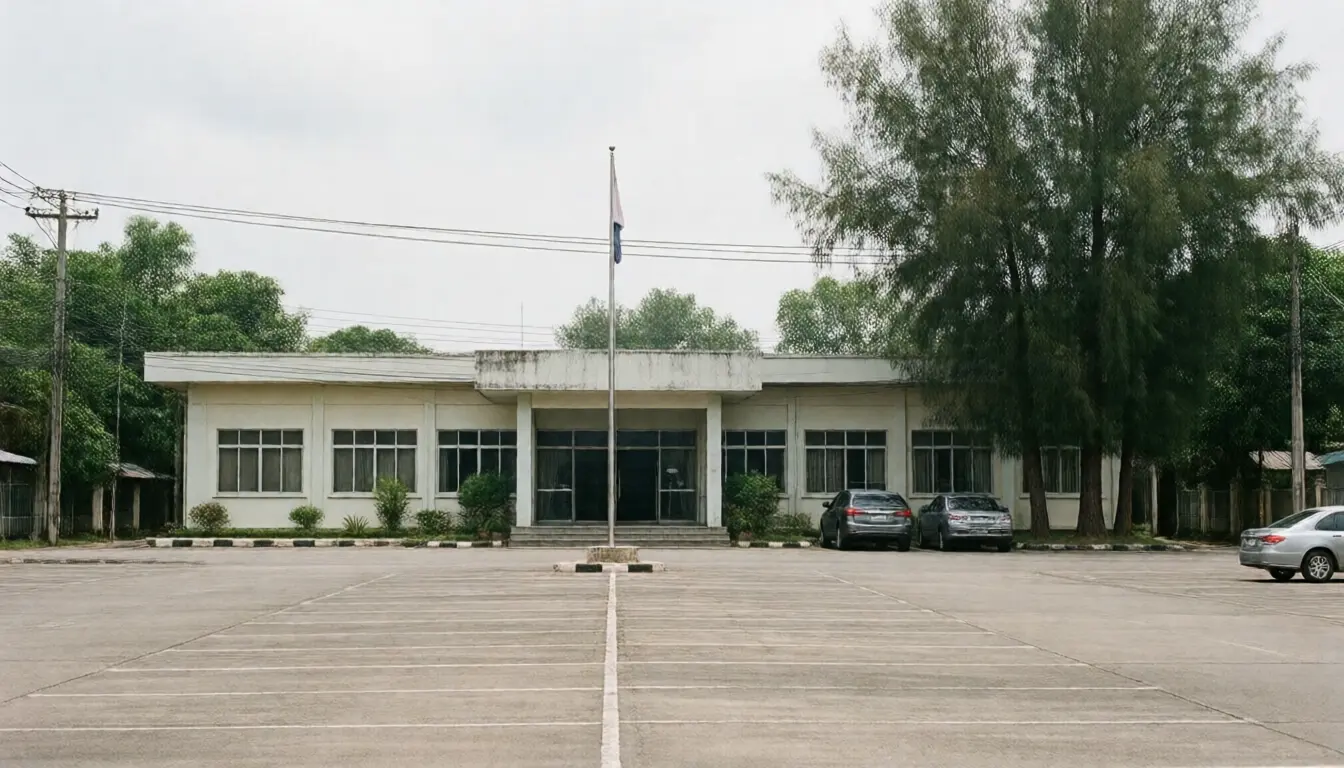
You see it all over the country without noticing: government office sites, military camps, state schools and hospitals, some markets, and land leased out to private operators.
What confuses people is that state land is not a single category.
Treasury land is different from land reform land, which sits with the Agricultural Land Reform Office, and different again from public domain property in common use, such as public roads and public waterways.
All three carry separate rule sets, so advice that applies to one may not apply at all to another.
Land reform land is covered in what you can and cannot do with land reform land.
You can lease it, but understand what you are getting
Private use of treasury land runs through leases, for several purposes: residential, agricultural, and other purposes including business.
Conditions and rates differ by purpose and must be confirmed directly with the provincial Treasury office, because details are revised from time to time and vary by area.
What to be clear about from the start:
- You hold a lease, not ownership, however long you have been there or however many generations took it over.
- The lease has an end date, and renewal is a decision under the applicable rules rather than an automatic right.
- Transferring the lease must follow the rules and be permitted, rather than being agreed privately between the outgoing and incoming tenant.
- Using it outside the stated purpose can end it. Leasing for residence and then running a shop is a risk many tenants overlook.
Who owns the buildings
This is the question that costs the most when answered wrongly.
The answer depends on what the agreement says, and several structures are in use.
One found in investment projects is that the investor constructs the building and transfers ownership of it to the Ministry of Finance, receiving long-term use rights in return.
Which means the building you paid to construct belongs to the state from completion, and what you hold is a lease for a fixed term.
People who understand this structure think about recovering their investment within the term. People who do not think they are building an asset of their own.
So before investing in construction on treasury land, read the agreement carefully on three points:
- Who owns the building on completion.
- Who owns it when the term ends.
- Who pays for demolition, if demolition is required.
All three need answers in writing before the foundations are poured, not afterwards.
Be careful with anybody offering to sell you rights
A common situation is somebody offering a house or building standing on treasury land, saying people have lived there for years without trouble.
What to do before parting with a single baht:
One, ask the provincial Treasury office directly whether the plot really is treasury land, who the tenant of record is, how much of the term remains, and whether rent is in arrears.
Two, establish whether the lease can actually be transferred and by what procedure, because if it cannot, what you paid buys nothing in law.
Three, do not accept we will change the name on the lease later. Have it changed first, then pay.
Four, watch for a seller who is not the tenant of record, which happens more often than expected, because rights get passed along informally through several hands.
The principle is the same for every category of state land: the consent of whoever is in occupation does not give you rights. What gives rights is an agreement with the body that administers the land.
Frequently asked questions
Can treasury land be bought?
No. Section 8 of the State Treasury Land Act B.E. 2562 vests ownership in the Ministry of Finance, and private parties may use it only by lease.
Who do I approach?
The Treasury Department, through its provincial office where the land is located, rather than the agency currently occupying the site.
How does it differ from land reform land?
Different owner and different administrator. Treasury land sits with the Ministry of Finance and the Treasury Department, land reform land with the Agricultural Land Reform Office, and each has its own rules.
Is a building I paid for mine?
It depends on the agreement. In some structures the investor builds and transfers ownership of the building to the Ministry of Finance in exchange for long-term use rights. Read it carefully before starting work.
Do leases renew automatically?
No. Renewal follows the applicable rules and a decision, rather than arising by itself. Ask about the conditions on the day you sign.
Can I open a shop on a residential lease?
That is a risk, because use outside the stated purpose is grounds for termination. Speak to the provincial Treasury office first.
Can I buy a house standing on treasury land?
You can buy the building and the lease, not the land, and you must check with the provincial Treasury office that the lease is transferable and the seller really is the tenant of record.
Does decades of occupation create ownership?
No. Treasury land is state property, and length of occupation creates neither ownership nor a lease where no agreement exists.
In short
- The Ministry of Finance owns treasury land and the Treasury Department administers it.
- Private parties use it by lease, not by purchase.
- Deal with the provincial Treasury office, not the agency occupying the site.
- Treasury land, land reform land and public domain property are separate things with separate rules.
- Establish in writing who owns any building, both on completion and at the end of the term.
- Renewal is not automatic, and misuse of the stated purpose is grounds for termination.
- If somebody offers to sell rights, verify with the provincial Treasury office before paying.