
The abbot is willing, the temple committee agrees, and you have the money. So why can you still not buy it?
The question sounds unreasonable until you read the provision.
Section 34 of the Sangha Act B.E. 2505 states that ownership of temple land and monastic land may be transferred only by an Act of Parliament.
Read that last part slowly: only by an Act.
Not by a resolution of the temple. Not with the approval of the provincial ecclesiastical governor. Not by the religious affairs department. Not by anybody's order.
By an Act, meaning legislation passed by parliament specifically for that plot of land.
That is the entire reason temple land cannot be bought and sold, however willing every party may be.
This article covers the three categories of temple land, how they differ, what can be done with each, how leasing works, and what to check before buying anything near a temple.
Three categories, which people tend to treat as one
Section 33 divides them into three, and the distinction decides what is possible.
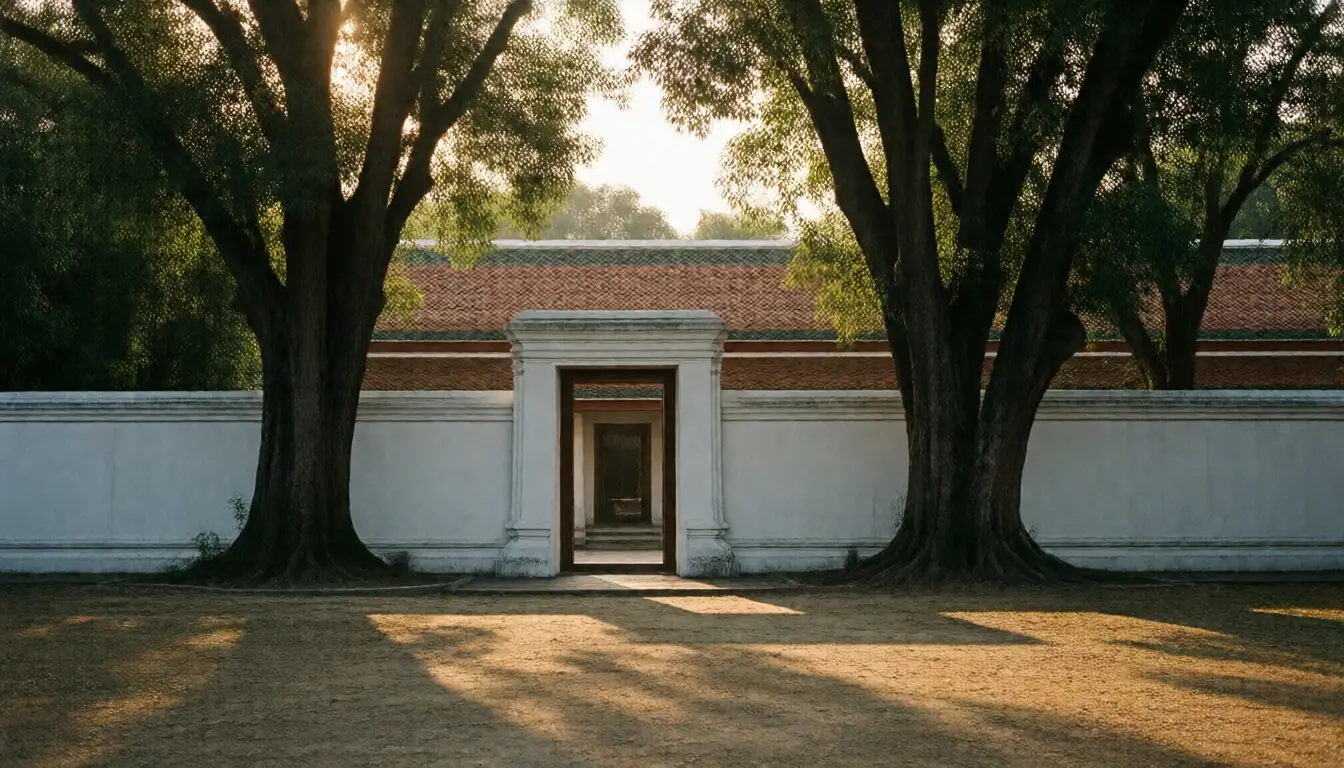
Temple land is the site of the temple and its precincts: the ordination hall, the assembly hall, the monks' quarters and the consecrated boundary.
Monastic land is land belonging to the temple that sits outside those precincts.
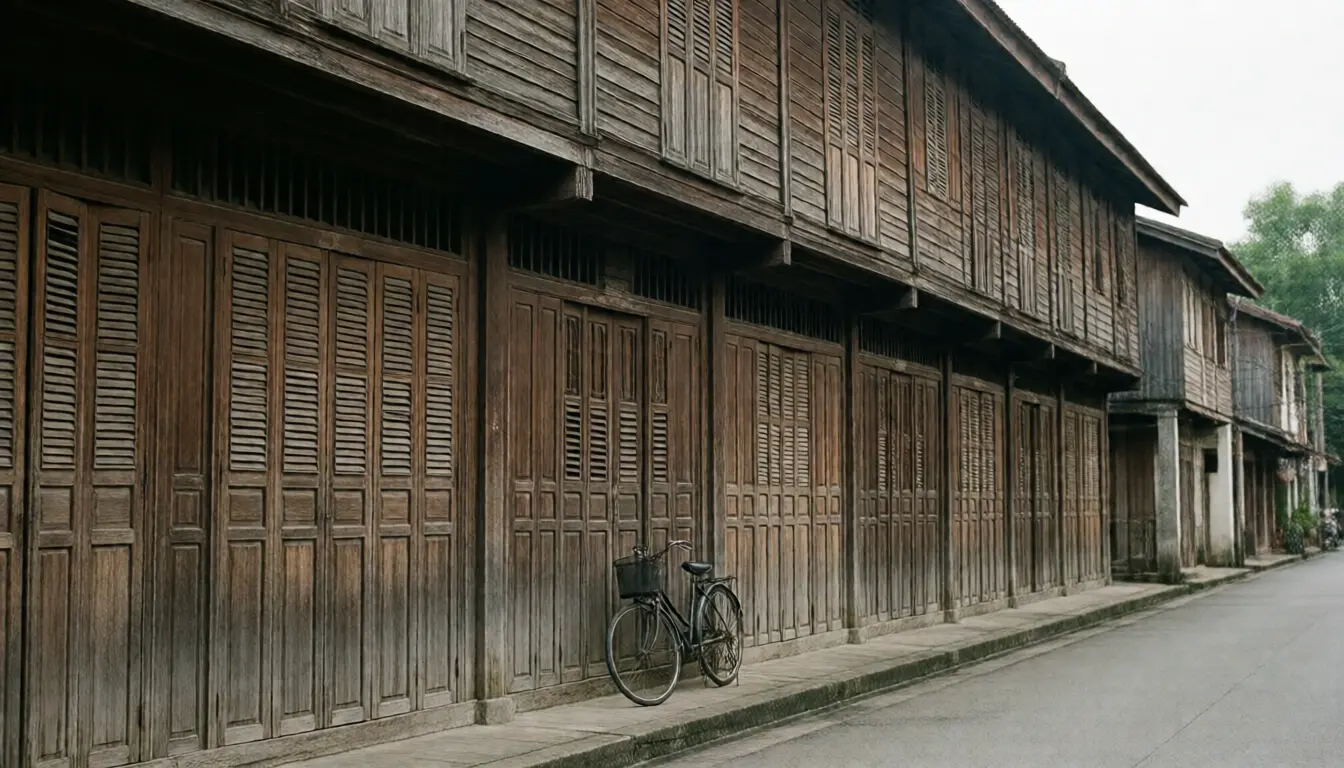
It usually came from donations by lay people in the past, and tends to be scattered across a subdistrict or a whole district. Some plots sit in the middle of a market, some are paddy fields, and some carry shophouses whose tenants have lived there for three generations.
This is the category people misjudge most, because nothing about it looks like temple property from the outside.
Dedicated land is land whose owner has not transferred ownership to the temple but has dedicated only the benefits from it to the temple or to the religion.
Ownership stays with the original owner while the fruits go to the temple, which is a completely different structure from the first two.
Section 34 closes the door twice
The first closure is the transfer rule already described: only by an Act.
The second is the next sentence in the same section, which forbids anybody from raising prescription against a temple in respect of temple land or monastic land.
This matters enormously, and it ends a great many hopes.
With ordinary land, open and continuous possession for long enough can lead to ownership by adverse possession.
With temple and monastic land, that mechanism simply does not operate.
Thirty years, fifty years, three generations, and there is still no ownership, while the temple can reclaim it at any time and you cannot raise the passage of time in answer.
A house standing on monastic land since your grandfather's day is still a house standing on somebody else's land today.
Section 35 closes another route
Section 35 provides that temple land, monastic land and central religious property are assets against which execution of judgment cannot be levied.
So even where a temple is a judgment debtor, a creditor cannot seize this land and sell it at auction.
The practical consequence is that such land cannot be mortgaged, and no bank can accept it as security.
A tenant on monastic land who wants to borrow to improve the building runs into a wall here, because what they hold is a leasehold interest rather than an asset that can be pledged.
So can monastic land be used at all?
Yes, by lease, not by purchase.
A temple may lease out monastic land, dedicated land, or the part of the temple land set aside to generate benefit, which is how religious property funds the temple.
What to know is that a lease exceeding three years must comply with the requirements of the law, rather than being settled privately between tenant and temple.
This is where many leases run into difficulty in practice, being made as short agreements renewed indefinitely with no long-term security.
What a tenant should understand clearly:
- You hold a lease, not ownership, however long you have been there.
- Buildings you put up yourself need a clear agreement about who owns them when the lease ends, written down on day one.
- It cannot be mortgaged, and it cannot be sold in the sense of selling land.
- Transferring the lease to somebody else depends on whether the agreement permits it and whether the temple consents.
What to check if you are buying
The real risk is not somebody setting out to buy temple land, because almost nobody does that deliberately.
The risk is somebody buying a house or a shophouse built on monastic land while believing the land comes with it.
What to do:
One, ask whether the seller holds any document of title to the land. If what they have is a lease with a temple, they are selling a building and a lease, not land.
Two, obtain the registration record at the Land Office to see whose name the plot is in. If it is the temple's, that settles it.
Three, establish exactly how much of the lease remains and on what terms it renews, because the price should follow the time left rather than the value of the land.
Four, verify that the lease can actually be transferred by contacting the temple or the provincial Buddhism office directly rather than believing the seller.
Five, do not rely on nobody has ever come to ask about it, because section 34 has removed prescription entirely. Nobody having claimed yet does not mean nobody can.
Price is a signal too. A well-located shophouse far below market usually has an explanation in the paperwork, which is the same point made in why an unusually cheap resale house is cheap.
Land already donated to a temple: can heirs get it back?
This comes up often when a later generation discovers that family land was given to a temple.
The answer depends on whether the donation was legally complete, which is a different question from whether merit was made or a ceremony held.
If the land was registered into the temple's name, it is monastic land and falls under section 34 immediately, meaning it cannot be recovered by ordinary means.
Where no transfer was ever registered, or there is a dispute over whether the original intention was to dedicate the benefits rather than transfer ownership, that turns on the evidence in each case and warrants a lawyer from the start.
What families should do preventively is discuss it and write down precisely what is being given: the whole plot, part of it, or only the benefits. Those three produce entirely different legal outcomes.
Family property planning generally is in transferring a house to a child with a usufruct.
Land next to a temple is not temple land
Another confusion worth separating: privately owned land adjoining a temple is bought and sold normally, because it is not temple property.
What to weigh there is about living with it rather than about law.
- Noise from religious activity: merit ceremonies, funerals, and chanting at certain hours.
- Traffic and parking on religious holidays.
- Smoke from the crematorium, where the temple has one.
- On the other hand, land beside a temple usually gains mature trees, open space, and the certainty that nothing tall will be built on that side.
That last one is a genuine advantage people overlook, because temple land is not easily redeveloped, for all the legal reasons set out in this article.
Frequently asked questions
Can temple or monastic land be bought?
No. Section 34 of the Sangha Act B.E. 2505 provides that ownership may be transferred only by an Act of Parliament, meaning legislation passed specifically for that plot.
How does monastic land differ from temple land?
Temple land is the site and precincts of the temple. Monastic land is land owned by the temple outside those precincts, usually acquired by donation and scattered across the area.
Does decades of occupation create ownership?
No. Section 34 bars raising prescription against a temple over temple or monastic land, so adverse possession simply does not apply.
Can monastic land be leased?
Yes. A temple may lease monastic land, dedicated land or set-aside temple land, but a lease exceeding three years must comply with the requirements of the law rather than being agreed privately.
Can it be mortgaged?
No. Section 35 makes temple land, monastic land and central religious property immune from execution, so no bank can take it as security.
What is dedicated land?
Land whose owner has not transferred ownership to the temple but has dedicated only the benefits from it, so ownership remains with the original owner.
Can I buy a shophouse standing on monastic land?
You can buy the building and the lease, not the land. Check how much of the lease remains, the renewal terms, and whether the lease can actually be transferred, by asking the temple or the provincial Buddhism office directly.
In short
- Temple and monastic land can change ownership only by an Act of Parliament, under section 34.
- Consent from the temple or any authority does not make a sale possible.
- There are three categories: temple land, monastic land and dedicated land.
- Monastic land is invisible from the outside, and is where people go wrong most.
- Prescription cannot be raised against a temple, so adverse possession never applies.
- This land is immune from execution, so it cannot be mortgaged or pledged.
- It is used by lease, and a lease over three years must follow the legal requirements.
- Buying a building on leased land means pricing from the remaining term, not the land value.
- Nobody having claimed it yet means nothing, because the law removed the time element.