
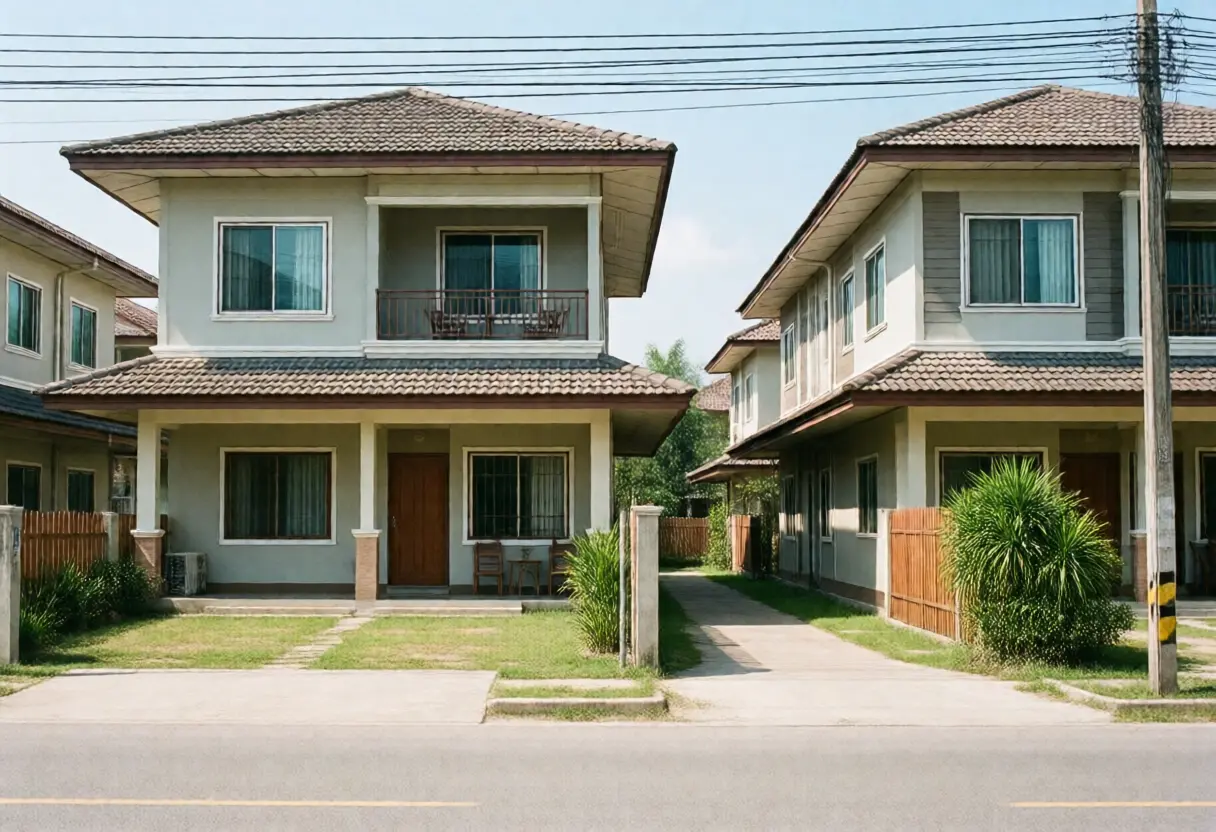
Why do banks value the same house differently?
Because each bank uses a different appraisal firm, a different set of criteria, and a different set of actual transaction records to compare against. A valuation is a reasoned opinion with a method behind it, not a fixed number belonging to the house.
This does not merely bruise feelings. It changes the cash you have to bring on transfer day.
The three prices people confuse
| Price | Who produces it | What it is used for |
|---|---|---|
| Government appraised value | The Treasury Department | Calculating fees and taxes at the land office on transfer. Generally below market |
| Sale price | Agreed between buyer and seller | The money that actually changes hands |
| Bank valuation | An appraisal firm the bank appoints | Setting the loan amount. Nothing to do with transfer fees |
Many people take the Treasury figure and argue with the bank about it, which is an entirely different matter. Many others treat the bank valuation as the true worth of the house, which it also is not.

What the bank is actually looking at
- What has sold in the area, not what is being asked. A 5 million baht board on an unsold house carries less weight than the one next door that transferred at 4.2 million six months ago.
- Structure and services rather than presentation. A house freshly painted and nicely furnished, with the original roof, wiring and plumbing, is a long term risk in the bank's eyes. Decorating raises the asking price far more than it raises the valuation.
- The shape of the plot. Two plots of identical area in similar locations can value very differently. A wide fronted, near square plot tends to value higher than a narrow deep one, because more of it is usable.
- How readily it could be sold. The bank is estimating what it would recover, and how quickly, if it had to repossess and sell. It is not estimating how pleasant the house is to live in.
That last point explains all the others. A bank valuation is the price the bank believes it would get back if you stopped paying, not the price the house deserves.
What happens when the valuation comes in low
The bank lends against the lower of the sale price and the valuation. The gap becomes cash you have to find.
| Valuation matches price | Valuation comes in low | |
|---|---|---|
| Sale price | 3,000,000 | 3,000,000 |
| Bank valuation | 3,000,000 | 2,700,000 |
| Loan at 90 per cent of the lower base | 2,700,000 | 2,430,000 |
| Cash you must bring | 300,000 | 570,000 |
A valuation 300,000 light raises the cash you need by 270,000, not by 300,000, because the shortfall is multiplied by the portion you cannot borrow. This is where deals most often collapse in the final week before transfer.

What you can do about a low valuation
- Ask to see the reasoning, particularly the comparable properties used. If the comparables are a different house type or a different lane, there are grounds to request a review.
- Submit better comparables. Actual transfers of the same house type in the same development at higher prices. Records with a date and a title deed number carry more weight than online listings.
- Apply to another bank, because a different appraisal firm may genuinely produce a different figure. Allow for the extra time and the extra valuation fee.
- Negotiate with the seller, using the valuation as the reason. A serious seller knows the next buyer will meet a similar number.
- Increase the deposit, if the property is genuinely worth it and you have the liquidity.
What you should not do is sign a sale and purchase agreement with no financing condition. If the loan falls short, the deposit can be forfeited. State in the contract that if the lender approves less than a specified amount, the buyer may withdraw and have the deposit returned.
Reducing the risk before you apply
- Keep evidence of work on the services: receipts for a new roof, rewiring or replumbing, because those are what the bank weighs, unlike paint.
- Clear the property and make every room accessible on the day the appraiser visits. A room that cannot be entered is usually read unfavourably.
- Have the title documents complete and matching the physical property. Extensions that do not match the approved plans can pull the figure down.
- For a resale, learn the actual transfer prices in the area before agreeing a price, not just the asking prices.
How to check the Treasury appraised value and the parcel data yourself is in how to check a plot before paying a deposit, and preparing for an application is covered in what to prepare before applying for a mortgage.
Frequently asked questions
Why do two banks value the same house differently?
They use different appraisal firms, different criteria and different sets of actual transaction comparables. A valuation is a reasoned opinion rather than a fixed figure.
How does the Treasury appraised value differ from the bank valuation?
The Treasury figure is used to calculate fees and taxes at the land office and is generally below market. The bank valuation sets the loan amount and has nothing to do with transfer fees.
Will decorating raise the bank's valuation?
Only slightly. Banks weigh structure, roof, wiring and plumbing over presentation. A repainted house with original services is still viewed as a long term risk.
Why do two plots of the same size value differently?
Because of shape. A wide fronted, near square plot tends to value higher than a narrow deep one of the same area, because more of it is usable.
What happens if the valuation is below the price?
The bank lends against the lower base, so the gap becomes cash the buyer must find. It is the most common reason deals collapse close to transfer.
Can I ask for a review?
Yes. Ask for the comparables used and submit closer ones, ideally actual transfers with a date and title deed number rather than listings.
Does applying to several banks help?
It can, because a different appraisal firm may produce a different figure, but allow for the extra time and valuation fees.
What clause should be in the sale agreement?
That if the lender approves less than a specified amount, the buyer may withdraw and have the deposit returned, so a shortfall does not cost you the deposit.
Key takeaways
- Different banks use different appraisal firms, criteria and comparables, so differing valuations are normal.
- The Treasury appraised value sets transfer fees while the bank valuation sets the loan. They are separate things.
- Banks work from what has actually sold in the area, not from asking prices.
- Structure, roof and services weigh far more than paint and furnishing.
- A wide fronted, near square plot tends to value above a narrow deep plot of the same area.
- Lending is against the lower of price and valuation, so the shortfall becomes cash you must bring.
- Put a financing condition in the sale agreement so a short valuation does not cost you the deposit.