
The number of circuits is not the target. It is the result of two rules
The question people ask is how many circuits a house should have, which has no fixed answer, because the number is an outcome rather than something set in advance.
The first rule is to separate the things that must not fail together, because when a fault occurs at one point you should not lose the whole house with it.
The second is not to put more load on one circuit than its breaker and cable can carry, because a breaker that trips often is not a faulty breaker. It is a breaker telling you there is too much on it.
Design to those two and the number comes out by itself, and it is usually several times what an older house has.
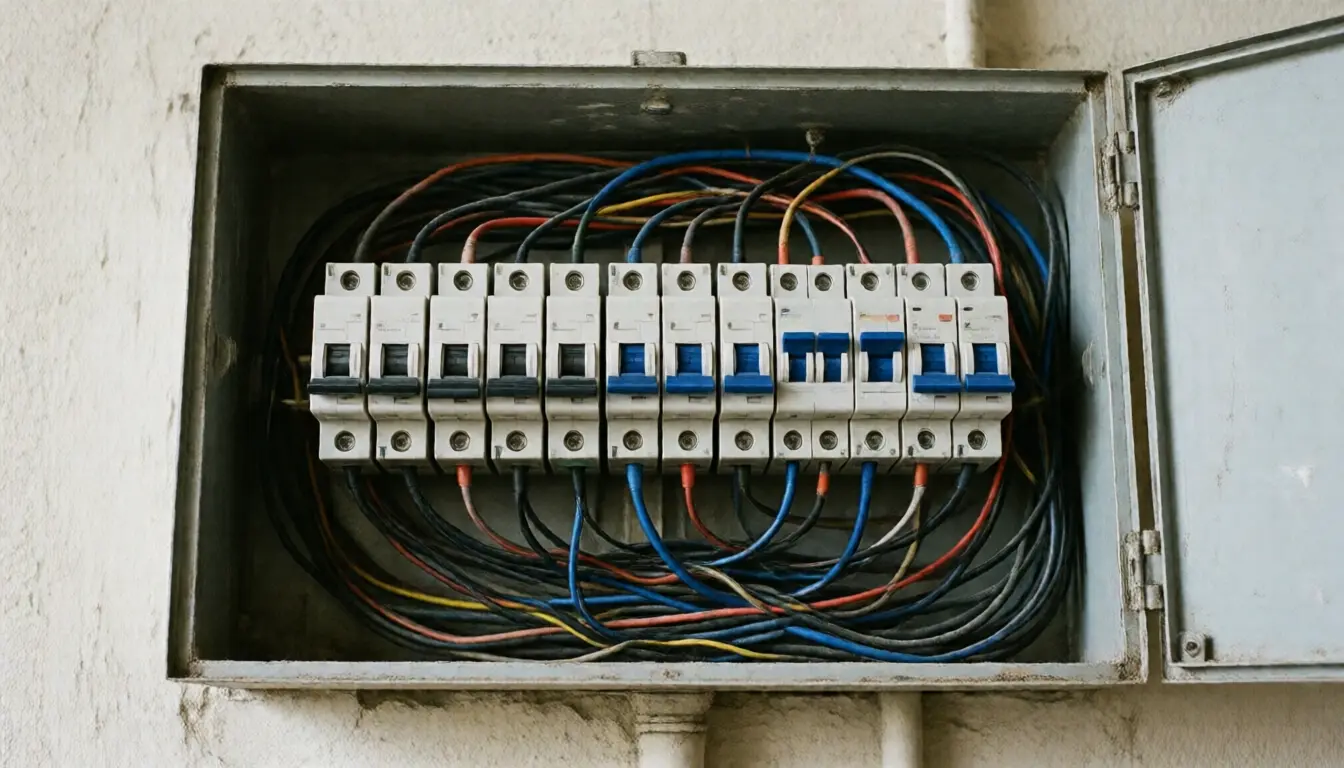
What is wrong in a great many older houses
Thai houses built twenty or thirty years ago often have only one or two circuits for the whole property, which was adequate then because there were far fewer appliances.
The consequence is that when the bathroom water heater develops a fault, the whole house goes dark, including the lighting you need to walk to the consumer unit.
And when the choice is between sitting with no power at all or pushing the breaker back up without knowing the cause, most people choose the second, which is a decision an electrical system should never force on anybody.
Separating circuits is therefore not a convenience. It is what allows a house's protection to be used the way it was designed to be.
The circuits a Thai house should have as a minimum
- Lighting, separate from sockets, so a fault at a socket does not leave the house dark, and in a two-storey house one lighting circuit per floor.
- General sockets, separated by zone or by floor, because sockets are where new things get plugged in constantly and are the most common source of trouble.
- One circuit per air conditioner, because they are the largest load in the house and draw a surge when the compressor starts.
- The water heater, on its own circuit with its own RCD, being electrical equipment in direct contact with water.
- The kitchen, separated out, because a rice cooker, microwave, kettle and refrigerator on one circuit is the recipe for a breaker that trips every morning.
- The water pump, separated out, so you can tell whether the pump is the problem, and can switch it off when going away without killing anything else.
- An EV charger, always on its own, being a load that runs continuously for hours and has requirements of its own. That is covered in installing an EV charger at home.
This is not to say every house must have all of them. It is to say that if yours has far fewer, you should know you are trading safety against what was saved at construction.
Leave spare ways, because replacing the box later costs far more
A consumer unit that is exactly full on the day it is installed is one that will have to be replaced within a few years.
Because houses add load continuously: a third air conditioner, an EV charger, a solar system, a new circuit for an extension, each of which needs a way in the box.
The price difference between a box that just fits and one with four spare ways is small on installation day. Replacing the whole box in five years means stripping out and reterminating everything.
Ask for a box with at least two to four ways still empty after installation, and have the electrician leave enough slack in the cables that things can be moved later.
And if you are building, discuss it at the design stage, because running spare conduit while the walls are open costs almost nothing. That is in wiring a new build before the walls close.

One RCD for the house, or one per circuit
This decision affects the behaviour of the people living there more than most people expect.
A single RCD covering the whole house is cheaper and simpler to install, with one large drawback: when there is a leakage fault anywhere, the whole house goes off.
What follows in practice is that when it trips repeatedly because of one faulty appliance, the household becomes irritated, and one day somebody tells an electrician to take it out, which is a more common ending than it should be.
Individual devices per circuit cost more but trip only the circuit at fault, so the rest of the house keeps working and you know immediately where the problem is.
A workable middle route is separate protection on the higher-risk circuits, the water heater, the kitchen, outdoor sockets and the pump, with the rest under a common device. RCDs are covered in residual current devices at home.
Two things that make everything above meaningless if skipped
The earthing system, which a great many older houses simply do not have, and which has to exist before any of the rest is worth discussing.
What must be understood is that fitting an RCD in a house with no earth is not the same as having an earth. They are separate layers of protection that work together, not substitutes for each other.
Ask the electrician whether there is an earth rod, how deep it goes, and what resistance it measures. An electrician who works properly answers immediately.
Circuit labelling, the cheapest thing in this article and the most often skipped.
An unlabelled consumer unit is one where, in an emergency, nobody knows which breaker to throw, so they throw the main instead, which needlessly kills the pump and the refrigerator too.
Label every way with a permanent marker, then photograph it and keep the picture on every phone in the house, because the moment you need it is a moment when it is dark and somebody is frightened.
When to replace the consumer unit
Replace it when any one of these five is true, without waiting for it to fail.
- You are about to add solar, an EV charger or a third air conditioner, all of which need new ways and circuits.
- The box is full with no spare ways, and the electrician starts suggesting spurring off an existing breaker.
- It still uses old fuses or a cut-out, which offer no earth leakage protection at all.
- An existing breaker trips more and more often with nothing having changed, which can mean the device itself has aged.
- You see scorching, discoloration, or smell hot plastic at the box, which means calling an electrician that day rather than waiting.
And whether or not you replace it, always ask the electrician for two documents: a schedule showing which breaker controls what, and the test results after installation, because those are what the next electrician in ten years will need.
Frequently asked questions
How many circuits should a house have?
There is no fixed number, because it results from separating what must not fail together and not loading a circuit beyond what its breaker and cable can carry.
Why separate lighting from sockets?
So that a fault at a socket does not leave the house dark, because having to walk to the consumer unit in the dark is a situation the electrical system should not create.
One RCD or one per circuit?
Per circuit is better, because it trips only the affected one. A single device for the whole house is cheaper but takes the whole house down, which usually ends with somebody having it removed.
With an RCD, do I still need an earth?
Yes, because they are separate layers that complement each other rather than substitute. Ask the electrician whether there is an earth rod and what it measures.
My breaker trips often. Should I fit a bigger one?
Not without checking the cable first, because the breaker protects the cable from overheating. Fitting a larger one on the same cable removes that protection.
In short
- The number of circuits results from separating what must not fail together and not overloading cable.
- At minimum, separate lighting, sockets, each air conditioner, the water heater, the kitchen and the pump.
- Leave two to four spare ways, because replacing the box later costs far more.
- Per-circuit RCDs beat one for the whole house, since a single one usually ends up removed.
- An earth must exist first, because an RCD does not substitute for one.
- Label every way and photograph it, because you need it when it is dark and somebody is frightened.