
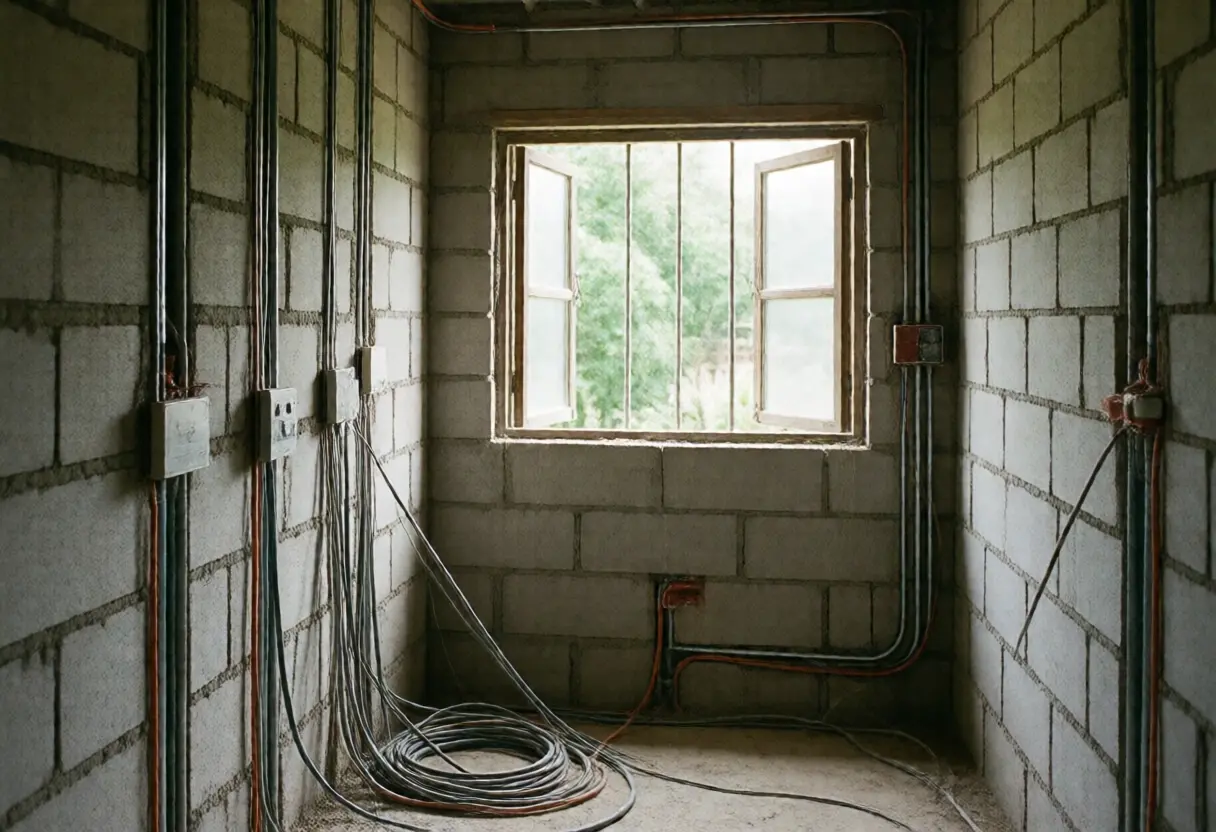
Building a house: what to put in the walls before they close, if you want a smart home later
What you prepare is cable and boxes, not devices. Devices change every couple of years and can always be bought later. A neutral at every switch position, deep enough back boxes, conduit with draw strings, and power at the ceiling are different: leave them out now and adding them means opening walls.
This part of the budget is small against the cost of a house, and it decides what you will be able to do in five years without demolition.
Twelve things to tell the electrician before rendering
| What to provide | Why |
|---|---|
| A neutral at every switch position | Almost every smart switch needs one. Without it, they cannot be fitted at all |
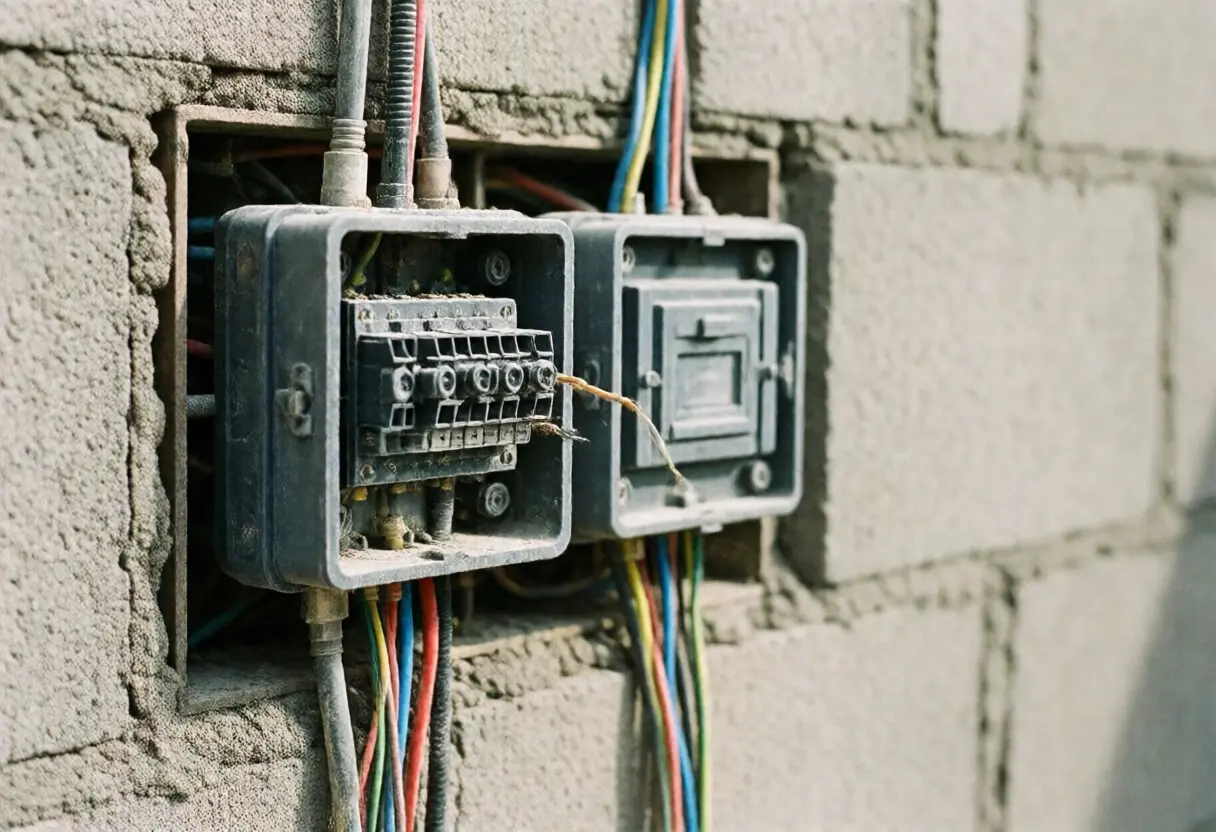
| Deep back boxes | Smart switches are thicker than ordinary ones and often will not fit a standard shallow box |
| Conduit with draw strings on every run | Lets cable be replaced or added later without opening walls |
| Power and a network drop at the ceiling on each floor | For access points and ceiling sensors |
| Power above windows and in curtain pelmets | Blind and curtain motors need it, and adding it later means opening the ceiling or surface trunking |
| Power and cable at the gate, the front door and the letterbox | Cameras, video doorbells and gate motors all sit where retrofitting cable is hardest |
| A ventilated position for the equipment cabinet | Not the roof void, and near where the fibre enters |
| Conduit from the consumer unit to the carport | For a future EV charger, even if there is no electric car today |
| Positions for leak sensors | Under the sink, at the water heater, at the washing machine and at the pump |
| Lighting circuits split by zone | Rather than by room, because lighting scenes need finer division than a whole room |
| Power and cable at camera positions around the house | One cable is enough with PoE, but the conduit has to reach there first |
| A separate circuit and breaker for each air conditioner | Safety first, and it makes per-circuit energy measurement possible later |
The list is longer than most people expect, and together it comes to a modest sum on a whole house. Retrofitting three or four of these items alone would exceed it.
The three most often forgotten
- The neutral at the switch. This is what defeats more smart home plans than anything else, because a great many Thai houses run only the live to the switch and never bring a neutral back. When the time comes to change the switches, none of them can be changed.
- Back box depth. Nobody thinks about it until installation day. A smart switch carries its electronics behind the faceplate and needs more space than an ordinary one.
- Draw strings in the conduit. They cost almost nothing while the conduit goes in, and they are worth a great deal on the day another cable has to be pulled.
Where the access points go and which cable to use is in home cabling in the Wi-Fi 7 era, and choosing the right sensor type per room is in presence sensor or motion sensor.
What not to buy yet
| Do now | Buy later |
|---|---|
| Conduit, cable, boxes and power points | Switches, sensors, cameras and speakers |
| Cabinet position and ventilation | Router and network equipment |
| Separated circuits and breakers | Energy metering devices |
| Conduit to the carport | The EV charger |
The reasoning is simple. The left column lives inside the walls and lasts as long as the house. The right column changes generation every couple of years and gets cheaper each year. Buying devices while the house is still being built is buying things that will be dated before they are used.
The EV charging side specifically is in installing a home EV charger.

How to have this conversation with the builder
- Give it as one list on one sheet of paper, rather than one item at a time as you think of them, because trades plan work in passes.
- Say it before the conduit goes in, not while the rendering is happening. Adding conduit after the walls are built means chasing them out again.
- Walk the site once the conduit is in and the render is not, and photograph every wall. That set of photographs is the most valuable thing you will have the day you need to drill a wall ten years from now.
- Ask for a drawing of the power and cable positions, even a rough sketch on paper, which beats having nothing.
- Do not move switch positions after the conduit is in. If you must, accept that it is chasing work and patch rendering.
The third item has the best return for the time spent. Photographing every wall before rendering takes ten minutes and gives you a map of everything hidden behind the plaster.
The platform and budget overview is in the smart home guide for Thailand, and what these systems genuinely save is in does a smart electrical system cut the bill.
Frequently asked questions
What should a new house prepare for a smart home?
Cable and boxes rather than devices: a neutral at every switch position, deep back boxes, conduit with draw strings, and power plus a network drop at the ceiling.
Why does the neutral matter so much?
Because almost every smart switch needs one, and many Thai houses run only the live to the switch without bringing a neutral back, which makes changing the switches impossible throughout the house.
How deep do back boxes need to be?
Deeper than the ordinary standard box, because a smart switch carries its electronics behind the faceplate and needs more space than a plain switch.
Should I buy the devices in advance while building?
No. Devices change generation every couple of years and get cheaper. Spend now on what goes inside the walls and lasts as long as the house.
Why draw strings in the conduit?
Because they let cable be added or replaced later without opening walls, and they cost almost nothing at installation.
Is photographing the walls before rendering really worth it?
Yes, and it is the best return for the time spent, because those photographs are a map of every conduit and cable about to be covered.
Should conduit run to the carport with no electric car?
Yes. Empty conduit is very cheap during construction, while running it from the consumer unit to the carport afterwards is a different order of cost.
How should lighting circuits be split?
By zone of use rather than by room, because lighting scenes need finer control than switching a whole room on and off.
Key takeaways
- What to prepare before the walls close is cable and boxes, not devices.
- A neutral at every switch position is what defeats more smart home plans than anything else.
- Back boxes need to be deeper than standard, because smart switches carry electronics behind the faceplate.
- Conduit with draw strings costs almost nothing now and is worth a great deal when a cable has to be added.
- Run conduit to the carport even with no electric car, because retrofitting it costs far more.
- Do not buy devices in advance. They date before the house is finished, while what is in the walls lasts as long as the house.
- Photograph every wall before rendering, because that is the map of everything about to be covered.