
Three different dangers, three different devices
People talk about smoke and gas detectors as one thing, when they are three devices that sense different things, mount at different heights, and warn you about different situations.
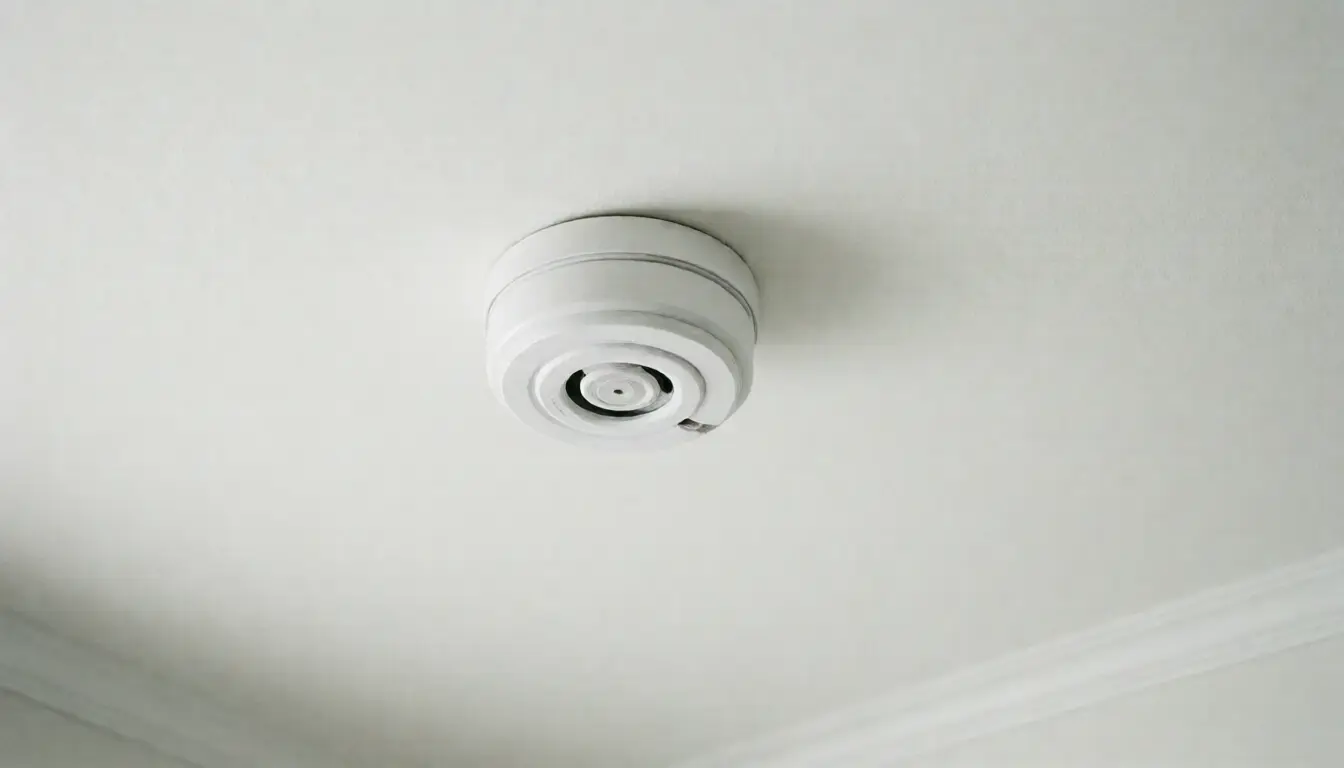
A smoke alarm senses smoke particles from a fire. It goes on the ceiling, because hot smoke rises.
An LPG detector senses cooking gas escaping from the cylinder or the hose before it is ignited. It goes low, near the floor, because LPG is heavier than air and sinks.
A carbon monoxide detector senses the gas produced by incomplete combustion, which has no colour and no smell and which people breathe without knowing. It goes at roughly breathing height.
The most common mistake is buying a gas detector and mounting it on the ceiling like a smoke alarm, which leaves it almost no chance of finding the gas at all.
Why so many people take the battery out
There are two reasons, and both are solved by choosing and placing them correctly in the first place.
The first is that it goes off while cooking. High-heat wok cooking produces enough smoke and oil vapour to set off an alarm mounted too close, every single day, and anyone woken by that every evening will remove it within a fortnight.
The answer is not to put a smoke alarm in the kitchen. Put it outside the kitchen at a distance, and put a heat alarm in the kitchen instead, which ignores smoke and reacts to an abnormal rise in temperature. This is what separates a house with a system that works from a house with a device hanging on the ceiling with no battery in it.
The second is the low-battery chirp, which almost always starts at three in the morning, because battery voltage falls as the temperature drops overnight. Someone woken at three takes the battery out and tells themselves they will buy one tomorrow, and tomorrow usually does not arrive.
The answer is a model with a sealed ten-year lithium battery, which is never changed at all, and when its life ends you replace the whole unit, which you should be doing anyway because the sensor itself degrades.
Where to put them, and how far from what
Position matters as much as having them, because a badly placed alarm is an alarm that reacts too late.
- In the middle of the ceiling, not in a corner, because the angle between ceiling and wall holds still air that smoke reaches slowly. Keep at least about thirty centimetres from any wall.
- One outside every sleeping area, because it has to be loud enough to wake someone deeply asleep behind a closed door.
- One inside the bedroom if you sleep with the door shut, because a closed door slows smoke considerably, which is good for escaping but means an alarm outside may sound too late for you.
- One per floor, particularly above the stairs, since the stairwell is the shaft smoke uses to travel upstairs.
- Not near an air conditioning outlet or a ceiling fan, because moving air carries smoke away from the sensor.
- Not in a bathroom, where shower steam causes false alarms.
The LPG detector goes below hob height and near the cylinder, because the places that leak most are the regulator and the flexible hose, not the burner.
The one people learn about too late: carbon monoxide
Everyone here knows about a gas leak, because cooking gas carries a strong odour added deliberately so it can be smelled. Carbon monoxide has no smell whatsoever, which is exactly what makes it far more dangerous.
It comes from incomplete combustion, meaning fuel burning without enough air. Three situations in Thai homes produce it.
A gas water heater in a poorly ventilated bathroom, which is how people lose consciousness in a bathroom with no warning of any kind beforehand.
A generator running inside the house, in a garage, or under the building, which happens often during floods and long outages, and is the most dangerous of the three.
Burning charcoal in an enclosed space, such as grilling in a room with the doors and windows shut for the air conditioning.
There is one rule to remember: never run a generator or burn any fuel in an enclosed space. Leaving one window open is not enough. A generator belongs outside the building and away from doors and windows.
The early symptoms of carbon monoxide are headache, nausea and unusual drowsiness, which people interpret as tiredness or a fever, so they go and lie down, which is the worst possible response. If several people in the house have the same symptoms at the same time and feel better outside, leave the house immediately and leave the doors and windows open.

Interlinking is the most valuable upgrade there is
If the house already has smoke alarms and you will add only one more thing, change them for a set that talks to each other.
The reason is a real situation. A fire starts in the downstairs kitchen at two in the morning. The kitchen alarm sounds loudly, and someone asleep upstairs behind two closed doors with the air conditioning running may hear nothing at all until the smoke reaches them.
An interlinked set solves this by having every unit sound when any one of them detects something, which means you hear the alarm from the unit in your own bedroom, from the second the kitchen unit finds smoke.
Wirelessly interlinked models install with no cabling. Pair them once and they are done, which makes them the right choice for a house that is already built.
If there is an older person in the house with poor hearing, choose a model with both a sound and a flashing light, and always put one in their room. Other equipment worth having in a house with an older person is in home technology for elderly parents.
What to do monthly and yearly
Every month, press the test button on every unit. Ten seconds each, and it is the only thing that confirms they still work. With an interlinked set, press one and walk round to hear whether the others sound too.
Every six months, vacuum around the air openings, because dust and cobwebs accumulating in the sensing chamber are a leading cause both of false alarms and of failing to alarm when it matters.
Every year, replace the flexible gas hose if you can see crazing in the rubber, and test for leaks by brushing soapy water onto the joints and watching for bubbles. Never test with a flame or a lighter.
Every ten years, replace the smoke alarm itself, because the sensor degrades with time even while the test button still makes it sound. The manufacture or expiry date is printed on the back. Turn it over on the day you install it and write the replacement year on it with a marker.
The fire extinguisher nobody ever looks at
Plenty of houses have an extinguisher standing in a corner for five years that nobody has touched, which amounts to not having one.
Three things need doing. First, check the needle on the gauge is still in the green. If it has dropped into the red, the pressure is gone and it will produce nothing at the moment you need it.
Second, turn a dry powder extinguisher upside down and shake it twice a year, because the powder inside compacts into a solid mass when it stands still for a long time.
Third, keep it near the way out rather than in the kitchen, because if the fire is in the kitchen you would have to walk towards it to reach the extinguisher. The right position is between the kitchen and the exit, so you can pick it up on the way out.
And everyone in the house should know where it is and how the pin comes out, because reading the label while something is burning is not something anyone manages.
Frequently asked questions
Can I put a smoke alarm in the kitchen?
You should not. High-heat cooking will set it off daily until you remove it yourself. Put it outside the kitchen and use a heat alarm inside the kitchen instead.
Does an LPG detector go high or low?
Low, near the floor, because LPG is heavier than air and sinks. Mount it near the cylinder and below hob height.
Why does it chirp at three in the morning with nothing happening?
That is the low-battery warning, which usually starts at night because battery voltage falls as the temperature drops. A sealed ten-year lithium model removes the problem.
How is carbon monoxide different from a gas leak?
Cooking gas has an odour added so you can smell it. Carbon monoxide has no colour and no smell at all, comes from incomplete combustion such as a generator running in an enclosed space, and needs a different detector.
Can I run a generator in the garage with the door open?
No. It must be outside the building and away from doors and windows. One open door or window is not enough to clear carbon monoxide.
When should a smoke alarm be replaced?
About ten years from manufacture, even if the test button still makes it sound, because the sensor degrades with time. The date is printed on the back. Write the replacement year on it when you install it.
In short
- Smoke, LPG and carbon monoxide are three dangers needing three devices at three different heights.
- An LPG detector must go low near the floor, because the gas is heavier than air.
- Never put a smoke alarm in the kitchen. Use a heat alarm there so nobody removes it.
- Choose sealed ten-year lithium units to end the three in the morning chirp for good.
- Interlinked alarms are the most valuable upgrade for a two-storey house.
- Never run a generator inside the house, in a garage or under the building, open windows or not.