
The belief that makes people switch to TOU and end up paying more is that night electricity is cheaper
That sentence is half true, and the missing half is the half that raises the bill.
A time of use tariff does not simply make night electricity cheaper. It also makes daytime electricity more expensive.
Because TOU divides the price into two rates by time of day. It is not a discount across the whole day.
The expensive band is On Peak, from nine in the morning to ten at night, Monday to Friday.
The cheap band is Off Peak, from ten at night to nine in the morning, and all day on holidays.
So the question is not whether TOU is cheaper. It is what percentage of your household's consumption falls in weekday daytime.
This article works that out from your own bill, before you spend anything on a meter.
How the tariff is structured
On Peak runs from 09.00 to 22.00, Monday to Friday.
Off Peak runs from 22.00 to 09.00, Monday to Friday, and all day on holidays.
What matters is that the On Peak band is thirteen hours long and covers almost the entire working day.
Plenty of people hear the word peak and picture a short evening window, which it is not.
The other thing to know is that using this tariff requires changing to a TOU meter, and the customer pays for that meter.
And having used the tariff for not less than twelve months, you may then apply to return to the previous one.
That matters a great deal, because it means a wrong decision is one you live with for at least a year.
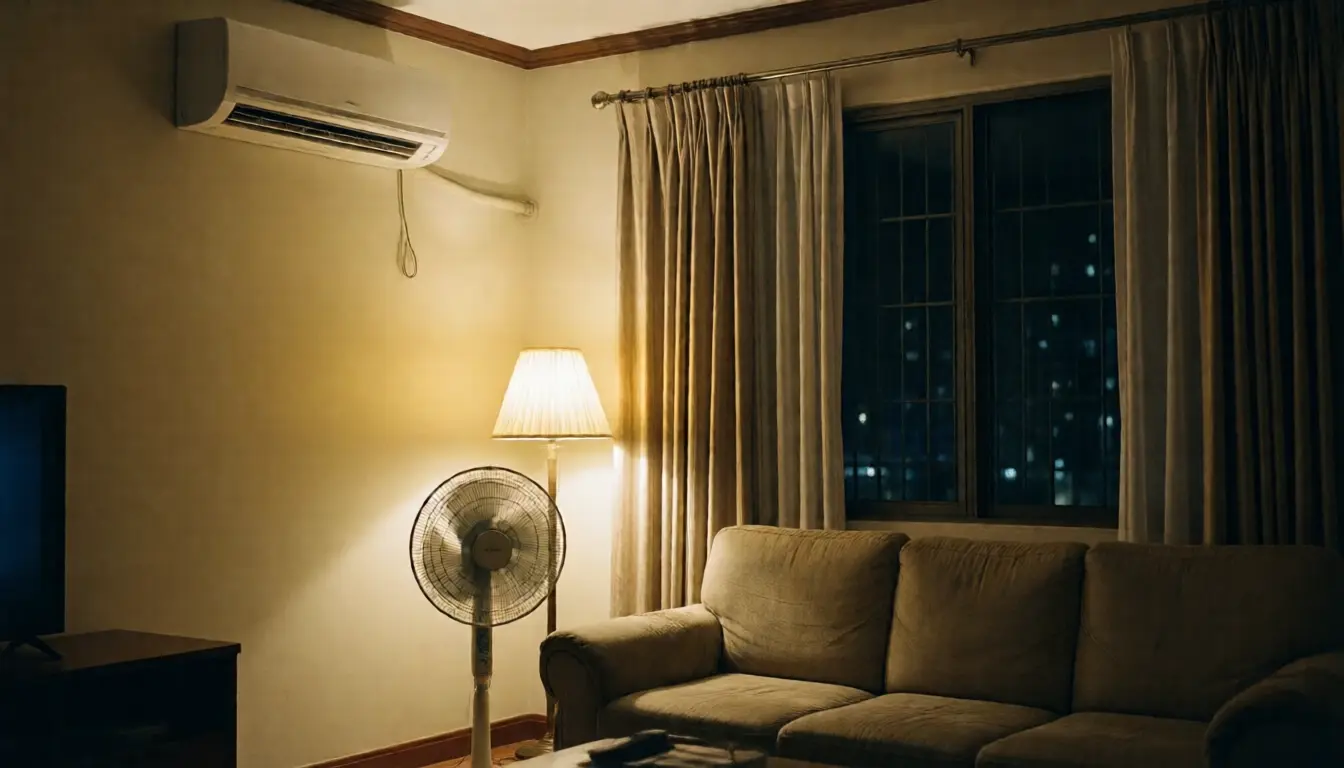
Working it out from your own bill
This is the part that decides everything, and it costs nothing.
Step one, write out when the house uses electricity.
Go through the heavy consumers one by one and note when each runs.
- Bedroom air conditioner: which hours?
- Living room air conditioner: when, and weekdays or weekends?
- Water heater: morning or evening?
- Washing machine and dryer: which day and what time?
- Rice cooker, microwave and kettle, which cluster around morning and evening.
- Refrigerator and water pump, which run around the clock.
Step two, estimate the proportion.
Judge roughly what percentage of consumption falls inside the On Peak band.
This does not need decimal accuracy. Knowing whether it is about half, well over half, or well under half is enough to decide.
Step three, apply that proportion to both rates.
Take the month's units from your bill, split them by the proportion you estimated, multiply by the current On Peak and Off Peak rates, and add them.
Compare that with what you pay on the ordinary tariff.
Current rates for both are on your local electricity authority's website, and should always be taken fresh, because rates change by period.
Step four, do not forget the fixed costs.
Both the TOU meter charge at the time of the change and the monthly service charge.
If the monthly saving is smaller than those costs averaged out, the switch does not pay.
Which households benefit
Houses empty during weekday daytime benefit most clearly, with everybody at work or school and heavy use resuming after ten at night.
Houses charging an electric vehicle overnight, which is a large block of load that can move entirely into Off Peak.
Houses that can run washing and drying late at night or at weekends.
Houses with rooftop solar already installed, because the panels generate during the day, which is exactly the expensive band, so the share bought at On Peak rates falls sharply.
That last pairing is the neatest fit, and it is why so many solar households choose TOU.
Which households it hurts
Houses occupied all day: people working from home, older residents, small children, and anybody keeping the house. The air conditioning runs precisely in the expensive band.
Houses running a business at home: shops, salons, anything using powered equipment during business hours.
Houses where somebody works nights and sleeps by day, which sounds advantageous but means the air conditioner runs through On Peak.
Houses that already use little electricity, because the saving amounts to a few baht while the meter and service charges are fixed.
That last one is the trap people fall into most, because it looks good as a percentage and does not add up in baht.
The behaviour changes TOU actually requires
People who switch and genuinely save are the ones who changed their behaviour, not merely their tariff.
- Set the washing machine to run after ten at night, which most machines can already do.
- Move heavy tasks to weekends: large washes, drying, and oven cooking.
- Charge the car and every device overnight.
- Set the air conditioner slightly warmer during weekday daytime and use fans to help.
- Reconsider when the water heater runs, because a morning shower falls squarely in On Peak.
If reading that list makes it clear none of it is possible in your house, that is your answer about TOU.
Three things to do before deciding
One, measure where the units go, because estimating the On Peak proportion is only accurate once you know which appliances actually consume, which is measured as in which appliance uses the most electricity.
Two, trial the behaviour change before changing tariff. Move washing and charging to after ten at night for a month and see whether it is genuinely workable. It costs nothing.
Three, ask the authority three things: what the TOU meter costs, what the monthly service charge is, and what the conditions are for switching back.
The third matters because switching back requires not less than twelve months, which is a commitment to understand beforehand rather than afterwards.
Frequently asked questions
What is TOU?
A time of use tariff dividing the price into two bands, a more expensive On Peak and a cheaper Off Peak. It is not a discount across the whole day.
When are the bands?
On Peak is 09.00 to 22.00 Monday to Friday. Off Peak is 22.00 to 09.00 Monday to Friday, and all day on holidays.
Which households benefit?
Houses empty during weekday daytime, houses charging an electric vehicle overnight, houses that can move heavy tasks to weekends, and houses with rooftop solar.
Which should not switch?
Houses occupied all day, houses running a business at home, houses where somebody sleeps by day, and houses already using little electricity, where the saving is smaller than the fixed costs.
Can I switch back?
Yes, but only after using the tariff for not less than twelve months.
What does switching cost?
A TOU meter charge plus a monthly service charge, and you should get both figures from your local authority before deciding.
Should a solar house use TOU?
Usually it pays, because the panels generate during the day, which is the expensive band, so the share bought at On Peak rates falls sharply.
How do I know it pays before switching?
Write out when the house uses electricity, estimate the On Peak proportion, split the month's units by that proportion against each rate, compare with what you pay now, and add the fixed costs.
In short
- TOU does not make electricity cheaper all day. It makes weekday daytime dearer too.
- The On Peak band is thirteen hours, nine in the morning to ten at night on weekdays.
- The question is what percentage of your consumption falls in On Peak.
- Work it from a real bill, and include the meter and service charges.
- It pays best for empty daytime houses, EV charging, and rooftop solar.
- It hurts households occupied all day, home businesses, and light users.
- People who save are those who changed behaviour, not only the tariff.
- Switching back is possible, but only after twelve months.