
A hot house starts at the roof, not the windows
Most people start with the windows, because that is where you can see the sun coming in. But in a Thai single storey house, or the top floor of a two storey one, the largest share of heat arrives downwards from the roof.
The reason is area and angle. The roof takes full sun across its whole surface all day with almost nothing shading it, and the space beneath it accumulates heat until it is far hotter than the air outside. The ceiling below that space becomes a radiant panel the size of the room, sending heat down at you all day and on into the night.
That is why so many houses are still hot at nine in the evening, three hours after the sun has gone. That heat is not coming from the sun at that moment. It is coming from things releasing what they absorbed during the day.

Find out why your room is hot before spending anything
Spend two days on this before paying for anything, and you will know where the money belongs. Use the palm of your hand on surfaces, and compare two moments in the day.
At three in the afternoon, touch the ceiling, the west wall, the north wall and the window glass. Note which is hottest. Then at nine in the evening, touch all the same places again.
If the ceiling is hot both times, the problem is the roof and the space under it, which is the commonest case by far. If the west wall is hot in the afternoon and still warm at nine, the walls are storing heat. If only the glass is hot while the walls and ceiling are not, the windows genuinely are the problem, which is the least common case in a Thai house.
The test sounds too simple, and it is the difference between filming every window in the house and still being hot, and knowing where that same money should have gone.
What pays, in order
The first four deal with the roof and with shading outside, which is where the heat actually arrives. The rest manage what gets through.
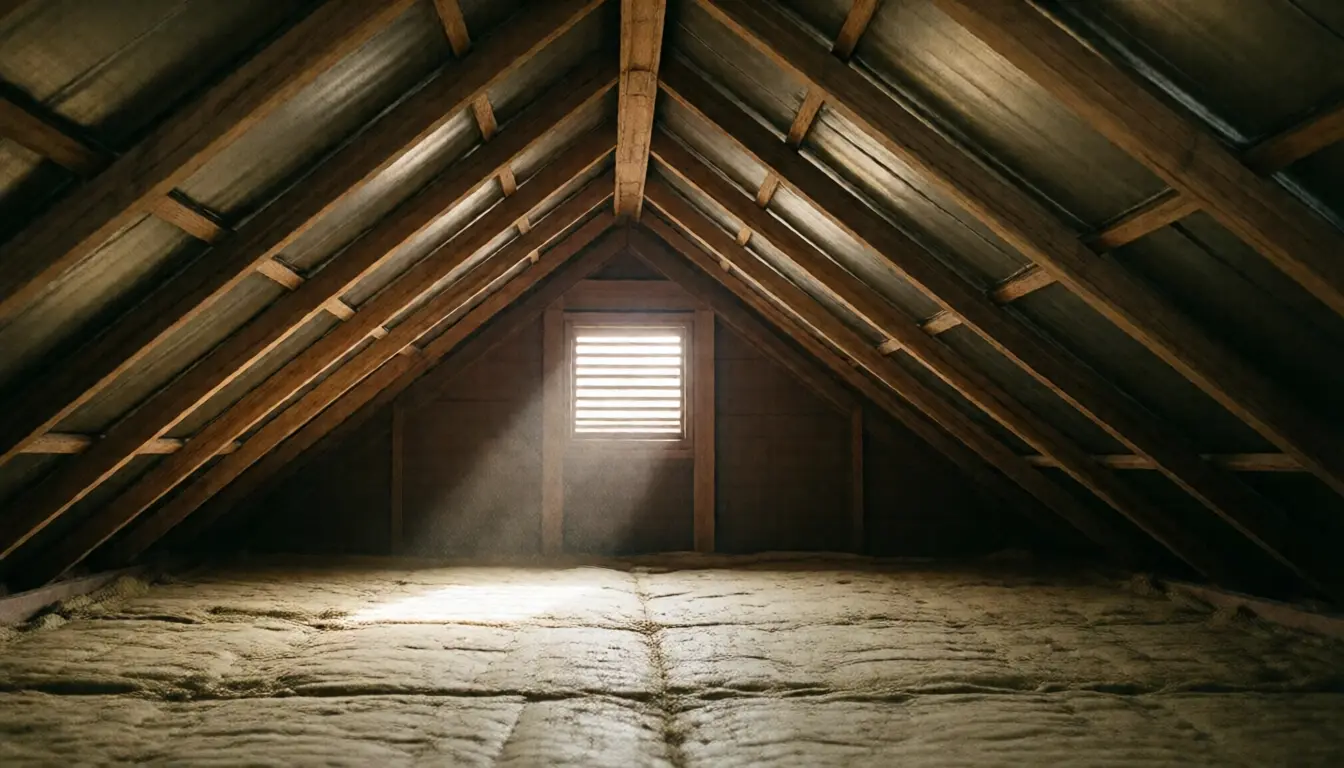
One, ventilate the roof space. The cheapest and the most overlooked. Hot air under a roof needs a way out. Without one it builds until the space is tens of degrees above outside. Vents at both gable ends, or a turbine vent on the roof, let it escape. The cost runs from a few thousand to the low tens of thousands of baht, and it acts fastest of anything on this list.
Two, insulation above the ceiling. The barrier between that roof space and your room, laid over the ceiling framing or fixed under the roof sheets. The essential point is that insulation and ventilation go together; they are not alternatives.
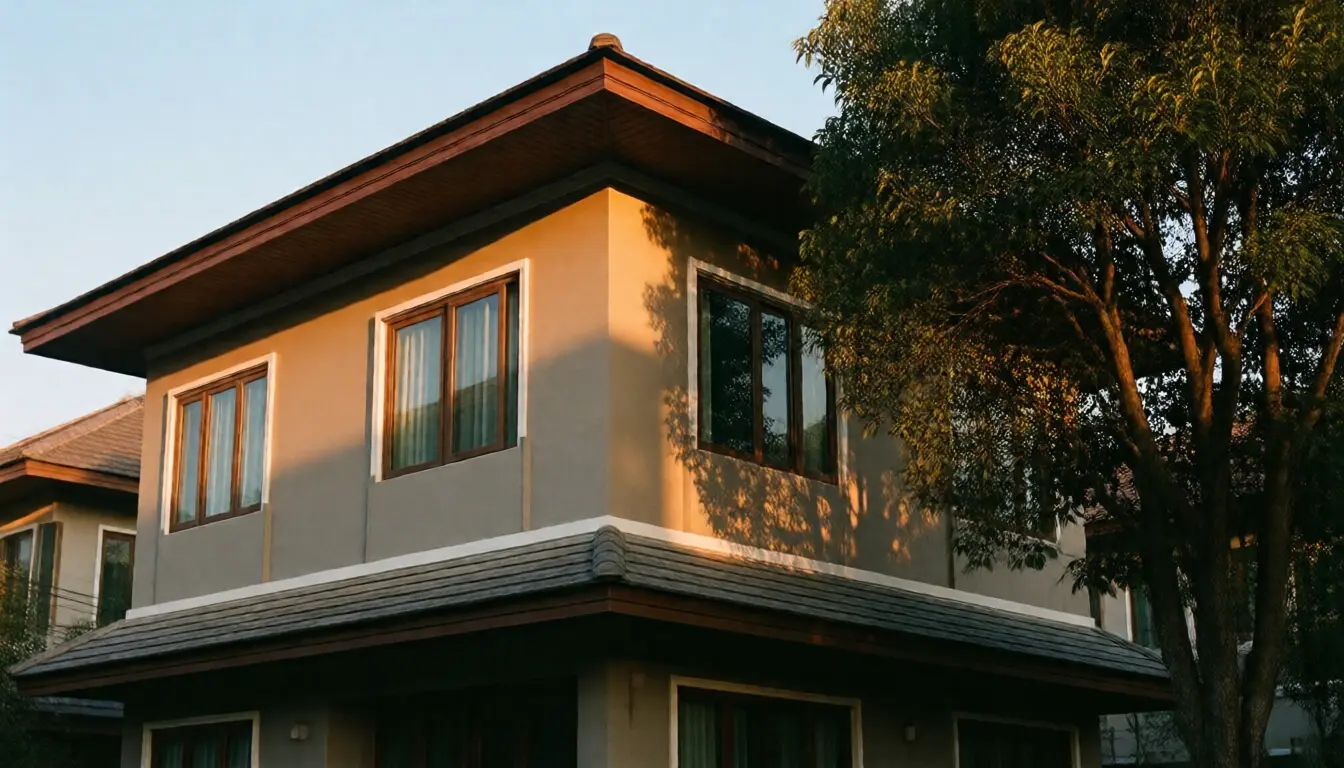
Three, external shading on the west. An eave with real projection, vertical external louvres, or a tree. Anything that stops the sun before it reaches the wall and the glass outperforms anything working behind the glass.
Four, curtains that actually seal. Hung close to the glass and covering beyond the reveal, they create a still air layer that genuinely insulates, unlike a curtain hung away and stopping short, which lets hot air circulate round the edges into the room.
Five, window film. It helps, but it works at the inner face of the glass, so it is the last line. What values to look for is in window film versus Low-E glass.
The mistakes that make the money useless
The most frequent is fitting insulation and closing the ventilation openings at the same time, on the reasoning that sealing everything keeps heat out. What you get is a roof space that has become an oven with no way out, with moisture accumulating too, and a ceiling that runs hotter than before over time.
The second is insulating incompletely, leaving gaps at the edges or around pipes. Heat pours down through those gaps and cuts the overall result by more than the missing area suggests. Continuous coverage matters more than choosing something thicker.
The third is painting the exterior a dark colour and expecting insulation to cope. Dark walls absorb appreciably more than pale ones, and in an uninsulated wall that difference travels straight into the room. If you are repainting anyway, choosing a pale colour for the afternoon-sun side is an improvement with essentially no extra cost.
The air conditioner working hard because the ceiling is hot
This answers the question people ask most: why does a brand new unit still not make the room cool enough? The answer usually is not the unit.
An air conditioner removes heat from a room. If the ceiling is radiating heat down continuously, it has to keep removing heat that arrives fresh every second, which means the compressor barely rests and the bill stays high.
Deal with the roof properly and the same unit cools faster and cycles off, which shows up in the electricity bill rather than only in how the room feels. Sizing a unit correctly is in air conditioner sizing and the bill.
What you can do in one weekend without a contractor
- Clear the vents you already have. Many houses have gable vents that are blocked by stored items or were sealed during earlier repairs. Walk round and open them.
- Take everything out of the roof space. Boxes and old belongings stacked on the ceiling block airflow and add mass that stores heat.
- Make the curtains seal. Move the track close to the glass and use fabric that extends beyond the reveal. A few hundred baht, effective immediately.
- Close the door of the hottest room during the day so that hot air does not spread through the house, then open up in the evening once outside is cooler than in.
- Run the bathroom and kitchen extractors after use, because humidity makes it feel hotter than the temperature says, and that is fixable without lowering the temperature at all.
Ventilation and air movement in a Thai house generally is in light and ventilation in a Thai house, and if the problem comes with standing humidity, read it with ventilation systems for a humid climate.
If you are buying, view at three in the afternoon
Agents and developers tend to arrange viewings mid-morning or early evening, when every house looks good. If you want to know how hot a house gets, ask to view between two and four on a sunny day, and stand in the top floor room for five minutes.
In a resale house, touch the ceiling and ask whether there is insulation and whether the roof space is ventilated. An owner who has lived there will answer both immediately, and "I don't know" is an answer too.
For a house being built, raise it with the contractor at the design stage, because laying insulation and forming vents while the roof is going on costs a fraction of correcting it later. And giving the west side an eave with enough projection is a decision with no ongoing cost at all for the life of the house.
Frequently asked questions
Where should I start?
With roof space ventilation, which is cheapest and acts fastest, then insulation above the ceiling. The two go together rather than being alternatives.
Can I insulate and seal the vents?
No. That turns the roof space into an oven with no outlet and traps moisture as well. Insulation and ventilation always work as a pair.
Why is the house hot at night when the sun has gone?
Because the ceiling and walls are releasing heat stored during the day. It is a question of insulation and wall mass, not of sun at that moment.
Why does a new air conditioner still not cool enough?
If the ceiling keeps radiating heat, the unit has to remove heat arriving fresh every second, so the compressor barely rests. Fixing the roof lets the same unit cycle and lowers the bill.
Does a pale exterior colour really help?
Yes. Dark walls absorb appreciably more, and in an uninsulated wall that goes straight into the room. If you are repainting anyway, a pale colour on the west side costs nothing extra.
How do I tell whether a house I might buy runs hot?
Ask to view between two and four on a sunny day, stand in the top floor room for five minutes, touch the ceiling, and ask whether there is insulation and roof ventilation.
Key takeaways
- In a Thai house the largest share of heat arrives through the roof, not the windows.
- Touch the ceiling, walls and glass at three in the afternoon and at nine at night to find out where the money belongs.
- Roof space ventilation is the cheapest and fastest fix, and always pairs with insulation.
- Never seal the vents when insulating, or the space becomes an oven that also traps damp.
- External shading always beats film, particularly on the west.
- A house hot at night is a house whose ceiling and walls are releasing stored heat.