
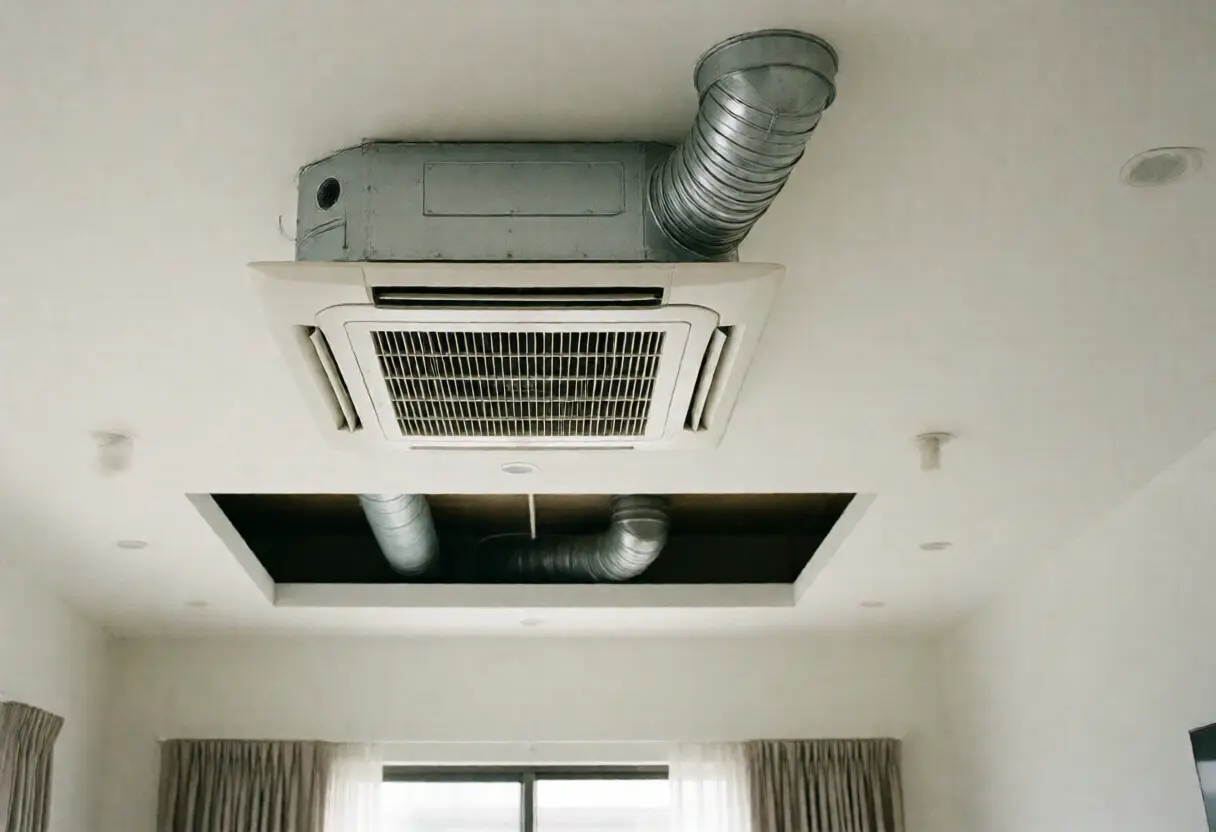
HRV or ERV, and which one a house in Thailand should have
The difference is humidity. An HRV exchanges heat only. An ERV exchanges both heat and moisture between the air coming in and the air going out. In a hot humid climate the hard part of an air conditioner's job is not lowering the temperature, it is removing the water, which makes the ERV the one that fits Thailand.
Before choosing between them there is a prior question: is your house sealed enough to get any benefit from either?
What these two machines actually do
Both are ventilation units that work in two directions at once, extracting stale indoor air and drawing outdoor air in to replace it, with the two streams passing through an exchange core without mixing.
| HRV | ERV | |
|---|---|---|
| What it exchanges | Heat only | Heat and moisture |
| The incoming air | Somewhat cooler, but as humid as the outdoor air | Cooler and less humid than the outdoor air |
| Suited to | Cold dry climates, where keeping moisture indoors is desirable | Hot humid climates, where outdoor moisture is a burden |
| Effect on the air conditioning load | Reduces the sensible load only | Reduces both the sensible load and the dehumidification load |
The reason this distinction matters so much here is that the moisture arriving with outdoor air does not disappear on its own. It turns up at the cooling coil, which has to condense it out before the room feels comfortable. Drawing humid air straight in simply moves the work over to the air conditioner.
Conversely, an ERV does not dry the air. It only makes the incoming air less humid than the air outside, by transferring some of that moisture back into the exhaust stream. Anyone expecting a house as dry as one running a dehumidifier will be disappointed.
The question to answer first: how sealed is the house?
These units are designed for buildings where the way air enters and leaves is controlled. If the house leaks on every side, air will keep going in and out through those gaps anyway, and the machine you paid for becomes an expensive fan running in parallel with the leaks.
- An older house with roof vents, louvred windows and unsealed pipe penetrations should have the leaks dealt with first, and the machine considered afterwards.
- A condominium with fixed glazing and a single door is where the benefit is clearest, because once it is shut the air genuinely does not circulate.
- A house still under construction with the walls open is the cheapest moment to run the ducting, because retrofitting ducts into a finished house can cost more than the unit.
The problem that sends people looking at these units is usually the same one: sealing the room against dust and then finding the air inside goes stale. That is covered in indoor air and PM2.5.
A ventilation unit is not an air purifier
This is the most expensive misunderstanding in the category. An ERV takes stale air out and brings fresh air in. Filtering dust is a separate specification.
- The filter supplied as standard is usually a coarse one, there to protect the exchange core rather than to deal with PM2.5.
- To filter fine particulate you have to choose a unit rated for that filter class from the start, because a finer filter means higher resistance and the fan has to be able to push through it.
- Forcing a fine filter into a unit not designed for one reduces the airflow until the ventilation is inadequate, which solves one problem by creating another.
- A room air purifier still has a place, because it recirculates the air already inside while the ERV supplies new air. They do different jobs.
Where the intake and exhaust go decides whether any of it works
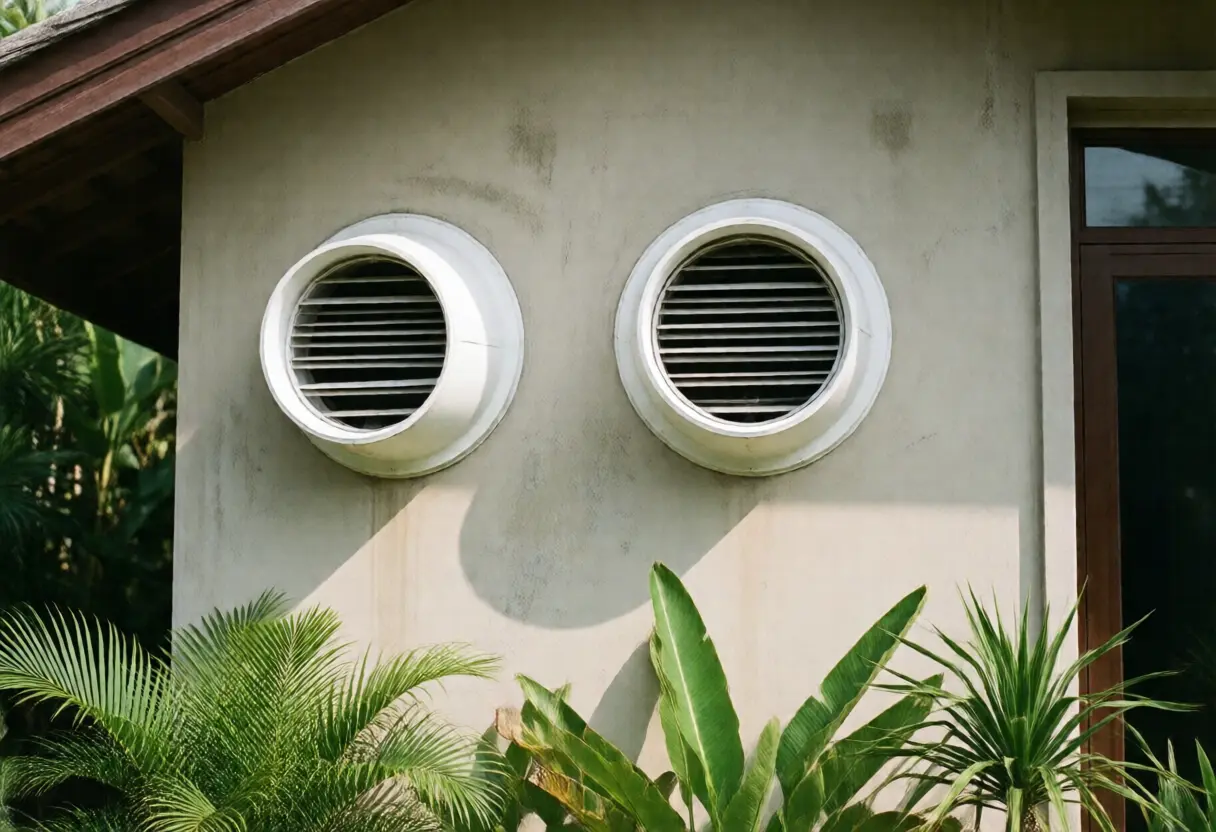
- Keep the intake well away from the exhaust, or the unit draws back the air it just expelled, which makes the numbers on the specification sheet meaningless.
- Do not put the intake near an air conditioning condenser, which pulls hot discharge air straight into the house.
- Keep it away from the road and the parking area, low level especially, because that is where exhaust fumes sit.
- Keep it away from septic vents and the kitchen extract, for reasons that need no explanation.
- Think about noise at the design stage. A duct with many bends plus a unit sited over a bedroom is the combination that ends with the machine switched off permanently.

Cheaper approaches that genuinely work in some houses
| Approach | Suits | Limitation |
|---|---|---|
| Opening windows when the air outside is good | Outside the dust season, at quiet traffic hours | Useless on high particulate days |
| A filtered fresh air fan | Wanting fresh air and positive pressure to keep dust out of the gaps | No heat or moisture exchange, so the load falls on the air conditioning |
| ERV | A house or condominium that genuinely seals, with air conditioning in regular use | High unit and ducting cost, and continuous maintenance |
| HRV | Cold dry climates | Does not address the humidity in Thai air |
The blunt conclusion is that if the house does not seal and the air conditioning is not in regular use, the same money spent on sealing gaps, replacing door seals and insect screens, and an air purifier in the bedroom produces a result you feel sooner.
The maintenance to know about before deciding
- Filters need replacing on a schedule, and in a dusty city that schedule is shorter than the manual says.
- The exchange core has to come out for cleaning. Check when choosing the model whether that means lifting a hatch or opening up the ceiling.
- There must be a condensate drain, particularly on units working hard through the wet season.
- Ducts need insulating wherever they cross hot spaces such as a roof void, or you get warm air back indoors and condensation on the duct surface.
- The unit has to be genuinely reachable. An access hatch that is too small means nobody will ever clean it again.
If you are building or house hunting, running the ducts in advance always costs less than retrofitting them. See the listings for sale.
Frequently asked questions
What is the difference between HRV and ERV?
An HRV exchanges heat only between the incoming and outgoing air. An ERV exchanges heat and moisture, so it also reduces the dehumidification load on the air conditioning.
Which suits a house in Thailand?
An ERV, because the climate is hot and humid and the moisture arriving with outdoor air is the main burden on the air conditioning, not just the temperature.
Will an ERV dry the house like a dehumidifier?
No. It only makes the incoming air less humid than the outdoor air by transferring some moisture into the exhaust stream. It does not dry the indoor air.
Does an ERV filter PM2.5?
Not automatically. The standard filter is usually a coarse one protecting the exchange core. Fine particulate filtration requires a unit rated for that filter class from the outset.
Is it worth it in a leaky house?
No. Air will continue moving through the gaps regardless. Seal the leaks and improve the door and window seals first, then consider the unit.
Where should the intake go?
Away from its own exhaust, away from any air conditioning condenser, away from the road and parking, and away from septic vents and the kitchen extract.
What maintenance does it need?
Filter replacement on a schedule, removing and cleaning the exchange core, keeping the condensate drain clear, and checking duct insulation wherever ducts cross hot spaces.
Is there a cheaper option?
Yes. A filtered fresh air fan supplies new air and positive pressure for less, but with no heat or moisture exchange, so the load transfers to the air conditioning.
Key takeaways
- An HRV exchanges heat only, while an ERV exchanges heat and moisture.
- Thai air is hot and humid and the main air conditioning load is removing moisture, which is what makes the ERV the fit.
- An ERV does not dry the house. It makes the incoming air less humid than the air outside.
- A ventilation unit is not an air purifier, and PM2.5 filtration has to be specified when choosing the model.
- A house that still leaks on every side should be sealed first, or the unit runs in parallel with the leaks.
- Intake and exhaust in the wrong places make the specification sheet meaningless.
- When building, run the ducts before the walls close, because retrofitting can cost more than the unit.