
A breaker trips for exactly three reasons, and knowing which one solves half the problem
One, overload. More is being drawn on that circuit than it is rated for.
Two, a short circuit. Conductors that should never touch are touching.
Three, earth leakage, which an ordinary breaker does not catch but a residual current device does.
These three behave quite differently, and you can tell them apart yourself in half an hour with nothing but paper and a pen.
The one thing never to do is fit a larger breaker because it keeps tripping, because that is not a fix. It is silencing the warning.
Telling the three apart by behaviour
Overload usually trips after a while rather than instantly, and usually when several heavy appliances run together.
Notice that it has a pattern: it trips when the air conditioner is on and the kettle goes on, or when the washing machine reaches its heating cycle.
A short circuit trips instantly and hard, usually the moment something is plugged in or a switch is thrown, sometimes with a noise or a flash.
If the breaker drops the instant you push it up, with nothing switched on, that is nearly certainly a short.
Earth leakage usually involves water or damp: water heaters, washing machines, pumps, outdoor lighting.
The tell is that it trips after rain, or only when one particular appliance is running, and the device that trips is the residual current device rather than an ordinary breaker.
If one device in your board has a TEST button, that is the residual current device, and it trips for a different reason than everything else.
Working through it, all of which you can do yourself
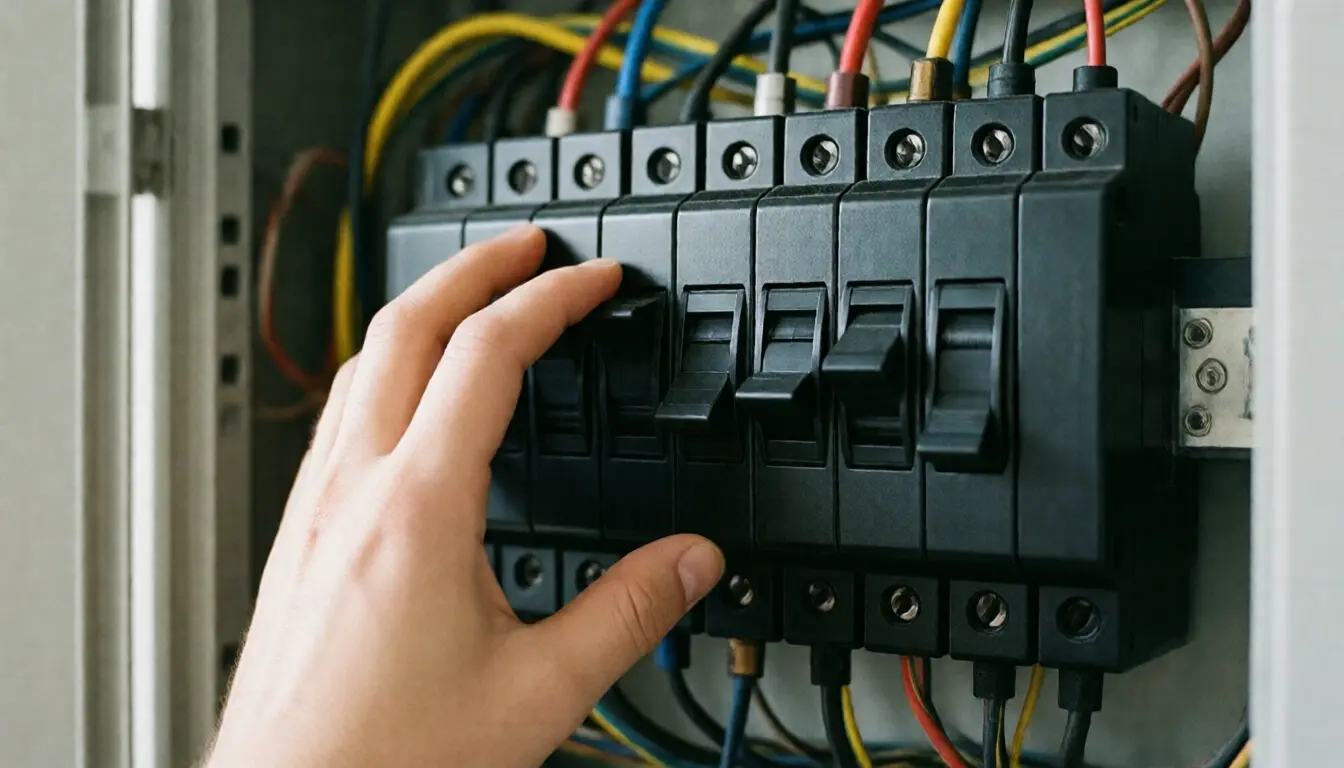
Step one, note which one tripped.
Open the board and see which breaker is in the tripped position. On some, that is midway rather than fully down.
The main tripping for the whole house and one circuit tripping are entirely different situations.
Step two, note when it trips.
Write it down every time: date, time, what was running, and whether it was raining.
Three occurrences usually reveal a pattern, and that pattern is exactly what an electrician most wants if you end up calling one.
Step three, remove variables one at a time.
- Unplug everything on that circuit, then reset the breaker.
- If it holds, the problem is one of the appliances, not the wiring in the wall.
- Plug things back one at a time, waiting a while with each, and see which one causes the trip.
- If it trips immediately with everything unplugged, the problem is in the wiring or in something fixed, such as a socket or a light fitting.
This step draws the clearest line there is between something you plugged in and something inside the wall, which is also the line between what you can handle and what needs an electrician.
Step four, if it is an appliance, test it on another circuit.
Plug the suspect appliance into a socket on a different circuit. If that circuit trips too, the appliance is confirmed.
If it behaves perfectly elsewhere, something is wrong with the original circuit, possibly simply too much total load.
Real causes, in order of frequency
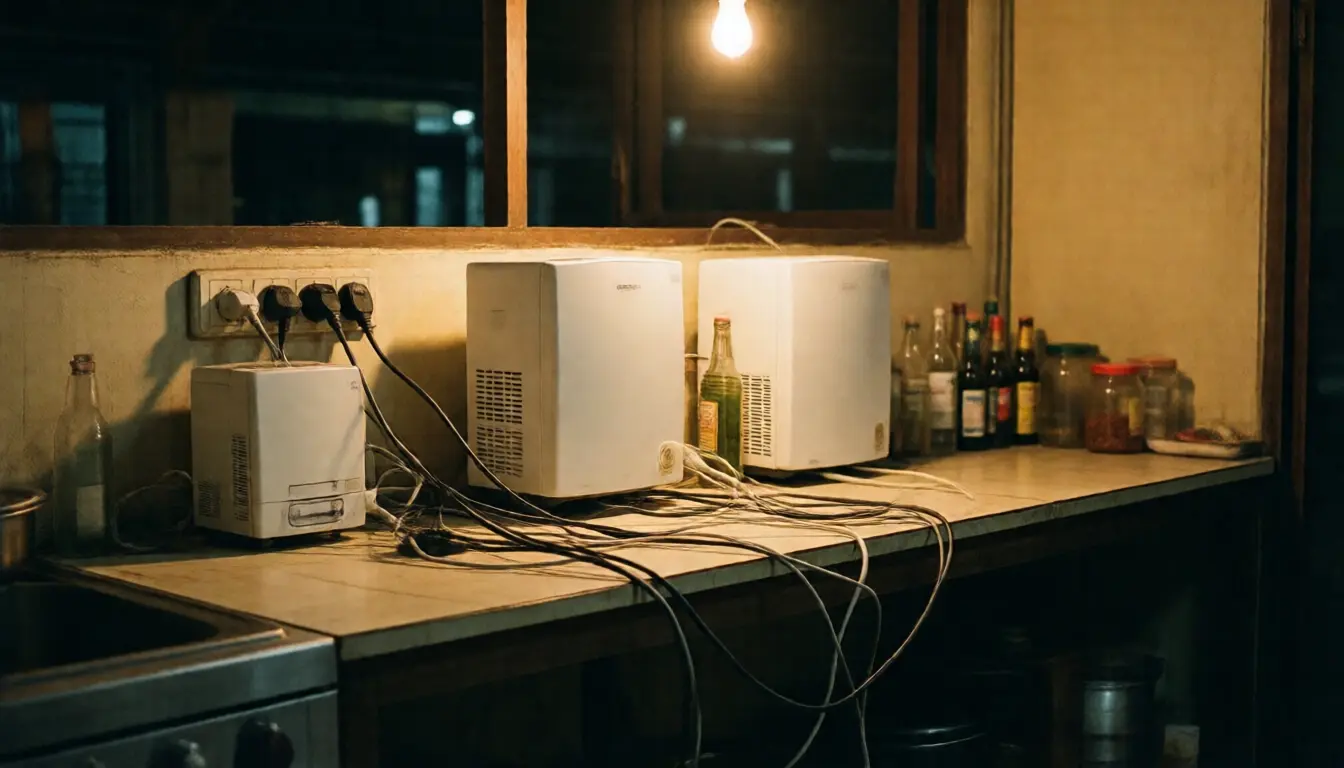
One, too much on one circuit, especially a kitchen with a rice cooker, a microwave, a kettle and an air fryer all on the same wall.
Everything that heats draws heavily, and several at once on one circuit is a reliable recipe for tripping.
Two, an appliance on its way out, particularly anything with a motor or a heating element, where degrading insulation produces leakage.
Three, moisture in the circuit: outdoor sockets with covers left open, junction boxes taking water, outdoor light fittings whose seals have gone. The symptom is tripping after rain and behaving again once dry.
Four, extension leads plugged into extension leads, which add load and connections at the same time.
Five, damaged cable inside a wall, from a nail, from rodents, or from drilling years ago. The rarest cause, and always one for an electrician.
Six, the breaker itself worn out. Breakers age, and one that has tripped for years starts tripping more easily. An electrician can check this, but never conclude it first, because blaming the breaker is the shortcut to fitting a bigger one.
Why you must not fit a bigger breaker
Because the breaker was not chosen for your convenience. It was chosen to match the cable in the wall.
A given cable carries a certain current, and the breaker's job is to trip before that cable gets too hot.
Fit one larger than the cable can take, and the cable simply heats up with nothing to stop it, until the insulation fails and a fire starts inside the wall.
And that kind of fire starts where you cannot see it.
If a circuit really is overloaded, the correct fix is moving load to another circuit or adding a new one with appropriate cable, not enlarging the breaker.
The relationship between cable and breaker is in house wiring and what goes wrong when the cable size is wrong.
Symptoms that mean stop and call somebody now
- The breaker drops instantly on reset with everything unplugged, meaning there is a short in the system.
- A burning smell from the board or the wall.
- The breaker or the board warm to the touch.
- A tingle from an appliance or a tap, which is on a different level from a tripping breaker.
- A residual current device that will not reset at all.
- Sparks or noises from a socket.
None of these are things to keep experimenting with. Switch the main off if you are unsure.
What to have ready for the electrician
If it does come to calling somebody, information makes the visit faster and cheaper.
- Which breaker tripped, main or circuit, and what that circuit serves.
- When it tripped, with a note of what was running.
- Whether it was after rain.
- The result of unplugging everything and resetting.
- Whether the suspect appliance was tested on another circuit, and what happened.
- When the house was last extended or rewired.
An electrician handed that list skips the entire guessing stage.
And if they propose a bigger breaker as the first remedy without looking at the cable, that is a signal to find somebody else.
Frequently asked questions
Why do breakers trip?
Three reasons: overload, short circuit, and earth leakage. Leakage is caught by a residual current device rather than an ordinary breaker.
How do I tell which one it is?
By behaviour. Overload trips after a while and follows a pattern, a short trips instantly and hard, and leakage usually involves water and often follows rain.
Can I fit a bigger breaker if it keeps tripping?
No, because the breaker is matched to the cable in the wall. One that is too large lets the cable heat with nothing to stop it, and the fire starts where you cannot see it.
It still trips with everything unplugged. What now?
The problem is in the wiring or in something fixed such as a socket or light fitting, which is work for an electrician.
It only trips after rain. Why?
Usually moisture in the circuit: an outdoor socket left uncovered, a junction box taking water, or an outdoor fitting whose seal has failed.
What should I prepare before calling an electrician?
Which breaker, when it tripped, what was running, whether it rained, the result of unplugging everything, and the result of testing the suspect appliance on another circuit.
In short
- Breakers trip for three reasons: overload, short circuit, earth leakage.
- The way it trips tells you almost everything about which one it is.
- Write down every trip. Three occurrences usually show a pattern.
- Unplug everything and reset, to separate appliances from wiring.
- Test a suspect appliance on another circuit to confirm it.
- Never fit a larger breaker, because it is matched to the cable size.
- A genuinely overloaded circuit needs load moved or a new circuit added.
- Burning smells, a warm board, or a tingle mean stop and call somebody.