
A melted socket behind the fridge, and a breaker that never once tripped
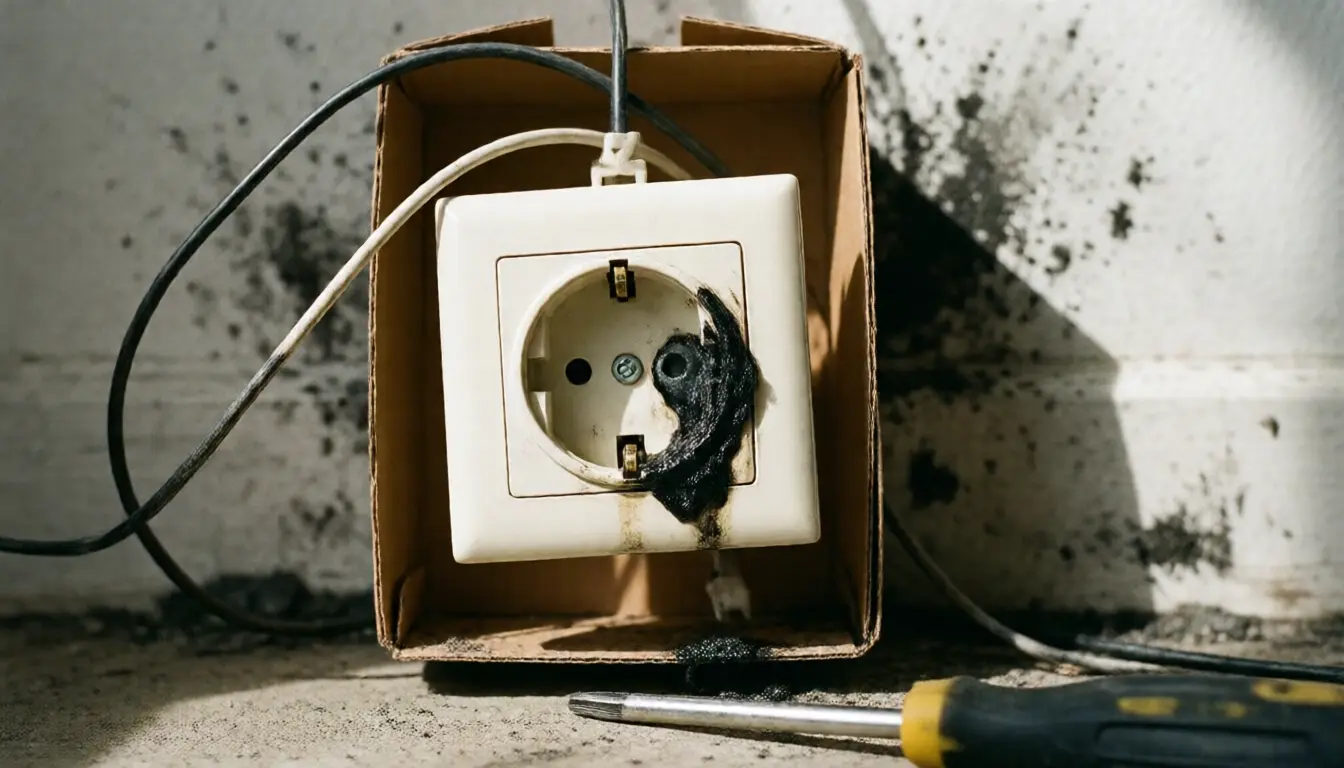
An owner pulled the fridge out to clean behind it and found black marks on the wall and a socket whose plastic had melted out of shape on one side.
What surprised them was not the scorching. It was that the breaker had not tripped once in three years.
If it got hot enough to melt plastic, why did the breaker do nothing?
The answer is one sentence worth remembering for life.
A breaker does not protect your appliances, and it does not protect you. It protects the cable.
If the cable is too small for the breaker fitted above it, the cable will cook itself long before the breaker notices anything is wrong.
This article covers what determines cable size, why one table cannot serve every house, and what an owner can check without being an electrician.
How a breaker works, and why it did not help here
A breaker opens the circuit when current exceeds its rating, but not the instant it exceeds it.
It has two behaviours layered together.
Magnetic, which acts very fast on very high current, as in a short circuit.
Thermal, which acts more slowly the smaller the overload. A modest excess can take minutes or longer.
Now picture a loose connection.
A loose connection has higher resistance, so it gets very hot at that one point, while the current in the circuit may never exceed the breaker's rating at all.
So the breaker has no reason to trip while the plastic at the joint is melting.
This is why so many electrical fires happen in houses where the breaker never tripped.
What determines cable size
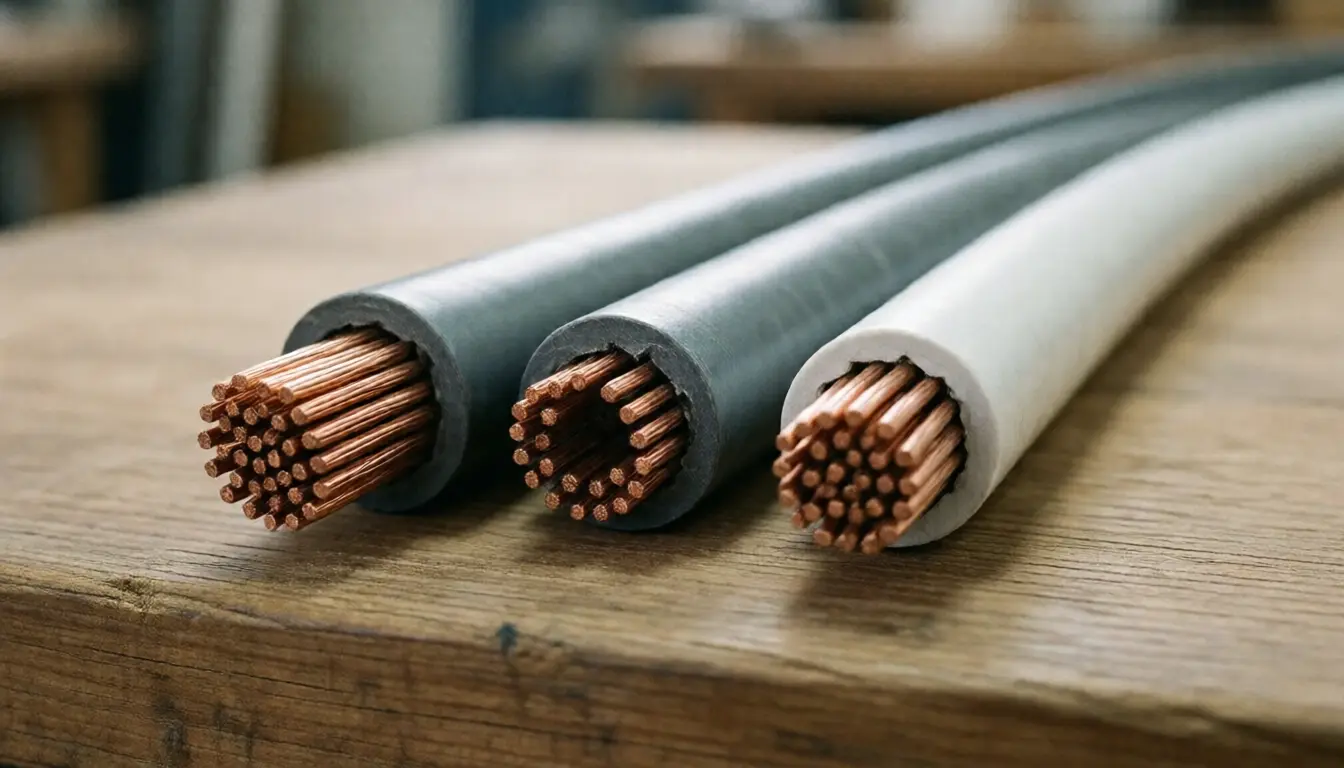
Most people believe there is a single table saying this size carries this many amps.
In reality that figure moves with several conditions, which is why the tables shared online are more dangerous than they look.
One, the installation method. The same cable carries different current clipped in free air, drawn through conduit, or buried, because it sheds heat differently.
Two, how many cables share the space. Several cables in one conduit warm each other, so their ratings must be derated.
Three, ambient temperature. A cable run through a roof space that bakes all afternoon is not the same as one in an air-conditioned room.
Four, distance. The longer the run, the greater the voltage drop, which sometimes forces a larger cable than the current alone would require.
Five, insulation type and temperature rating, which sets how much heat the cable itself can tolerate.
So the answer to what size your house needs has to come from the electrical installation standard used in Thailand and from an electrician calculating for the actual conditions.
I am deliberately not giving figures here, because a number that is correct in one house can be dangerous in another.
What an owner can check
You do not have to calculate anything, but you can and should check these.
Which breaker controls what. If nobody in the house can say, that is the first problem to fix. Switch them off one at a time and write down what goes dark. Half an hour, useful forever.
Whether high-load appliances have their own circuits. Air conditioners, water heaters, electric hobs and washing machines that heat their own water should each have a dedicated circuit rather than sharing general sockets.
Whether anybody has fitted a larger breaker because it kept tripping. This is the most dangerous item in this article, because a breaker larger than the cable removes the protection entirely.
A breaker that trips repeatedly is telling you something. Making it bigger does not fix it. It silences the warning.
Sockets or plugs that run unusually warm. Touch the socket serving a heavy appliance after it has been running. Slightly warm or cool is fine. Too hot to hold is urgent.
Yellowing, blackening or a smell of hot plastic at sockets, switches or in the board. All of these mean calling an electrician this week, not next month.
Connections are what fail, every time
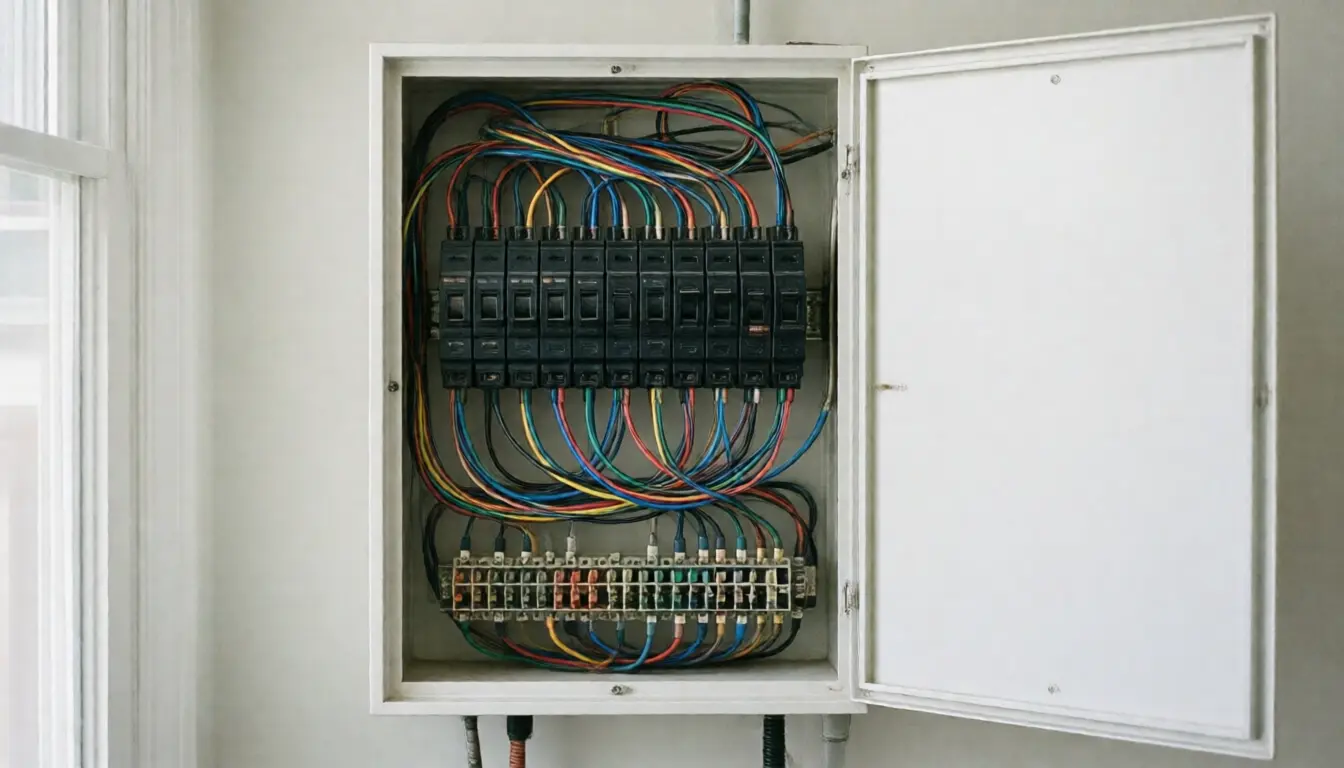
If you remember one place where the danger lives, remember connections.
Continuous runs of cable almost never cause trouble. What fails is wherever the cable meets something else.
- Screws not tightened properly in a socket or switch, which loosen further as heat expands and contracts them.
- Joints made with insulating tape inside a wall, with no junction box and no proper connector.
- Copper joined directly to aluminium, which expand differently and cause trouble at the joint.
- Extension leads plugged into extension leads, adding a connection at every layer.
- Cable pinched by a nail or repeatedly bent at the same point until the insulation is damaged.
Notice that every item here is workmanship and maintenance rather than cable size.
A house with correctly sized cable and bad connections is more dangerous than one with oversized cable and tidy connections.
What about wiring that has been in place for years?
Insulation degrades with time, heat and sunlight.
Cable run outside in direct sun degrades fastest, visible as insulation that has gone hard, brittle, or that flakes when handled.
Cable in conduit inside walls lasts far longer, protected from both sun and mechanical damage.
What to look for in an older house:
- Insulation that has darkened or gone brittle.
- Cable run outside with no protective conduit.
- A board still using old fuses, or with no earth leakage protection.
- Circuits that have had sockets added to them as the house was extended.
Houses extended several times usually have wiring that grew without anybody planning it, which is the group that most deserves one whole-system inspection.
Circuit layout for the whole house is in how many circuits a consumer unit should have.
Questions to ask an electrician
- What type and size of cable is this, and what was that chosen from?
- What is the breaker rated at, and how does that relate to the cable?
- What is on this circuit, and is there headroom for the future?
- What conduit is it in, and how many cables share it?
- Is there earth leakage protection, and which circuits does it cover?
- Where exactly is the earth bonded to ground? That answer has to be a physical location, not the word yes.
Somebody who answers all of these immediately is working to a standard. Somebody who answers we use what everyone uses has not given an adequate answer about something that can burn a house down.
Frequently asked questions
What does a breaker protect?
The cable. Not your appliances and not you directly. If the cable is too small for the breaker fitted, the cable cooks before the breaker trips.
Why did a socket burn without the breaker tripping?
Because a loose connection has high resistance and gets hot at that one point while the circuit current stays within the breaker's rating, so the breaker has no reason to act.
Can I fit a bigger breaker if it keeps tripping?
No. A breaker larger than the cable removes the protection. Repeated tripping is a signal to find the cause, not to silence it.
Is there a table of cable size to amps?
There is, but the figures change with installation method, cables per conduit, ambient temperature, distance and insulation type. One table cannot serve every house, and it must be calculated for the actual conditions.
Which appliances need their own circuit?
Air conditioners, water heaters, electric hobs and washing machines that heat their own water should each have a dedicated circuit rather than sharing general sockets.
Where does household wiring fail most?
At connections: screws not tightened, taped joints inside walls with no junction box, and extension leads plugged into extension leads.
Is a warm socket normal?
Slightly warm is acceptable. Too hot to touch, or any yellowing, blackening or smell of hot plastic, is urgent.
What should an older house check first?
Brittle or discoloured insulation, cable run outside with no conduit, a board with no earth leakage protection, and circuits extended piecemeal over the years.
Can copper and aluminium be joined?
Not directly, because they expand differently and the joint loosens over time. Only connectors designed for that combination should be used.
In short
- A breaker protects the cable, not your appliances.
- A loose connection can overheat while current stays within rating, so nothing trips.
- Cable size depends on installation method, grouping, temperature, distance and insulation.
- An internet table is no substitute for calculating for the actual conditions.
- Fitting a bigger breaker because it trips removes the protection entirely.
- Every high-load appliance deserves its own circuit.
- Connections fail first, and that is workmanship rather than cable size.
- Yellowing, blackening and hot plastic smells are this week's problem, not next month's.