
The shortest answer: they differ by whether there is a storage tank, not by how hot the water gets
The Thai names for these two have misled people for years, because warm and hot sound like they describe temperature.
They do not describe temperature. They describe the machine.
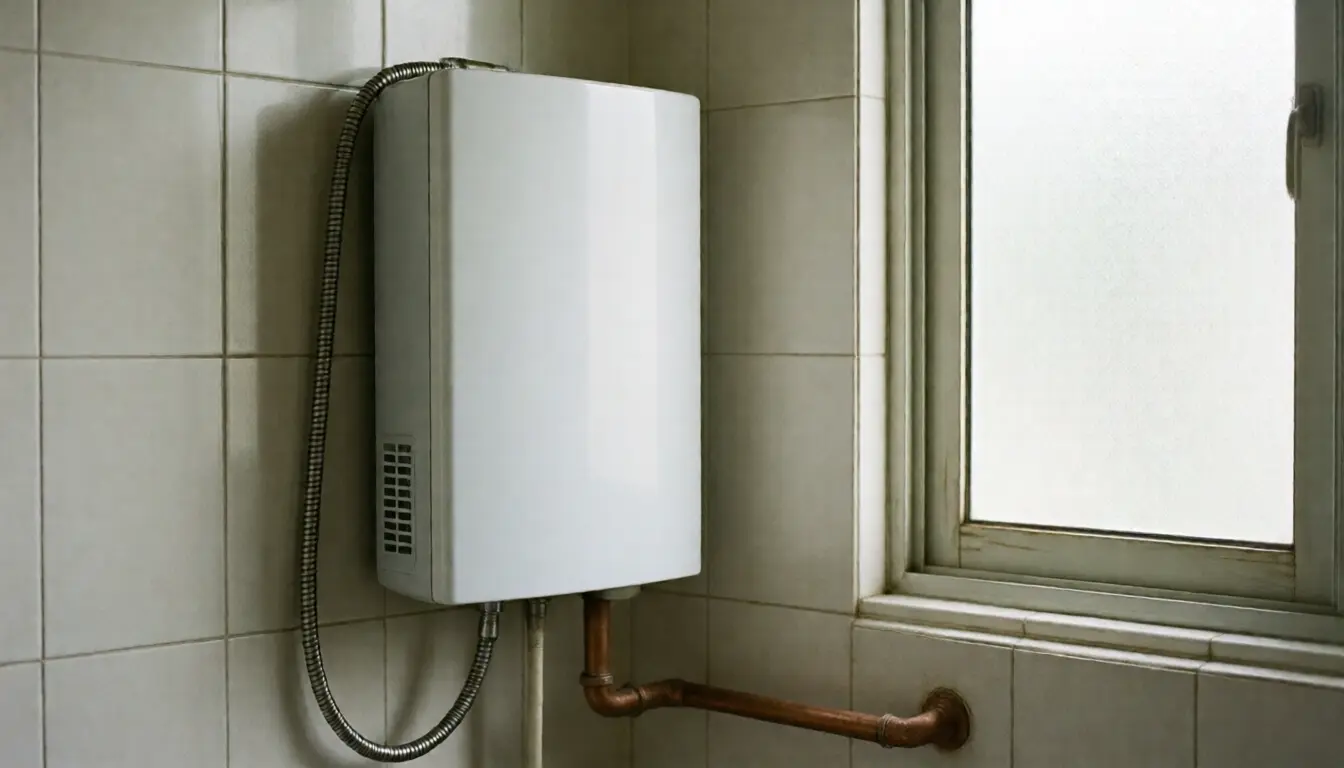
An instant water heater heats water as it flows through, has no tank, and serves exactly one outlet: the shower attached to it.
A storage water heater holds a tank of water it has already heated, and can serve several outlets at once, including filling a bath.
Everything else follows from that single difference: price, size, where it can go, running cost, and which house it suits.
This works through how each one operates, the real limitations people discover only after buying, how to choose based on how you actually live, and the electrical side, which matters far more than the brand.
How an instant heater works, and its three limitations
Inside is a heating element and a flow sensor. Open the tap, the sensor detects flow, the element is energised, and water passing through gets hot within a few seconds.
Close the tap and it stops immediately. Nothing is left running.
The advantages are no waiting, no space taken, no energy spent keeping unused water warm, and a much lower price.
The limitations number three, and all three are why people end up disappointed.
One, it serves a single outlet. One unit, one shower. Wanting warm water at the basin as well means buying another one.
Two, the temperature depends on flow rate and on how cold the incoming water is. This is the least understood point of all.
The unit has a fixed power rating. So a strong flow passes the element quickly and comes out less hot, while turning the flow down makes it hotter.
You are trading water pressure against temperature, constantly. It is also why the same heater feels weaker on a cold morning, when the water in the pipes is colder than usual, without anything being wrong with it.
Three, it needs a minimum water pressure. It will not fire if the flow is too weak, because the sensor cannot detect it.
Houses fed from a ground-level tank with no pump, or upstairs rooms where pressure drops, run into this, and it is not the heater's fault.
If the symptom is the heater cutting in and out while you shower, fix the pressure first, which we covered in weak water pressure upstairs.
How a storage heater works
This type has a tank built in, from a few dozen litres to several hundred, heats the water in it to a set temperature, and holds it there.
Open a hot tap and stored water flows out while cold water flows in, and the unit starts heating again.
The important advantage is that it banks energy in advance, so it can deliver hot water faster than its power rating could heat it on demand.
Which is why it can fill a bath, and supply two bathrooms at once. An instant heater cannot do either.
The drawbacks are straightforward.
- It takes space, and needs a mount or a platform that can carry the weight, which is considerable when full.
- The hot water can run out, after which you wait for a new cycle, which takes a while.
- It loses heat while standing, because it keeps water hot that nobody is using.
- It costs more and is more involved to install, because hot water pipework has to reach the outlets.
- It needs a safety relief valve that can genuinely discharge, not merely be fitted.
Retrofitting one into a house that never had hot water pipework often costs more in pipework than the unit itself, which is worth knowing before deciding.
Choosing by how you live, not by budget
An instant heater suits you if
- The house has one bathroom, or several that are not used at the same time.
- You only need showers, with no bath to fill.
- You are in a condo or a rental where new pipework is not possible.
- The budget is tight and you want something installed in a day.
A storage heater suits you if
- There is a bath, or more than one shower head in the same room.
- Several people shower around the same time.
- You want hot water at the kitchen or basin taps too.
- You want a steady temperature that does not swing with the flow, which matters in a house with small children or older people.
That last point is the one most often overlooked.
An instant heater's temperature moves with the flow and with water being used elsewhere in the house. People who react slowly, the very young and the elderly, are more exposed when the water suddenly runs hotter because somebody opened a tap in the kitchen.
The electrical side, which matters more than the brand
If you take only one section from this article, take this one.
Because both types are high-powered electrical appliances installed in a bathroom, which is the room where people are wet and standing barefoot on a wet floor.
Three things have to be in place.
One, a dedicated circuit and its own breaker. Not shared with sockets or lighting. The breaker and cable size are calculated from the power rating printed on the unit, which is an electrician's job rather than something to copy from what a neighbour used.
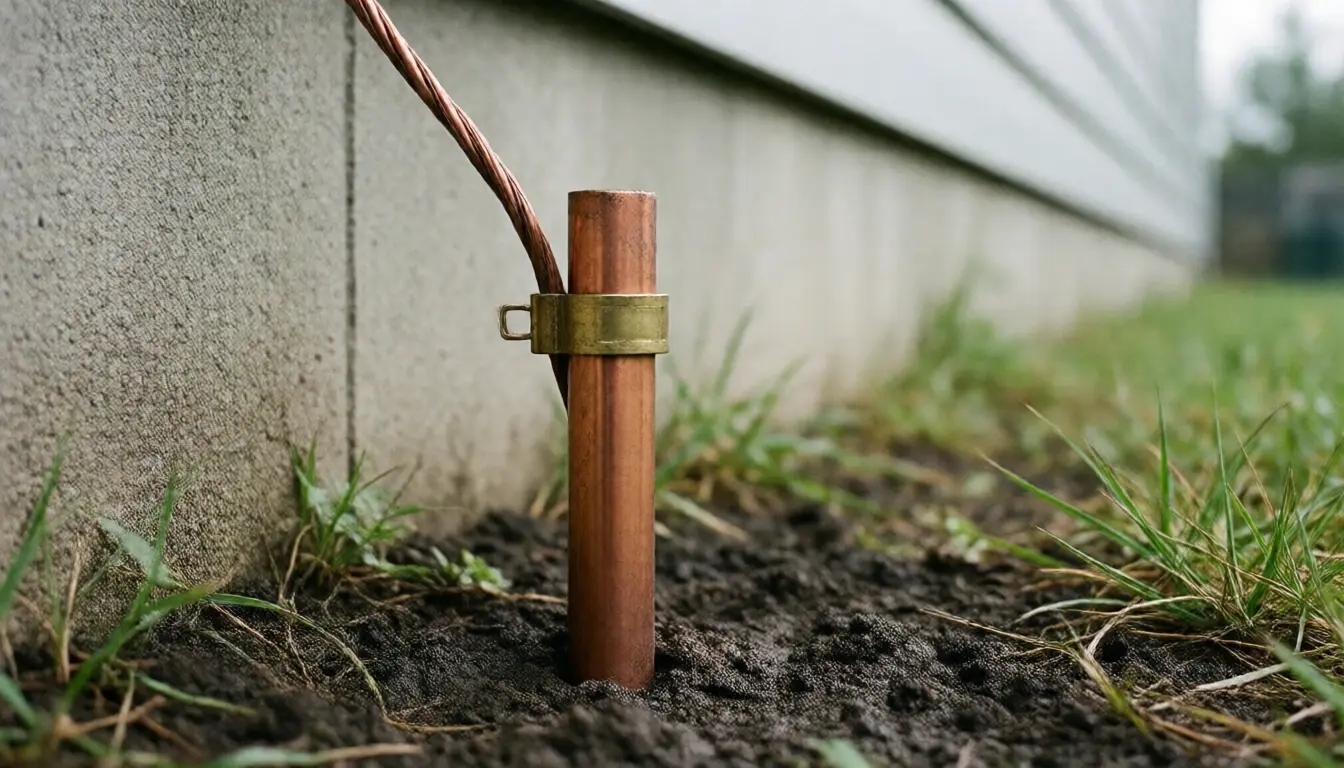
Two, a real earth. A conductor that reaches the house earthing system and is genuinely bonded to earth at the main board.
A three-pin socket does not mean there is an earth. Plenty of houses have three-pin outlets where the third conductor goes nowhere at all, which is more dangerous than having none, because it convinces people they are protected.
Three, earth leakage protection, both inside the unit and on the circuit.
What the ELCB inside the unit is, and why it does not replace the earth
Water heaters sold in Thailand already contain leakage protection. The Provincial Electricity Authority describes two kinds.
The ELCB or ELB type, which cuts the supply quickly when leakage occurs, with a TEST button to check it.
The ELSD type, also called EELS or ESD, an internal circuit that cuts the supply within a fraction of a second, also with a TEST button.
The point to understand is that both live inside the heater, not on the circuit.
And both require an earth conductor to be installed, because the whole principle depends on leakage having a path to earth rather than through a person.
A heater with an ELCB and no earth is a heater whose protection cannot work as designed.
The authority also recommends fitting an additional external residual current device on the circuit, because the protection built into some models may not carry dependable certification.
The residual current rating used for protecting people is commonly 30 mA, a figure worth confirming with your electrician at installation.
How to lay out circuits and the board for the whole house is in how many circuits a consumer unit should have.
The TEST button, monthly, and how to read it
Every unit has one, and most people never press it once in the appliance's life.
It could not be simpler.
- Have the unit running normally.
- Press TEST.
- It must cut the supply immediately.
- Press RESET to bring it back.
If pressing TEST does not cut the supply, the protection has failed, and the unit should not be used until it is fixed.
Ten seconds a month, testing the one thing standing between you and mains electricity while you are wet.
Attach it to something you already do monthly, like paying the electricity bill, so it does not get forgotten.
Signs that mean stop using it now
- Any tingle when touching the shower head, tap or the unit itself, however slight. Switch off the breaker and do not use it until an electrician has looked at it.
- The breaker tripping more and more often. Do not fix this by fitting a bigger breaker, which just silences the warning.
- The TEST button no longer cutting the supply.
- A burning smell, unusual noise, or scorch marks at the outlet or on the cable.
- Water alternating hot and cold suddenly with nobody using water elsewhere, which usually means the sensor or element is failing.
- Water dripping from the unit, which on a storage type can mean the tank is leaking and is a reason to stop.
Water quality, which nobody thinks about when buying
One of the biggest factors in how long a heater lasts is not the brand. It is the water going through it.
Hard water leaves limescale on the element. Scale insulates, so the element has to run hotter to deliver the same heat, which shortens its life considerably.
Water high in iron leaves deposits and blockages too.
Houses on groundwater should know their water quality before fitting a heater, and if filtration is needed, fit it upstream rather than after the second unit has failed.
How to test the water and match treatment to the problem is in a borehole at home, the licence and whether the water is drinkable.
Siting and upkeep
- Mount it out of children's reach, and where shower spray does not hit the unit directly.
- Leave room to take the cover off for service, because a heater wedged into a corner becomes a heater nobody repairs.
- Do not put the switch where you must reach across water. It should be reachable with a dry hand.
- Clean the inlet strainer periodically, because sediment there weakens the flow and makes the unit work harder.
- Switch the breaker off when away for several days, particularly with a storage type.
As for service life, no single figure applies to every unit, because it depends on water quality, how heavily it is used, and how well it was installed.
A more useful rule is that if it develops any of the safety symptoms above, replace it rather than repair it. For ordinary complaints like slower heating, have it assessed first.
Frequently asked questions
What is the difference between the two types?
An instant heater heats water as it flows, has no tank, and serves one outlet. A storage heater keeps a tank of hot water ready, serves several outlets at once, and can fill a bath.
Why is the water less hot in the cool season?
Because the incoming water is colder while the unit's power is unchanged, so it raises the temperature by the same amount from a lower starting point. The immediate fix is to reduce the flow so water spends longer in the unit.
Does a three-pin socket mean there is an earth?
No. Many houses have three-pin outlets whose third conductor goes nowhere. Have an electrician confirm the earth is genuinely bonded at the main board.
If the heater has an ELCB, do I still need an earth?
Yes. The electricity authority states that both the ELCB and the ELSD types built into heaters require an earth conductor, because leakage needs a path to earth rather than through a person.
How often should I press the TEST button?
At least monthly. It must cut the supply immediately. If it does not, the protection has failed and the unit should not be used.
Why does the heater cut in and out while showering?
Usually insufficient water pressure, so the flow sensor cannot detect flow consistently. Fix the pressure first, and check whether the inlet strainer is blocked.
I want hot water at the kitchen sink too. Which type?
Multiple outlets means a storage type, but budget for hot water pipework, which in a house that never had any is usually more expensive than the unit.
In short
- The difference is a storage tank, not how hot the water gets.
- An instant heater serves one outlet, and its temperature swings with flow and inlet temperature.
- A storage heater serves several outlets and fills a bath, but takes space and can run out.
- One bathroom suits an instant heater. Simultaneous use across the house suits a storage one.
- Fit a dedicated circuit and breaker, sized from the power rating on the unit.
- A three-pin socket is not an earth. There must be a conductor bonded to earth at the board.
- Both ELCB and ELSD protection inside a heater require an earth to work as designed.
- Add a residual current device on the circuit as well, and ask your electrician about the 30 mA rating.
- Press TEST monthly. If it does not trip, the protection has failed.
- A tingle from the shower head means switch off the breaker now, not later.