
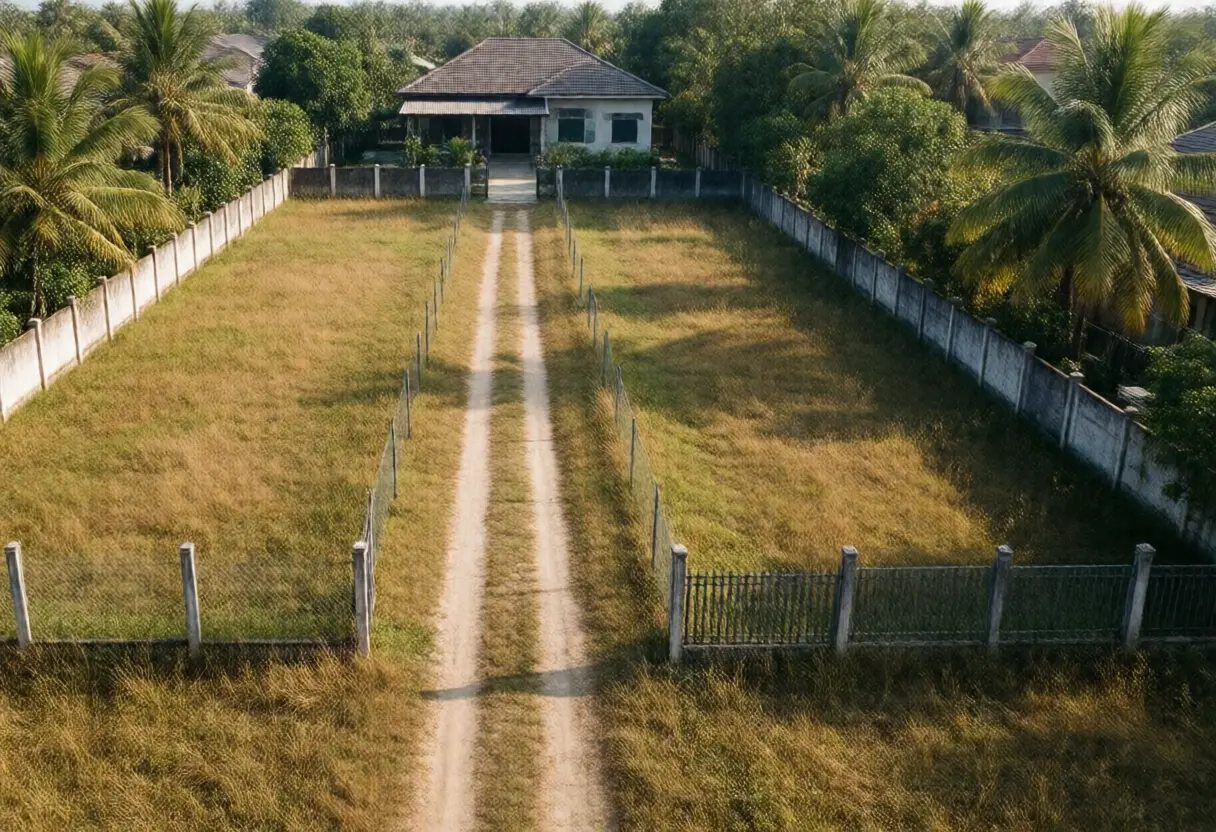
Can you buy land that carries a servitude?
Yes, and a servitude does not damage your ownership. But it attaches to the land rather than to the owner, so when you buy, you take it on automatically, and the previous owner selling to you does not extinguish a servitude that already existed.
What actually needs watching is not the servitude you can see in the documents. It is the one that appears in no document at all.
What a servitude is, and who benefits
Section 1387 of the Civil and Commercial Code provides that immovable property may be subjected to a servitude, obliging the owner to suffer certain acts affecting their property, or to refrain from exercising certain rights inherent in ownership, for the benefit of other immovable property.
The law calls the land carrying the burden the servient property and the land receiving the benefit the dominant property. If you are buying land with a servitude on it, you are buying the servient property.
The usual forms are a footpath or vehicle access crossing your plot to reach the land behind, water pipes or power lines running through, and restrictions on building along a particular line.
On how a servitude differs from a way of necessity, which is a separate right with a separate origin, see landlocked land and the right to a way out.
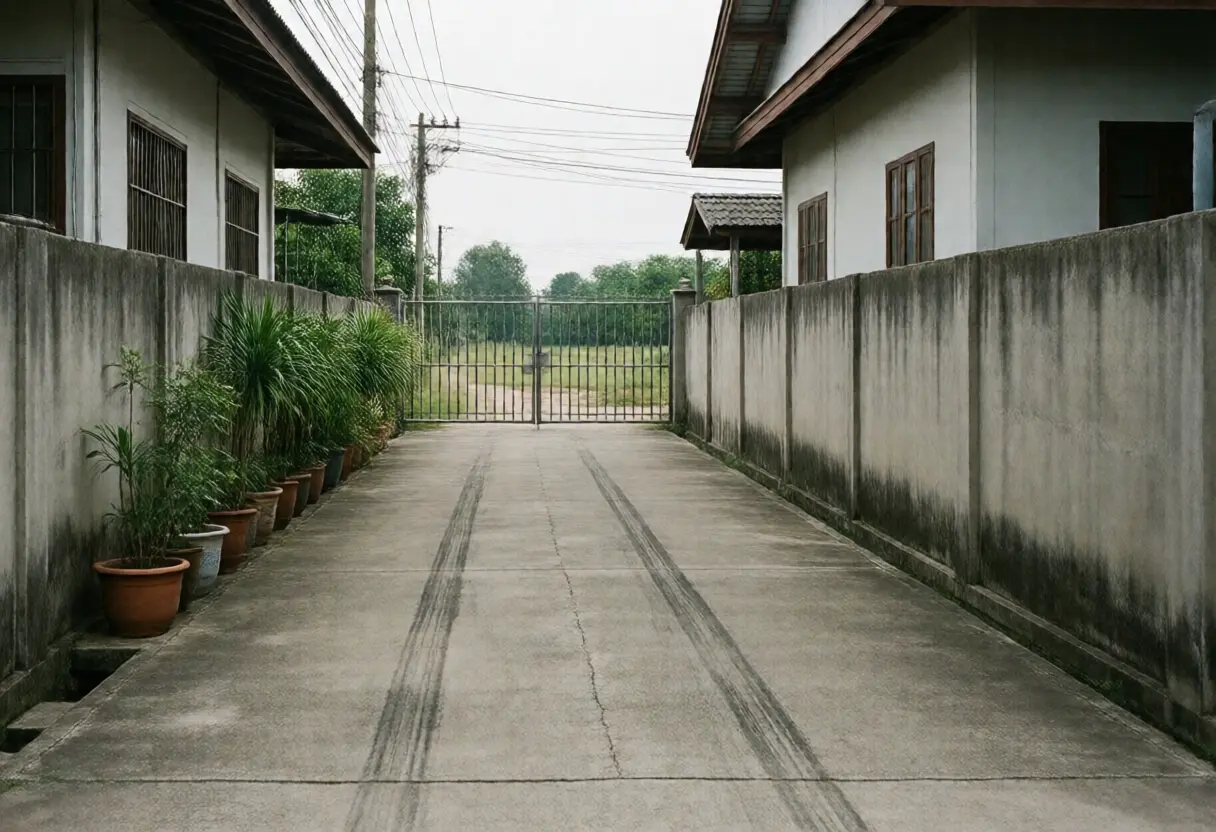
A servitude runs with the land, not with the person
This is what buyers most often get wrong. Many assume that once the owner changes, whatever the old owner agreed to falls away. The opposite is true.
Supreme Court judgment 1426/2514 held that where an owner whose land was already subject to a right of way acquired by prescription sells part of that land, the sale does not cause the existing servitude to lapse.
So you buy the land complete with the burden, and telling the neighbour that the arrangement was with the previous owner and is nothing to do with you will not work.
The real trap: the servitude that is not on the title
A servitude can arise in two ways, and the two appear very differently in the paperwork.
| Origin | Registration required? | Visible on the title? |
|---|---|---|
| By juristic act, such as an agreement between two owners | Yes, registration is needed to set it up against third parties under section 1299 | Yes, it appears in the register on the back of the title deed |
| By prescription, from peaceful, open and continuous use for ten years | No registration required, and it still binds third parties | No. Nothing appears on the title at all |
The bottom row is why checking the back of the title deed is not enough. A plot with immaculate paperwork can have a track the neighbours have used for fifteen years running across it, and that right is already complete without relying on any piece of paper.
The only way to find it is to go and look at the land and ask the people nearby, not to read documents in an air conditioned office.
When a servitude comes to an end
Section 1399 provides that a servitude is extinguished if it is not used for ten years.
That helps a buyer. If the land carries a registered servitude that nobody has used for more than ten years, the right may already have lapsed by operation of law, and the servient owner can apply to have the registration cancelled.
Do not celebrate yet. The burden of proving ten years of non-use falls on you, and proving that something did not happen is always harder than proving that it did. If you are buying in the hope of this, treat it as an opportunity rather than a fact, and do not pay full price on the assumption the burden will fall away.
What the benefiting owner may and may not do
Section 1391 gives the owner of the dominant property the right to do everything necessary to preserve and use the servitude, but at their own expense, and in doing so they may cause only the least damage to the servient property that circumstances allow.
Those two limbs settle the two arguments that come up most. First, who pays to repair the track: the person using it, not the landowner. Second, how far a neighbour may widen the way or lay more concrete: only as far as necessary, causing the least damage, rather than however they please.
What to check before you commit
- Obtain a current extract of the register from the land office, rather than relying on the copy the seller hands you, because entries may have been added since that copy was made.
- Visit the land at least twice at different times. A way in actual use shows in tyre tracks, footpaths and gates that are not locked, far more than it shows on a map.
- Ask the neighbours directly whether anyone crosses this plot and for how long they have done so. An answer of since my father's day is the signature of a servitude acquired by prescription.
- Look for power poles, water pipes and inspection chambers crossing the plot, which may carry utility servitudes.
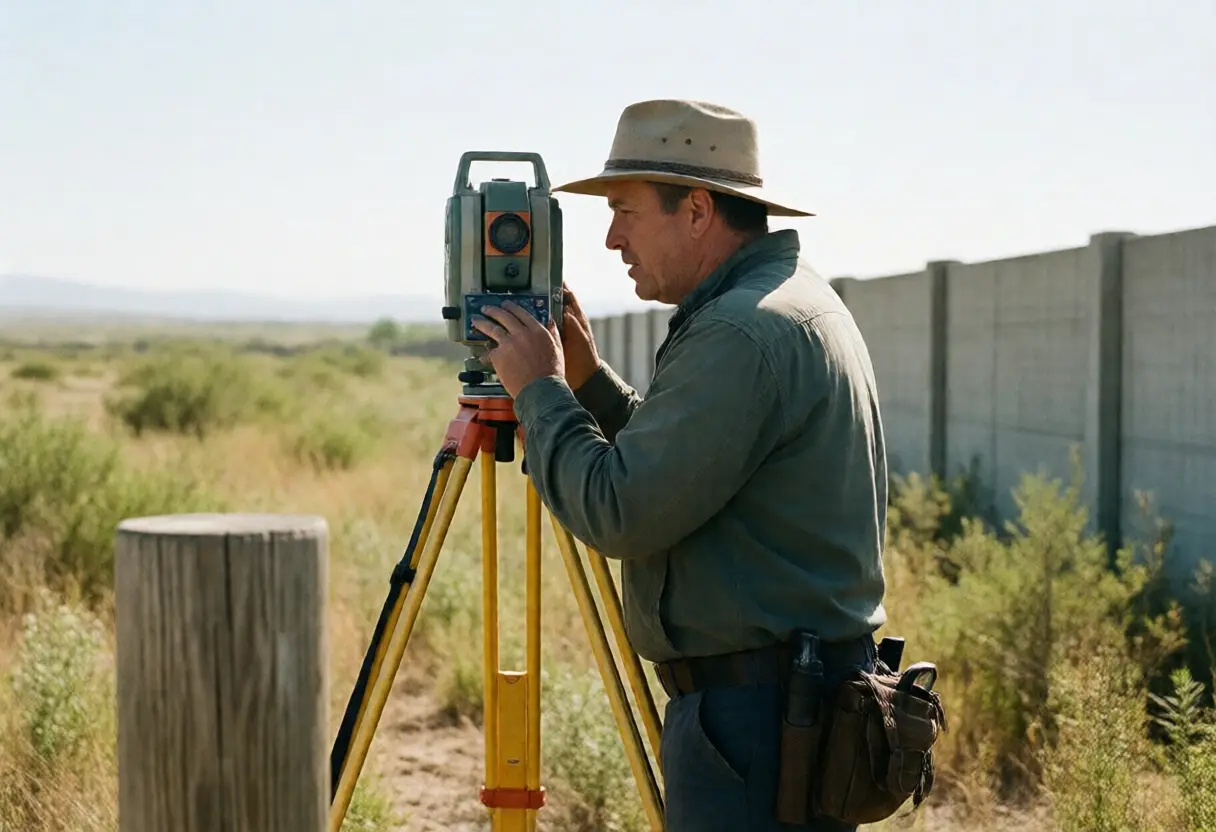
- Commission a boundary survey if the way in actual use does not match the line in the documents.
- Put a warranty in the sale and purchase agreement that the seller confirms there are no servitudes other than those disclosed, and is liable if others emerge.
That last item matters most for what you cannot see. When a servitude acquired by prescription appears nowhere in the paperwork, the seller's warranty in the contract is the only thing protecting you.
On checking title, appraised value and expropriation before paying a deposit, see how to check a plot before paying a deposit. And if you are still looking, our land and houses for sale are listed with their locations and areas.
How much should come off the price?
There is no fixed formula, but there is a workable method. Look at how much usable area the servitude actually consumes, and how far it cuts off what can be developed.
A four metre way across the middle of a plot and a two metre way along the side fence consume very different amounts of land, and cut off building options by even more. A plot split down the middle by a right of way may be unbuildable on one side, even though on paper it is still a single plot.
The figures to ask the seller for are the width and position of the servitude in metres, not a description along the lines of there being a small track through.
Frequently asked questions
If I buy land with a servitude, does the burden leave with the old owner?
No. A servitude runs with the land rather than with the person. Supreme Court judgment 1426/2514 held that a sale does not cause an existing servitude to lapse.
Can an unregistered servitude bind a buyer?
Yes, where it was acquired by prescription. Such a servitude needs no registration and can still be raised against third parties, unlike one created by juristic act, which requires registration under section 1299.
How do I find out whether an unregistered servitude exists?
The documents will not tell you. Visit the land several times at different hours, look for signs of use, and ask the neighbours who crosses the plot and for how long they have been doing so.
Can a servitude expire on its own?
Yes. Section 1399 provides that a servitude is extinguished if unused for ten years. But the burden of proving ten years of non-use falls on whoever asserts it, which is harder than it sounds.
Who pays to maintain the right of way?
The owner of the dominant property, the one using it. Section 1391 gives them the right to do what is necessary to preserve and use the servitude at their own expense.
Can the neighbour widen the track themselves?
Only as far as necessary to preserve and use the servitude, and causing the least damage to the servient property that circumstances allow, under section 1391. Not however they like.
Will a bank lend against land carrying a servitude?
Generally yes, but the valuation is usually reduced to reflect the area that cannot be used. Tell the bank at the outset and do not expect the same facility as an unencumbered plot.
How much should I negotiate off the price?
Work from the usable area actually lost and the constraints on where you can build, rather than from a standard percentage. A way through the middle costs far more than one along the side fence. Ask the seller for the position and width in metres.
Key takeaways
- Land carrying a servitude can be bought, but the burden runs with the land rather than the owner and always passes to the buyer.
- Supreme Court judgment 1426/2514 held that a sale does not extinguish a servitude that already existed.
- A servitude acquired by prescription needs no registration yet still binds a buyer, so it appears nowhere on the title.
- Checking the register on the back of the title deed is therefore not enough. The land has to be visited and the neighbours asked.
- Section 1399 extinguishes a servitude unused for ten years, but the burden of proof lies on whoever asserts the non-use.
- Section 1391 puts maintenance costs on the party using the way, and limits them to the least damage necessary.
- Put a seller's warranty about servitudes into the sale and purchase agreement, because it is the only protection against what cannot be seen.