
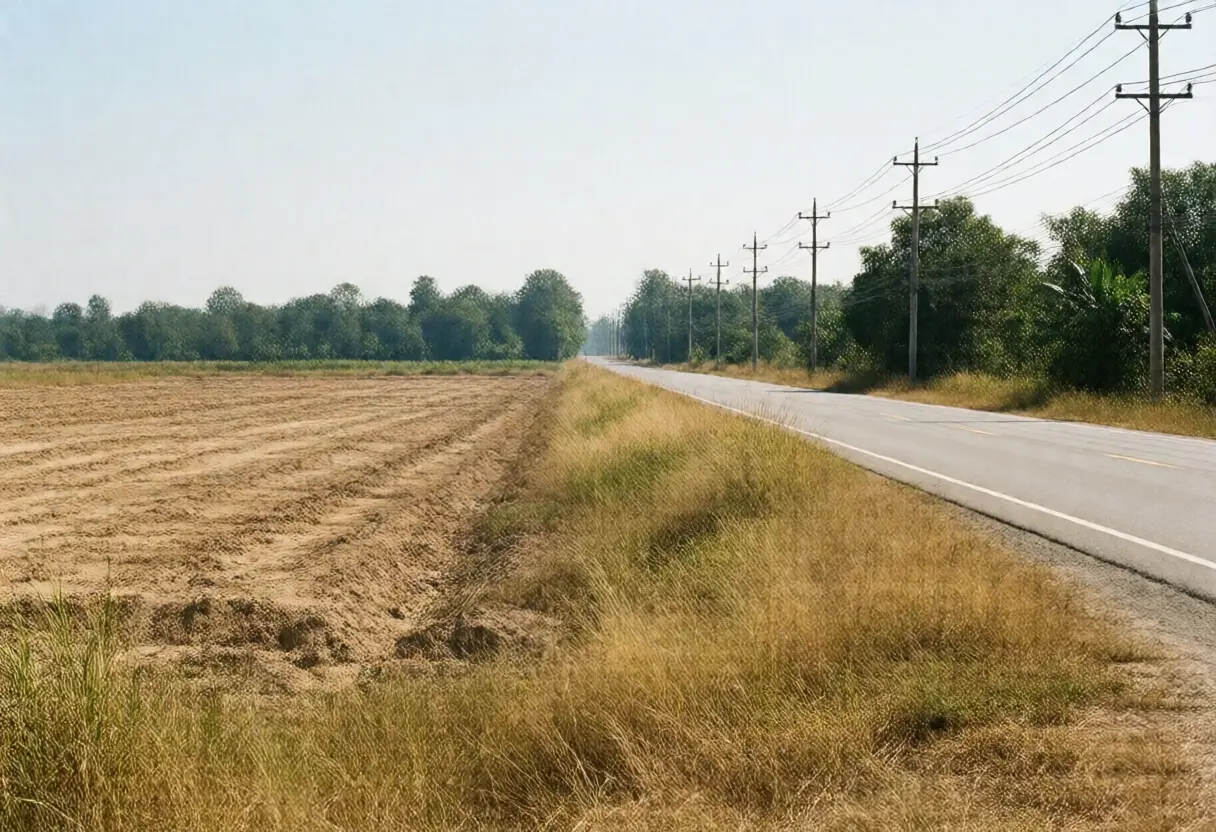
Buying land for a factory: what to check before the deposit
Start with the city plan colour, every time, because if the colour does not permit your type of operation nothing else matters. Then work through truck access, the electrical supply you can actually obtain, water, ground level and flood history, and earth filling, which has a statute of its own that buyers of factory land forget more often than anything else.
A plot that passes everything except one item is a plot you cannot build a factory on. It is not a plot that nearly passed.
The order to check in, and which office to visit
| Step | Where | What you come away with |
|---|---|---|
| 1 | Provincial Public Works and Town and Country Planning Office | The plot's city plan colour and the use conditions attached to that colour in the plan currently in force |
| 2 | Provincial or branch Land Office | The official copy of the title deed, the encumbrances recorded on the back, and an appointment for a boundary survey |
| 3 | The subdistrict administrative organisation or municipality | Local by-laws, any specific prohibitions, and the excavation and filling rules |
| 4 | Provincial Industry Office | Which factory categories may operate there and the licensing route |
| 5 | The local Provincial Electricity Authority office | The supply capacity actually available, the distance to the transformer, and the cost of extending the network |
| 6 | Provincial Waterworks Authority or the local water body | Whether mains water reaches the plot, and what the backup source would be |
The order matters because each step changes the question you ask at the next one. Going to the Land Office before you know the city plan colour means paying survey fees on a plot that may have been unusable from the start.
How to check the colour and what each one means, the purple zone in particular, is in purple zone land and the city plan. The licensing side is in applying for a factory licence.
What makes a plot unusable even when the colour passes
- Access a truck cannot actually use. Go and look. Can a six wheeler or an articulated lorry make the turn at the entrance, what will the bridges on the route carry, and is there an abutment or a power pole in the way?
- The road in use is not a public road. A track everyone has used for years does not become public automatically. If it belongs to someone else, check whether a servitude is registered, covered in land carrying a servitude.
- Not enough electrical capacity for the machinery. The distance to the transformer and the size of the existing main determine the network extension cost, which on some plots exceeds the discount you negotiated on the land.
- Not enough water for the process. Drilling a borehole requires permission. Owning the land does not entitle you to drill.
- Ground below road level with a flood history. How to check the record is in checking flood history before buying.
- Distance from communities, schools, temples or public watercourses. Some factory categories carry specific requirements here, so ask the Provincial Industry Office with your intended activity named.
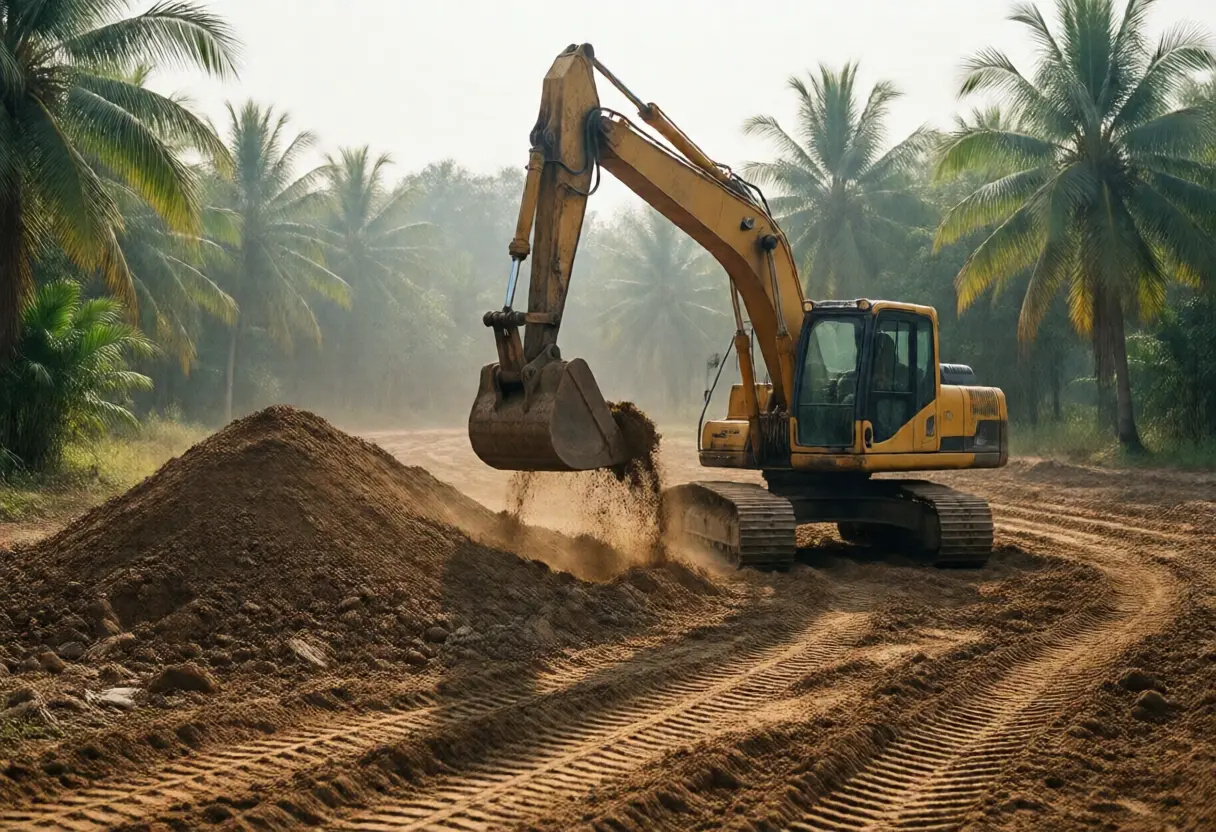
Earth filling and excavation, the statute people forget
Almost every plot destined for a factory has to be raised first, and the filled area passes two thousand square metres very easily. This is governed by its own law, the Excavation and Land Filling Act B.E. 2543.
| Situation | What is required |
|---|---|
| Excavation deeper than 3 metres from ground level, or a pit mouth exceeding 10,000 square metres | Notify the local official under section 17 |
| Filling above the level of adjoining land in different ownership, with a filled area not exceeding 2,000 square metres | Provide drainage sufficient not to cause nuisance to the adjoining land, under section 26 |
| Filling an area exceeding 2,000 square metres | The drainage duty applies, and the filling must also be notified to the local official |
| Excavating or filling without the notification receipt | Imprisonment of up to one year, a fine of up to 50,000 baht, or both |
Local officials may also announce different depths or areas within their own area, so the figures above are the baseline rather than the final answer everywhere. Ask the subdistrict organisation or municipality where the land sits.
The point that costs more money than the law does is this: filling above your neighbour's level without building the drainage turns into a dispute with them the first time it rains hard, and it is a dispute in which the statute already has you in the wrong.
Documents and questions to get from the seller before signing
- A copy of the title deed, front and back, because the encumbrances are on the back.
- The most recent boundary survey. If there is none, write into the contract that one will be done before transfer.
- Whether the land is mortgaged, and when the seller will redeem it.
- Whether an agricultural tenant is in occupation, and whether there is a written lease.
- Whether the access road in use is public or belongs to someone, and what documents support it.
- Whether the plot has been filled before, when, and how much it has settled since.

What to write into the sale and purchase agreement
The safest structure for a buyer ties the purchase to the results of the checks rather than to hope.
- Set a condition precedent giving the buyer the right to terminate and recover the deposit in full if the city plan colour does not permit the operation specified.
- Name the intended operation in the contract, because the clause above means nothing without it.
- Allow a realistic investigation period. Collecting answers from several offices does not finish in a week.
- State the area according to the survey, and how the price adjusts if the surveyed area differs from the deed.
- Allocate the costs explicitly, transfer fees, survey fees and the relevant taxes.
If you are looking for land, or preparing to sell a plot, see the listings for sale and the land selling service.
Frequently asked questions
What should be checked first?
The plot's city plan colour, at the Provincial Public Works and Town and Country Planning Office, because if the colour does not permit the intended operation nothing else matters.
Does filling land require notification?
Yes, where the fill sits above the level of adjoining land in different ownership and the filled area exceeds 2,000 square metres, it must be notified to the local official under the Excavation and Land Filling Act B.E. 2543.
Can I fill freely under 2,000 square metres?
No notification is required, but you must still provide drainage sufficient not to cause nuisance to the adjoining landowners or anyone else.
What excavation depth triggers notification?
More than 3 metres from ground level, or a pit mouth exceeding 10,000 square metres, or whatever the local official has announced for that area.
What is the penalty for doing it without notifying?
Excavating or filling without the notification receipt from the local official carries imprisonment of up to one year, a fine of up to 50,000 baht, or both.
Is a track the neighbours have used for years a public road?
Not automatically. Check whether it is genuinely public or privately owned, and if private, whether a servitude has been registered.
How does electricity become a problem?
Available capacity depends on the existing local network. The distance to the transformer and the size of the main determine the extension cost, which on some plots exceeds the discount negotiated on the price.
What clause protects the buyer best?
A condition precedent tied to the city plan result, with the intended operation named, giving the right to terminate and recover the full deposit if the result does not support it.
Key takeaways
- Check the city plan colour first, because survey and other fees spent before that can be wasted entirely.
- A workable order is planning office, land office, local authority, provincial industry office, then electricity and water.
- Access a truck cannot use, or access that is not a public road, makes a colour-compliant plot unusable anyway.
- On some plots the cost of extending the electricity network exceeds the discount negotiated on the land.
- Excavation deeper than 3 metres, or a pit mouth over 10,000 square metres, must be notified under section 17.
- Filling over 2,000 square metres must be notified, and filling of any size requires adequate drainage.
- Put a condition precedent tied to the city plan result into the contract, with the intended operation named.