
Two things you can clean, and five you cannot see
What a homeowner can genuinely clean is two things: the air filter and the plastic front cover.
Both sit at the front, come out by hand, and wash with plain water and a soft brush.
The other five sit deeper, and they are what decides whether the unit cools, how much electricity it draws, and whether it smells.
So cleaning it yourself does not replace a proper service. They are two different jobs that happen to share a name.
Somebody who washes the filter every month and calls a technician once a year is in the cheapest and most effective position there is.
The five parts inside that belong to a technician
The cooling coil is the aluminium finned block the air has to pass through. Once dust packs it solid, less air gets through and the cooling drops.
Cleaning it means pressure washing between the fins without bending them, which takes both equipment and a practised hand.
The drain pan and drain line is where damp and dust combine into a slime.
That slime is the leading cause of an air conditioner dripping onto the floor, because it blocks the line until the pan overflows.
Most people who think their unit is leaking have a blocked drain rather than a leak.
The blower is the cylindrical fan with small blades inside the unit.
It is the dirtiest part of the whole machine and the source of the musty smell that comes out when it starts.
It cannot be seen from the front and cannot be cleaned without dismantling.
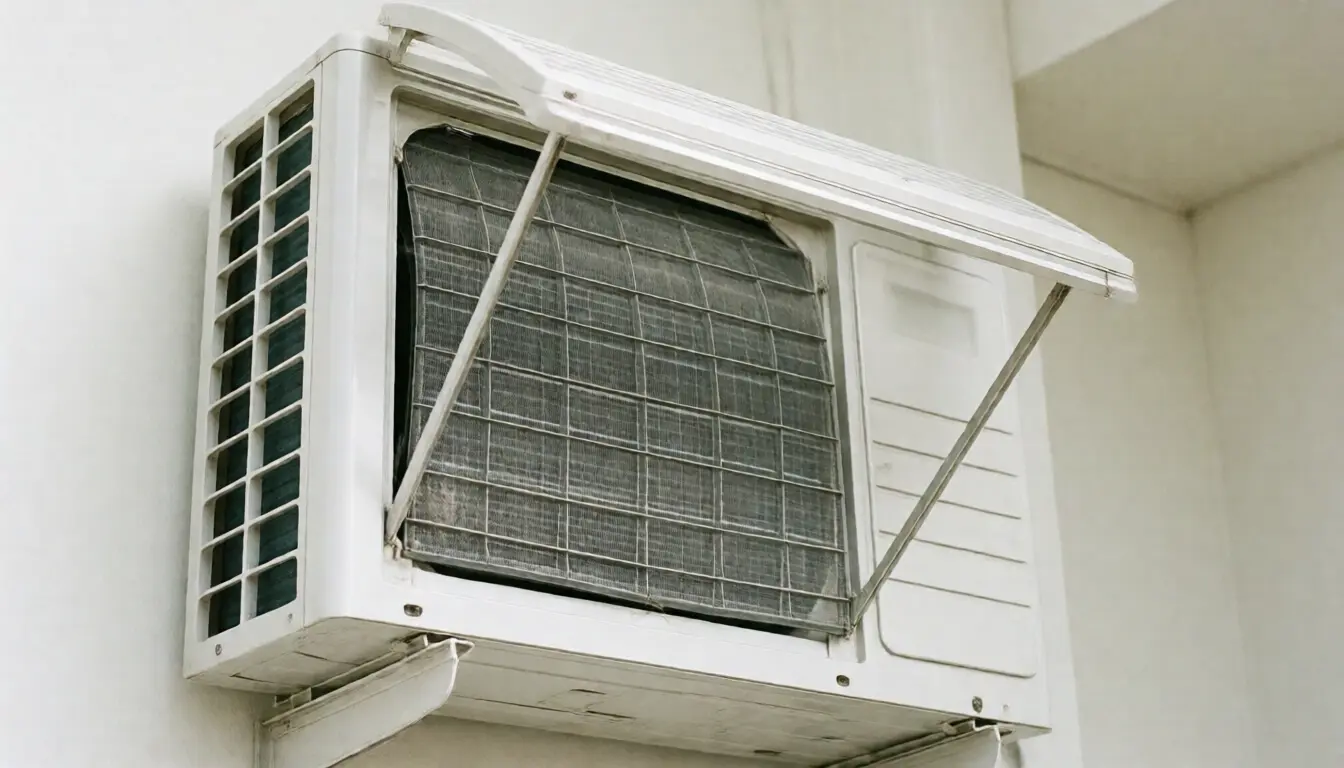
The outdoor condenser coil is the part people forget most, because it is out of sight.
When its fins are packed with dust and leaves, heat cannot escape, so the compressor works harder and draws more current without the room getting any cooler.
The electrical readings and system pressures, which can only be measured with gauges and a clamp meter.
Those numbers say whether the machine is working normally or heading for trouble, before it actually fails.
Topping up refrigerant, understood properly
The refrigerant circuit is a sealed system.
Which means that with no leak, the charge does not fall at all over the life of the machine.
So if it needs topping up every year, there is a leak somewhere.
Topping it up without finding the leak is paying for the same problem again every year.
What to ask the technician is whether the measured pressure really is low, and if so, whether the leak has been looked for.
The idea that a service always includes topping up is not normal, and the reason should be asked for every time.
Symptoms that are beyond a home clean
- Still not cooling after washing the filter, which points to a blocked coil, a blocked outdoor coil, or a low charge.
- Water dripping from the unit, which is usually a blocked drain line.
- A musty smell on start up, which comes from the blower and the drain pan rather than the filter.
- Unusual noise, which may be an unbalanced fan or a failing bearing.
- The breaker tripping when it starts, which is an electrical matter to trace as in finding out why the breaker keeps tripping.
No amount of home cleaning fixes those five, because the cause is somewhere hands cannot reach.
The right frequency
Wash the filter yourself every two to four weeks in a house that runs the unit daily.
Households with pets, on a main road, or near construction should do it more often.
Have it serviced once a year in an ordinary house.
Twice a year for a unit that runs most of the day, or one installed where the air is dusty.
More often than that does not help, and dismantling it too frequently wears out plastic parts and seals faster.
Cautions when washing the filter yourself
Isolate at the breaker first, not merely switching off with the remote.
Do not spray water into the unit, because the control board is off to one side, and water reaching it costs several times what a service costs.
Do not use a stiff brush on the aluminium fins, because bent fins block the airflow permanently.
Do not use strong cleaning chemicals, which attack aluminium and leave a residue that attracts dust back faster than before.
Dry it completely before refitting, because a damp filter is where the smell starts.
Frequently asked questions
Is cleaning it myself enough?
Enough for the filter and the cover, but not for the coil, drain pan, drain line, blower and outdoor coil, which are what decide cooling and consumption.
Why is it still not cold after washing the filter?
Because the filter is only the first barrier. A blocked cooling coil, a blocked outdoor coil, or a low charge from a leak will not be helped by cleaning it.
What causes water dripping from the unit?
Usually a drain line blocked by slime formed from dust and moisture, which makes the pan overflow. It is rarely a leak in the machine.
Does a service always need refrigerant added?
No. The refrigerant circuit is sealed, so with no leak the charge does not fall. Needing a top up every year means there is a leak, which should be found before adding more.
How often should it be serviced?
Once a year for an ordinary house, and twice a year for a unit running most of the day or installed somewhere dusty.
How do I get rid of the musty smell?
The smell comes from the blower and the drain pan rather than the filter, so it needs a technician to dismantle and clean. Deodorising sprays mask it temporarily without addressing the cause.
Can it be serviced too often?
Yes. Repeated dismantling wears plastic parts and seals faster without making the unit any colder.
In short
- Two parts are genuinely yours to clean: the air filter and the front cover.
- The five you cannot see are the cooling coil, drain pan and line, blower, outdoor coil and electrical readings.
- The musty smell comes from the blower and drain pan, not the filter.
- Dripping water is usually a blocked drain line rather than a leak.
- The outdoor coil is the forgotten part and the one that raises consumption.
- The refrigerant circuit is sealed, so an annual top up means a leak.
- Wash the filter every two to four weeks and have it serviced once a year.
- Always isolate at the breaker first, and never spray water into the unit.