
Measure the door before you pick a brand
A digital lock that arrives and will not fit is more common than people expect, and it is rarely the wrong brand. It is that nobody measured the door. Three numbers to have before ordering: the thickness of the door leaf, the distance from the edge to the centre of the existing handle, and what kind of latch the door currently uses.
Doors in Thai houses and condominiums are not a standard thickness, and each lock model supports a range. Too thin and the lock will not clamp properly and works loose; too thick and the screws do not reach. Ten seconds with a ruler at the edge of the door where the handle is removes the whole problem.
On the latch, if your door already uses a long mortise lock body, changing to a digital one is straightforward because the existing cut-out usually serves. If it is an ordinary round knob, the leaf normally has to be cut, which is harder work than the installation videos make it look.
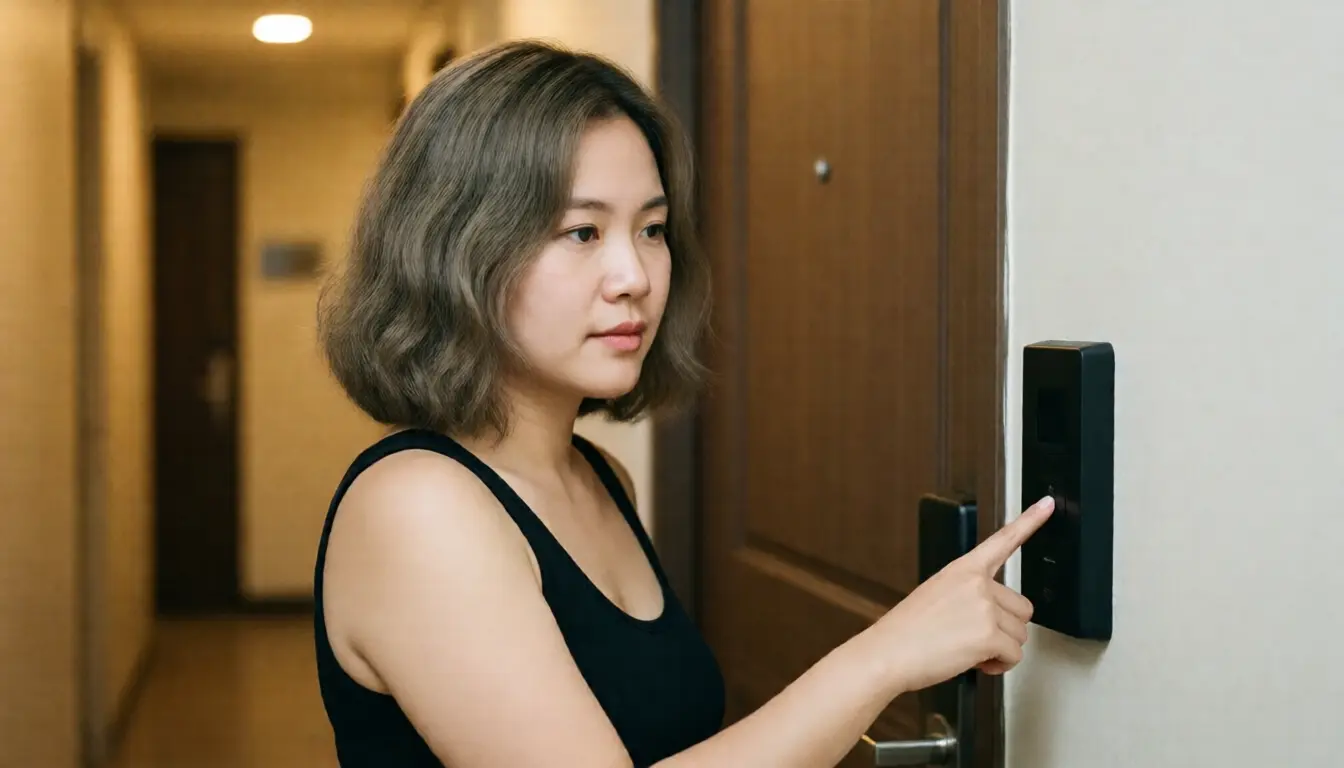
The question to ask first is how you get in when the battery dies
Everyone asks this afterwards, when it belongs at the start, because it separates the models you can live with from the ones that will one day leave you standing outside your own front door at ten at night.
A good lock has at least one fallback. The common ones are an emergency power contact on the outside that takes a power bank to energise the lock long enough to unlock normally, and a mechanical key hidden under a cover. Some models have both, some have one, and some cheap ones have neither.
If the fallback is a mechanical key, have an answer ready for where that key lives, because keeping it inside the house is the same as having no fallback, and carrying it every day removes half the reason you bought the lock. Most people end up leaving it with somebody trusted who lives nearby.
Then there is the battery. Most locks run on ordinary alkaline cells and last months to a year. What matters more than the cell type is the warning. A lock that starts telling you weeks before the batteries are actually flat means this never becomes a problem. A lock that warns you when they are nearly done guarantees you at least one experience you did not want.
The unlocking methods, in real Bangkok life
The specification lists five methods. In practice you will use one or two, and which one works depends on who is using it and when.
Fingerprint is the fastest and most convenient when it works. The problem here is humidity and wet hands: someone who has just washed their hands or walked in out of the rain fails the scan often, as does anyone whose work has worn the ridges off their fingertips. The fix is to enrol the same finger several times at different angles, and to enrol at least two fingers per person.
A code works for everybody and needs nothing carried. The drawback is that after a few months the fingerprints on the keypad show which digits you press. Better locks let you pad the real code with random digits before and after, which solves it completely. If yours does not, wipe the keypad regularly and change the code once a year.
A card or tag suits older family members and a cleaner who comes on certain days, because there is nothing to remember and a single card can be cancelled. The thing to be disciplined about is cancelling a lost card at the lock immediately rather than getting to it later.
The phone app genuinely earns its place for granting temporary access to somebody from anywhere, and for the entry log. The condition to understand is that it depends on the internet and the manufacturer's servers. If the home connection is down, or the manufacturer withdraws the service, that function goes. Treat the app as a good extra rather than your primary way into the house.
The weak point of a door is not the lock
People buy a digital lock expecting to be safer, which is true in some respects, as long as you understand that whoever wants to get into your house is not attacking the lock. They are levering the frame or taking the leaf off.
What determines actual security is the strength of the door leaf, the frame, and how far the bolt throws into it. The best lock in the world on a thin hollow door hung on a rotten frame is still a door that opens in seconds. Before spending money on the lock, push the door hard and see how much it moves in its frame.
Also look at any glazing beside the door or a light panel near the lock, because many digital locks have an inside release button that works immediately. If the glass is close enough to reach through, that is a weakness no lock can solve.
Condominiums and rented homes have extra limits
In a condominium, the door leaf of a unit is generally part of the unit, but many buildings have rules about the appearance of the side facing the common corridor, because it is part of how the building looks. Ask the juristic person before buying rather than after fitting. The questions are whether there are requirements on colour or style, and whether notice is needed.
In a rented house or unit, a tenant may change the lock only with the owner's consent, because it alters someone else's property. Get consent in writing, keep the original lock complete including its screws, and agree clearly whether it is reinstated on moving out or left in place. What counts as an alteration needing consent, and who bears what, is in who pays for repairs in a rented home.
For landlords, a digital lock has a concrete advantage: no recutting keys between tenants, just delete the old codes and set new ones, which saves both money and the risk of copies a previous tenant may have made. The caution is not to keep your own access and let yourself in unannounced, because a property handed over is the tenant's private space.
Can you fit it yourself?
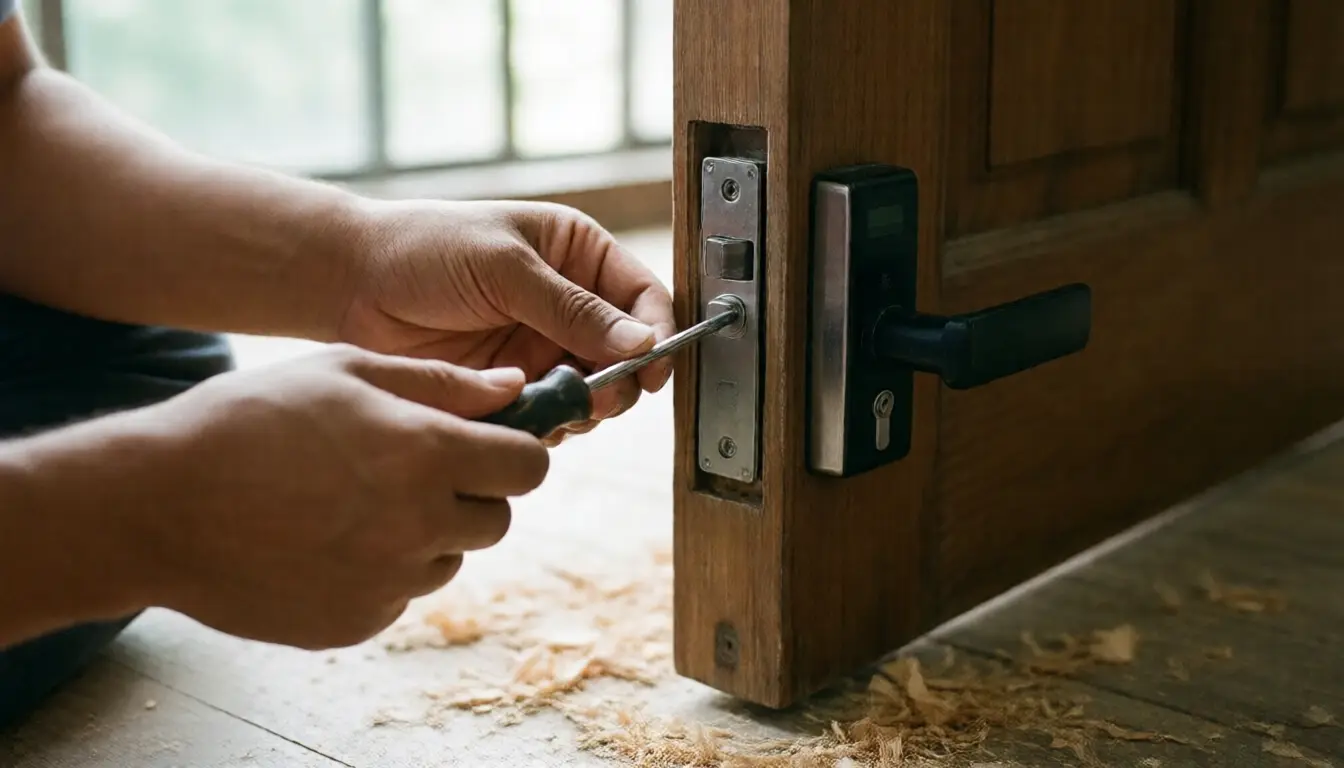
If the door already has a long mortise cut-out and the model you bought states the same cut-out size, this is a drill and screwdriver job that most people finish in an hour.
If the leaf has to be cut, hire someone. A few millimetres off and the bolt no longer lines up with the keeper in the frame, which means the door will not lock properly when closed, or has to be lifted every time. That is very hard to correct after the fact, and a door leaf cut in the wrong place is a door leaf that gets replaced.
Frequently asked questions
How do I get in if the battery dies at night?
It depends on the model. Most have an external emergency power contact for a power bank, or a mechanical key under a cover. Check which before buying, and if it is a key, plan where it lives that is not inside the house.
The fingerprint reader keeps failing. What now?
Enrol the same finger several times at different angles and at least two fingers per person. Wet hands and worn fingertips are the most common causes here.
Can someone work out my code from the marks on the keypad?
Yes, if the same code is used for a long time. Many locks let you pad the real code with random digits, which solves it. If yours does not, wipe the keypad regularly and change the code annually.
Can a tenant fit a digital lock?
Only with the owner's consent, because it alters their property. Get it in writing, keep the original lock complete, and agree what happens on moving out.
Do I need permission for a condominium door?
The unit's door leaf is generally part of the unit, but many buildings have rules about the appearance of the corridor side. Ask before buying whether there are requirements on colour or style.
In short
- Measure the leaf thickness and check the existing latch type before choosing a model, not after.
- Establish exactly how you get in when the power fails, and decide where the spare key lives.
- Enrol at least two fingers per person, because wet hands and worn fingertips are normal here.
- Real security lives in the door leaf and the frame, not in the lock.
- If the leaf has to be cut, pay someone, because a bad cut means replacing the whole door.