
A heat pump does not make heat, it moves it
The water heater most Thai homes use works with a resistance element. One unit of electricity in, one unit of heat out. Breaking even is the best it can ever do.
A heat pump does something different. It spends electricity driving a compressor that pulls heat out of the surrounding air and puts it into the water, the same principle as an air conditioner running the other way round. The electricity is not turned into heat directly; it is spent carrying in heat that was already in the air.
The result is several times more heat out than electricity in. Manufacturers call that figure the COP, and it is the number to ask for before buying, because it is the whole of the argument.
Thailand is a particularly good place for one, because the air is warm almost all year. The warmer the surrounding air, the easier the heat is to extract, unlike cold countries where efficiency drops in exactly the season hot water is needed most.
The question to answer first is what you currently spend on hot water
The salesperson will say it saves seventy percent, which may well be true. Seventy percent of what is the more important question.
If your household uses hot water twice a day for five minutes, the hot water share of the electricity bill may be a couple of hundred baht a month. Saving seventy percent of that is a bit over a hundred baht, set against equipment and a tank costing several times an ordinary heater, which means paying it back over more than a decade.
If instead there are six people, two bathrooms, everyone showers daily, there is a bathtub and hot water gets used for washing up too, the arithmetic changes entirely, because the base you are saving from is large enough to matter.
Finding your own number takes a month. Note the meter reading morning and evening on a day when no hot water is used at all, then compare with a normal day. The difference is the hot water share in units. Multiply by what you actually pay per unit, then by thirty.
Take that figure and multiply by two thirds. That is roughly what a heat pump would save each month. Divide the installed price by it and you have the number of months to payback. If that is longer than the working life the manufacturer quotes, the answer is already clear.
What the house has to have, and space is only part of it
A heat pump does not go on the bathroom wall where the old heater was. It is a system needing four things.
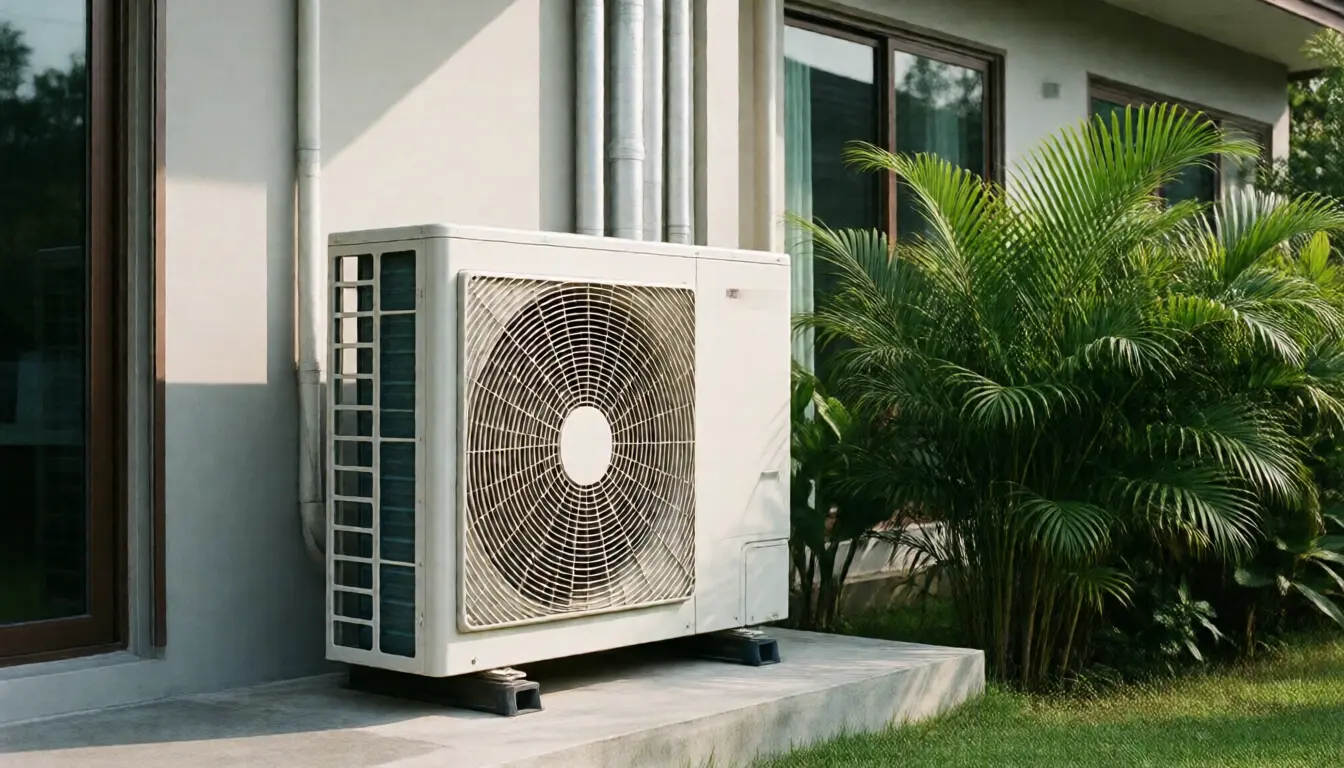
An outdoor position with air moving through it, because it takes air in and blows colder air out. Wedged into a narrow gap where air recirculates, it draws back the cold air it just expelled and efficiency falls.
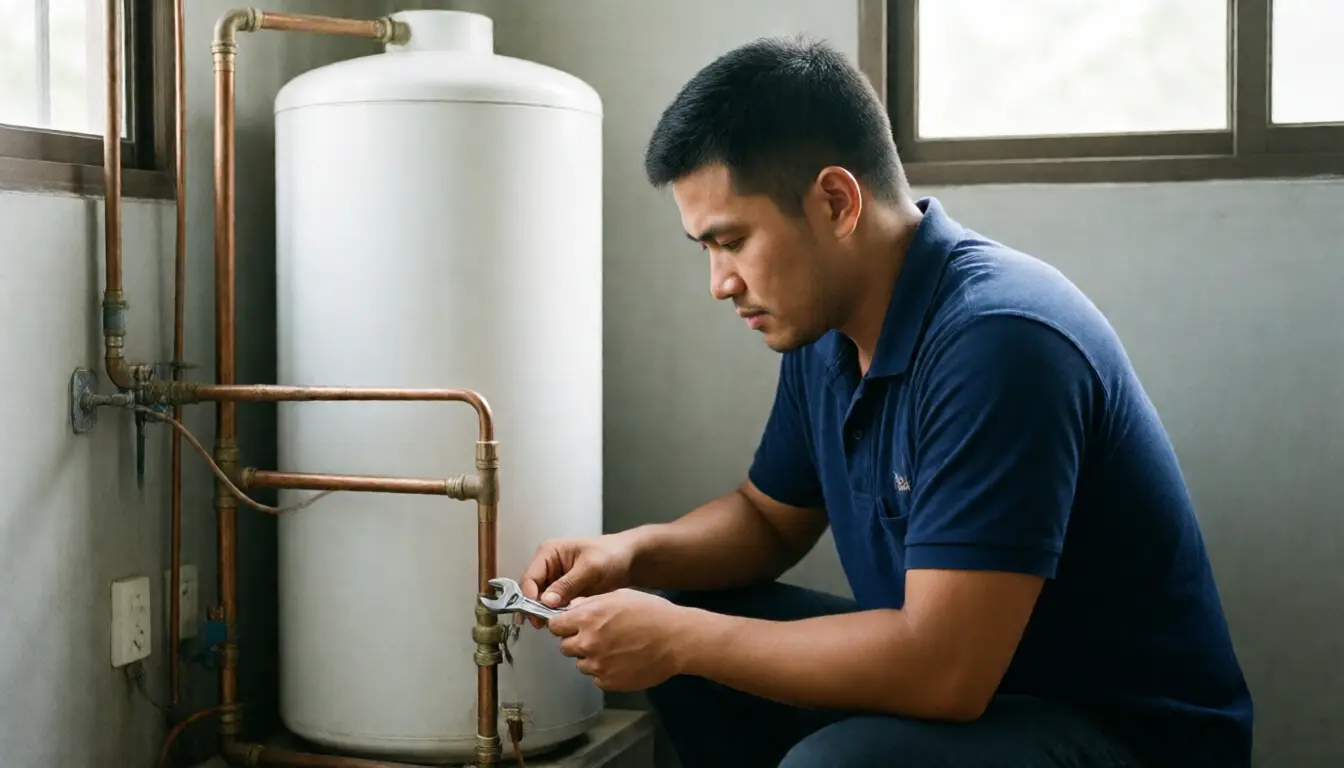
A storage tank, because a heat pump heats water more slowly than an element and therefore has to work ahead. Size the tank for the number of people and for the window when everyone showers at once. Too small a tank means the last person gets a cold shower.
Hot water pipework to every point of use, which is easy in a house being built and much more disruptive in one already lived in, because the pipes have to be run and insulated. Uninsulated pipe throws away the heat you have just paid for, along the way.
A drain, because it produces condensate exactly as an air conditioner does, and that has to go somewhere sensible rather than dripping down the wall.
The noise, and the cold air it blows out
Neither gets mentioned at the point of sale, and both are why people regret where they put it.
A heat pump has a compressor and a fan, so it makes about as much noise as an air conditioner's outdoor unit. Under a bedroom window or against a neighbour's wall, you will hear it every time it runs, and if you schedule it overnight, you will hear it overnight.
The other is the cold air it discharges, noticeably cooler than the surrounding air. Aimed at an outdoor seating area or the washing line, it is a nuisance. Planned well, it is a free extra: point it towards a hot laundry room or a stuffy store room.
With solar on the roof, the answer changes completely
This is where a heat pump is most interesting, and why people who have fitted solar tend to think of it next.
The problem with solar and no battery is that midday generation often goes spare because nobody is home. A heat pump is a load you can schedule freely, so it takes that surplus and stores it as hot water for the evening.
Put another way, the tank becomes a cheap battery that stores energy in only one form, but a form the house uses every day anyway. Actual batteries and whether they pay are covered in a home battery with solar, is it worth it.
A house with no solar but on a time-of-use tariff can apply the same idea by scheduling it for the cheap hours. Deciding on the meter and the tariff is in the smart meter and the TOU decision.
Who should buy one and who should not
Worth considering if four or more people shower daily; if you are building or renovating and the pipes are being run anyway; if you have rooftop solar with midday surplus; or if hot water goes beyond showers, to a bathtub, a pool or cooking at volume.
Not yet if you are in a condominium or rented place, where there is no outdoor position and no running new pipes; if one or two people take short showers, because the base to save from is too small; or if you expect to move within a few years, since this is not something you take with you.
Whichever way you go, every hot water system needs residual current protection, being electrical equipment in direct contact with water. That is covered in residual current devices at home.
Frequently asked questions
Does a heat pump really use less electricity than an ordinary water heater?
Yes, because it moves heat out of the air rather than creating heat from electricity. The COP figure manufacturers quote says how many times more heat you get than the electricity put in. Ask for it before buying.
Is it worth it for one person?
Usually not. The hot water share of a single person's bill is small to begin with, so a high percentage saving is still little money, and payback runs past the working life.
Can I install one in a condominium?
Generally no. It needs an outdoor position with airflow, a storage tank and new hot water pipework, and a unit rarely has room for any of the three.
How loud is it?
About the same as an air conditioner's outdoor unit, since it has a compressor and a fan. Do not put it under a bedroom window or against a neighbour's wall, particularly if you plan to run it overnight.
Does it heat instantly like a shower heater?
No. It heats more slowly and stores the result, so the tank must be sized for the number of people and the window when everyone showers. Too small and the last person gets cold water.
In short
- A heat pump moves heat out of the air rather than creating it, so it delivers several times more heat than the electricity it uses.
- Thailand's warm air is an advantage here, not a drawback.
- Measure your own hot water share of the bill first, then work out the payback.
- It needs an outdoor position, a tank, insulated pipework and a condensate drain.
- With surplus midday solar, the tank becomes a cheap store of energy.
- One or two people taking short showers rarely reach payback.