
The aim is not catching a burglar, it is being the house they skip
People buy an alarm expecting it to help catch someone, which is the wrong expectation and leads to buying the wrong things from the start.
What an alarm system does best is make your house the one that takes longer, is louder, and carries more risk than the house next door.
Because somebody looking for a way in picks the easiest house on the street, not the wealthiest, and time and noise are the two things they do not have.
Understood that way, the order of spending changes immediately, because making entry harder matters more than announcing that entry has happened.
The order to spend in, which differs from what sellers say
One, the locks and the ways in that actually work. An alarm sounding three seconds after the door has opened is an announcement, not protection.
Two, lights that come on when somebody arrives, a few hundred baht per point and genuinely effective, because light appearing suddenly makes anybody trying not to be seen reconsider.
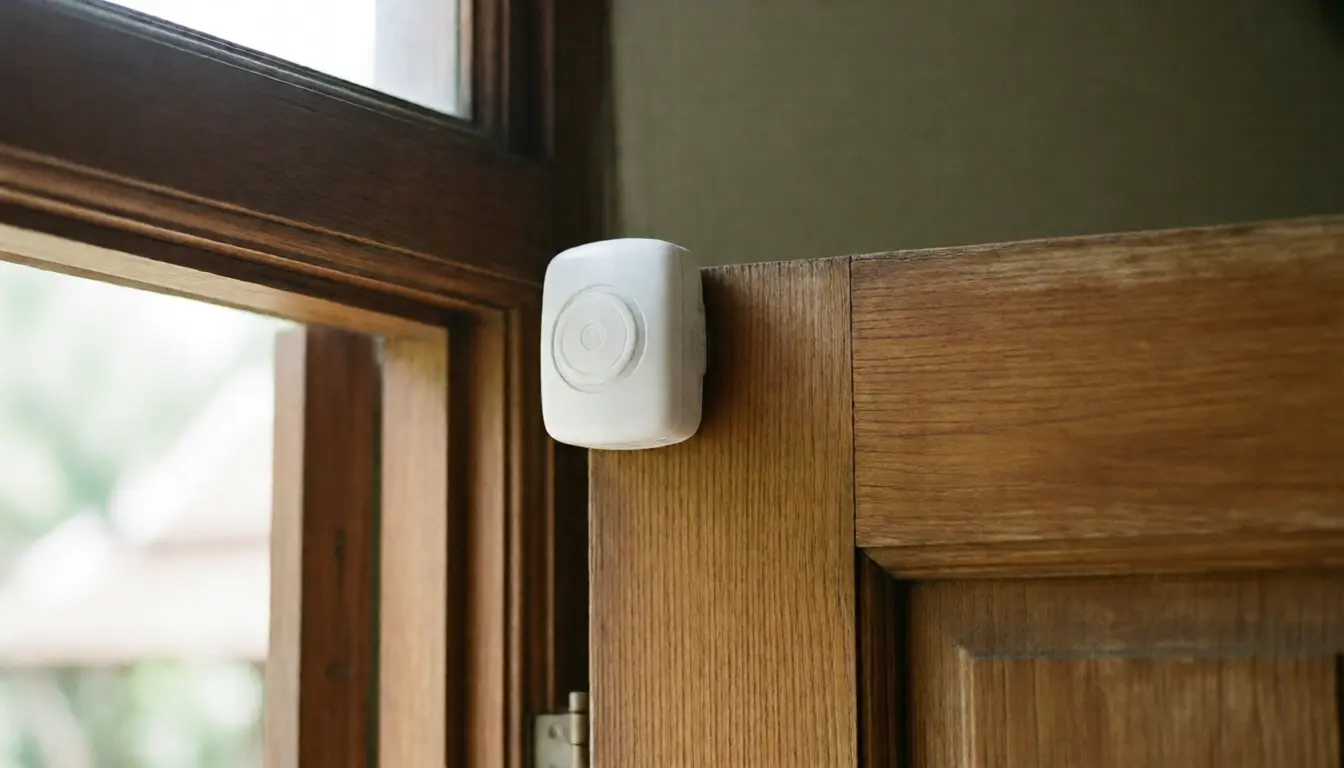
Three, door and window contacts, which is the layer that suits a Thai house best, for reasons in the next section.
Four, motion sensors inside, for when nobody is home.
Five, the siren, which must be outside, loud enough, and high enough that it cannot be reached and smashed, because a siren indoors sounds only for the people already indoors.
Six, cameras, which record what happened and stop nothing. Understand them as evidence rather than protection. Where they may point is in home CCTV and PDPA.
Why door and window sensors suit a Thai house better
The difference between contacts on doors and windows and motion sensors inside is not only position. It is when they warn you.
A door contact warns before anyone is inside. An interior sensor warns once somebody is already in your house, which is a very important difference at night.
And the more important consequence is that you can leave this layer armed while everyone is asleep in the house, and still walk to the bathroom at two in the morning without setting it off.
Interior sensors cannot be armed with people at home at all, which means they protect only an empty house, and not during the hours people are most afraid.
So if you start with one layer, start with the doors and windows, particularly every door to the outside and every ground-floor window.
The weaknesses of Thai houses that intruders know and owners do not
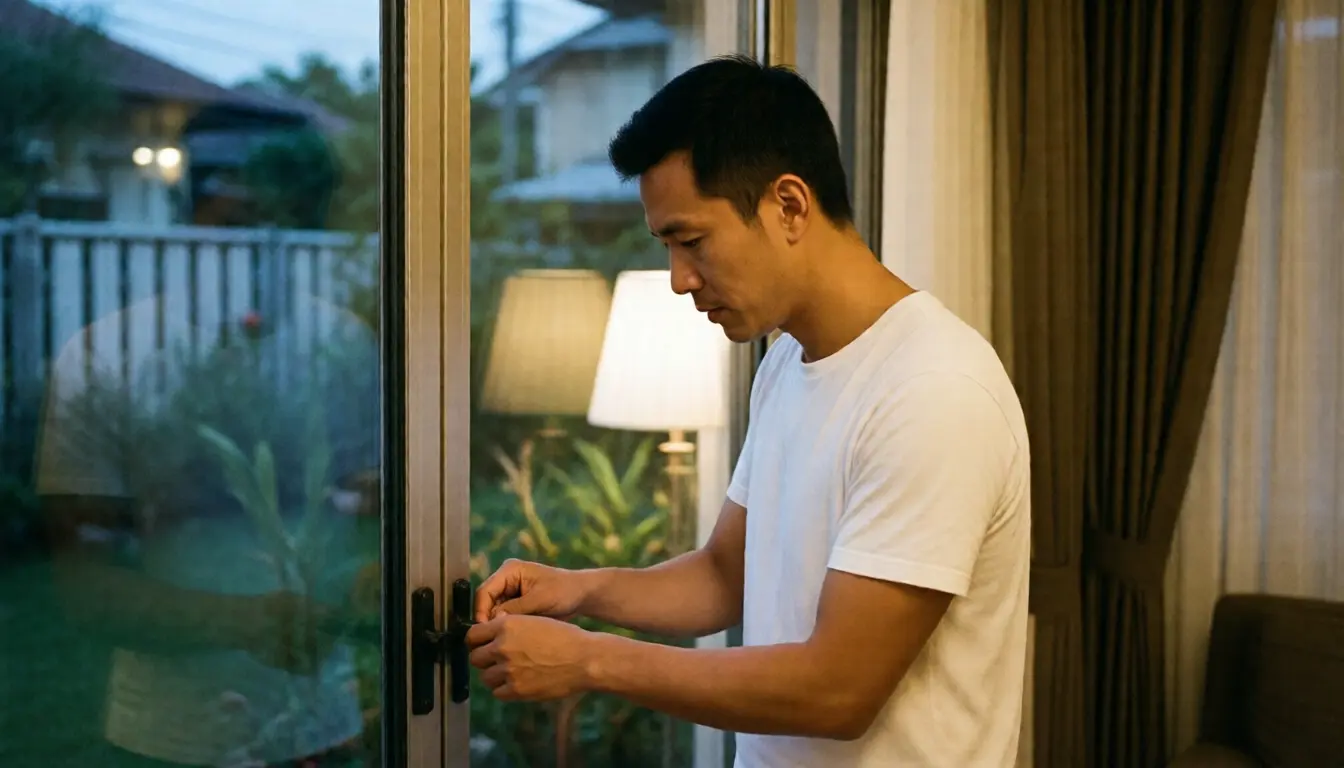
Sliding aluminium doors and windows are the first weakness, because many can be lifted straight out of the track even while locked, a method needing no broken glass and making no noise.
The fix costs a few hundred baht: an anti-lift stop in the upper track, or a second lock securing the panel to the frame, which immediately defeats the most commonly used method.
Test it yourself tonight. Lock the sliding panel and try to lift it. If it moves more than a centimetre, it can come out.
Steel window grilles genuinely work at keeping people out, and there is a trade that must be said plainly: they keep people in during a fire.
The rule not to break is that every bedroom window with a grille must have a section that opens from inside without a key, and everybody in the house must know where it is and how it opens.
If the grille is padlocked, keep the key hanging in the same place beside that window, always. The smoke alarms that belong alongside it are in smoke, gas and carbon monoxide detectors.
What gets the system switched off within the first month
The best alarm system is the one that actually gets armed, and the one thing that stops people arming it is false alarms.
Three causes account for most false alarms in Thai homes.
Pets, which set off ordinary motion sensors every night. The answer is a model designed not to respond to small animals, mounted high enough.
Geckos and insects crossing the lens, a problem specific to tropical houses that the English-language manual does not mention. The answer is cleaning around the lens periodically and not mounting near a light that attracts insects.
Wind and doors that do not close fully, which make a contact report open and closed repeatedly. The answer is adjusting the door to close properly rather than moving the sensor.
And choose an arming method fast enough that people will do it daily, because a system needing an app to open and load for ten seconds every time you leave is one that will not be armed within a fortnight.
Who is going to look, when it sounds and you are far away?
This is the question people do not ask themselves before buying, and it decides whether the system is worth anything.
A system that sends a notification to your phone gives you information, which is good but is not protection, because knowing the house was opened while you are two hours away changes nothing during those two hours.
What to do is agree in advance who will go and look. A neighbour, a relative living nearby, or the estate security, and that person must know they are the one and have your number.
If you use a service with a monitoring centre, ask exactly what they do when it sounds, who they telephone first, and how long it takes before anyone reaches the house.
And agree with two neighbours to watch each other's houses when anybody is away, which is a security system that costs nothing and works better than several devices combined.
Does it still work in a power cut or when the internet is down?
An alarm that stops when the power does is one that does not work in the situation carrying the most risk.
Ask before buying whether the control unit has an internal backup battery and how long it lasts.
The second question is whether the siren still sounds if the internet is down, because a system that must reach the manufacturer's servers before triggering the siren goes completely silent when the router reboots.
The answer you want is that the siren operates locally with no internet involved, and that phone notifications are an addition that can be lost.
And if it can send alerts over a mobile signal when the home connection is down, that is worth paying extra for, because cutting the internet line is too straightforward a method to ignore.
Frequently asked questions
What should I start with on a limited budget?
The locks and the ways in that actually work, then lights that come on when somebody arrives, then door and window contacts. Cameras are evidence rather than protection.
Door contacts or motion sensors?
Door and window contacts first, because they warn before anyone is inside and can stay armed while everybody is asleep at home. Interior sensors cannot be armed with people in the house.
My house has sliding aluminium doors. What should I do?
Lock one and try to lift it. If it moves more than a centimetre it can be lifted out. Fit an anti-lift stop in the upper track or a second lock, which costs a few hundred baht.
Are steel grilles safe?
They keep people out and also keep people in during a fire. Every bedroom window with a grille must have a section opening from inside without a key, and everybody must know where it is.
My pet sets it off constantly. What now?
Choose a sensor designed not to respond to small animals, mount it high enough, and clean around the lens periodically, since geckos and insects also cause false alarms.
In short
- The aim is being the house that gets skipped, not the house that catches somebody.
- Spend in order: locks and entry points, then lighting, then door and window contacts.
- Door contacts warn before entry and can stay armed while everybody sleeps.
- Many sliding aluminium panels lift out of the track even locked. Test yours tonight.
- A grilled bedroom window must have a section that opens from inside without a key.
- Agree in advance who goes to look, and check that the siren works with the internet down.