
Where it drips is not where it leaks, which is why the repair never holds
The stain on the ceiling is almost never underneath the hole the water came through, and not knowing that is why plenty of houses have paid three roofers and still leak.
What actually happens is that water enters at one point, runs along the underside of the roof sheet, continues along a purlin, a rafter or a cable run through the roof space, and drips only where that path is interrupted.
That distance may be two metres or six, and it is almost always further down the slope, because water follows gravity.
So there is one rule for finding a leak: look from inside the roof space and trace the wet mark upwards. Do not climb onto the roof and look for a hole above where the ceiling is stained.
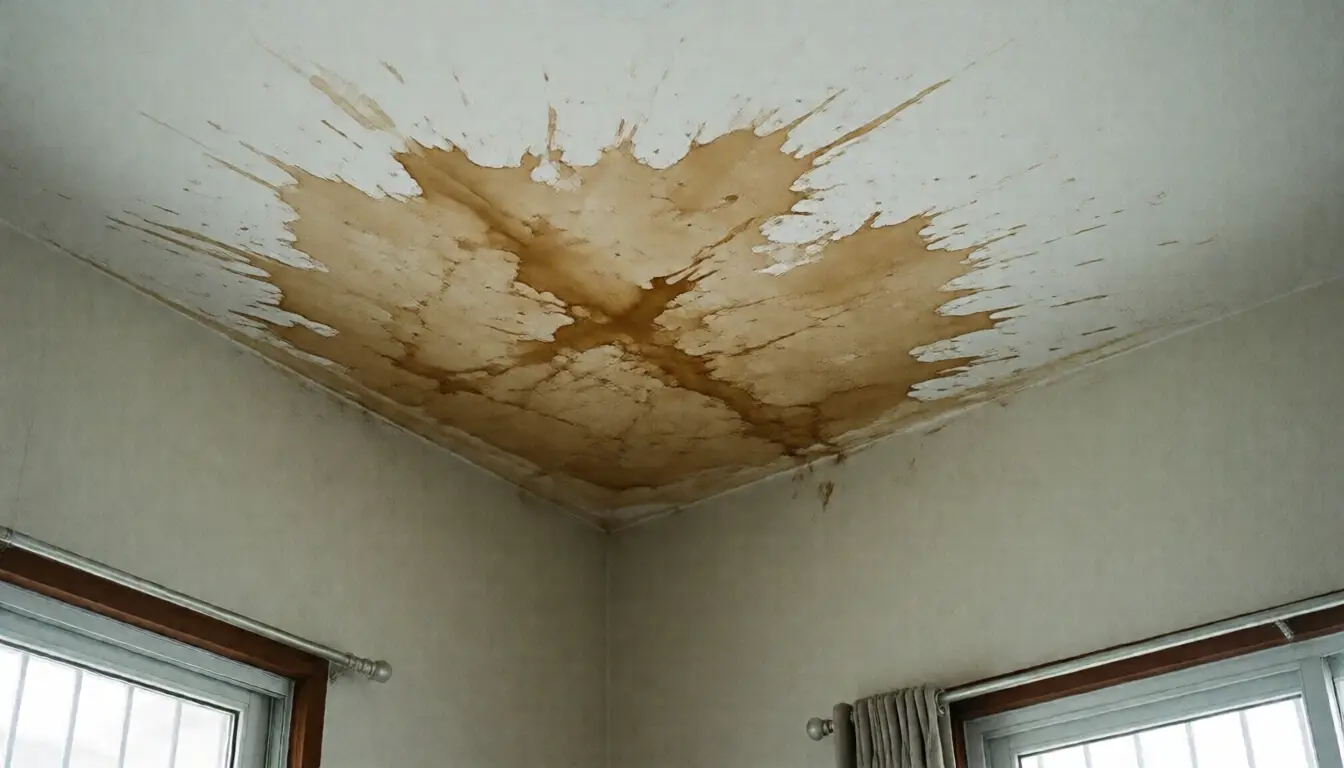
First, decide whether it is a leak at all
Three things drip in a way indistinguishable from a leaking roof, are fixed completely differently, and are not helped at all by roof repairs.
Condensation under a metal roof in a house with no insulation. The tell is that it drips on cool clear nights rather than while raining. If it drips on a clear night, it is not a leak.
A blocked gutter overflowing, sending water back under the eaves to drip at the outer edge of the ceiling. The tell is that it happens only in very heavy rain and never in drizzle.
Water or air conditioning pipework run in the ceiling. The clearest tell is that it also drips on days with no rain at all, particularly in step with when the air conditioning runs or water is used.
Write down three things every time it drips: the date and time, whether it was raining, and which direction the wind came from. Three lines in a notebook tell you more than a day of guessing on the roof.
Why some houses leak only in a storm
A house that never leaks in ordinary rain but leaks in a storm is not a house whose roof is adequate for ordinary rain. It is a house whose weak point needs wind to push water into it.
Rain here usually arrives with strong wind and falls at an angle, so water is driven up under the tiles, past overlaps that gravity alone would have handled.
That makes the wind direction on the day it leaked genuinely valuable information. If it only leaks when the wind is from the south, look at the south side of the roof first, particularly where it meets a wall, the side caps, and the eaves on that side.
It also explains why a roofer who came on a sunny day found nothing. A weak point of this kind is invisible to the eye. It needs water and wind together before it shows itself.
The five places leaks actually start, in order
One, where the roof meets a wall, such as where a lower roof runs into an upper storey wall, or where a canopy meets the house. That junction needs flashing tucked properly into the wall. Where render or a smear of silicone has been used instead, it cracks and leaks within a few years. This is the most common source in Thai houses.
Two, ridge and hip caps bedded in mortar, because mortar and tile expand differently under daily sun and split along the line. You can see this from the ground with binoculars or by zooming in with a phone.
Three, anything penetrating the roof: soil vent pipes, aerial mounts, solar mounting feet, turbine vents. Every penetration is a place that needs weatherproofing, and every one of them deteriorates before the roof itself does.
Four, valley gutters between two roof slopes, which collect more leaves than anywhere else. When they block, water rises above the tile edge and runs back underneath. This one is fixed by cleaning alone, with no repair at all.
Five, cracked or slipped tiles, which is what people think of first and which is in fact rarer than any of the four above.

Finding it yourself without going on the roof
Most of the work is done from inside, and it is far safer.
Go up into the roof space through the ceiling hatch while it is raining or shortly after, with a torch bright enough to be useful, and look for wet patches or water staining on the roof structure and the underside of the roof covering.
When you find a wet mark, follow it upwards, always towards the higher side, because water comes from above. Keep following the staining until you reach where it begins. That is the area water is entering.
Mark it, for example by tying coloured string to the structure there, so that when you do go up outside you know exactly where to look instead of searching the whole roof.
While you are up there, photograph every stain you find, including places that are not dripping into the room yet, because old staining tells you there are other entry points that have not yet reached the ceiling.
The hose test must go from the bottom upwards
If the roof space does not make it clear, test with a hose, with one person outside and one inside the roof space watching.
The rule that matters is to start at the lowest part of the roof. Wet one section, wait five to ten minutes, and only move up to the next section if nothing comes through.
Starting at the top is useless, because if water appears you have no idea which section let it in, since the water has already passed over everything below.
Run the water long enough, too. Some leaks need several minutes of accumulation before anything gets through, so thirty seconds and a declaration that it does not leak proves nothing.
On safety: do not go on a wet roof, do not stand in the middle of a tile but on the line where a purlin supports it, and if the roof is steep or above two storeys, pay someone with fall protection.
Silicone is the fix that makes next time harder
The most common repair is silicone or a waterproofing coating smeared over the suspected area, and sometimes it works for a while.
The problem is that it treats the symptom rather than the cause, and when it lifts or cracks in a year or two, the water returns by the same route, now with a layer of silicone hiding where that route actually is.
Worse, sealing all around means water that does get in cannot get out, so it stands in the structure and rots timber or rusts steel faster than it otherwise would.
The correct repair for the first four sources is to strip back and redo it properly: install flashing genuinely tucked into the wall, refit caps with a system that can move, or reform the weatherproofing around whatever penetrates the roof.
Ask the roofer how they will fix it before agreeing. If the answer is silicone and nothing else, ask where the water is getting in. If they cannot say, they have not found it.
A new house still under warranty needs a different approach
If the house was transferred recently, do not hire an outside roofer first, because doing your own repair can be used as an argument that you altered the original work.
What to do is notify the developer in writing as soon as you find it, with dated photographs, and keep a copy of every notification.
Photograph both the ceiling stain and, if you can get into the roof space, the wet marks on the structure, because a picture from above is far harder to dispute than a stain below.
What falls under which warranty period and from when is in the new home warranty, structure and fittings. And if you are about to take handover of a new house, opening the ceiling hatch to look for water staining is essential, which is on the list in the new house handover inspection.
What to do before the next rainy season
- Clean the gutters and valleys before the rains every year, since it is both the easiest cause to fix and the most common one in houses with large trees around them.
- Cut back branches overhanging the roof, because a branch scraping tiles in strong wind moves them, and the leaves it drops are what blocks the gutters.
- Zoom in on the ridge line with a phone from the ground to look for splits along the mortar. Five minutes, without going anywhere near the roof.
- Open the ceiling hatch and look once, even with no symptoms, so you know what normal looks like and have something to compare against later.
- Fit a water sensor where it leaked before, so you know at the first drop rather than when the ceiling stains, which is covered in water leak sensors for a Thai home.
Frequently asked questions
Why does it still leak after repairing above the stain?
Because the drip is almost never below the entry point. Water runs along the underside of the roof and the structure until something interrupts it. Find it from the roof space by tracing the wet mark upwards.
It drips on clear nights. Is that a leak?
No. That is usually condensation under metal roofing in a house with no insulation. Roof repairs do not help; insulation and ventilation do.
What does it mean if it only leaks in a storm?
That the weak point needs wind to drive water into it. Note the wind direction on the day it leaks and inspect that side first, particularly the wall junctions and side caps.
Where should a hose test start?
At the lowest part of the roof, working upwards one section at a time with five to ten minutes between. Starting at the top tells you nothing about which section let the water in.
Is silicone over the top enough?
Not in the long run. It treats the symptom, and when it cracks in a year or two the water returns by the same route, now hidden under a layer that makes the real point harder to find.
Should I hire a roofer for a new house?
Not first. Notify the developer in writing with dated photographs, because repairing it yourself may be used as an argument that you altered the original work.
In short
- Where it drips is not where it leaks. Trace the wet mark upwards from inside the roof space.
- First decide whether it is a leak, condensation, an overflowing gutter or a pipe in the ceiling.
- Record date, rain and wind direction every time. That points to the spot faster than guessing.
- The most common source is the junction between roof and wall, not a broken tile.
- A hose test goes bottom to top, one section at a time, with enough time between.
- Silicone is a temporary fix that makes finding the real point harder next time.