
The developer's duty to maintain the common utilities never simply expires
This is where many residents start from the wrong assumption, and it is why some estates have lived with a broken road for ten years believing nothing could be done.
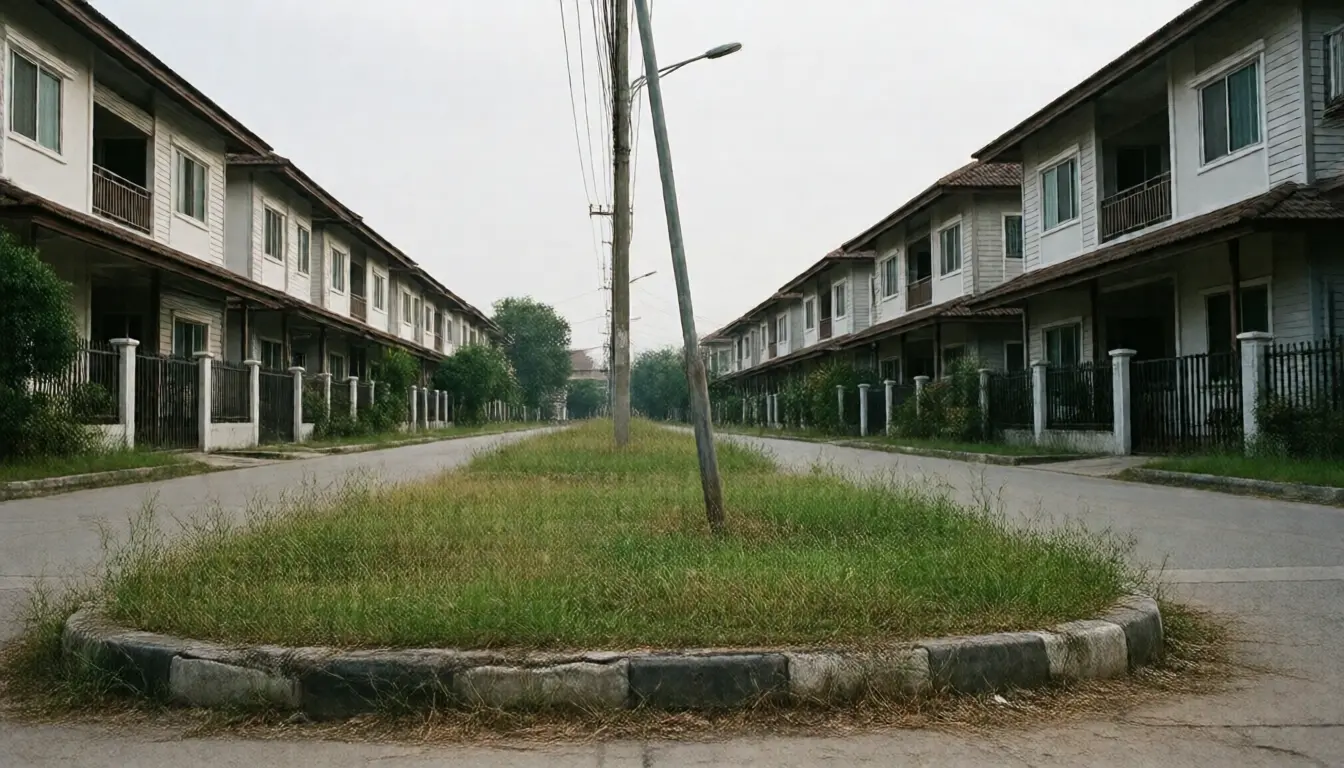
Under the Land Allocation Act, the developer has a duty to maintain the common utilities they built in the condition in which they were built, and that duty does not end merely because every house has been sold.
The developer is released only when one of three things happens: the buyers establish a housing estate juristic person, or another legal entity, to take transfer of the assets and manage them; the committee approves some other arrangement for maintenance; or the assets are registered as dedicated to public benefit.
In practice, if none of those has happened, the duty still sits with the developer, and their having disappeared does not mean the duty disappeared with them.
What changed in the latest amendment
The Land Allocation Act (No. 3) B.E. 2568 came into force on 1 March 2569 and adds the tool residents had been waiting for.
What it adds is this: if the developer does not initiate the establishment of a housing estate juristic person within a period of not less than 180 days from the date the buyers were notified, buyers representing not less than one half of the sub-divided plots already sold under the project plan may come together and establish the entity themselves, to take transfer of the common utilities and manage them instead.
Before this, if the developer simply never started the process, residents had almost no way forward, and many projects sat in that condition for a decade.
Two further changes go straight to the money. The guarantee funds must be handed to the juristic person or to the local administrative organisation when the developer is released from the duty. And the rules on common fees were amended so that different rates may be set according to the type of land use or the size of the plot.
That last point resolves a long-standing grievance, where a small plot, a large plot and a plot used for a business all paid the same although they do not use the common facilities equally.
There are also penalties for a developer who breaches a committee order, from fifty thousand to one hundred thousand baht, plus a daily fine until they comply.
The guarantee money to chase down
The thing residents should ask about most carefully at the point of transfer is the maintenance guarantee for the common utilities.
The developer must arrange for a bank or financial institution to enter a guarantee contract for the maintenance of the common utilities at the time the allocation licence is applied for, in an amount calculated as seven percent of the estimated cost of constructing the whole project's common utilities, at the government's central construction prices at the time the guarantee contract was made.
And the amount the developer must contribute towards maintenance when released from the duty must be not less than the amount of that guarantee contract.
Which means that on the day the juristic person takes transfer of the common utilities, it should receive that sum too, rather than taking the roads and drainage and starting to collect common fees from zero.
Before signing for the transfer, ask to see the original guarantee contract and the figure in it, and check that what you are being given matches. Once you have signed, claiming it afterwards is far harder.
Three routes, and the third one people overlook
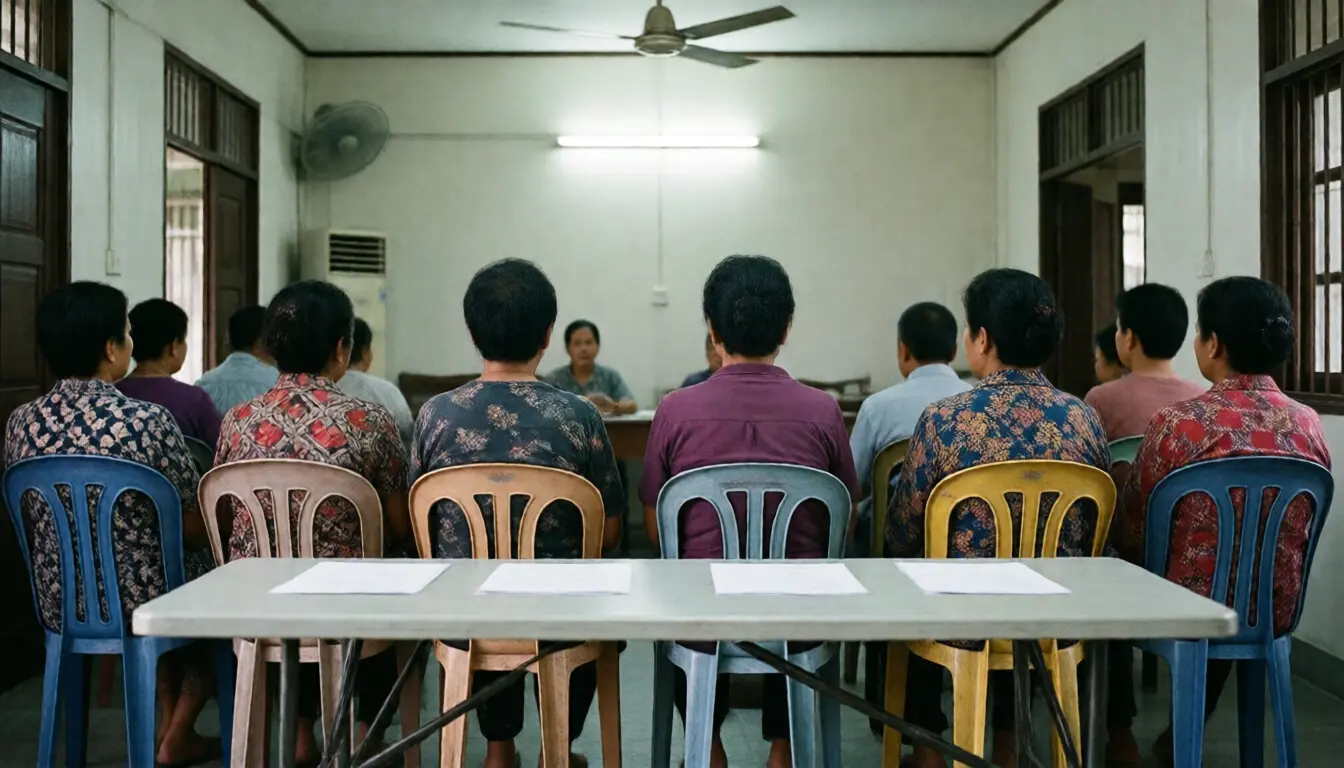
First, establishing a housing estate juristic person, which gives residents the most control. The entity owns the common utilities, may collect common fees under the law, and may set the rules inside the estate. The trade is that somebody has to be willing to serve on the committee and do the work.
Second, the developer obtaining approval for some other arrangement, which requires the committee's agreement and is used in specific circumstances.
Third, dedicating the common utilities to public benefit, meaning the roads and common assets become public, maintained by the local administrative organisation.
The third sounds attractive to anyone who does not want to pay common fees, but there is a trade nobody usually explains in full.
Once the roads are public, anybody may drive in. The guardhouse can no longer stop a vehicle, a barrier has no legal authority to bar anyone, and maintenance follows the local authority's budget and priorities rather than what the residents want.
For an estate that sold itself on privacy and security, that is a change with a direct effect on house prices, so it is something to vote on with full understanding, not something to choose because you want the common fee to stop.
What to inspect before taking transfer
The day the juristic person takes transfer of the common utilities is the day the entire repair burden moves to the residents. Accepting something about to fail is taking on a large debt without realising it.
Form a working group and walk it with an independent engineer, looking at six things.
- The road surface and the base beneath it, not just whether there are potholes but whether there is crocodile cracking or settlement along a line, because those are signs it needs rebuilding rather than patching.
- Drainage and inspection chambers, opening the covers to see whether they are full of silt, and testing by running water through on a dry day.
- Street lighting and its control panel, visiting at night to count how many actually work, and opening the panel to look at the cabling and breakers.
- Pumps, water tanks and the treatment plant, which have finite lives and expensive replacements. Ask for the maintenance history and the age of the equipment.
- The clubhouse, pool and gardens, particularly the pool filtration, which is a recurring cost many estates underestimate.
- Documents and drawings: as-built drawings, drainage layouts, electrical layouts, and the schedule of assets being transferred, because having no drawings means every future repair starts with guesswork.
Where something is not right, list it in an annexe with a deadline for putting it right, exactly as with a house handover, explained in the new house handover inspection.
Settle the common fee before, not after
Almost every estate that establishes a juristic person and then has problems has the same problem: people not paying the common fee.
What to do before establishing it is work out a real budget with real numbers: gardening, security, street lighting electricity, a reserve for road repairs, and management costs, divided by the number of plots.
The figure that comes out is usually higher than residents expect, and seeing it before the vote keeps the decision grounded in reality, rather than establishing the entity first and arguing about money afterwards.
The new Act also allows different rates by type of land use or plot size, which should be used from the start, because it is far easier to agree when setting up than to change later.
And there must be a plan for non-payers from day one, because the law provides the tools, and an estate that never uses them is one where those who pay on time carry those who do not. The details are in common fee arrears in a housing estate.
If you are about to buy in an estate
Ask one question before anything else: who holds the common utilities right now?
If a juristic person already does, ask for the past financial statements, the common fee rate, the arrears rate and the minutes of the last general meeting. Those four say more about the state of an estate than one walk round.
If it is still with the developer although the project sold out and was completed years ago, ask why, and use the state of the roads and street lighting as your indicator.
If it has been dedicated to public benefit, understand that you are buying a house on a public road, which is not wrong in itself but is different from the gated estate in the advertising, and check whether the guardhouse can actually do anything.
Frequently asked questions
The developer sold every house. Does their duty over the roads end?
No. The maintenance duty continues until a juristic person is established to take transfer, or another arrangement is approved, or the assets are registered as dedicated to public benefit.
The developer will not start the process. What can residents do?
Under the Act (No. 3) B.E. 2568, if the developer does not initiate it within not less than 180 days from the date buyers were notified, buyers representing not less than one half of the sub-divided plots already sold may establish the entity themselves.
Does any money come with the transfer?
It should, because there is a maintenance guarantee calculated as seven percent of the estimated cost of constructing the project's common utilities at the government's central construction prices. Ask to see the original guarantee contract before signing.
Is dedicating the roads to the public better, so we stop paying fees?
It trades away control: the roads become public, anybody may enter, the guardhouse cannot stop vehicles, and maintenance follows the local authority's budget. That affects both security and house prices.
Is the common fee the same for every plot?
The new Act allows different rates by type of land use or plot size, which should be agreed when the entity is established, because changing it later is harder.
What should I ask before buying in an estate?
First, who holds the common utilities. If a juristic person does, ask for the past accounts, the fee rate, the arrears rate and the minutes of the last general meeting.
In short
- The duty to maintain common utilities stays with the developer until one of three specific things happens.
- The Act (No. 3) B.E. 2568 lets buyers holding at least half the sold plots establish the entity themselves after not less than 180 days.
- The guarantee is seven percent of the estimated cost of the project's common utilities, and it should follow the transfer.
- Dedicating to public benefit costs you a gated estate: anyone may enter and the guardhouse cannot stop them.
- Inspect roads, drainage, lighting, pumps and drawings before signing, because after that it is the residents' burden.
- Work out a real common fee budget before the vote rather than arguing about money afterwards.