
Your leverage peaks before transfer and is close to nothing after it
That single sentence explains why the handover inspection matters more than people think.
Before transfer, the developer wants you to transfer, because that is the day they take the final payment and close the sale. While you have not signed, what you ask for carries weight.
After transfer the position reverses. You become a homeowner asking someone to come back and finish what was not right, and although the warranty still stands, the speed of response is visibly different.
So the one rule that matters most is this: do not transfer with outstanding items agreed only verbally. If you are going to transfer before everything is done, there must be a defects list signed by both sides, itemised with a completion date for each, attached to the contract.

What to bring, which nobody tells you
Most people arrive empty handed and inspect only what the eye can see, although what you need is a handful of things already in the house.
- A torch, for under the sink, inside cupboards, up in the ceiling void and every corner the house lighting does not reach.
- A marble or a bottle of water, to set on the floor and see whether it runs. Every room in a few minutes.
- A phone charger, to plug into every socket and confirm there is actually power, not merely an outlet on the wall.
- Masking tape and a pen, to mark each problem so the workers can find it and you do not have to explain twice.
- A bucket or a bowl, to pour water across the bathroom floor and watch where it goes, and down every drain.
- A coin or a screwdriver handle, for tapping tiles, which returns more information per minute than anything else you will do.
- A phone camera, photographing every finding plus a wide shot of the room so you know where it was.
Go in bright daylight, because sunlight raking along a wall reveals the waves and unevenness in the plaster that are completely invisible under a ceiling light.
Three tests you can only do while the house is empty
Once the furniture arrives these become much harder, to the point that many houses never get them done at all.
Test the water. Open every tap at once and watch the pressure, flush every toilet, leave a shower running, then walk round looking under sinks and around pipes for drips. Then pour water across the whole bathroom floor and see whether it all reaches the drain or stands somewhere. A bathroom that holds water is a problem whose later fix means lifting tiles.
Test the electrics. Plug the charger into every socket in the house one at a time, operate every switch, then press the test button on the residual current device in the consumer unit and confirm it actually trips. That button exists to be pressed, and handover day is when it should be. This is covered in residual current devices at home.
Test floors and doors. Set the marble in the middle of each room and see whether it moves, and open and close every door slowly to see whether it stays where you leave it or swings back. A door that must be forced or will not reach the latch is telling you the frame is out of square.
Tapping tiles: the best hour you will spend
The most common defect in new Thai houses, and the one fewest people check for, is tile laid over incomplete mortar.
Tap along tile by tile with a coin or a screwdriver handle. A fully bedded tile sounds solid and dull. One with a void underneath sounds hollow, and the difference is obvious enough that someone with no experience can hear it within the first three minutes.
It has to be put right because a tile with a void beneath it cracks when something heavy sits on it or people walk the same line repeatedly, and once cracked, replacing a single tile rarely matches the original batch for colour.
Tap every room, concentrating on the middle of the floor, the edges against walls, and the door thresholds, which are the three places it turns up most, and tape a mark on every hollow-sounding tile.
This takes about an hour for a whole house and usually produces the longest section of the defects list, which is money you will not be spending yourself in two years' time.
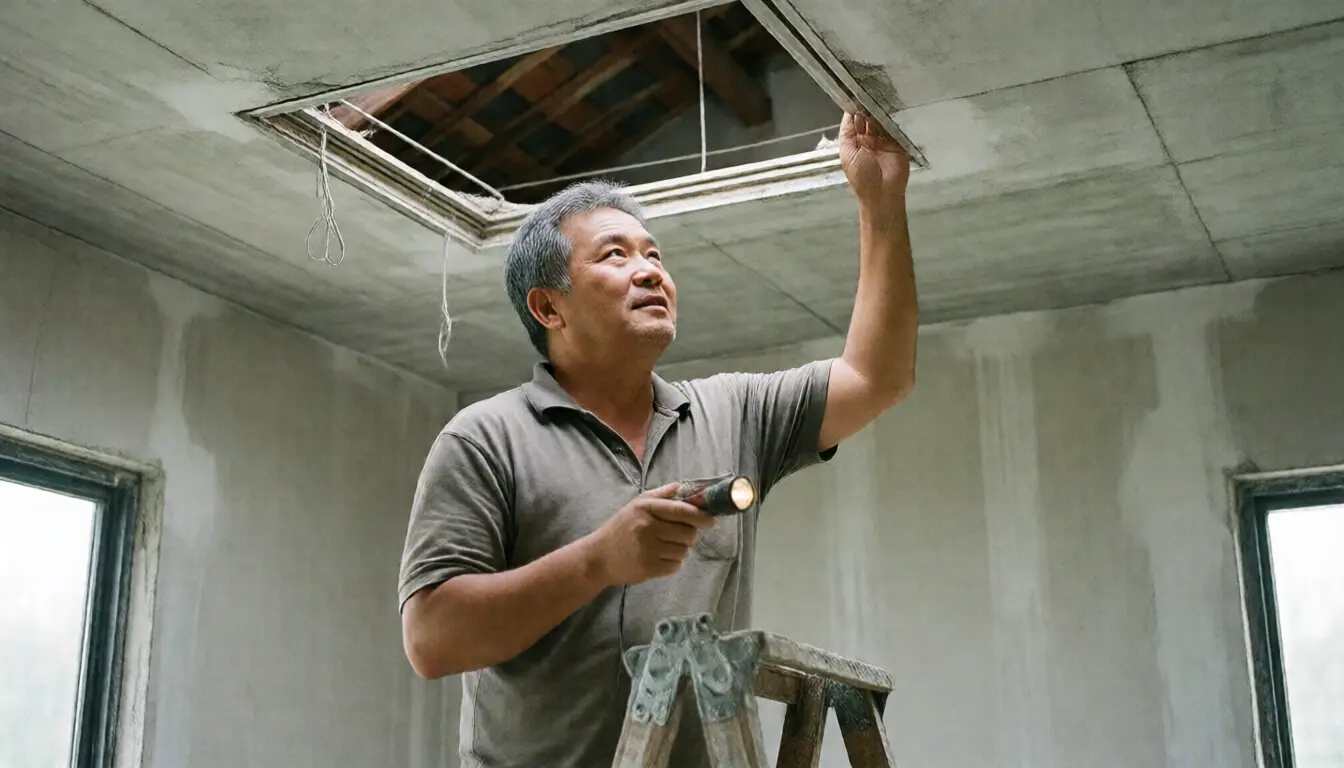
The ceiling hatch: most skipped, most informative
Almost every house has an access hatch somewhere, usually in a bathroom or a hallway, and most owners never once open it.
Shine a torch in and look for four things. Whether there is insulation laid, and whether it covers the whole area or stops in places. Whether there are ventilation openings at the gables. Whether there are water stains or damp marks on the roof structure. And whether builders' offcuts have simply been left up there.
The first two decide how hot this house will be for as long as you live in it, and both cost several times more to put right later than now. That is explained in why Thai houses get hot and what to fix first.
The third matters most, because a water stain in the roof space of a house nobody has lived in yet means there is already a leak. Photograph it and put it on the list immediately. Do not accept a promise to have another look.
Which cracks to raise
New houses do crack, and not every crack is a problem. What matters is telling apart what is on the surface of the plaster from what says something about the structure.
Fine hairline crazing spread across a plastered wall is normal shrinkage. Filler and paint fix it. Put it on the list so it gets done, but it is not a worry.
The ones to raise seriously are cracks running diagonally out of the corner of a door or window opening, cracks continuing across a change of material, cracks wide enough to slide the edge of a card into, and cracks appearing in the same place on both faces of a wall.
Those four need an explanation item by item rather than filler over the top, because filling a crack that is still moving brings it back within months. How to tell them apart yourself is in which cracks are dangerous.

What to check against the documents, not just for looks
Half of a handover inspection is finding defects. The other half is confirming that what you got is what you bought.
Fence lines and plot area. Walk the boundary against the plan in the contract, particularly for corner plots and plots against common land, because a fence in the wrong place gets harder to move every day after transfer.
Electricity and water meter sizes. They should match what was specified, since upgrading later is at your cost, and a house with several air conditioners on an undersized meter has problems from the first year.
Materials and fittings. Compare the brand and model of sanitaryware, taps, tiles and doors against the sales documents. If something was substituted, ask why and ask for the difference or for the original.
Parking and everything promised. Walk it in person, including the size of the parking space, the access, and the common facilities that were advertised.
Do two passes, always. One looking for defects, one holding the documents and comparing, because the two use different kinds of attention and doing them together means missing things.
When the developer pushes for transfer
The common scene is thirty outstanding items on the list and the developer saying transfer now, we will come back and finish everything, with a reminder that missing the transfer date might cost you something.
The right response is neither refusal nor agreement, but turning the words into a document. Ask for a defects schedule listing every item with a completion date for each, signed by both sides and attached to the contract.
If they genuinely intend to do the work, signing that costs them nothing. If they will not sign it, that is your answer about the intention.
Also photograph every finding on inspection day with the date in the file, because the argument that comes up most often after transfer is whether the damage was there before or happened during the move, and a dated photograph answers that in three seconds.
And remember that transferring does not waive the warranty. The house still carries structural cover and cover on the fittings for the periods the law provides. What falls under which and from when is in the new home warranty, structure and fittings.
If you have no time, hire an inspector
Handover inspection services exist and vary in quality. Four questions before hiring.
What tools do they use? A good answer includes more than eyes: a moisture meter, a thermal camera, a level.
What does the report look like? Ask to see a sample from another house. A usable report has a photograph of every finding, a clear location and a recommendation for how to put it right.
Do they re-inspect after the developer has done the work, and is that in the price or extra? The re-inspection is the part that gets items actually fixed.
Are they independent of the developer? An inspector the developer recommends may well be good, but you should know the relationship first.
Whether or not you hire one, go yourself. The person who will live there notices things an inspector is not looking for, such as how the afternoon sun reaches the bedroom, or the road noise in the evening.
Frequently asked questions
How long should a handover inspection take?
Two to three hours for a normal detached house if done properly, with about an hour of that being tile tapping. If the developer offers thirty minutes, ask for a different appointment.
Can I transfer first and have them fix things afterwards?
Yes, provided there is a defects schedule listing every item with completion dates, signed by both sides and attached to the contract. Verbal or chat agreements are what let it drag on indefinitely.
Are cracks in a new house abnormal?
Hairline crazing on plaster is normal shrinkage. Cracks running diagonally from door and window corners, cracks wide enough for a card edge, and cracks matching on both faces of a wall need an explanation from the developer.
If a tile sounds hollow, does every one have to be replaced?
Every hollow-sounding tile should be put right, because a void beneath it cracks under load, and replacing tiles later rarely matches the original batch for colour.
How does a house inspection differ from a condominium one?
A house has things a unit does not: the roof space, fences and boundaries, drainage around the building, and the roof itself. A unit focuses on internal work and the junctions with common property. That list is in the condominium handover checklist.
What time of day should I go?
Bright daylight, because sun raking along a wall shows uneven plaster that a ceiling light hides completely. If you can, come back once on a rainy day.
In short
- Leverage is highest before transfer. Do not transfer with items agreed only verbally.
- Bring a torch, a marble, a charger, masking tape, a bucket and a coin for tapping tiles.
- Test water, electrics and floor level while the house is empty, because afterwards it is far harder.
- Tapping every tile is the highest-return hour of the whole inspection.
- Open the ceiling hatch and look for insulation, gable vents and water stains on the roof structure.
- Do two passes: one for defects, one holding the documents to confirm you got what you bought.