
The answer first: shut off every tap in the house, then watch the small dial in the middle of the meter. If it still turns, you have a leak
Ten minutes, nothing to buy, nobody to call, and it settles one of the more expensive questions a house can pose.
Because most household leaks in Thailand are not dramatic. No burst, no spray, no flood.
They trickle, a few dozen litres a day, through a toilet that does not quite seal or a hairline crack in a pipe under the floor, and they surface as a bill that climbs every month with nobody able to explain it.
Most owners find out when the bill lands, when the meter at the front of the house had been saying so for months, had anybody lifted the lid.
This covers how to read the meter, how to test for a leak, how to tell whether it is inside your boundary or outside it, how to measure it in litres, and the list of the places leaks actually turn up, in order.
Learn to read the meter first
The dial carries three sets of information, and most people use only one of them.
The digits on the black background are cubic metres. This is the set the water authority bills from, and the only set that appears on your bill. This month's reading minus last month's is your consumption.
The digits on the red background are litres. They are not used for billing, but they are the most useful part of the dial when hunting a leak, because they move visibly while the black digits have not budged at all.
A cubic metre is a thousand litres. So a leak of fifty litres a day moves the black digits by one unit every twenty days, which is far too slow to notice on a bill. The red digits show it immediately.
The small dial in the centre of the face is the most valuable part for this job. It is a little star or triangle that spins the moment water passes through, even a flow too small to move the numbers.
The rule the water authority states is exactly this: if you are not using water, that dial should not turn. If it turns, assume a leak inside the property and find it.
The real test: two rounds, to separate inside from outside
Do not draw a conclusion from one round, because one round tells you there is a leak, not where it is.
Round one, shut off everything that uses water.
- Every tap, indoors and out, including the garden tap and the car-washing tap that everybody forgets.
- The washing machine and dishwasher, not just switched off but with no fill cycle pending.
- The water pump, if the house has one.
- And tell everybody in the house not to use water during the test, including not flushing.
Then open the meter box at the front and watch the centre dial.
If it is completely still for thirty seconds, write down the red digits and come back in ten or fifteen minutes, because some leaks run so slowly that the dial barely creeps.
If it turns, or the red digits have changed while nobody used water, water is going somewhere.
Round two, close the main valve for the house.
Most houses have a shut-off valve just after the meter, or where the pipe enters the property.
With that closed, every pipe in the house is now cut off from the meter. Go back and watch the dial again.
The result splits cleanly.
The dial stops. The water is going somewhere inside your boundary: internal pipework, a toilet, the tank, or a pipe under the floor.
The dial keeps turning with the main valve closed. The leak is between the meter and the valve, or the meter itself has a problem. In that case notify the water authority rather than hiring anybody yourself.
The two rounds differ by closing one extra valve, and that one valve halves the area you have to search.
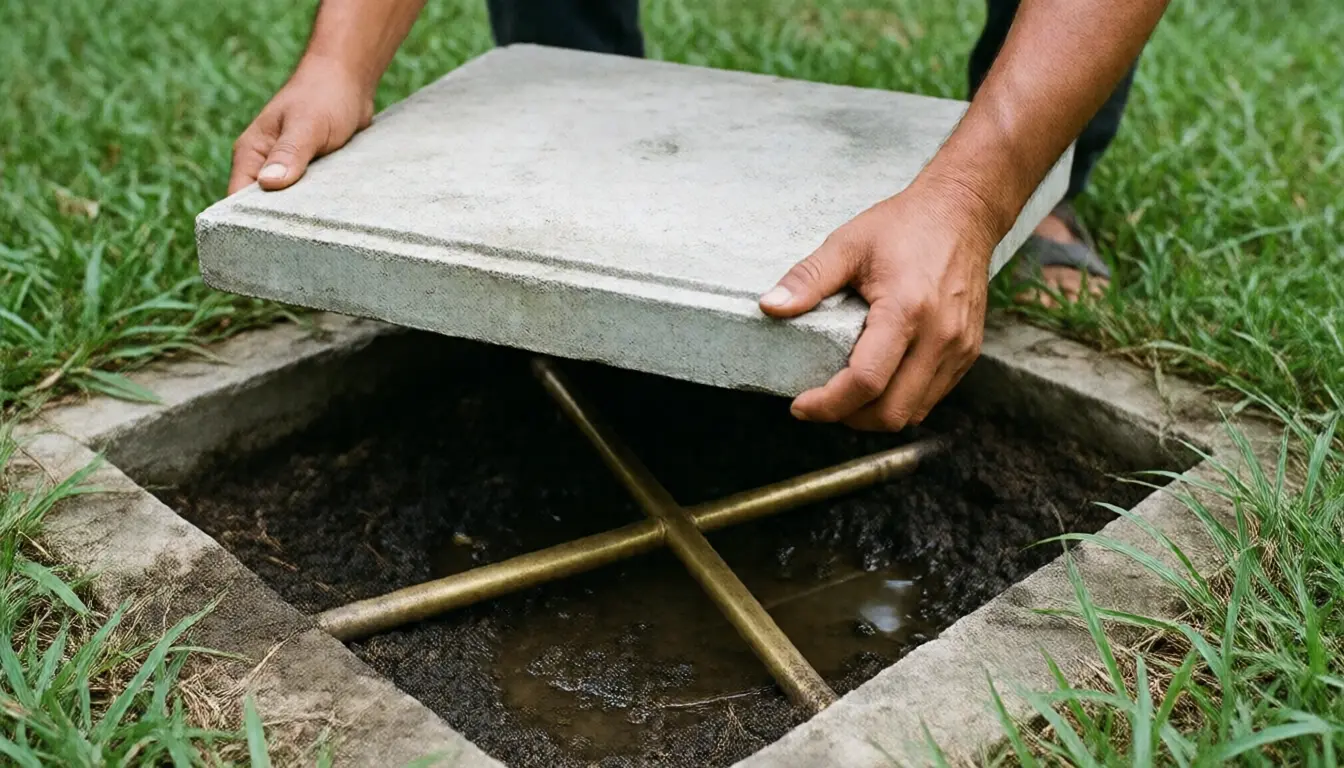
Measuring how big the leak is, with two readings
Knowing there is a leak is not enough, because the size decides how urgent it is, and it is how you prove a repair actually worked.
The easiest accurate method uses the night.
Before bed, after everybody has finished with water, note both the black and the red digits.
In the morning, before anybody touches a tap, note them again.
The difference is water that disappeared while nobody used any, which should be zero.
If there is a figure, scale it to a day to make it real. Eight hours is a third of a day, so multiply by three.
The same number checks the plumber's work. Repeat it the night after the repair. If the figure has not moved, the cause was not fixed, which happens more often than people expect, because a house leaking in one place usually leaks in several.
Where leaks actually turn up, in order
One, the toilet. The champion, by a wide margin over second place.
The seal at the bottom of the cistern perishes with age, stops sealing, and water runs into the pan continuously, twenty four hours a day, silently, with nothing to see.
A house with three toilets and two of them leaking without anybody knowing is entirely ordinary.
Two, the tank float valve. If the float does not close fully, the tank keeps filling and spills out of the overflow, which is usually piped to a drain where nobody ever sees the water.
The symptom is a faint sound of running water near the tank at all hours.
Three, pipes under the floor or in walls. The hardest to find and the most expensive, but it does give warnings, which get their own section below.
Four, garden and car-washing taps. Out of sight, dripping into soil that swallows it, so no puddle ever appears.
Five, washing machine valves and hoses. Braided hoses have a service life, and they are usually forgotten for years until one bursts.
Six, the bidet spray. Leaking at the connector or at a head that does not fully close, onto a bathroom floor that is wet anyway, so nobody notices.
Seven, water heaters and their relief valves, whose discharge is usually piped straight to a drain.
What all seven have in common is a way for water to vanish without leaving a mark on the floor, which is exactly why the eye is not enough and the meter is.
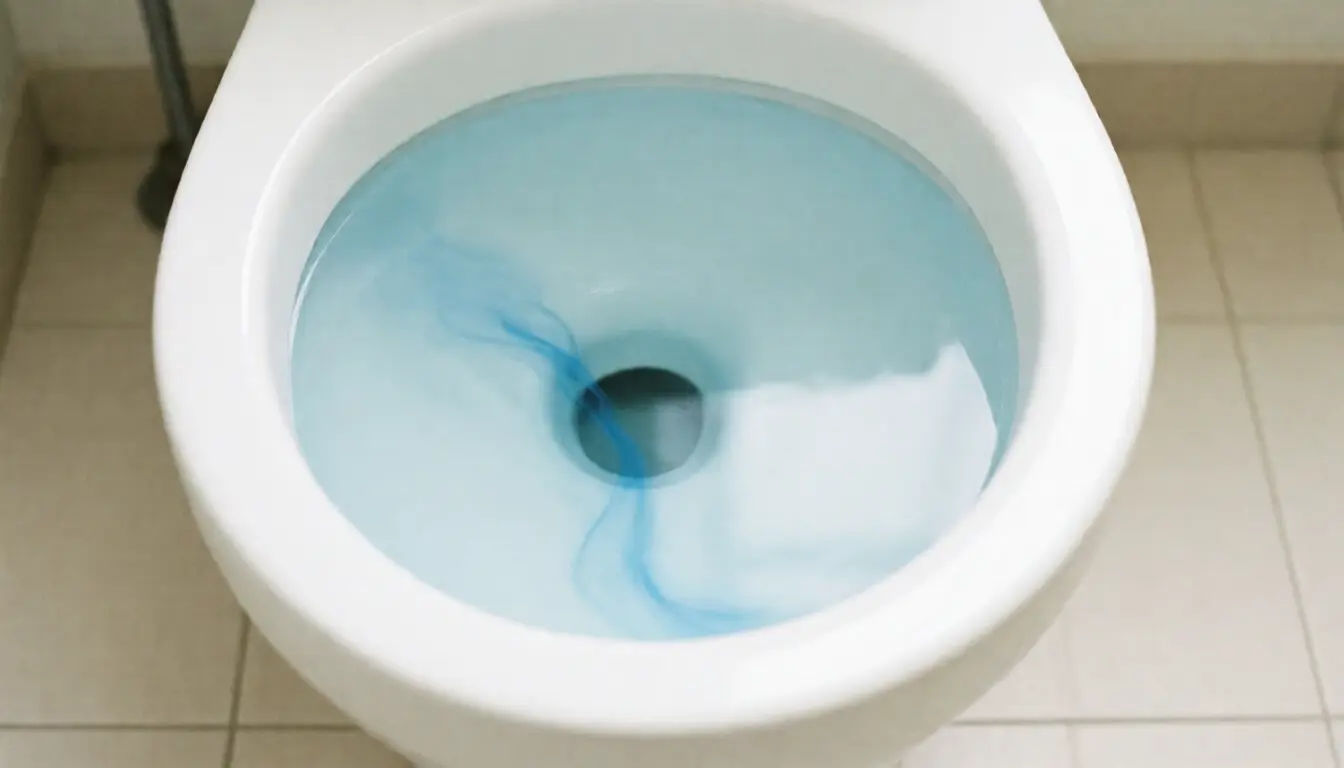
The food colouring test for a toilet
Thirty minutes, and it names the offending toilet with certainty.
- Lift the cistern lid off.
- Put about ten drops of food colouring into the cistern and stir gently to spread it.
- Put the lid back and do not flush for thirty minutes.
- Look at the water in the pan. If it has taken on colour, the seal is passing water continuously.
With several toilets, do them one at a time and note the results, because the point is knowing which one needs a new seal, not merely that the house has a leaking toilet somewhere.
There is a cruder version that needs nothing at all: listening.
Go into the bathroom late at night when the house is at its quietest and stand still beside the toilet for a minute. A badly leaking one is audible as a faint continuous trickle.
A slightly leaking one is silent, which is why the dye test is the more reliable of the two.
A pump that starts on its own at night is the plainest evidence there is
A house with a pump already has a leak detector fitted, without realising it.
A pump runs when pressure in the system drops, and pressure drops when water leaves the system.
So if nobody has opened a tap and the pump still kicks in periodically, water is leaving the system somewhere.
This gets called short cycling, and it is often blamed on the pump, which ends with a new pump bought while the problem is in the pipework.
To separate them, close the pump's outlet valve and see whether it still starts by itself. If it stops, the leak is downstream of that valve. If it still starts, the problem is the pump or its pressure vessel.
We covered short cycling and sizing separately in sizing a water pump so it stops short cycling.
Leaks under floors and inside walls, and their visible signs
This is the case people fear most, with some justification, because finding it means opening something up.
But before anything gets opened, it almost always announces itself.
- A few floor tiles unusually warm, where it is a hot water pipe.
- Tiles lifting or grout darkening in a long line, especially a straight line from one point to another, which tends to follow the pipe run.
- A damp patch on a wall that grows slowly, with paint blistering off in sheets.
- Running water audible inside a wall when nobody is using any. Put your ear against it in a silent house.
- A stripe of deep green grass across an otherwise dry lawn, the classic sign of a buried pipe leaking.
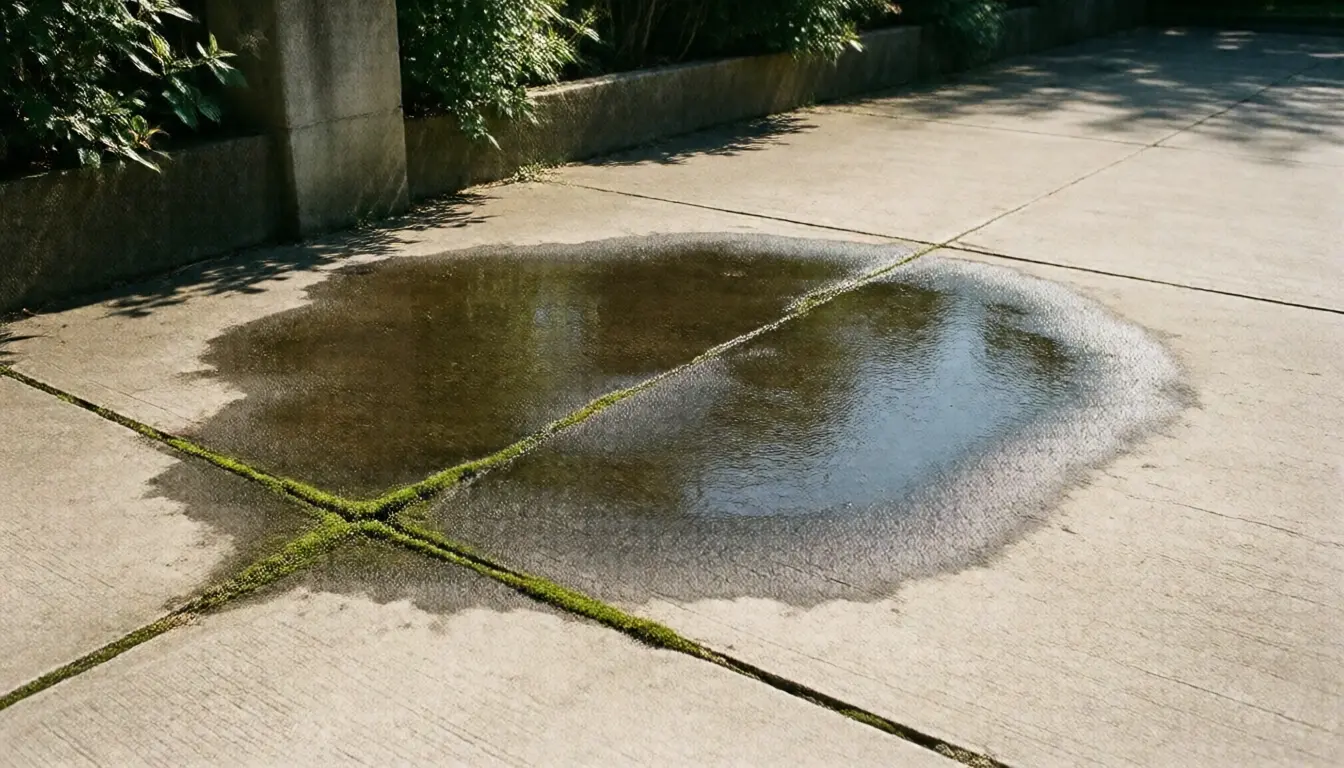
- An outdoor concrete slab with a permanently damp patch, days after the last rain.
If you see these, do not start breaking things. Close zones one at a time if the house has zone valves, and watch the meter again, to narrow the area first.
A house with no zone valves cannot do that step, which is why fitting them during construction or a renovation pays for itself many times over.
Once you know there is a leak, in what order
One, take the toilets out of the equation first, because they are the most common cause, the cheapest, and repairable yourself. Dye test every one before considering anything else.
Two, retest after every repair, using the overnight reading. Do not assume it is fixed because a part was replaced.
Three, if it still leaks once toilets and taps are ruled out, suspect the pipework, and at this point call somebody with leak detection equipment rather than somebody who starts by breaking concrete.
Four, if you suspect the leak is on the meter side, notify the water authority first. Generally the authority looks after up to and including the meter, and the pipe from the meter into the property is the customer's, but confirm with your local office before paying anybody to dig.
In the Metropolitan Waterworks Authority area, report to 1125 or a branch office. In Provincial Waterworks areas, contact your local branch.
Five, keep the evidence: photographs of the meter before and after, the dates you tested, and the repair receipts. If you later ask for an unusual bill to be reviewed, evidence is what the request rests on.
What to put in place so it does not happen again
- Note the meter reading on the same day every month. A photograph will do. It takes ten seconds and it always shows you trouble before the bill does.
- Close the main valve whenever you are away for several days, because a leak that starts in an empty house is the expensive kind.
- Replace toilet seals on age rather than waiting for them to fail. The cheapest part in the house and the most worthwhile to change early.
- Fit zone valves during construction or renovation, so the day you have to hunt a leak you can do it without demolition.
- Replace washing machine hoses on age, not when one bursts.
If the house is due for repiping anyway, read about pipe types and their trade-offs first in choosing between PVC, PPR and PE water pipe.
Frequently asked questions
How do I check for a leak using the water meter?
Shut off every tap and appliance that uses water, switch off the pump, then watch the small dial in the centre of the meter face. If it turns, or the red digits change while nobody is using water, there is a leak.
What is the difference between the red and black digits?
Black digits are cubic metres, the set used for billing. Red digits are litres, not billed, but the most useful part of the dial for leak hunting because they move far sooner.
How do I tell whether the leak is inside or outside my property?
Test twice. First with everything shut off, then again with the main valve closed as well. If the dial stops with the valve closed, the leak is inside your boundary. If it keeps turning, it is between the meter and the valve, or in the meter.
How do I test whether a toilet is leaking?
Put about ten drops of food colouring into the cistern, leave it thirty minutes without flushing, then look at the pan. Colour in the pan means the seal is passing water continuously.
What does it mean when the pump starts by itself at night?
That water is leaving the system with no tap open, which is almost always a leak. Close the pump's outlet valve. If it then stops starting, the leak is downstream of that valve.
What are the signs of a leak under the floor?
Tiles lifting or grout darkening in a straight line, a few tiles unusually warm, a slowly spreading damp patch on a wall, running water audible in a wall at night, a green stripe across a dry lawn, and outdoor concrete that stays damp with no rain.
What if the leak is before the meter?
Report it to the water authority rather than hiring a contractor to dig. Generally they look after up to the meter and the pipe into the house is yours, but confirm with your local office first. In the Metropolitan Waterworks area, call 1125.
In short
- Shut off everything and watch the centre dial on the meter. If it turns, you have a leak. Ten minutes.
- Black digits are the billed cubic metres, red digits are the litres you hunt leaks with.
- A second round with the main valve closed separates a leak inside the boundary from one at the meter.
- Read the meter at bedtime and at dawn to put a real number on the loss.
- Toilets are the number one cause, and a dye test names the culprit in thirty minutes.
- A pump starting with no tap open is a leak nearly every time.
- Leaks under floors always warn first: lifting tiles, damp walls, a green stripe on the lawn.
- If you suspect the meter side, notify the water authority before paying anybody to dig.
- Note the meter monthly, and close the main valve whenever the house is empty for days.