
The technician looks at the outdoor unit for a moment and says this one is R22
What comes next usually forces the owner into a decision with no information.
One will say it is getting hard to find. Another will say you can switch to the new stuff. A third will say something else can be put in instead.
The correct answer is that you cannot mix or substitute across types.
Not because manufacturers want to sell new machines, but because these three refrigerants work at different pressures and use different lubricating oils.
This article explains why, then says what to do with an old machine still running on R22.
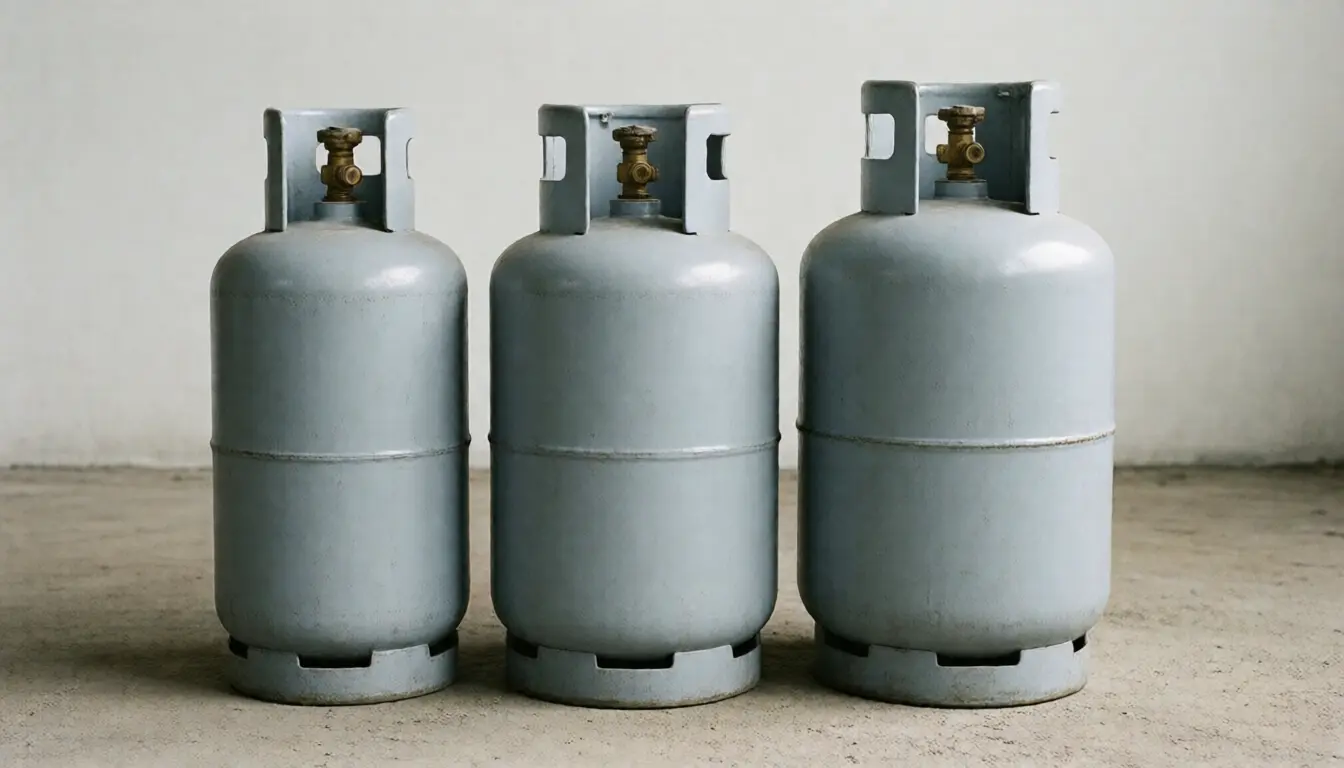
How the three differ
R22 belongs to the hydrochlorofluorocarbon group, which damages the ozone layer, so it is being phased out under the Montreal Protocol.
It is a single compound, works at the lowest pressure of the three, and pairs with mineral oil in the compressor.
R410A is not a single compound but a blend of two, in a fixed proportion.
It works at a much higher pressure than R22 and pairs with synthetic oil rather than mineral oil.
R32 is a single compound, and is one of the two components of R410A.
It works at a pressure close to R410A, also uses synthetic oil, and has a lower global warming potential than R410A, which is the main reason the industry moved to it.
What sets it apart from the other two is that R32 is mildly flammable, which changes how technicians work.
Why you cannot substitute one for another
There are three reasons, and each is sufficient on its own.
One, different pressures. A system is designed to operate in one refrigerant's pressure range: the wall thickness of the pipes, the compressor, the expansion device.
Putting a higher pressure refrigerant into a system designed for a lower one means running it outside what it was built for.
Two, different oils. A compressor needs oil that travels with the refrigerant and returns to it.
Mineral oil used with R22 does not mix with the newer refrigerants, so it stays out in the system rather than returning to lubricate the compressor.
The result is a compressor starved of oil while appearing to run normally, until it fails.
Three, valves and controls are matched to the refrigerant. The expansion device and the sensing elements are chosen for that substance's properties.
Change the refrigerant without changing them and the system runs at the wrong operating point, even if it still cools somewhat at first.
What actually happens if the wrong one goes in
The frightening part is that it does not fail immediately.
At first it may still cool, which convinces everybody there is no problem.
What is really happening is this.
- High side pressure beyond what the system was designed for, so the compressor works harder and runs hotter.
- Oil not returning to the compressor, which is invisible wear until an unusual noise appears.
- Lower efficiency, so it draws more electricity without the room getting cooler.
- A mixture in the system that nobody knows the proportions of, meaning next time it all has to be recovered and started again.
That last is the cost nobody counts, because the next repair is dearer because of this one.
R410A is a blend, which changes how it is charged
Working technicians know this. Homeowners almost never hear it.
Because R410A is two substances blended in a fixed proportion, it has to be charged as a liquid.
Charged as a gas from the cylinder, the proportion entering the system is wrong, because the two components do not evaporate equally.
And once the system has leaked, the proportion remaining inside has already changed.
So the correct approach when R410A has leaked is to find the leak, repair it, recover what is left, evacuate the system, and weigh in a complete fresh charge.
Not to add more to what remains.
The word weigh matters, because the correct amount is stated as a weight on the machine, not judged from a pressure gauge.
Where R22 stands in Thailand now
Thailand is a party to the Montreal Protocol, which sets a timetable for reducing and eliminating this group of substances.
In practice, R22 has been prohibited in the manufacture of air conditioners below 50,000 BTU for domestic use since 1 July 2017.
And the target is to bring R22 imports to zero by 2030.
What that means for a homeowner is that a machine still running on R22 is not unlawful and can keep running.
But the refrigerant for topping it up gets scarcer and dearer every year, which is a clear enough trend to plan around.
So the question is not whether to replace it now, but when to replace it without being rushed.
What to do with an old R22 machine
Three routes, each suiting a different situation.
One, keep using it and service it normally, which suits a machine still working well, with no history of leaks and not many years on it.
What matters is keeping the system leak free, because not leaking means never needing to top up.
Two, replace the whole machine, which suits one that is old, has leaked repeatedly, or whose compressor is showing problems.
The overlooked advantage is that newer machines are significantly more efficient, cutting the electricity bill at the same time, as set out in how much the Number 5 label really saves.
Three, convert the existing system to a new refrigerant, which sounds the cheapest and is usually the least worthwhile.
Because a conversion done properly means flushing out all the old oil, changing the oil, changing the related control components, and confirming the pipework and compressor can take the new pressures.
Once labour and parts are added, it usually comes close to a new machine that is more efficient and carries a warranty.
A conversion done with steps skipped is what kills the compressor a year or two later.
What R32 being mildly flammable means in practice
This worries some people more than it should and makes others careless.
What to understand is that R32 sits in the mildly flammable class, not the readily flammable class that cooking gas belongs to.
In normal use with no leak, the user need do nothing differently at all.
What changes is how technicians work: ventilating during service, keeping open flame away from where refrigerant could be present, and using appropriate equipment.
What an owner can do is choose a technician who knows this, and never let anybody braze pipework without recovering the refrigerant first.
Questions to ask before the technician starts
- Which refrigerant does this machine use? It is on the label on the outdoor unit.
- Have you measured the pressure, and is it genuinely low? Before any talk of topping up.
- If it is low, has the leak been located, and where?
- Are you topping up or recovering and weighing in a fresh charge? For a blend the answer should be the latter.
- What is the correct charge for this machine? Which is a weight printed on the label.
Those five do not make you a technician. They change the conversation from guessing to measuring.
The thing to remember about topping up
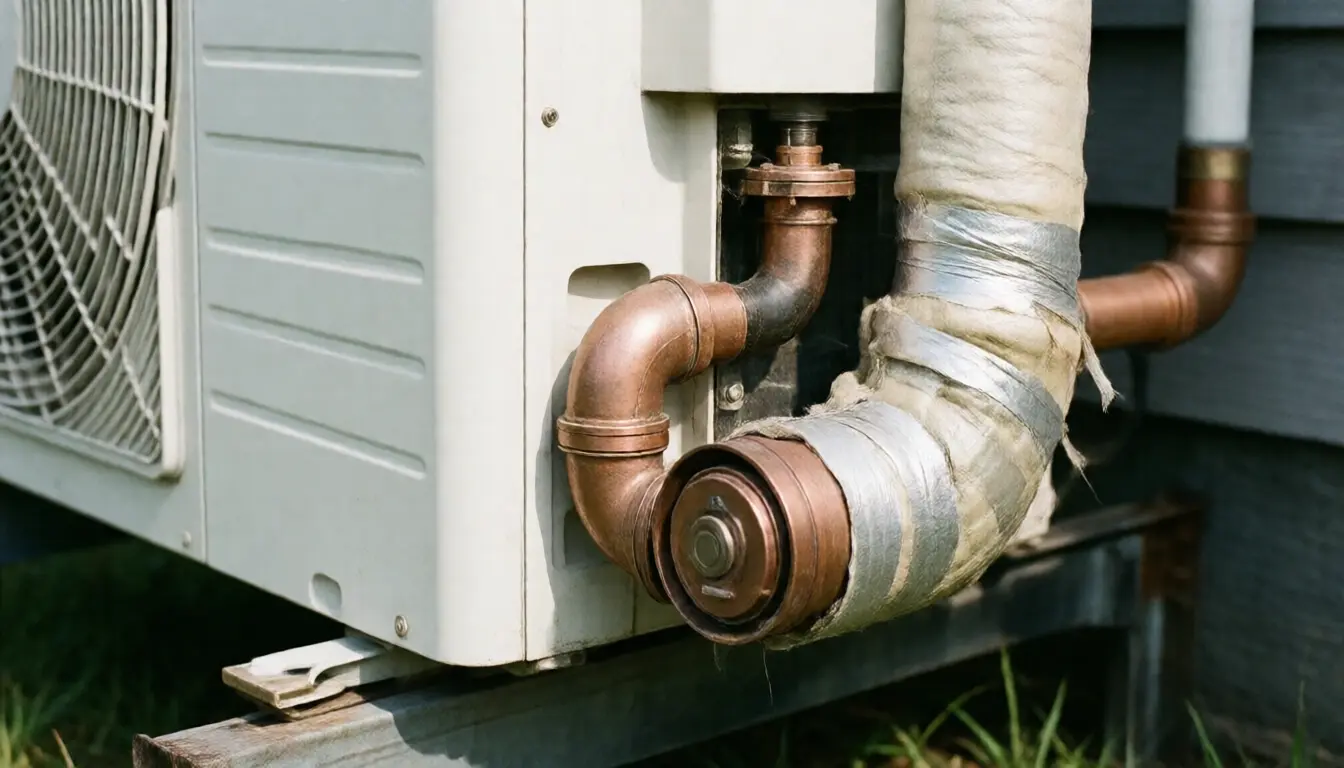
The refrigerant circuit is a sealed system.
With no leak, the charge does not fall at all over the life of the machine.
So needing a top up every year is not routine maintenance. It is the symptom of a leak that has not been repaired.
And letting it keep leaking costs three ways: the refrigerant paid for repeatedly, the higher electricity from a system not working properly, and the risk of losing the compressor to running undercharged.
This connects to routine care, covered in cleaning it yourself against calling a technician.
Frequently asked questions
Can R32 go into an R22 machine?
No. The pressures differ and the lubricating oils differ. Mineral oil used with R22 does not return to the compressor with the newer refrigerants, which damages it while it still appears to run normally.
How would I know if the wrong one went in?
Usually not immediately, because it still cools at first. What follows is higher consumption, hotter running, and eventually an unusual noise from the compressor. Have a technician measure the pressures against what they should be.
Why must R410A be charged as a liquid?
Because it is two substances blended in a fixed proportion, and charging as a gas puts the wrong proportion into the system. Once it has leaked, recover everything and weigh in a fresh charge rather than adding more.
Can I still use an R22 machine?
Yes, and it is not unlawful. But R22 has been prohibited in manufacturing air conditioners below 50,000 BTU for domestic use since 2017, and imports are targeted to reach zero by 2030, so the refrigerant gets scarcer and dearer every year.
Is converting an old machine worthwhile?
Usually not, because it means flushing the old oil, changing the oil, changing control components, and confirming the pipework and compressor take the new pressures. With labour added it approaches the cost of a more efficient new machine with a warranty.
Is R32 being flammable dangerous?
It is in the mildly flammable class rather than the readily flammable one. In normal leak free use, nothing changes for the user. What changes is how technicians work during service.
In short
- Refrigerants cannot be substituted, because pressures, oils and controls are all matched to one.
- The danger of the wrong charge is that nothing fails immediately, so nobody knows until it is late.
- R410A is a blend, so it must be charged as liquid and reweighed in full after a leak.
- R32 is a single compound and mildly flammable, which changes the technician's practice rather than the user's.
- R22 has been prohibited in manufacturing units below 50,000 BTU since 2017.
- Imports of R22 are targeted to reach zero by 2030, so it gets scarcer and dearer.
- A healthy R22 machine can keep running, but plan a replacement without being rushed.
- Converting across refrigerants is usually not worthwhile once labour and parts are counted.
- Needing a top up every year is not maintenance. It is an unrepaired leak.