
Heat enters a house three ways, and in Thailand the biggest one is overhead
The first is sunlit walls, the second is glass, and the third is the roof.
In a single storey house, or any house with rooms directly under the roof, the third is usually the largest.
Because the roof is the surface exposed to direct sun for longest, and the largest surface facing the sun at all.
So the air in the roof space runs far hotter than the air in the room through the afternoon, and that heat works its way down through the ceiling.
Insulation is what stands in the way of that flow.
But different insulation blocks different mechanisms, which is why some houses feel an obvious difference and others barely notice.
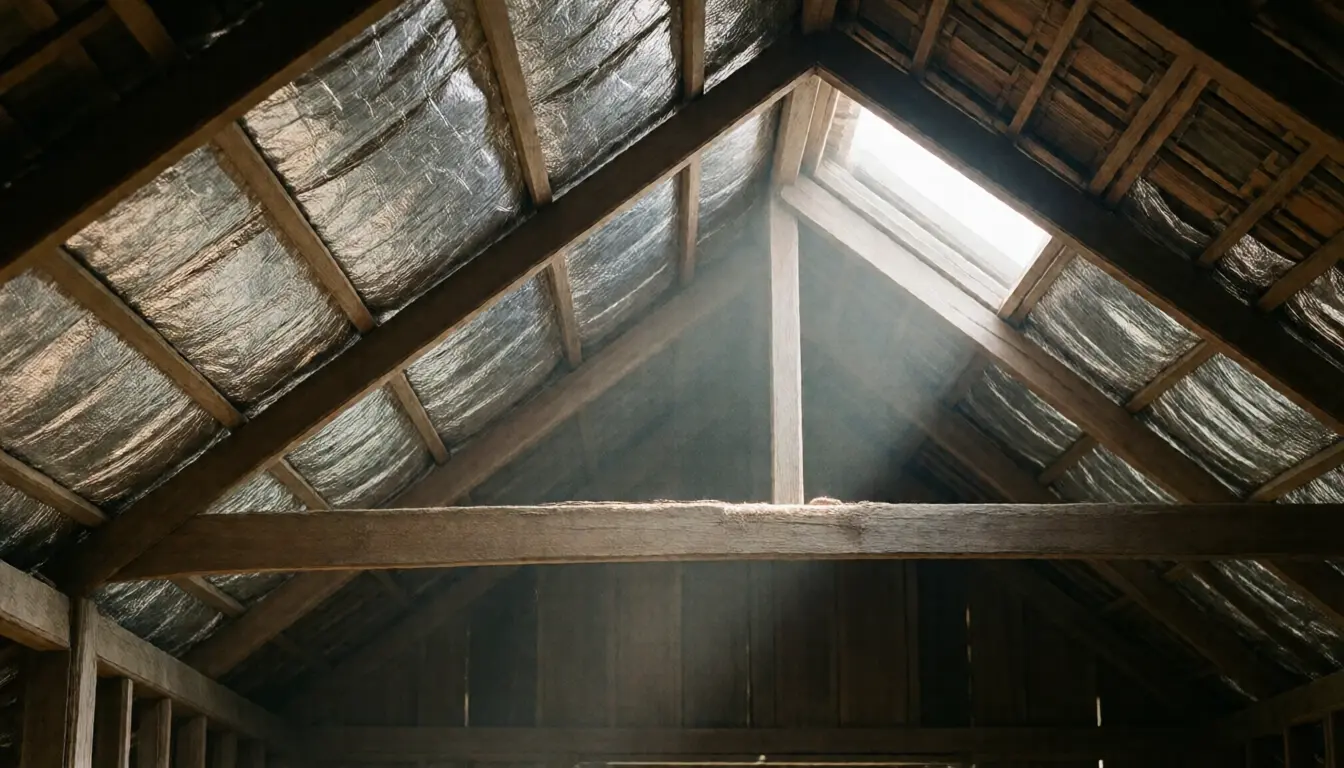
Heat travels three ways, and each insulation handles a different one
Understand these three words and choosing becomes far easier.
Conduction is heat travelling through the substance of a material from the hot side to the cool side.
What deals with this is bulky material with air trapped inside it: glass wool and foam.
Convection is heat carried along by moving air.
What deals with this is not insulation but roof ventilation, which takes hot air away before it accumulates.
Radiation is heat travelling as waves from a hot surface to a cooler one, needing no medium in between.
What deals with this is a radiant barrier, a bright reflective surface that sends the waves back.
The point people get wrong most is that a radiant barrier needs an air space in front of it to work.
Press it flat against another material and it stops reflecting and starts conducting instead.
What is used in Thai houses, and what each suits
Foil faced glass wool laid on the ceiling is the most common approach in a finished house.
The advantage is installing it without touching the roof, going in through a service hatch, and choosing the thickness to suit the budget.
The caution is laying it across the whole area with no gaps, because small gaps cut the overall performance by more than their share of the area suggests.
A radiant barrier under the roof covering, fitted when the roof goes on or is replaced.
It works well in Thailand because most of the heat from a roof arrives as radiation.
The condition is an air space between the barrier and whatever comes next, which rushed installations regularly ignore.
Foam bonded to the roof sheet, such as metal sheet supplied with foam from the factory.
The advantage is heat and rain noise handled in one product, and it is only possible when the roof is being laid.
Insulated ceiling boards, which suit a job where the ceiling is being replaced anyway.
Sprayed foam, which reaches awkward corners best, costs most, and is hardest to correct if it goes in wrongly.
The figure to look at, and why thickness matters
Resistance to heat flow is expressed as a thermal resistance value.
The higher the value the better it blocks, and that value rises with thickness for the same material.
So thicker insulation of the same type does block more, straightforwardly.
What to watch is comparing across types by thickness alone, because different materials give different values at the same thickness.
When buying, ask for that product's thermal resistance value rather than only its thickness in inches.
And ask whether the figure is for the material alone or already includes the effect of an air space, because those are not the same.
Five reasons insulation underperforms
One, a radiant barrier pressed flat with no air space, which stops it reflecting at all.
This is the commonest error and it is invisible from inside the house.
Two, a reflective surface covered in dust, because a surface that is no longer bright reflects far less.
Which is why a barrier facing upward loses effectiveness faster than one facing down.
Three, insulation not laid across the whole area, particularly at the eaves and around pipework, which become shortcuts for heat.
Four, wet insulation, from a roof leak or from vapour, which loses much of its effect and can grow mould.
Insulation that has been wet and dried usually never lofts back to its original thickness.
Five, insulation laid over downlights, which traps heat at the fitting, the same subject as downlights and yellowing ceilings.
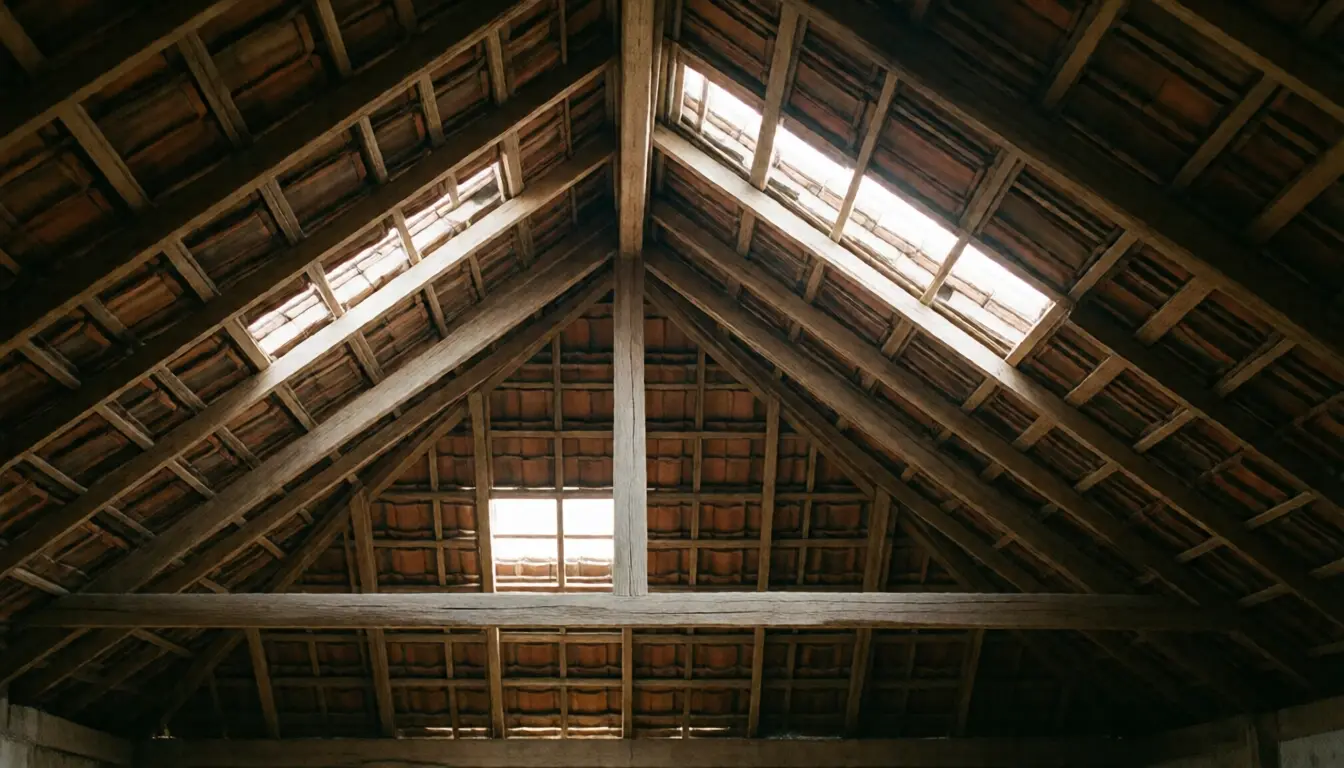
Roof ventilation matters as much as insulation
Insulation slows the flow of heat. Ventilation carries heat away.
They do different jobs, and a house that does only one gets less than it should.
Because if the air above the ceiling stays permanently hot, the insulation is working flat out all the time.
The usual methods are gable vents, eaves vents and turbine ventilators on the roof.
The rule to remember is that air must be able to get in as well as out, not only out.
A turbine fitted with no inlet at the eaves pulls cooled air up out of the house instead, which is the opposite of the intention.
That is why some houses fit one and feel no difference.
The order to spend in on a limited budget
One, fix the roof leaks first, because wet insulation is insulation that does not work, and money thrown away.
Two, make the ventilation work in both directions, which is usually cheaper than insulation and has an immediate effect.
Three, lay insulation across the whole ceiling, choosing the thickness by budget but leaving no gaps.
Four, deal with the sunlit glass with curtains or film, which in some houses does more than another layer of insulation.
Five, change the roof covering or add a radiant barrier, a large job best done when the roof is being replaced anyway.
Notice that what people buy first is usually item three, when items one and two are cheaper and must come before it.
How to tell whether it paid
Do not measure by feel, because feel changes with the weather that day.
Measure the temperature just below the ceiling at the same time of day, before and after, at the same point.
Watch the hours the air conditioning runs, or the units on the bill for a month of similar weather.
How to measure individual appliances is in which appliance uses the most electricity.
Notice how long the room takes to cool after switching on, because insulation that works makes the room cool sooner and the unit cycle off more often.
Those three are real information, unlike asking whether it feels cooler.
Frequently asked questions
Which insulation is best?
There is no single best, because heat travels three ways. Bulky insulation handles conduction, a radiant barrier handles radiation, and ventilation handles convection. Most houses do best with ceiling insulation and ventilation that genuinely works.
Why did a radiant barrier make no difference?
Most often because it was pressed flat against another material with no air space in front, so it does not reflect. The other cause is a reflective surface thick with dust.
Is thicker really better?
Yes for the same material, because thermal resistance rises with thickness. But you cannot compare across materials by thickness alone, so ask for the product's thermal resistance value.
Is a turbine ventilator enough on its own?
No, because air has to get in as well. With no inlet at the eaves it pulls cooled air up out of the house instead, the opposite of the intention.
Is wet insulation still usable?
Its performance drops a great deal, and insulation that has been wet rarely lofts back after drying. Fix the leak first rather than laying insulation over the problem.
What should I do first on a limited budget?
Fix leaks, then make the ventilation work both ways, then lay ceiling insulation across the whole area, because the first two are cheaper and have to come first.
In short
- In a Thai house the roof is where most of the heat comes in.
- Heat travels three ways, and each type of insulation handles a different one.
- A radiant barrier needs an air space in front of it to work at all.
- Thermal resistance is the figure to ask for, not thickness alone.
- Small gaps in the layout cut performance by more than their share of the area.
- Wet insulation is insulation that does not work, so fix leaks first.
- Never lay insulation over downlights.
- Ventilation needs an inlet as well as an outlet, not just a turbine.
- Measure the result with temperature and units on the bill rather than by feel.