
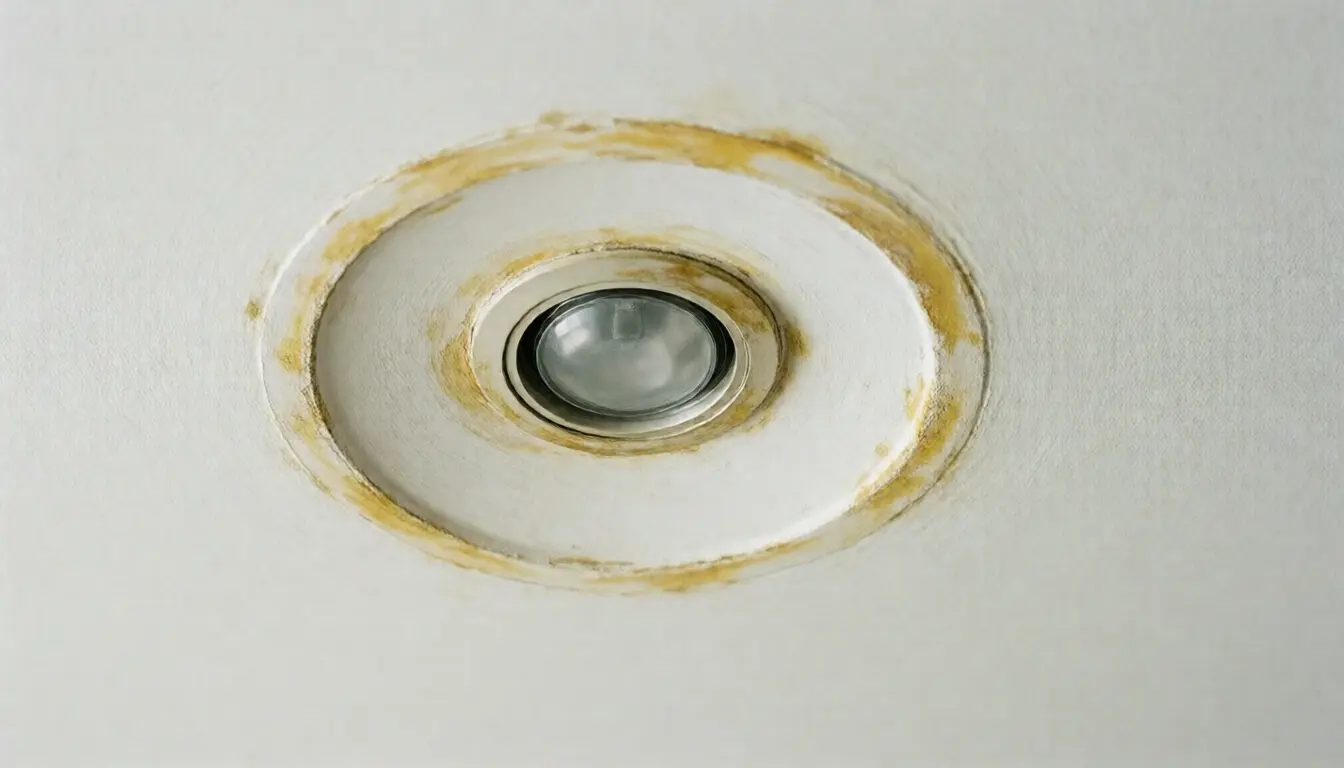
The yellow ring around a downlight is the mark of heat that cannot escape
A ceiling that yellows in a ring around a fitting is not yellowing because it is old, and not because of cigarette smoke.
It is yellowing because heat has been baking that spot every day for years.
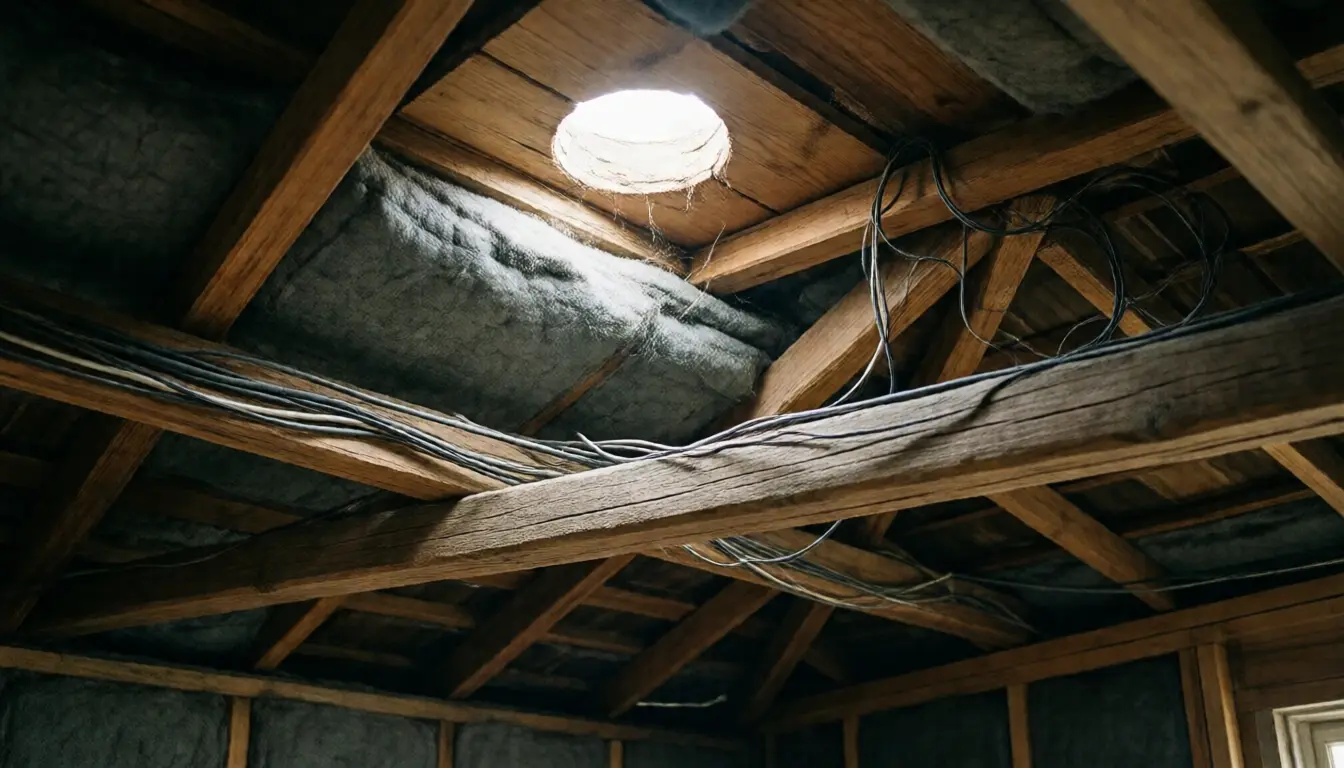
In Thai houses there are two usual causes: insulation lying over the top of the fitting, and the driver sitting flat against the ceiling in a dead pocket of air.
Neither is visible from inside the room, so nobody ever fixes them.
And both happen at installation, without the installer doing anything they thought was wrong.
Because the insulation went in first and the downlights were cut in afterwards, or because there was nowhere else to put the driver.
LEDs get hot too. They just get hot in the other direction
The misconception that lets this go unnoticed is the belief that LEDs do not produce heat.
They do. A substantial share of the electrical power becomes heat.
What differs is the direction.
An old filament lamp radiated its heat forward along with the light, so anybody standing under it could feel it.
An LED dumps its heat backward through a heat sink, and the heat sink is inside the ceiling.
So the room feels cooler while the ceiling runs hotter than anybody expects.
And that heat does more than discolour plaster.
High temperature shortens the life of the driver, which is why downlights flicker or die well before the life the maker claims.
Most people blame the lamp, when the problem is where it was installed.
Six reasons the ceiling gets hot and yellows
One, insulation lying over the fitting. Most fittings need clear air around them to shed heat.
When glass wool or batt insulation covers them, the heat that should have escaped comes back into the fitting and into the ceiling board.
A fitting rated for insulation contact says so plainly in its instructions. Where it does not say so, assume it may not be covered.
Two, the driver flat against the ceiling in dead air. The driver is the small box wired to the fitting, and it is the hottest component in the set.
Laid flat with insulation over it, it accumulates heat and dies before the lamp does.
The right place is on a ceiling joist with air around it, somewhere reachable for replacement later.
Three, a cut out that is too small, which squeezes the fitting and leaves no air gap around the heat sink.
This happens when the fitting is bought first and the hole is cut by eye rather than to the dimension the maker states.
Four, a lamp drawing more than the fitting is rated for, common in houses where somebody changed the lamp themselves and chose a brighter one.
A fitting's rating is not there to limit brightness. It is there because that is all the heat its construction can shed.
Five, a roof void with no ventilation, which matters enormously in Thailand, because afternoon temperatures above the ceiling run far higher than in the room.
A downlight working in air that is already hot sheds even less heat than usual.
Houses with roof vents or turbine ventilators have noticeably less of this problem.
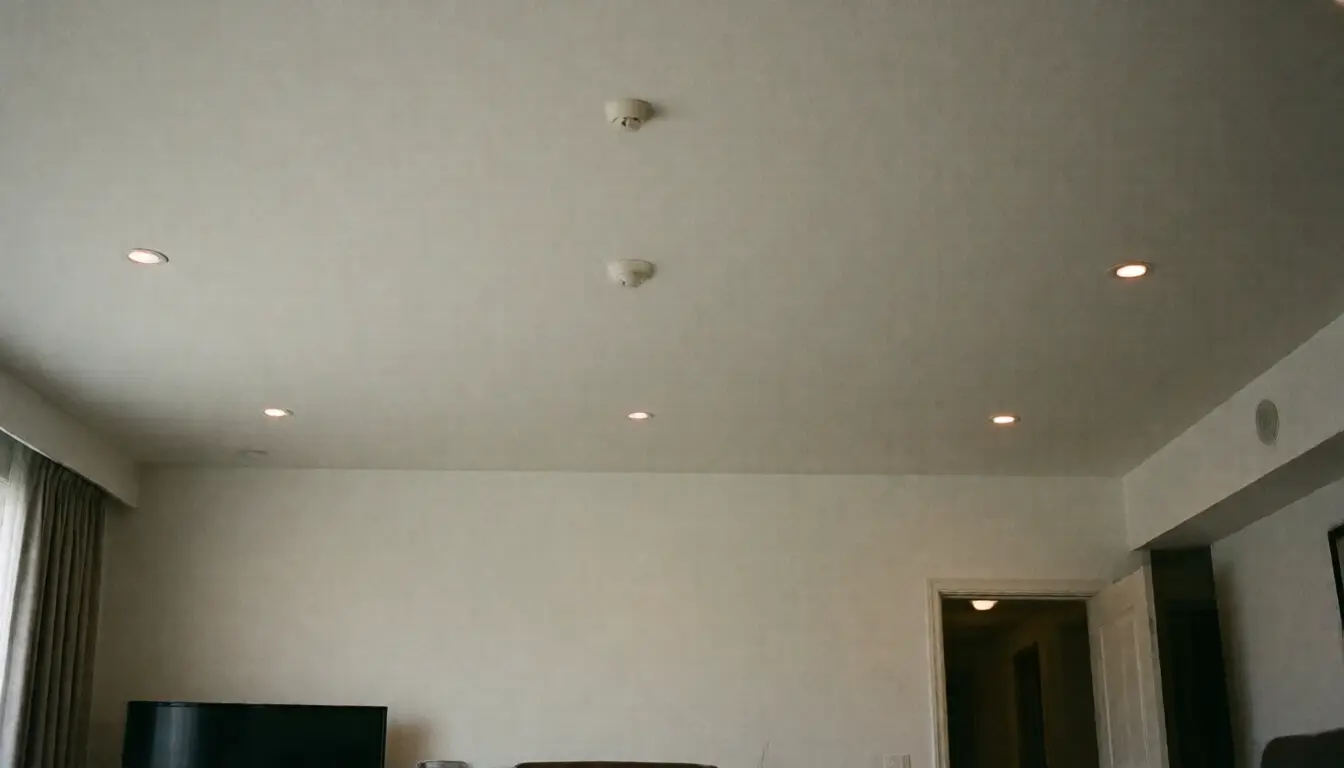
Six, a great many downlights in one ceiling, because each one adds heat and each hole lets hot roof air down into the room.
A ceiling with twenty downlights is not merely a ceiling with twenty lights. It is a ceiling with twenty holes.
Stains that are not heat
Before concluding it is heat, rule out two other things.
A roof leak. Water stains usually have a hard edge and darken in rings rather than shading evenly.
And a water stain is usually not centred on the fitting, but offset along the path the water ran across the ceiling.
If it grows after every rain, that is water rather than heat.
Dust drawn through the gap around the fitting. As room air rises into the ceiling through that gap, dust deposits around the edge of the hole in a grey ring.
That stain is more grey than yellow and partly wipes off.
A heat stain will not wipe off, because the colour of the material itself has changed.
The part that matters more than appearance
A yellow ceiling is only the visible symptom. What happens alongside it is not visible.
Cable insulation ages faster, going brittle and cracking over time in a permanently hot space.
Drivers fail early, because their internal components are temperature sensitive.
Connections work loose through expansion and contraction, the same mechanism that causes local heating in a socket.
Fire risk, where insulation covers a fitting not designed for it and combustible material sits around it.
That does not happen often, but when it does it happens where nobody can see it and nobody can put it out in time.
Four checks you can make yourself
One, leave the light on for two hours, then touch the ceiling near the fitting, about a hand's width from its edge.
Noticeably warmer than the ceiling elsewhere means heat is accumulating.
Two, switch off, let it cool, and drop the fitting down to look. Most recessed fittings pull straight down because they are held by spring clips.
Isolate at the breaker first, not merely at the wall switch.
Three, shine a torch up around the fitting. What you should see is air around it, not insulation hugging it.
And note where the driver sits. Flat against the ceiling under insulation is your answer.
Four, look at the colour of the cable going into the fitting. Discoloured or brittle insulation means calling an electrician, not fixing it yourself.
How to put it right
Restore the air gap around the fitting by pulling the insulation back to the clearance the maker specifies.
Where the instructions are long gone, leave as much clearance as the space allows, and never let insulation touch the fitting.
Move the driver out of dead air, onto a joist with air around it, in a position reachable from an access hatch.
Change to fittings rated for insulation contact where full insulation coverage is genuinely required.
Reduce the number of fittings or the wattage if the room is brighter than it needs to be, which is more often the case than people expect.
Make the roof ventilation work, because everything above the ceiling improves once that air is cooler.
Painting over is fine, but fix the cause first, because a heat stain bleeds back through fresh paint before long if the heat is still there.
When painting over, use a stain blocking primer first, then the finish coat.
How to choose downlights that avoid this
When buying, look at these six things rather than only brightness and price.
- The cut out size the maker states, and cut to it rather than by eye.
- A heat sink made of actual metal, not plastic shaped to look like fins.
- Whether it is rated for insulation contact, and if it does not say so, it is not.
- A separate, replaceable driver, because that is always the part that fails first.
- A water protection rating for a bathroom or under eaves.
- Colour temperature suited to the room, covered in choosing colour temperature room by room.
And if you are renovating, decide the downlight positions while the ceiling is still open, because moving one afterwards means cutting a whole new hole.
What to do while the ceiling is open is covered in renovating an older house for technology.
Frequently asked questions
What causes the yellow ring around a downlight?
Accumulated heat with nowhere to go. The two usual causes are insulation lying over the fitting and the driver sitting in dead air against the ceiling.
Do LED downlights still get hot?
Yes, but in the other direction. An LED sheds heat backward through a heat sink inside the ceiling, so the room feels cooler while the ceiling runs hotter than expected.
Can insulation cover a downlight?
Only where the fitting is rated for it. If the instructions do not say so, assume it cannot, and keep the clearance the maker specifies.
Can I just paint over the stain?
Only after fixing the heat, otherwise it bleeds back through the new paint. Use a stain blocking primer before the finish coat.
How do I tell a water stain from a heat stain?
Water stains have hard layered edges, sit offset from the fitting along the path the water ran, and grow after every rain. Heat stains form an even ring around the fitting and will not wipe off.
Why do my downlights fail early?
Usually because the driver is in a hot place, not because the lamp is poor. It belongs on a joist with air around it and within reach for replacement.
Do lots of downlights really make the air conditioning work harder?
Yes, because every hole is a path for cooled air to leak up into the ceiling and for hot roof air to come down. More holes, more leakage.
In short
- The yellow ring is the mark of heat that could not escape.
- LEDs produce heat too, but send it up into the ceiling rather than down into the room.
- The leading cause is insulation over the fitting, the second is the driver in dead air.
- An undersized cut out and an over rated lamp both make it worse.
- An unventilated roof void raises the temperature of the whole system above the ceiling.
- Water stains and heat stains are told apart by their edges and by whether they wipe off.
- The consequences beyond appearance are brittle cable, early driver failure and fire risk.
- Check it yourself by touching the ceiling after two hours, then dropping the fitting to look.
- Decide downlight positions while the ceiling is open, because moving one later means a new hole.