
House buyers buy what they can see. Land buyers buy a possibility
That difference explains almost everything about selling bare land, and it is what most sellers never think about.
Somebody viewing a house can assess what is in front of them immediately. Somebody viewing bare land has to imagine what could be built, what it would cost, and what would go wrong.
Every question they cannot answer for themselves is a risk they convert into a discount in the price they offer.
So the seller's job with bare land is not to make it look attractive. It is to answer every question a buyer will have, before they have to ask it.
The five questions every land buyer is carrying
Where exactly does it end? Somebody standing in the middle of a plot of long grass has no way of knowing where the boundary runs, and guessing always produces a guess below the truth.
How do I get in? This carries the most weight of anything in valuing land, because a plot with no access, or access across somebody else's land with no registered right, is a plot banks generally will not take as security.
What can I build? Which depends on the zoning colour and its regulations, and on the width of the road the plot fronts.
Does it flood? Which the buyer will ask the neighbours if you do not answer, and the answer from the neighbours is usually worse than the one you would have given.
What will I have to spend before I can build? A question sellers almost never prepare an answer to, although it is a figure the buyer must add to whatever they are willing to pay.
Two plots at the same price per square wa, where one has power and water at the boundary and needs no filling while the other needs three hundred metres of cable and a metre of fill, are not the same price at all in the eyes of a buyer who is thinking.
Five things to do before listing, in order of return
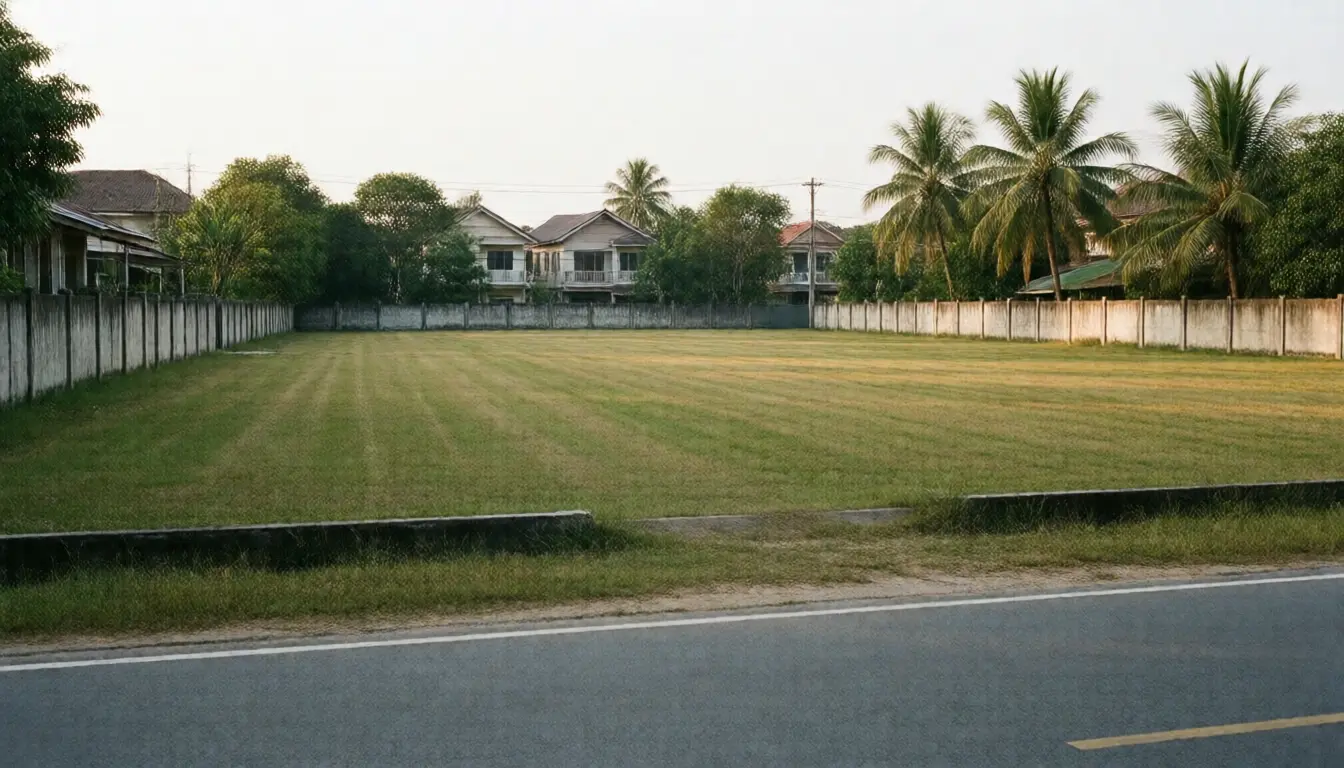
One, cut the grass and keep cutting it. A plot you cannot walk on is a plot that cannot be assessed, and buyers assume the worst about anything they cannot see.
This is the highest return per baht in this article, and it has to continue until it sells, not be done once for the photographs.
Two, survey the boundary and leave the markers visible. When the buyer can see all four corners, they see what they are buying and do not need to price in the risk of the boundary being elsewhere. That is in when to do a boundary survey.
Three, produce photographs that show the shape and the frontage, not grass from one angle. Shoot from all four corners, from the road looking in, and from above so the shape and its relationship to the road are visible.
Four, gather the documents before anyone asks. A copy of both sides of the deed, the zoning of the plot, the status of power and water at the boundary, and the latest land tax receipt.
Five, put the access into writing. If it is reached across somebody else's land, register the servitude before listing, because a verbal arrangement in use for thirty years is worth nothing to a buyer and to their bank.
Shape and frontage matter more than sellers think
Most sellers price by multiplying a price per square wa by the area, which ignores the two variables that matter most.
The first is the width along the road, because a deep plot with eight metres of frontage is far less usable than a plot of the same area with twenty.
The second is the shape, because a rectangle takes a building across its full area while a triangle or a plot with a sharp corner has several parts that cannot be used for anything.
What that means for you is that if your plot has good frontage and a good shape, put the frontage in the listing as a number, because it is what justifies a higher price per square wa than your neighbours.
And if the shape is awkward, know in advance that buyers will negotiate on it, and prepare information about what could be laid out on it, which turns a weakness into an answer rather than an argument.

Three kinds of land buyer, each wanting different information
Somebody building a house to live in cares whether the house they want fits, whether it floods, what the neighbours are like, and whether power and water reach it. They take the longest to decide and negotiate least once satisfied.
A small developer cares how many plots it divides into, whether an internal road works, and what the zoning permits. They calculate quickly and negotiate with figures.
If your land has subdivision potential, prepare that information, but know that dividing for sale into ten or more plots falls under the land allocation law with its own requirements, explained in subdividing and consolidating titles.
Somebody buying to hold cares about the direction the area is moving, planned roads, and buying below the market. They negotiate hardest and buy only on price.
Work out which one you are talking to from their first question, because what you should prepare for each differs greatly, and giving the wrong set wastes both parties' time.
The money to work out before setting a price
Bare land does not sit there without cost, because the land and building tax on land left unused has its own rate and rises with the number of years it stays that way.
So holding land waiting for a price has an annual cost, which belongs in the calculation of whether to wait or sell. That is in the tax on vacant land.
On selling, work out the full cost of transfer day: the transfer fee, withholding tax, and specific business tax or stamp duty depending on the case, whose conditions are explained in tax on selling, before and after five years.
What must be agreed clearly in the contract is who pays what on transfer day, because writing that it is split equally without saying equally of what is how arguments start at the land office counter.
Why most land listings get no enquiries
Open ten land listings and see how many state the frontage, the shape of the plot, the utilities and the zoning. The answer is usually none.
Most have the area, the price and three photographs of grass, which means a serious buyer has to telephone and ask everything from scratch, and most do not telephone.
What helps most is one simple plan drawing showing the shape, the length of each side, which side fronts the road, and the orientation. It takes half an hour and makes your listing different from every other one on the page.
Include a map pin that opens directly, because a land buyer wants to look at the surroundings before deciding whether to visit at all.
On how to list it, bare land takes more effort to sell than a house, which makes it the case where granting exclusivity with a verifiable list of work usually works better, explained in exclusive against open listing agreements.
Frequently asked questions
Should I survey before selling?
Yes, because when a buyer can see all four markers they do not price in boundary risk, and a survey also finds existing problems before the buyer is the one who finds them.
Can I sell land with no access?
You can, but at a much lower price and to a cash buyer, since banks generally will not take it as security. The best fix is registering a servitude before listing.
How should I set the price?
Not by multiplying a rate per square wa by the area alone, because road frontage and shape matter a great deal. A wide, well-shaped plot justifiably achieves a higher rate.
Is cutting the grass really that important?
Yes, because a plot you cannot walk on cannot be assessed, and buyers assume the worst about what they cannot see. Keep cutting it until it sells, not once for the photographs.
Does holding land waiting for a price cost anything?
It does, because the tax on land left unused has its own rate and rises with the years it stays unused. Put that figure into the decision to wait or sell.
Why does my listing get no enquiries?
Because most listings have only the area, the price and photographs of grass. Add a plan showing the shape, side lengths, road frontage and orientation, plus a map pin.
In short
- Land buyers buy a possibility, and every question they cannot answer becomes a discount.
- Keeping the grass cut is the highest return per baht available.
- Survey with visible markers, and put the access into writing before listing.
- Road frontage and plot shape affect the rate per square wa considerably.
- Know which of the three kinds of buyer you are talking to, because they want different information.
- Make one plan drawing with a map pin, which sets your listing apart from every other on the page.