
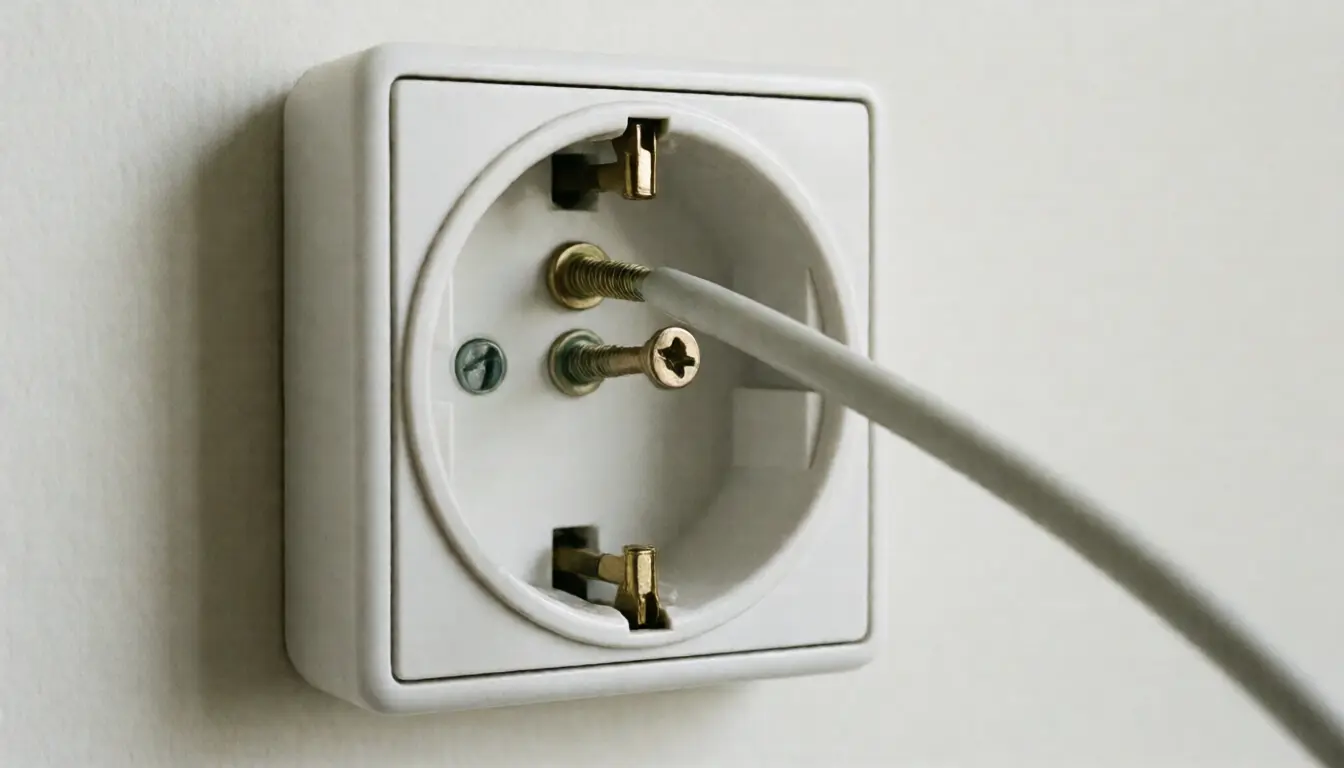
The electrician took the socket out, turned it over, and there were two wires and an empty third terminal
The owner, watching, said but my sockets are the three-pin kind.
The electrician nodded and said yes, three holes, two wires.
This is the state of a great many Thai houses, and it is more dangerous than having no earth at all.
Because in a house with two-pin sockets, everybody knows there is no earth. In a house with three-pin sockets and a conductor that goes nowhere, everybody believes there is.
This article covers what an earth actually does, what a correct system consists of, how to check whether your house has one, and the three things never to do that people do constantly.
What an earth actually does
Most people think the earth is what stops you getting a shock.
Close, but not quite, and the difference explains everything else.
Picture a washing machine whose internal insulation has degraded until a live conductor touches the metal chassis.
With no earth, that chassis sits quietly live, waiting for somebody to touch it, and the person who does becomes the path the electricity uses to reach the ground.
With an earth, the current flows to ground through the earth conductor immediately, a far easier path than a human body, and that flow makes the protective device operate and open the circuit.
So the earth's real job is to give leakage a way back so that protective devices can notice it and disconnect.
It does not make the electricity go away. It makes the system able to detect it.
Which is why an earth and a residual current device work as a pair. Either alone is not enough.
What a correct earthing system consists of
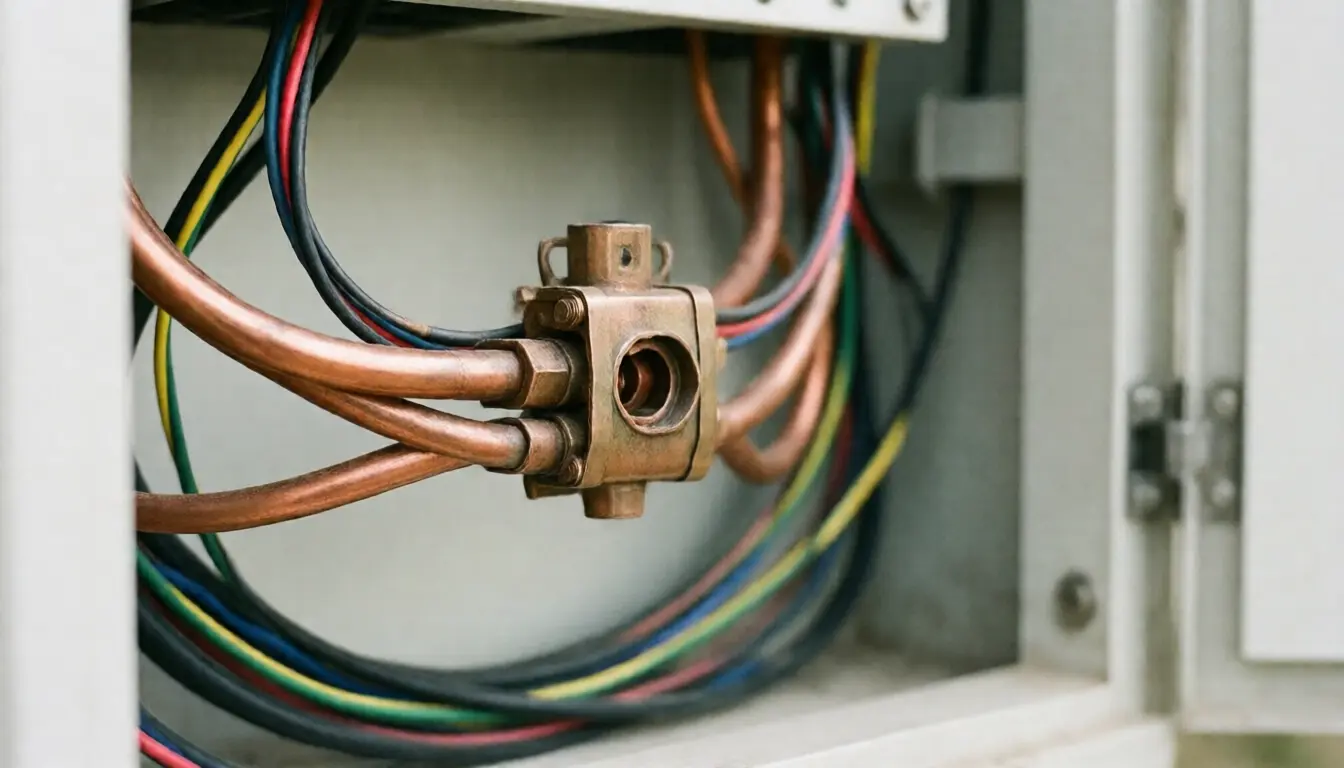
People imagine the earth is one wire. In reality it is a system of parts joined into a path.
One, the earth electrode, a metal rod driven into the ground so there is a genuine point where current can enter the earth.
Two, the earthing conductor running from the electrode up to the main board.
Three, the main earth terminal in the board, where every circuit's earth conductor comes together.
Four, the protective conductor of each circuit, run alongside the live conductors all the way to sockets and appliances.
Five, where it actually arrives: the third pin of the socket, and the metal chassis of appliances.
Break any one of these and the path is broken, and the system does not work.
A house with three-pin sockets but nothing from one to three has the destination without the road.
Three things never to do
One, never connect the earth pin to the neutral at the socket.
Plenty of people do this, because it makes a cheap socket tester and a test screwdriver both show everything as normal.
It is extremely dangerous, because if the neutral breaks or loosens anywhere before that point, the metal chassis of every appliance on that circuit becomes live instantly.
It converts the thing that should be safest into the thing that is live.
Two, never use water pipes or the building's steelwork as the electrode.
It used to be done because pipes were metal and buried in the ground.
The problem is that most pipework is now plastic, and the day a plumber replaces one section, the earth for the whole house disappears without anybody knowing.
Three, never assume a residual current device removes the need for an earth.
Such a device genuinely helps, and helps a great deal, but it works best when there is an earth for leakage to return through.
Without one, the thing that makes it trip may have to be the person who touched the appliance, which is a situation nobody wants.

How to check whether your house has one
Step one, find the electrode.
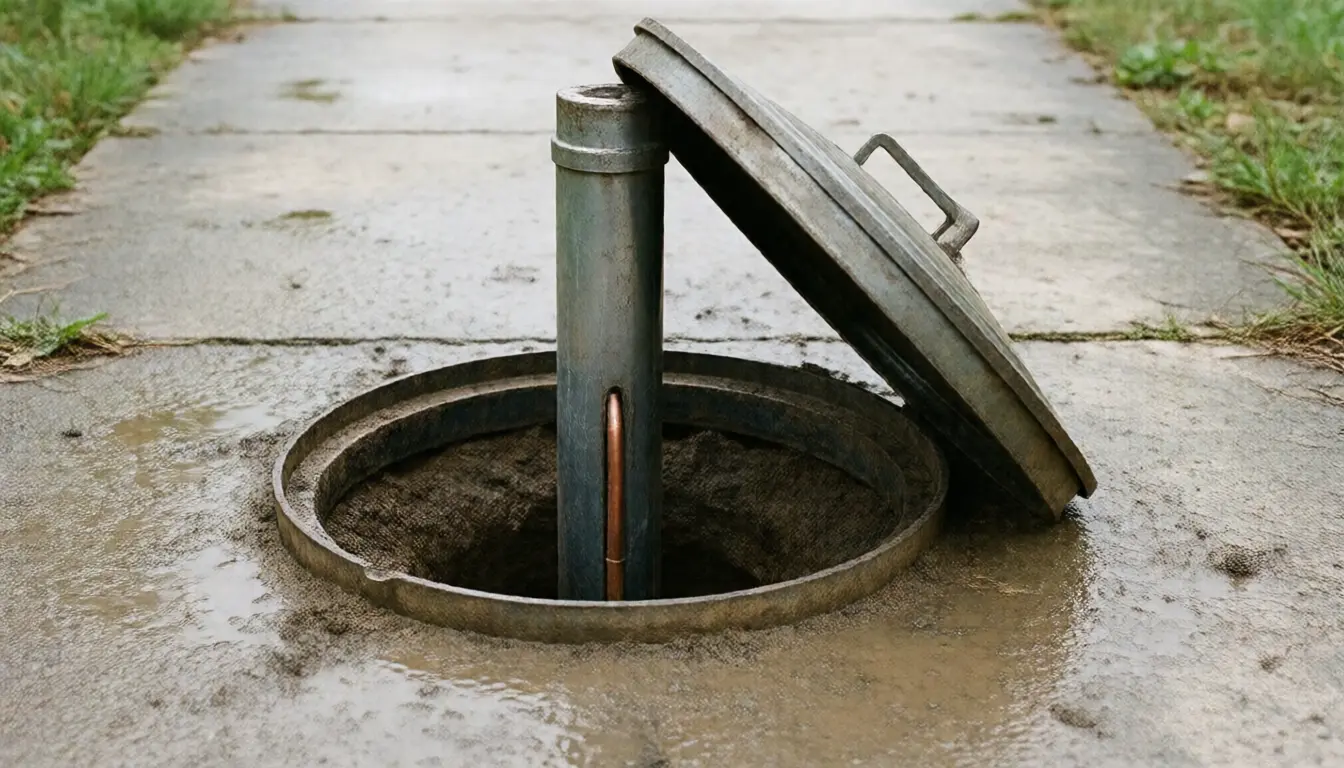
Walk round the house looking for a metal rod driven into the ground near the board, or a small inspection pit set into the paving, with a copper conductor running from it.
Finding nothing is already a fairly clear answer.
Step two, open the board.
Look for a bar where bare or green-and-yellow conductors gather, and see whether a heavy conductor leaves the board heading downwards.
If the board contains only lives and neutrals with no earth arrangement at all, that is another answer.
Step three, take one socket out and look, always switching the breaker off first.
Turn it over and count the wires, two or three, and see whether the third terminal has a conductor or is empty.
If you are not confident, do not do it. Have an electrician open one while you watch.
Step four, have it measured.
Seeing a wire is not the same as having a working system. An electrician with instruments can test the continuity of the protective conductors and measure the resistance of the electrode.
That is the only step that gives a definite answer, and it is worth doing once for every house.
An older house with no earth: what now?
The question that always follows is whether the whole house has to be opened up.
It does not have to happen all at once, and there is a clear order of priority.
First, circuits involving water: water heaters, washing machines, pumps, and sockets in bathrooms and kitchens.
Those are where people are wet and standing on wet floors, the conditions that make a shock most severe.
Second, circuits serving appliances with metal chassis: refrigerators, ovens, power tools.
Third, everything else, which can be done during a renovation or repaint that was happening anyway.
What has to exist from day one is the electrode and the main earthing conductor into the board, because without that piece, running protective conductors to any circuit means nothing.
And a residual current device should go in at the same time, because the two work as a pair.
What tends to happen during extensions
Houses that add a kitchen or a bathroom usually run the new wiring from whichever existing circuit is nearest.
If that circuit has no earth, the new part has none either, even though it is the part with water in it and the part that most needs one.
So every time you extend, ask as a separate question whether the new section has an earth and whether it reaches a real electrode.
Do not ask just make the wiring neat, because neat means different things to different people.
Circuit layout is in how many circuits a consumer unit should have, and cable size in what goes wrong when the cable size is wrong.
Signs the system has a problem
- A slight tingle when touching an appliance, especially when wet or barefoot, which is not something to get used to or ignore.
- A tingle from a tap or a shower head, which is more serious, because it means leakage has reached what should be the most neutral thing in the house.
- A residual current device tripping intermittently with no cause found.
- A faint hum felt when touching an appliance chassis.
The first two do not wait. Switch that circuit off and call somebody.
Questions to ask an electrician
- Where is the electrode? The answer must be a location they can walk you to.
- Has the electrode resistance been measured, and what was it?
- Which circuits actually have protective conductors run, and which do not?
- Is there a residual current device, which circuits does it cover, and at what rating?
- Is the earth bonded to neutral anywhere? The answer needs to be no.
Somebody who cannot answer the first one has either not looked or there is nothing there, and both need fixing before anything else is discussed.
Frequently asked questions
What does an earth do?
It gives leakage current a way back to ground so protective devices can detect it and disconnect. It does not make the electricity go away by itself.
Does a three-pin socket mean there is an earth?
No. Many houses have three-hole sockets with only two conductors run, which is more dangerous than having none, because everybody assumes there is one.
Can the earth be connected to the neutral?
Never. If the neutral breaks or loosens before that point, the metal chassis of every appliance on the circuit becomes live instantly.
Can water pipes serve as the electrode?
No, because most pipework is now plastic, and the day a plumber replaces a section, the earth for the whole house disappears unnoticed.
With a residual current device, is an earth still needed?
Yes, because the two work as a pair. Without an earth, the thing that makes the device trip may have to be the person who touched the appliance.
Does an old house need opening up completely?
No. Start with the electrode and the main earthing conductor into the board, then do the circuits involving water first. The rest can wait for a renovation.
How serious is a tingle from a tap?
Very, and it does not wait, because it means leakage has reached what should be the most neutral thing in the house. Switch the breaker off and call somebody.
How much can I check myself?
You can look for the electrode, open the board to look for an earth arrangement, and inspect behind a socket with the breaker off. Confirming the system works needs an electrician to test continuity and resistance.
In short
- An earth gives leakage a way back so protective devices can disconnect.
- Three holes do not mean an earth, and such a house is more dangerous than one with none.
- A correct system has five parts, from the electrode to the third pin.
- Never bond earth to neutral, and never use water pipes as the electrode.
- A residual current device and an earth work as a pair.
- In an older house, start with the electrode, then the circuits involving water.
- At every extension, ask separately whether the new section reaches a real earth.
- A tingle from a tap means switching the breaker off immediately.