
An underground tank is not better. It trades yard space for a different set of problems
The question usually starts with appearance, because a large tank standing in front of the house goes with nothing.
That is a fair reason and not the only one to decide on, because these two options differ more than people expect, and the important differences are not in the installation price.
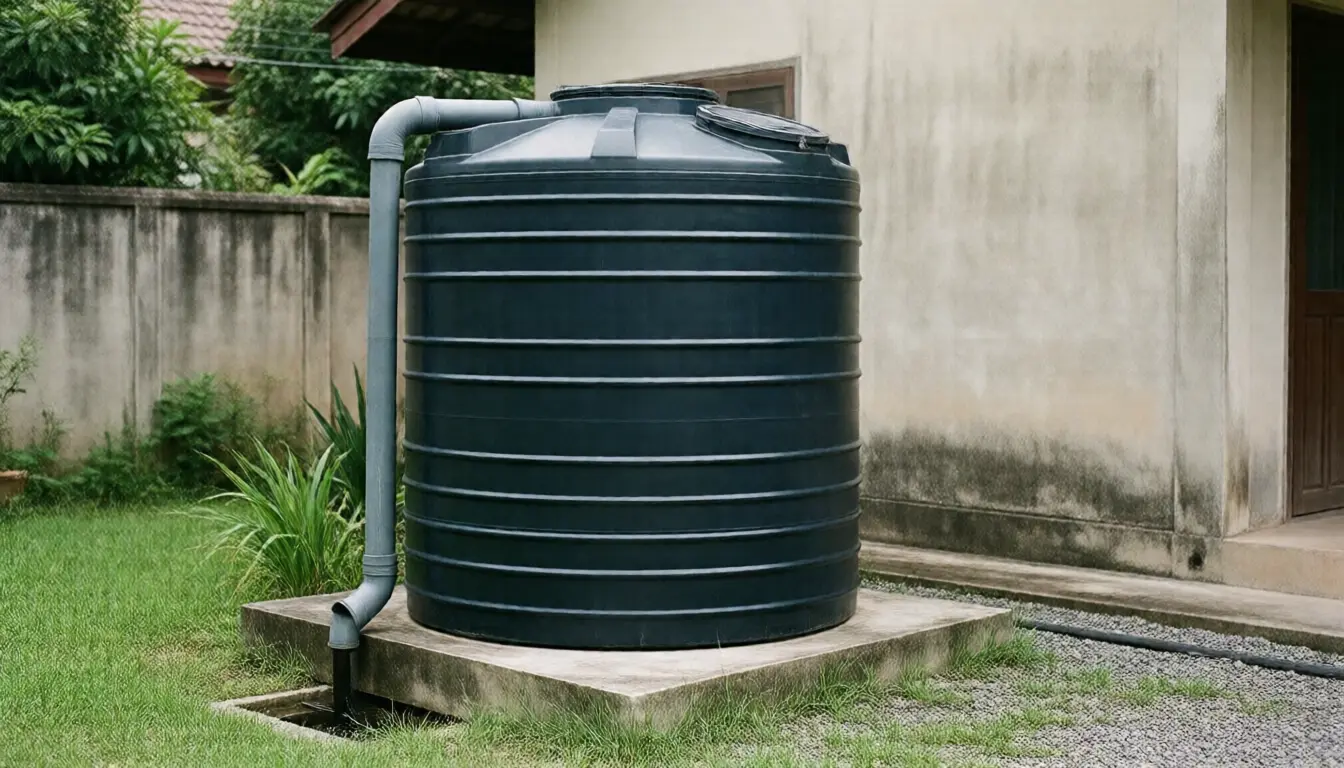
An above-ground tank costs less, is easier to inspect, easier to clean, and if it leaks you see it immediately.
An underground tank saves space, keeps water cooler, and stays out of sight, at the cost of construction, harder maintenance, and two risks most buyers have never heard of.
This covers what those two risks are, which type suits which situation, and how to size a tank from your own water bill.
The advantage of an above-ground tank that gets overlooked
The biggest advantage is simply that you can see it.
That sounds trivial, and it means that if the tank leaks you notice water on day one, rather than noticing next month's bill at three times the usual figure with no explanation.
The second is cleaning. An above-ground tank is cleaned without anybody entering a confined space, which is a more serious safety point than people assume.
The third is that moving it, replacing it, or adding a second one is a single day's work.
The genuine drawbacks are two.
It takes up space, and in a townhouse or on a narrow plot, a square metre and a half beside the house is valuable.
It sits in the sun, which warms the water and encourages algae if the tank lets light through.
The second is solved by choosing an opaque tank and nothing else. Avoid pale tanks that light passes through, because light plus still water is the recipe for algae.
And where the position can be chosen, put it somewhere shaded in the afternoon, or build a cover that still allows air to move around it.
Underground tanks and the two risks sellers rarely mention
First, flotation. An empty underground tank is a box of air buried in the ground.
When the groundwater rises, during heavy rain or a flood, buoyancy can push the whole tank up out of its hole, tearing off the pipework and lifting the paving around it.
This is not rare, and it is why a properly installed underground tank sits on an anti-flotation concrete slab with straps holding it down, rather than being dropped into a hole.
The question to ask the contractor plainly is what holds this tank down, and if they cannot answer, it has not been designed.
The habit that follows is not letting an underground tank run empty during the flood season, because the water inside is the weight holding it in place.
Second, contamination. An underground tank sits lower than everything around it.
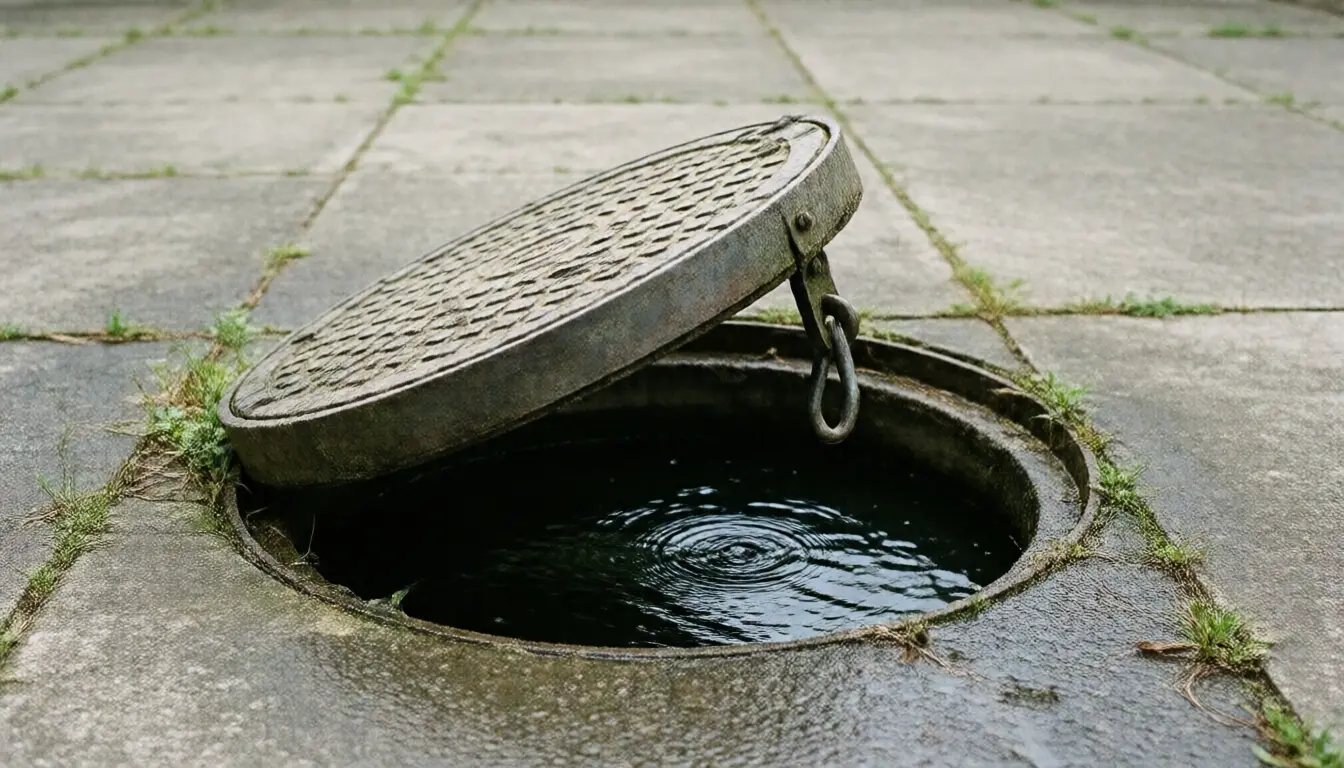
When the lid does not seal, the gasket perishes, or the neck sits below the level of the surrounding ground, dirty surface water runs straight in.
What it needs is a neck raised above the surrounding ground by at least a hand's width, a lid that seals and locks, and paving around it that falls away from the tank rather than towards it.
The other point is distance from the septic tank and the treatment tank. Put it as far away as the plot allows, and never lower than them or in the path water from that area takes.
The advantages are real too: it saves space, the water stays cooler and steadier in temperature, no light means no algae, and nothing blocks the view of the house.
For a plot genuinely too narrow for an above-ground tank, it is the sensible answer. Just do it properly the first time, because correcting an underground tank after the paving has been laid over it is a different price altogether.
Size the tank from your own water bill
Do not use somebody else's average, because a house with a garden and one without differ by a factor of two.
Open your own bill and look at the units used that month. A unit of mains water is a cubic metre, which is 1,000 litres.
Multiply the units by 1,000 and divide by the number of days in the month, and you have what your household actually uses per day in litres.
Then ask one question: how many days would you want to keep going if the supply stopped?
Where supply rarely fails, two days is enough. At the end of a distribution line, or anywhere the supply is cut regularly, three to five days is more comfortable.
Multiply the daily figure by the number of days and you have a minimum size, then go one step up in the sizes actually sold.
A caution: a tank far larger than needed is not better, because water sitting too long is water losing quality.
If a large tank is unavoidable, make sure the inlet and outlet are on opposite sides so the water circulates through the whole tank, rather than entering and leaving at the same point while half the tank stands still.
What every installation needs, whichever type you choose
- An overflow pipe running to a real drain rather than spilling beside the house, with a screen at the end to keep animals out.
- A drain valve at the bottom, so sediment can be flushed rather than scooped. Without one, cleaning becomes a major job every time.
- A lid that seals and locks, particularly in a house with children.
- A float valve you can reach, because it is the single most frequently replaced part in the whole system.
- A separate isolating valve on the inlet, so the float can be repaired without shutting off water to the whole house.
On cleaning, do it at least once a year, and immediately after any flood or after the mains supply runs unusually cloudy.
If the tank is underground, never go in alone. A closed tank with no ventilation is a confined space, and the air inside can hold too little oxygen with no smell to warn you.
Leave the lid open for several hours first, keep somebody above the whole time, and for a deep tank pay somebody with the right equipment.
Finally, if you are thinking of putting a tank on the roof or an upper floor for pressure without a pump, remember this figure: one cubic metre of water weighs one tonne.
A full thousand-litre tank is a tonne pressing on a few square metres, which is a question for an engineer rather than one a plumber can settle.
Choosing and installing the pump that will draw from this tank is in why a household pump short cycles and how to size one, and the sensors that warn about a leak are in water leak sensors for a Thai home.
Frequently asked questions
Above ground or underground: which is better?
Neither is universally better. Above ground is cheaper, easier to inspect and clean, and shows a leak immediately. Underground saves space and keeps water cooler, at the cost of construction and the risks of flotation and contamination.
Can an underground tank really float up?
Yes. An empty tank is a box of air, and rising groundwater can push it out of the ground. Proper installation needs an anti-flotation slab and straps, and the tank should not be left empty in the wet season.
What size tank should I choose?
Multiply the units on your water bill by 1,000, divide by the days in the month for your own daily litres, then multiply by the days of reserve you want.
Why does algae grow in the tank?
Because light is reaching the water. Use only opaque tanks, and avoid full-day sun where the position can be chosen.
How often should a tank be cleaned?
At least annually, and immediately after a flood or unusually cloudy mains water. For an underground tank, never enter alone, because it is a confined space.
Can I put the tank on the roof to avoid a pump?
In principle, but one cubic metre of water weighs a tonne, so a full thousand-litre tank is a tonne on a few square metres. Have an engineer check the structure first.
In short
- Above ground is cheaper, easier to clean, and shows a leak at once, which is the overlooked advantage.
- Underground suits genuinely narrow plots, but must be designed against flotation and against surface water getting in.
- An empty underground tank in the wet season is a tank that can float.
- Always choose an opaque tank, because light plus still water means algae.
- Size it from your own bill rather than from somebody else's average.
- Fit an overflow, a bottom drain valve, a locking lid, and a separate inlet isolating valve.
- One cubic metre of water weighs a tonne. Do not put one on unchecked structure.