
The expensive part of a connected house is not the devices. It is running cable afterwards
A camera costs a few thousand baht. Running cable to the far corner of the house after the walls have been plastered usually costs more than the camera.
Which is why a renovation matters more than people realise.
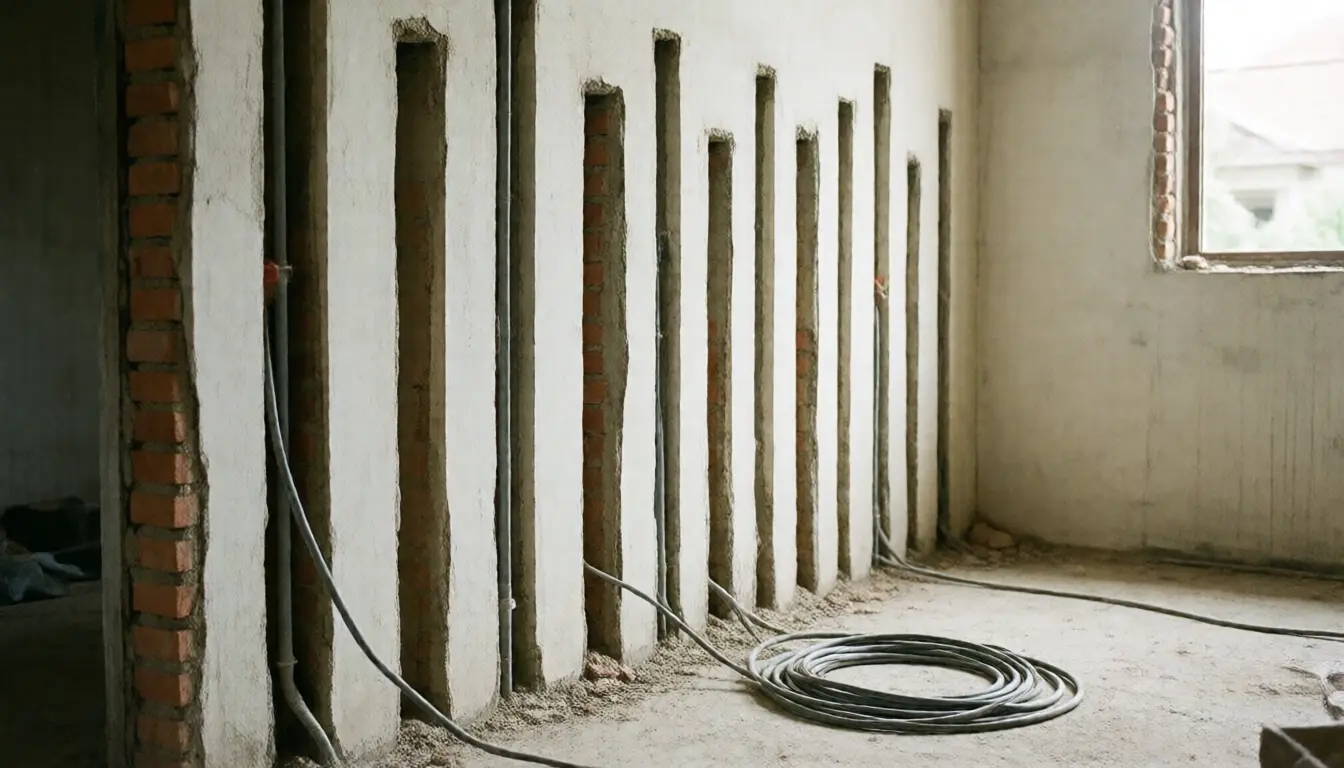
While walls are chased open and ceilings are down, adding one more conduit costs almost nothing. Once the walls are closed, the same conduit means breaking them open again.
So what makes a house ready for technology is not buying clever equipment. It is leaving routes for equipment nobody has bought yet.
This article is not about what to install. It is about what to leave behind while the walls are still open.
Seven things to do while the walls are open
One, empty conduit with a draw string. The most important item and the one skipped most often.
Do not try to guess which cable you will want in ten years, because standards change and conduit does not.
Run empty conduit from the consumer unit to the ceiling void, from the void to any corner you might need later, and from inside the house out to the front boundary. Then leave a nylon string pulled through every one of them.
That string costs a few baht and it is what turns pulling a new cable in five years into a half-hour job rather than a wall-chasing job.
Two, a neutral in every switch box. An ordinary switch uses two wires to make and break the circuit, but a smart switch has to power itself continuously to listen for commands, so it needs a neutral as well.
A great many older houses run only two wires to the switch box, which makes smart switches impossible to fit.
The renovation is the one moment when adding that wire costs almost nothing. Have the electrician run neutrals to every position, even where you have no plans to use them.
Three, network cable to the places that need to be reliable. Wi-Fi is fine for nearly everything, but not for everything.
Cable belongs at the positions where a ceiling access point will go, at the living room television, at any permanent desk, and at cameras that can be powered over the same cable.
Run at least two cables to each of those, because labour is most of the cost and the second cable adds almost nothing.
Positioning access points and choosing between mesh and cable is in whole-home Wi-Fi: mesh, access points or FTTR.
Four, a central position for the equipment cabinet. Almost every house forgets this, and the router ends up in the corner where the incoming line happens to arrive.
Choose one reasonably central spot with power, some ventilation, and access that does not need a ladder, and have every cable terminate there.
Under the stairs, a storeroom, or a bay in built-in joinery all work. Just not inside a hot ceiling void that is hard to reach.
Five, more sockets than you think, in places you would not think of. Add one at each ceiling access point position, inside the wardrobe, behind the television, on both sides of the bed, and wherever the cabinet is going.
A socket costs a few hundred baht while the wall is open. Afterwards it costs breaking and replastering.
Six, earthing and a consumer unit with spare ways. Many older houses still run two-wire circuits with no earth at all, which is a safety matter before it is a technology one.
The renovation is the only time rewiring the earth throughout the house comes at a sensible price.
And choose a consumer unit with at least three or four spare ways, because everything you add later, whether a car charger, solar, or new circuits in an extension, needs a way in that board.
How many circuits a house should have is in how many circuits a consumer unit needs, and residual current devices are in RCDs in a Thai home.
Seven, conduit and spare capacity for an electric car and for solar. Even with no electric car and no plans for panels, run conduit from the consumer unit to the parking space, and from the board up into the roof space.
Those two runs are very cheap now and are the two most expensive jobs to do afterwards.
Older houses come with constraints newer ones do not
Plan knowing what you will meet, because an old house is not simply a new house that has not been wired yet.
Solid masonry walls. Chasing into brickwork is possible, but check it is not load bearing, and any long horizontal chase in masonry is a question for an engineer rather than a decision for the builder on site.
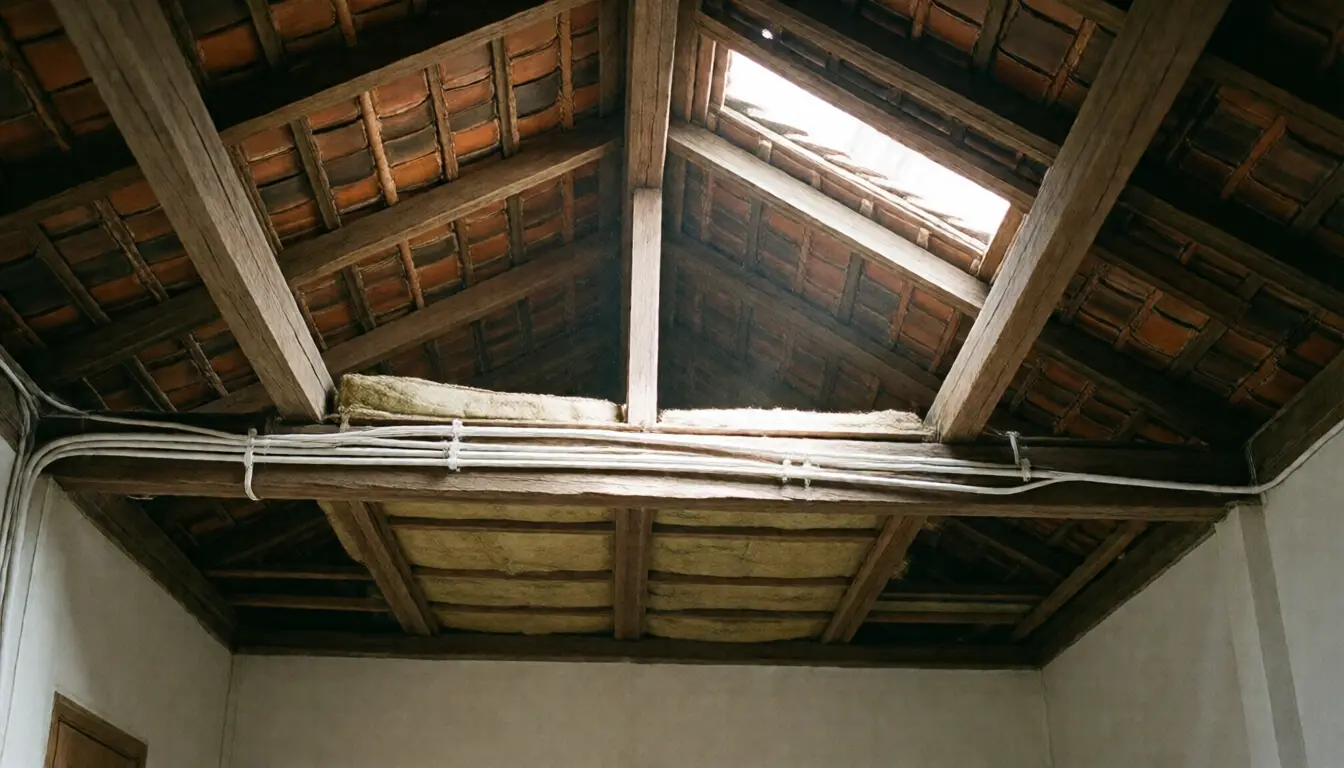
Ceiling voids you cannot get into. Many older houses have no access hatch at all, or one hatch in a corner. During the renovation, add hatches where they will actually be used, at least one per zone.
A hatch added now costs a few hundred baht and is what lets somebody service the house without cutting a new hole in the ceiling every time.
Old cable still in service. Wiring past a certain age goes brittle and the insulation cracks. If you open a wall and the insulation breaks when handled, replace the whole run. Do not join new cable to old and close the wall over it.
A supply that may not be enough. A house built thirty years ago was designed for fans, a television and lights, not for three air conditioners and a car charger.
Check the meter size and main breaker before starting, so that any upgrade can be done in the same visit. Single against three phase supply is covered in single or three phase power for a Thai home.
The order of work
Getting the order wrong is why so many renovations end up breaking the same wall twice.
- Decide where the furniture goes first, because a socket behind a wardrobe is a socket that does not exist.
- Fix the cabinet position and draw every cable route back to it on paper.
- Install all conduit and boxes, including the empty conduit you are not using yet.
- Photograph every wall before plastering. This step is free and is worth the most in five years.
- Plaster and close the ceilings.
- Install equipment, which is the last step rather than the first one many people start with.
Step four deserves expanding. Photograph every wall after the conduit is in and before plastering, with something in shot that gives scale, such as a tape measure laid across it.
Keep those photographs with the house documents, and on the day somebody drills to hang a television, you will know where the conduit runs.
What not to do during a renovation
Do not bury any one manufacturer's equipment in the wall. What belongs in the wall is neutral infrastructure: conduit, cable and power.
Equipment belongs where it can be swapped out, because devices have far shorter lives than walls, and a manufacturer shutting down its servers turns anything embedded into rubbish you cannot remove.
The full argument is in a smart home that works when the internet is down.
Do not remove the wall switches. Whatever system you move to, every light must still work by hand. There is no exception to this.
Do not buy the equipment before designing the system, because whatever you bought first becomes a constraint on the design, instead of the design deciding what to buy.
Do not let the electrician decide the network. Electricians are good at electricity, but choosing access point positions and cable routes is a different job. Set the positions yourself and have them run conduit to those points.
Frequently asked questions
What comes first when renovating an old house for technology?
Empty conduit with draw strings, neutrals to every switch box, and a central position for the equipment cabinet. Those three are the most expensive to add later.
Why install empty conduit with no cable to put in it?
Because cable standards change every few years and conduit does not. Empty conduit with a draw string turns a future cable run into a half-hour job instead of wall chasing.
What is the neutral in a switch box and why does it matter?
A smart switch powers itself continuously to listen for commands, so it needs a neutral in addition to the usual two wires. Many older houses have none, and adding one later means opening the wall.
Does every room need network cable?
Not every room, but do cable the ceiling access point positions, the television, any permanent desk, and cameras powered over the cable. Run two per position, since labour is most of the cost.
The old house has no earth. What should I do?
The renovation is the only time rewiring the earth throughout comes at a sensible price. Do it together with replacing the consumer unit and fitting an RCD.
Should I buy smart home devices before or after the renovation?
After. Anything bought first becomes a constraint on the design. Put the neutral infrastructure in the walls first and choose the equipment afterwards.
In short
- The cost of technology in a house is running cable afterwards, not the devices.
- Install empty conduit with a draw string on every route you might ever need.
- Run a neutral to every switch box, even where you have no plans for one.
- Choose a central cabinet position with power and real access.
- Rewire the earth and pick a consumer unit with spare ways.
- Photograph every wall before plastering and file it with the house documents.
- Bury neutral infrastructure, never one manufacturer's equipment.