
The real benefit is not convenience, it is watering at the right time in the right amount
People buy automatic watering because they are tired of holding a hose, which is a good reason, but not the reason plants do better.
What makes plants do better is consistency, because hand watering tends to mean too much on the day you have time and none at all in a busy week, which is the pattern roots like least.
An automatic system set up badly creates its own new problem, though. In Thailand, more garden plants are lost to root rot from too much water in soil that drains poorly than are lost to drought.
So the settings matter more than the equipment, and the first decision is not which model to buy but how much water each part of the garden needs and how often.
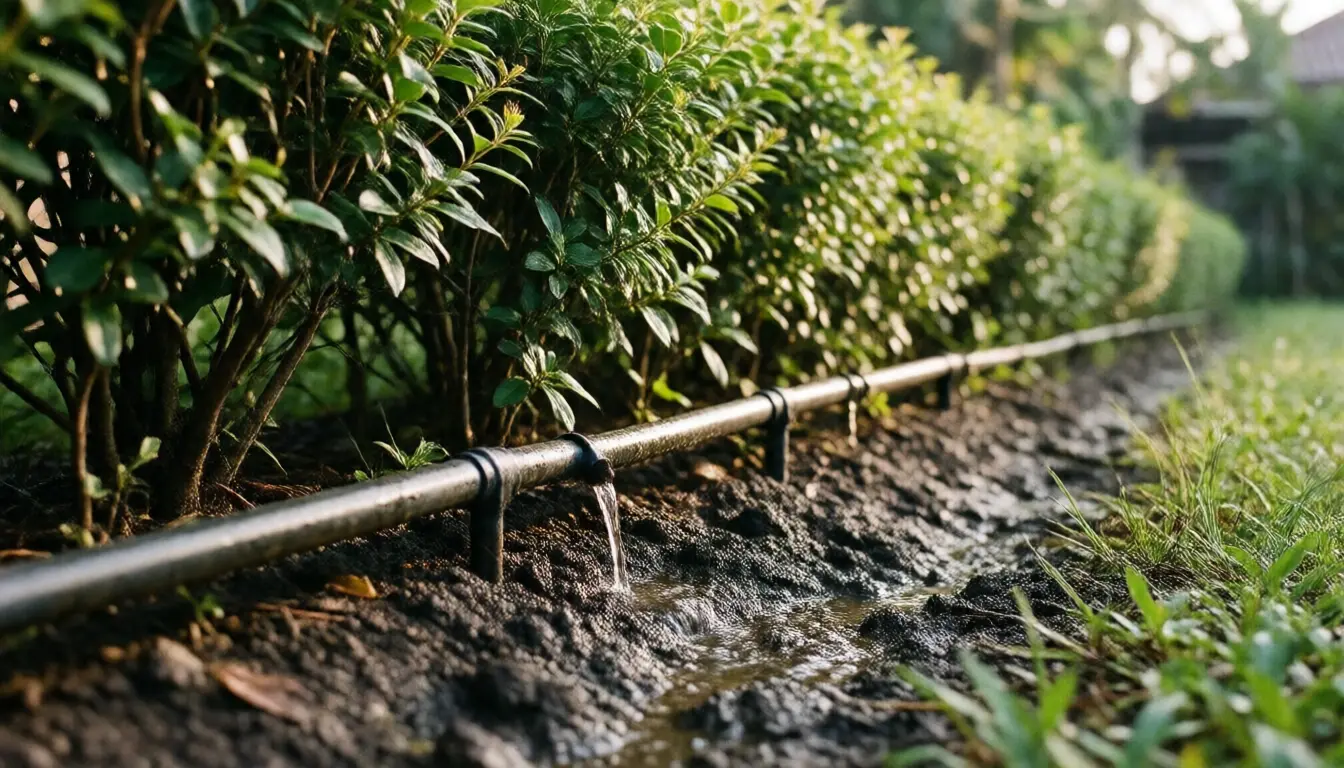
Two things that matter more than the controller
The first is a rain or soil moisture sensor, the best value item in the whole system for a country that rains for half the year.
Without one, the system waters while it is raining, which wastes water, keeps the soil saturated until roots rot, and gives the neighbours something to wonder about.
A rain sensor stops the cycle once a set amount has fallen. A soil moisture sensor is better still, because it measures what the roots are actually in rather than what the sky is doing.
The second is the time of day, which should be early morning before the sun is strong.
Watering at midday loses a share to evaporation before it reaches the roots, and watering in the evening leaves foliage wet all night in humid air, which is the condition fungal disease likes most. Changing the schedule from six in the evening to six in the morning costs nothing and shows within a few weeks on plants whose leaves have been spotted all along.
Three levels of system, and which one you need
A tap timer is the entry level, a few hundred to a few thousand baht, screwed onto the hose bib with the hose running from it. No wiring, no tradesman. Right for a small garden, a balcony, or one group of pots. The limit is that it controls one zone, so everything connected to it gets the same amount at the same time.
A multi-zone controller with solenoid valves is the real system. Each zone has its own valve and its own schedule, which is necessary because a lawn, shrubs and pots need completely different amounts. This is the level a house with an actual garden belongs at.
A connected controller adds phone control and weather data to skip a cycle when rain is forecast, which is the one genuinely worthwhile addition. Switching it on from your phone is something you will use three times and then stop.
If you buy a connected model, choose one that keeps the schedule in the unit and carries on when the internet drops, because a watering system that stops because the router rebooted is the one that has you coming home to a dead garden.
Zone by water need, not by location
The most common mistake is dividing zones by side of the house, front garden and back garden, which sounds tidy and is wrong in principle.
The right division is by water requirement and how much sun the area gets, because what has to differ between zones is frequency and duration, not position.
A division that works looks like this: pots, which dry fastest and may need water daily; shrubs in beds, watered two or three times a week but for longer; lawn, which wants a lot of water but on a different pattern; and established trees, watered rarely but deeply.
The important prohibition is never to put drip and sprinklers on the same zone, because they deliver water at wildly different rates. Set the timing to suit the sprinklers and the drip-fed plants die of thirst; set it to suit the drip and the lawn gets nothing.

The two parts people skip and then regret
With drip irrigation there are two components that are required and that people leave out because they look unnecessary.
A filter, because drip emitters have very small openings and Thai water carries enough sediment to block them within months. The symptom is individual plants declining one at a time for no apparent reason while the system still appears to run. A washable filter is inexpensive and extends the life of everything downstream.
A pressure regulator, because drip emitters are designed for low pressure. Feed them straight from a pump and emitters pop off, tubing splits, and fittings leak in places you never see because they are under the mulch.
And if the house runs on a pump, check that it can supply the number of emitters in one zone, because opening several zones at once is why every zone ends up weak. The answer is to schedule zones one after another rather than together. Pumps and pressure are covered in inverter water pumps and pressure tanks.
What to do monthly and twice a year
Monthly, run each zone manually and walk the whole of it. Look for emitters delivering nothing, spray heads pointing the wrong way, and tubing chewed by rodents or caught by the mower.
This matters because an automatic system runs when nobody is watching, so a broken line can water a wall for three months without anyone noticing while the plants beyond it die one by one.
Twice a year, change the schedule. Once going into the rainy season, reducing frequency or leaning harder on the rain sensor, and once going into the dry season, increasing frequency and moving the start time earlier.
A system set once at installation and never touched again is the one that floods the garden in August and underwaters it in April, which are the two problems it was bought to solve.
Frequently asked questions
Should it water every day?
No, except for pots, which dry quickly. Most planted beds prefer watering less often but more deeply, so roots go down to find water. Shallow daily watering keeps roots at the surface where they cannot handle a dry spell.
Can I water in the evening?
Better not. Foliage left wet all night in humid air is what fungal disease wants. Set it for early morning before the sun is strong, which costs nothing to change.
Can drip and sprinklers share a zone?
No, because they deliver at very different rates. Timing that suits one is always wrong for the other, so they need separate zones.
Is a connected controller worth the extra?
Worth it for one thing, skipping a cycle when rain is forecast. Phone control tends to be used a few times and forgotten, and choose a model that keeps its schedule locally so it keeps running when the internet drops.
In short
- The real benefit is consistency, not convenience, and the settings matter more than the equipment.
- A rain or soil moisture sensor is the best value item in a country that rains half the year.
- Water early morning, not evening, so foliage is not wet overnight.
- Zone by water requirement, not by which side of the house it is on.
- Drip needs a filter and a pressure regulator, the two parts skipped most often.
- Walk each zone monthly, and change the schedule twice a year with the seasons.