
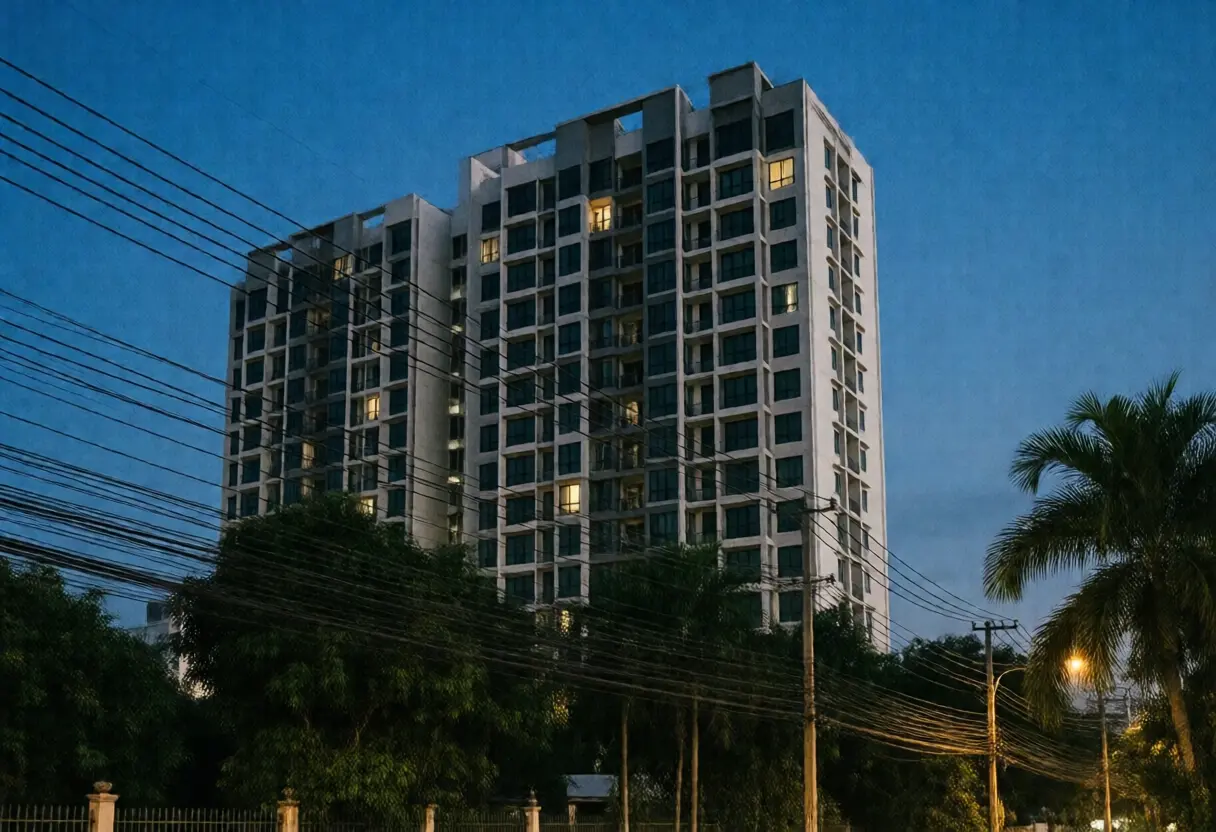
Bad loans are falling, so why is there more bank-owned property for sale?
Because part of the fall comes from banks moving the debt off their books rather than from borrowers catching up, and what leaves the books arrives back on the market as property. The Bank of Thailand said so plainly in its Q2 2026 banking summary: the drop in non-performing loans came mainly from accelerated management of loan quality.
For anyone buying a home, that is not simply a longer list of bargains. It also means the ordinary unit you were about to buy is being priced against whatever the bank next door needs to clear.
What the latest figures actually say
The Bank of Thailand published its commercial banking summary for the second quarter of 2026 on 18 August 2026. The headline numbers:
| Measure | Q2 2026 |
|---|---|
| Commercial bank lending, including subsidiaries | Grew 2.0 per cent year on year |
| Non-performing loans, stage 3 | 534.8 billion baht, down |
| NPLs as a share of total lending | Steady at 2.82 per cent |
| Stage 2 loans | 6.78 per cent, down |
Read quickly, that is good news across the board. The sentences attached to the numbers matter more than the numbers.
The central bank attributes the lower NPL balance mainly to accelerated management of loan quality. On stage 2, which covers loans where credit risk has increased significantly but which are not yet non-performing, it says the decline came partly from vulnerable borrowers flowing into NPL status.
So one box got lighter because the contents were moved out for disposal, and the other got lighter partly because some of the contents dropped into a worse box. Neither route means the problem left the market. It changed address, and the new address is a listing you are about to open.
How a missed instalment becomes a bank-owned listing
NPA stands for non-performing asset. In Thai practice it means property that has come back into the hands of a bank or an asset management company, and is no longer a loan at all. Getting there takes several stages.
- The first missed payments. A borrower whose credit risk has increased significantly is classified stage 2. Nothing about this is visible from outside.
- Past 90 days. Under the central bank's classification rules, a loan more than three months overdue, or where the borrower is not expected to repay in full, is classified as non-performing, stage 3.
- Restructuring talks. Length varies case by case, and many end here without ever reaching a listing.
- Litigation and enforcement where no agreement is reached.
- Public auction run by the Legal Execution Department.
- No bidder, or bids too low. The creditor bids itself, and the property becomes an NPA on a bank or asset management company website.
Here is the point. The distance from first missed instalment to public listing is not measured in months, cases move at different speeds, and many resolve along the way. What is on those websites today is not a picture of this month's economy. It is the residue of pressure that built up years earlier.
Reading it the other way round is the common mistake: seeing a lot of bank stock and concluding the market is deteriorating right now. Where the market actually stands is covered in has the Thai housing market recovered.

Why bank stock in the same building pushes your price down
Say you are buying a 35 square metre unit at 2.5 million baht. The same layout a few floors away is listed by a bank at 2.1 million.
Three things happen at once.
| Who | What they see | What follows |
|---|---|---|
| You, the buyer | A lower reference price inside the same building | Paying the full difference becomes hard to justify |
| The bank's valuer | Actual transacted prices in the building, distressed sales included | The valuation is dragged down, and the loan amount with it |
| Other owners trying to sell | Their unit not moving at the old price | They cut, and those cuts become the next round of comparables |
The middle row is the one people miss, because it does not only affect what you negotiate. It affects what the bank will lend you, which means finding more cash yourself while the agreed price has not changed at all. Why valuations differ between banks is set out in why banks value the same house differently.
Reading the signal in how the stock is distributed
One bank listing tells you nothing. Concentration tells you plenty.
| What you see | How to read it |
|---|---|
| Spread across the city, one or two per project | Ordinary cyclical stuff, and says nothing about any single project |
| Several in one project | Find the cause. Often a project sold mainly to investors where the rental demand never arrived |
| Same layout, adjacent floors, several units | Usually one buyer or one group that took multiple units. A sign of a project sold heavily into investor demand |
| The same listing sitting there through several price rounds | The price has not reached what the market will take, or there is a problem the photographs do not show |
The practical method is to open the property pages of the large banks and of the asset management companies such as BAM and SAM, and search by project name rather than by a broad area. Property still at the auction stage, before a bank owns it, is searchable through the Legal Execution Department's system.
What to check before buying in a building with a lot of bank stock
- Count every listing in the project, bank, asset management company and private owner alike, against the total number of units. That ratio tells you more than any description of the location.
- Ask the juristic person about actual occupancy. Units sold and units lived in are different numbers, and the second one decides whether the building can afford to look after itself.
- Ask for the sinking fund position and total common fee arrears. Repossessed units are usually months behind before they are taken, and the shortfall lands on the remaining owners as declining service. What arrears trigger is set out in what unpaid condo common fees lead to.
- Walk the common areas on a weekday evening. Dark corridors, a lift out of service for months, a closed pool. These are budget outcomes, not coincidences.
- Compare price per square metre with a neighbouring project that has none of this. Where the location is similar and the price is far lower, that gap is the market pricing risk.

The discount worth taking and the discount that is a warning
Bank stock is cheaper for legitimate reasons: no interior viewing, sold as is, and a seller who wants the file closed. That discount is the price of not knowing, and you get something for it.
The other kind comes from the building itself. Common fees that cannot be collected until service degrades, a project sold so heavily to investors that nobody lives there, a location the transit line moved away from. That discount will still be there when you sell, usually deeper.
Separating them is simpler than it sounds. Ask whether renovating the unit makes the problem disappear. If yes, it is the first kind. If not, because the problem is outside your front door, it is the second.
The buying process itself, and how buying from a bank differs from bidding at a Legal Execution Department auction, is covered in bank NPA or court auction.
If you are the one selling in a building like that
- Do not price from what a neighbour achieved three years ago. The valuer is not using that number.
- Do what bank stock cannot do: let buyers see everything, have the paperwork complete, have no common fee arrears, and answer questions on the spot.
- Finish the sale before more bank listings appear in the project, because every low closing becomes your comparable.
- If you genuinely have to compete on price, compete with terms instead. Cover the transfer fee, or hand it over ready to move into, rather than cutting the asking price.
If you are looking for owner-sold property with the documents already checked, see our listings for sale.
Frequently asked questions
What is an NPA?
A non-performing asset: property that has come back into the hands of a bank or an asset management company, through enforcement or transfer in settlement of debt. It is no longer a loan.
Do falling bad loan figures mean the economy is improving?
Not necessarily. The Bank of Thailand attributes the fall to 534.8 billion baht in Q2 2026 mainly to accelerated management of loan quality, which means moving debt off the books rather than borrowers repaying in full.
How many days overdue makes a loan non-performing?
Under the central bank's classification rules, more than three months or 90 days overdue, or where the borrower is not expected to repay in full, classified as stage 3.
What is a stage 2 loan?
One where credit risk has increased significantly but which is not yet non-performing. It stood at 6.78 per cent in Q2 2026, and the central bank says part of the decline came from vulnerable borrowers flowing into NPL status.
Should I avoid a project with a lot of bank stock?
Not automatically, but find the cause first. If it comes from a project sold to investors where nobody lives and common fees cannot be collected, today's discount will follow you to resale.
Where can I see bank-owned property?
On the property pages of individual banks and of asset management companies such as BAM and SAM. Property still at the auction stage is searchable through the Legal Execution Department's system.
Does today's bank stock reflect today's economy?
No. The route from first missed instalment through restructuring, litigation, enforcement and listing runs through several stages at different speeds, so what is listed now reflects earlier pressure rather than this month's.
Does bank stock in the building affect my mortgage?
It can. Valuers use actual transacted prices in the building as reference data, so distressed closings pull the valuation down and the loan amount with it.
Key takeaways
- Part of the fall in bad loans comes from banks clearing debt off their books, not from borrowers catching up.
- The Bank of Thailand reported Q2 2026 NPLs at 534.8 billion baht, 2.82 per cent of total lending, with stage 2 at 6.78 per cent.
- Part of the stage 2 decline came from vulnerable borrowers flowing into non-performing status rather than recovering.
- What is listed today reflects pressure from years earlier, because the process takes many stages to complete.
- Bank stock concentrated in one project drags both the negotiated price and the valuation, which affects the next buyer's loan.
- A discount that renovation makes disappear is worth taking. One that comes from the building will still be there at resale.
- Before buying in such a project, check the listing count, actual occupancy and the building's common fee arrears.