
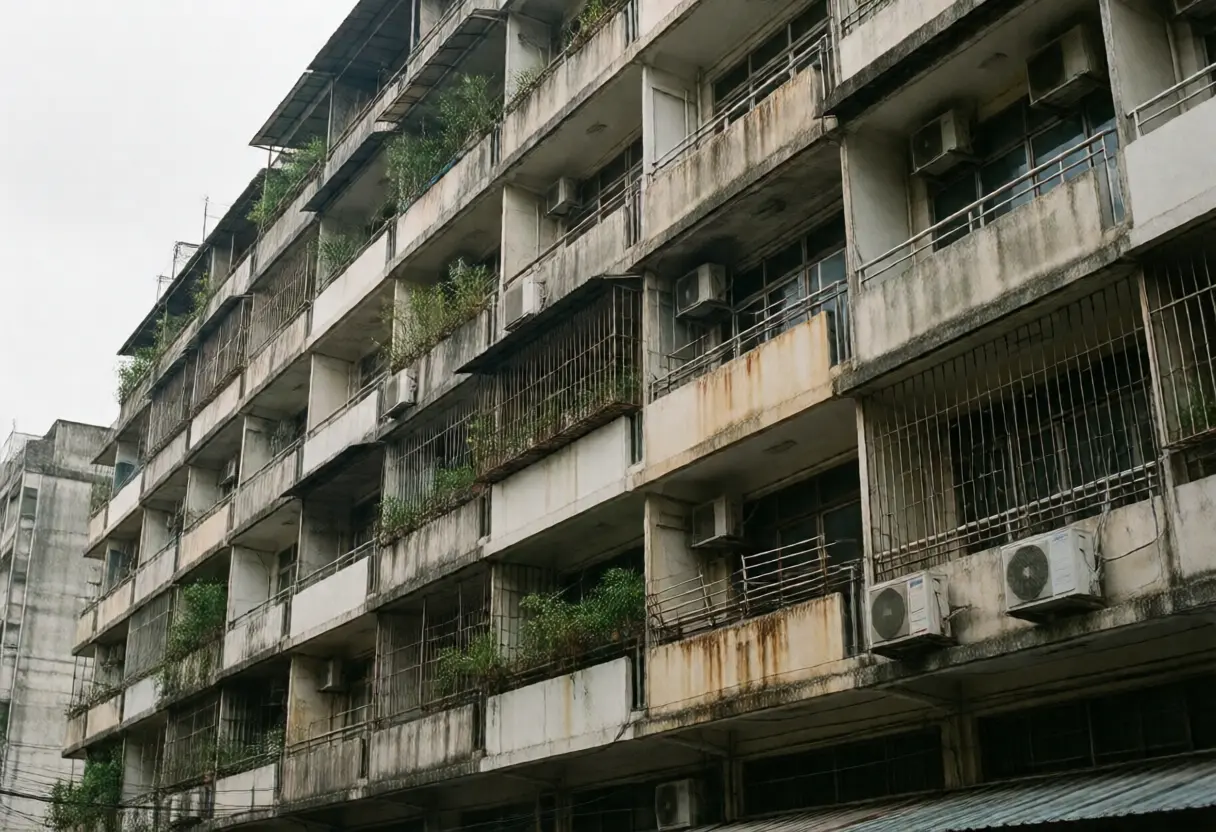
You have just bought a condo and the common property is a mess. What can you do?
Four things, in increasing order of force: inspect the juristic person's records, which you can do alone and immediately; gather owners holding twenty per cent of the votes to call an extraordinary general meeting; vote to remove the manager with one quarter of all votes; and complain to the condominium registrar at the local land office.
The first three come from the Condominium Act, and most co-owners have no idea they exist. Which is why so many buildings spend years complaining in a chat group instead.
First work out whose problem it actually is
These three look identical when you meet them and have completely different remedies. Starting down the wrong path is why so many of these disputes drag on.
| Symptom | Where the problem really sits | Remedy |
|---|---|---|
| Leaking pool, lifts failing constantly, common areas cracked since handover | The developer's build quality | Claim against the developer under defect liability and the warranty |
| Fees collected but nothing repaired, accounts opaque, nobody answers | How the juristic person and its manager run the building | Inspect the records, call a meeting, remove the manager |
| The sinking fund cannot cover repairs because many owners are in arrears | The co-owners themselves | Push collection measures through the general meeting |
Settle this before doing anything else. Arguing with the juristic person about cracks the developer left behind is time spent on people who cannot fix it.
The right you can exercise on your own today
Section 38/3 of the Condominium Act requires the juristic person to keep the annual report together with the regulations at its office, so that co-owners and officials may inspect them.
Which means you can walk into the management office and ask. No signatures to collect, no meeting to wait for, and no reason to give.
What to ask for and photograph:
- The registered regulations of the juristic person, not a printout somebody handed round
- The annual reports, as far back as they hold them
- The audited balance sheet, with the auditor's report attached
- Minutes of recent general meetings, to see what has already been resolved
- The current committee list and when their terms expire
The numbers that show whether the building is being run lawfully
Section 38/1 requires the juristic person to prepare a balance sheet at least once every twelve months, showing assets and liabilities together with the income and expenditure account, to have it examined by an auditor, and to submit it for approval at a general meeting of co-owners within one hundred and twenty days of the end of the accounting year.
That 120 day figure is the easiest tool you have. If the building's accounting year ends in December and no general meeting has approved the balance sheet by the end of April, the juristic person is not complying with the Act. That is a point you can raise without getting into an argument about management style.
Section 71 provides that a juristic person that contravenes or fails to comply with sections 38/1, 38/2 and 38/3 is liable to a fine not exceeding ten thousand baht.
Ten thousand baht bankrupts nobody. What the section does is turn "management will not show us the accounts" from a grievance in a chat group into a breach with a penalty attached, which carries very different weight in a conversation.
Twenty per cent of the votes calls an extraordinary meeting
If asking for records changes nothing, the next step is to call a meeting.
Section 42/2 allows co-owners holding not less than twenty per cent of the total votes to sign a written request to the committee to convene an extraordinary general meeting, and the committee must hold it within 15 days of receiving the request.
The important part is at the end. If the committee does not convene within that period, those same co-owners may hold the extraordinary general meeting themselves. That closes off the most common evasion, which is simply sitting on the request.
One thing to understand about counting: votes follow each unit's share of ownership in the common property, not one unit one vote. Larger units carry more weight. Reaching twenty per cent is an exercise in floor area, not headcount.
Removing the manager
Where the problem is the manager personally, section 35/3 allows a general meeting of co-owners to remove them by a vote of not less than one quarter of the total votes of all co-owners.
Note that the threshold is measured against the whole building, not against those who turned up. That is stricter than many people assume. A building with poor attendance can fail to remove a manager even when everyone present agrees. Collecting proxies from owners who will not attend is therefore the main work here, not an afterthought.

Where to complain
Condominium juristic persons are supervised by the Department of Lands. The condominium registrar is the land officer at the land office for the area where the building stands.
Matters you can raise include the juristic person failing to prepare or disclose the balance sheet as the Act requires, failing to hold general meetings within the prescribed period, or irregularities in the registration of the manager and committee.
Take copies of everything you have gathered. A complaint with documents attached and a complaint made by description are treated very differently.
If the problem was there on handover day
Cracks, systems that never worked, or common facilities that do not match what was advertised, all present from day one, are the developer's responsibility rather than that of a juristic person which has only just taken the building over.
On warranty periods for structure and fittings, and how to give notice so that it counts, see how long a new home is under warranty. If you are worried about cracks you have found, which cracks mean danger helps sort the urgent from the cosmetic.
What to check before buying, so none of this is yours to fix
- Ask for the audited balance sheets for the last two or three years. Look at what is left in the sinking fund and how large the arrears from co-owners are.
- Ask for the minutes of the most recent general meeting. A building's problems always surface under any other business.
- Ask for the common fee rate going back five years. A building that has not raised its fee in ten years is a building eating its reserves.
- Walk the plant, not just the lobby and the pool. Machine rooms, lifts, water pumps.
- Ask what proportion of units are in arrears. That number predicts a building's future better than how the common areas look.
On what unpaid common fees do to a transfer, see condominium common fee arrears. And if you are still choosing, our condominiums for sale are listed with their locations and areas.
Frequently asked questions
Can a single co-owner ask to see the accounts?
Yes. Section 38/3 of the Condominium Act requires the juristic person to keep the annual report and the regulations at its office for co-owners and officials to inspect. No signatures to gather and no meeting to wait for.
How long does the juristic person have to approve the balance sheet?
Within 120 days of the end of the accounting year, under section 38/1, which requires a balance sheet every twelve months, examined by an auditor, then submitted to a general meeting for approval.
Is there a penalty if the juristic person does not comply?
Yes. Section 71 provides for a fine not exceeding ten thousand baht where a juristic person contravenes or fails to comply with sections 38/1, 38/2 and 38/3.
How many votes are needed to call an extraordinary general meeting?
Not less than twenty per cent of the total votes of all co-owners, under section 42/2. The committee must convene within 15 days of the request, and if it does not, that group may convene the meeting themselves.
How many votes are needed to remove the manager?
Not less than one quarter of the total votes of all co-owners, under section 35/3, counted against the whole building rather than against those attending.
Is it one unit one vote?
No. Votes follow each unit's share of ownership in the common property, so larger units carry more weight. Building a bloc is a matter of floor area rather than the number of people.
Where do I complain about a condominium juristic person?
To the condominium registrar, who is the land officer at the land office for the area where the building stands. Bring copies of the documents you have collected.
Common areas were already defective at handover. Who is liable?
The developer, not the juristic person that has just taken over management. Pursue it under defect liability and the warranty terms, and give notice in writing so the date of notification is on record.
Key takeaways
- Establish first whether the problem is the developer, the management, or co-owners in arrears, because each has a different remedy.
- Section 38/3 lets a single co-owner inspect the annual report and the regulations at the management office immediately.
- Section 38/1 requires an audited balance sheet submitted to a general meeting for approval within 120 days of the accounting year end.
- Section 71 carries a fine of up to ten thousand baht where the juristic person fails to comply with sections 38/1, 38/2 and 38/3.
- Section 42/2 lets co-owners holding twenty per cent of the votes demand an extraordinary meeting, and hold it themselves if the committee does not convene within 15 days.
- Section 35/3 allows removal of the manager on one quarter of all votes, measured against the whole building rather than those attending.
- Votes follow each unit's share of the common property, so a voting bloc is built from floor area rather than headcount.