
Going up the stairs at two in the morning, you get three choices
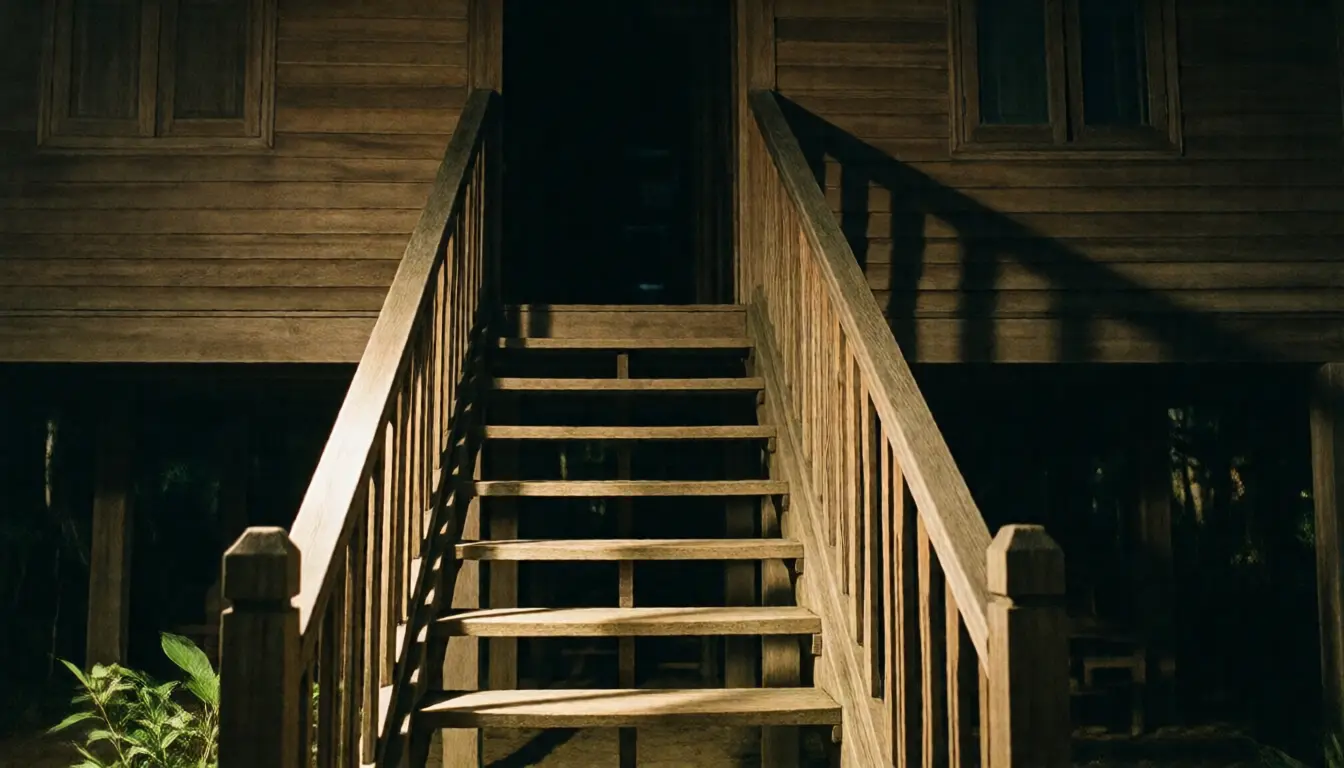
Choice one is to leave the stair light on all night, because the switch is downstairs and you are going up.
Choice two is to switch it off at the bottom and climb in the dark, counting the steps.
Choice three is to go up, come back down to switch it off, then climb again in the dark.
Plenty of two storey houses in Thailand have lived with those three choices for years without knowing there is a fourth.
The fourth is two point switching, which lets one light be turned on and off from both ends.
Its price while the house is being built is a few extra metres of cable.
Its price after the house is finished is chasing the wall out along the whole staircase.
What it is, and why the name is confusing
An ordinary switch has two terminals and does one thing: make or break a circuit.
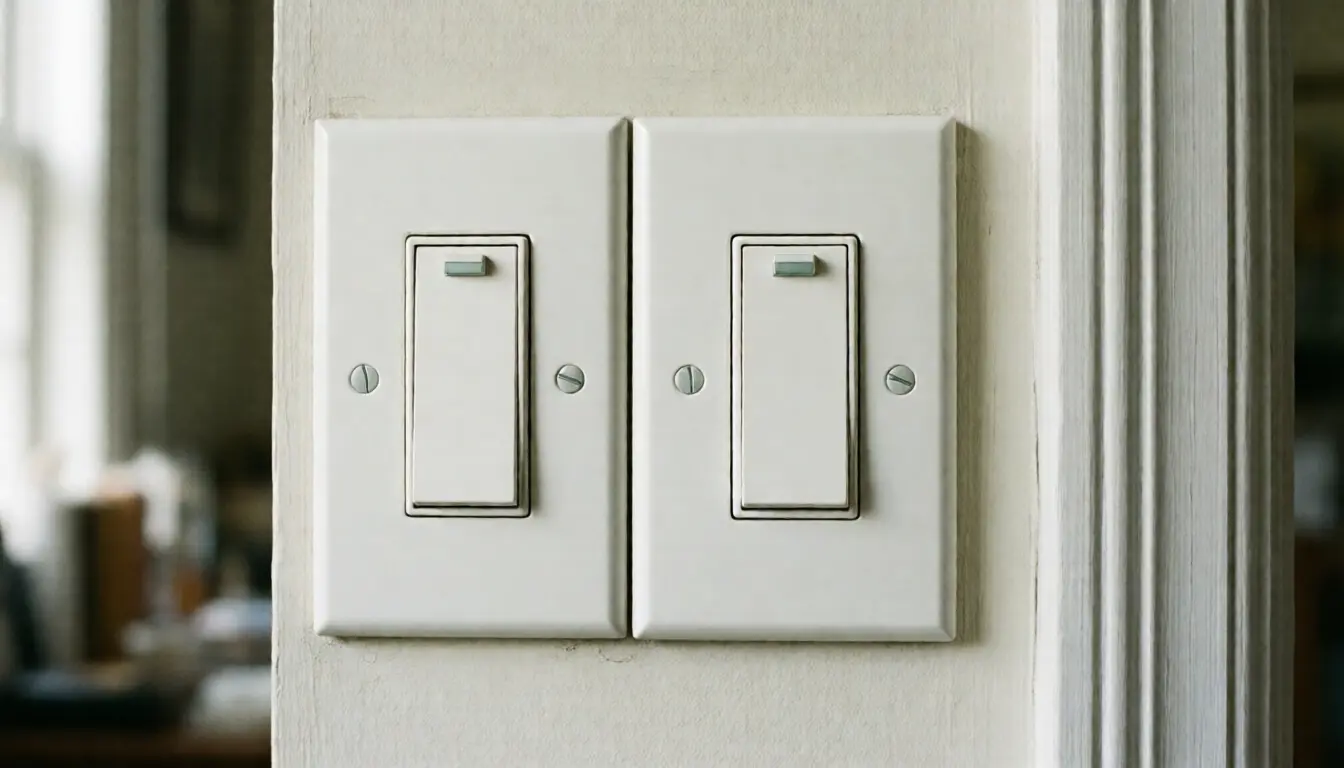
A switch used to control one light from two places has three terminals and must be used in pairs.
In Thailand it is usually called a three way switch, after the number of terminals.
Some people call it a two way switch, after the number of control points.
Both names mean the same object, and the difference is why conversations with electricians so often go astray.
The way to communicate without error is to describe what you want, not to name the switch.
Say you want the stair light switchable from both the bottom and the top, and the electrician will know what to fit.
The principle is simpler than it sounds. Each switch chooses which of two wires running between them carries the current.
Both switches on the same wire, the circuit is complete and the light is on.
Each on a different wire, the circuit is broken and the light is off.
So pressing either one always flips the light, whatever position the other is in.
Controlling from three points or more
A long hallway with three doors, or a living room with three ways in, needs another type of switch inserted in the middle.
It is called an intermediate or four way switch, and its job is to swap the two wires passing through it.
The arrangement is a three way switch at each end with as many intermediates as you like between them.
So the number of control points is unlimited, as long as the two ends remain three way switches.
In an ordinary house it rarely goes beyond three points, but a house with three floors of stairs benefits obviously.
Seven places worth having it from the start
Ranked by real value rather than by luxury.
The staircase, first and most important, because walking in the dark is most dangerous there.
In a house with older residents this is not convenience. It is safety.
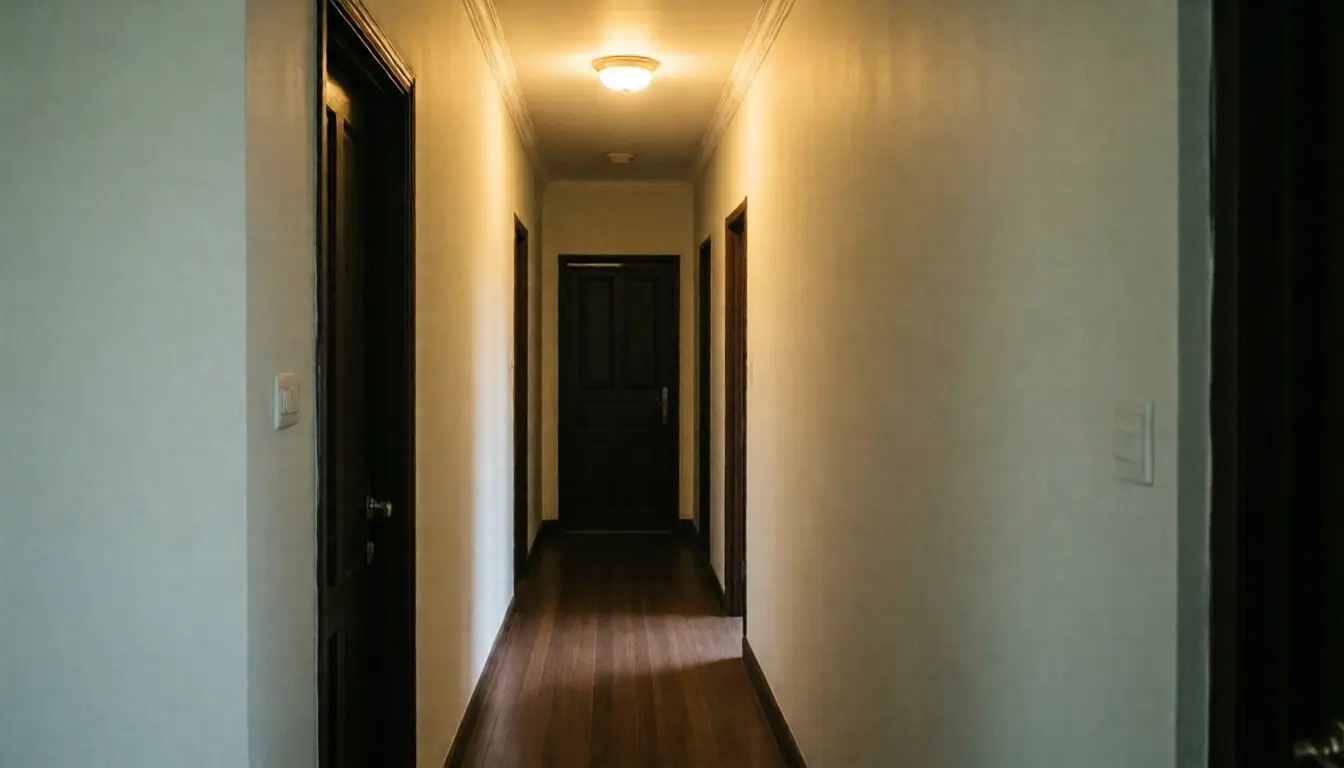
Long hallways over three or four metres, especially one connecting the bedrooms to the rest of the house.
The main bedroom, between the door and the bedside, used every night and rarely thought about at the design stage.
Anybody who has to get out of bed to switch off at the door and walk back in the dark understands this immediately.
From the parking area to the front door, so the path lights as you leave the car and switches off once you are inside.
A living room with two ways in, from the front door and from the kitchen.
Front door and back door, for the lighting used at night around the house, which is a security matter too, as covered in where outdoor lighting goes wrong.
A kitchen with a way through to the back, the route actually used every day in a Thai house.
All seven together still amount to only a few tens of metres of extra cable at construction.
Why it has to be decided while the walls are open
Two point switching needs extra cable between the two switch positions.
While the walls are still open, that cable runs alongside everything else and adds almost nothing in labour.
Once the house is finished, adding the same cable means chasing the wall along its whole length, replastering, waiting for it to dry, then repainting the wall.
That difference is not double or triple. It is a different order of cost.
The same logic applies to burying spare conduit, covered in surface against concealed wiring.
What to do while building or renovating is to walk through the house before the walls go up, following the routes you will actually use at night.
Every point where you would want to switch off what you just switched on is a point that needs a second switch.
Options for a house already built
If the walls are closed and you would rather not chase them, three approaches genuinely work.
Wireless wall switches. The transmitter sticks to the wall anywhere with no cabling, while the receiver goes at the light or inside the existing switch box.
The advantage is speed and no damage to the wall.
The limitation is that some transmitters run on a battery which has to be replaced, while others generate their power from the press itself and need no battery but come in fewer models.
A relay module in the existing box, fitted behind the existing switch with an additional control point added.
This needs room in the switch box, which many older Thai boxes do not have.
Smart switches controlled by app or voice, which in theory add unlimited control points.
The important limitation people meet after buying is the neutral.
The neutral at the switch box, which has wrecked plenty of plans
An ordinary switch needs no power of its own. It only makes and breaks the circuit.
So electricians usually run only what is needed to the switch position, without bringing a neutral there.
Almost every smart switch needs a permanent supply for its control electronics.
Which means a neutral must be present in that switch box.
Older Thai houses usually do not have one, and running one in means chasing the wall again.
The check is to have an electrician open the switch plate and see how many conductors are there and what colours.
Check before buying the switch, not after.
Some smart switches work without a neutral, but they often have trouble with certain LED lamps, showing up as a faint flicker when off.
The safety points that matter
This is the electrician's work, but an owner should know enough to ask properly.
The switch must break the live conductor, not the neutral, because breaking the wrong one leaves the lampholder live while the lamp is off.
Somebody changing a bulb with the switch off then gets a shock from a light they believe is dead.
This is a real hazard and it turns up in work done in a hurry.
The wires between the two switches must run in the same conduit as that circuit, not be routed alongside another one.
Do not use cable smaller than the circuit calls for, even for what looks like a control wire, because it is still part of a circuit carrying current, which is the same subject as choosing the wrong cable size.
Test from both positions before closing up, flipping back and forth several times, because some wiring errors work in one combination and not another.
What to tell the electrician at the design stage
Do not name the switch. Describe the behaviour.
- Stair light, switchable from downstairs and upstairs
- Hallway light, switchable from both ends
- Bedroom light, switchable from the bedside without getting up
- Entry light, on from the parking area and off from inside
Those four sentences let the cabling be planned properly on day one.
And ask for the electrical drawing with the switch positions marked, to keep.
That set of documents is worth a great deal on the day something has to change, and it is free to ask for then and impossible to get later.
Frequently asked questions
Is a three way switch different from a two way switch?
They are the same object. One name counts terminals, the other counts control points. The way to communicate without error is to say which places you want to switch from.
Can one light be controlled from three places?
Yes, with a three way switch at each end and an intermediate switch inserted between them, as many as the number of points requires.
Can it be added to a finished house?
Yes, by chasing the wall for extra cable, or avoided with wireless switches, a relay in the existing box, or smart switches, each with its own limitations.
Do smart switches need a neutral?
Almost all of them do, because their control electronics need a permanent supply. Many older houses have no neutral at the switch position, so have an electrician open the box before buying.
Do wireless switches need frequent battery changes?
It depends on the model. Some run on a battery that needs replacing in time, while others generate power from the press itself and need none, though fewer models are available.
Why did I get a shock changing a bulb with the switch off?
Because the switch was breaking the neutral instead of the live conductor, leaving the lampholder live. Have an electrician correct it, and isolate at the breaker before changing a bulb rather than relying on the switch.
Is adding two point switching expensive?
Very cheap while the walls are open, since it is a few metres of cable running with everything else. Much dearer once the house is finished, because it means chasing, plastering and repainting.
In short
- Two point switching lets one light be operated from two places.
- Three way and two way name the same thing, so describe the behaviour to your electrician instead.
- For three points or more, insert intermediate switches between the two ends.
- The best value places are the staircase, long hallways and the main bedroom.
- The cost while walls are open is a few metres of cable; afterwards it is chasing and repainting.
- A finished house can use wireless switches, a relay, or smart switches instead.
- Almost all smart switches need a neutral at the box, which older houses lack.
- The switch must break the live conductor, or the lampholder stays live when off.
- Walk your night time routes while the walls are open and the answer becomes obvious.