
How necessary is it? That depends on whether your kitchen fries, and whether the house has a treatment tank
If the kitchen cooks Thai food properly, meaning stir-frying, deep-frying, and washing oily dishes every day, a grease trap is not a luxury.
And if the house runs a combined wastewater treatment tank that also takes the kitchen flow, it moves from something you should have to something you must have.
The reason is not cleanliness or smell. It is what grease does to two things: the inside of your pipes, and the bacteria in the treatment tank.
Conversely, if the kitchen is barely used, boiling water and reheating, and the kitchen waste runs straight to a public drain, a grease trap can wait.
This article covers how one works, how to size and site it, how to maintain it so it actually functions, and the things people do that turn a trap into an ornament.
What grease does to pipes, and why hot water does not help
Oil in a hot pan is a liquid. It flows down the drain easily, which is why people assume there is no problem.
The problem starts a few metres from the sink, at the point where the water has cooled.
As it cools, grease returns to a semi-solid and clings to the pipe wall, a thin layer at a time, every time dishes are washed.
That layer does not come away on its own. It accumulates and progressively narrows the opening water passes through, like an artery closing.
And when small food particles flow past, they stick to the grease layer, after which the mass grows much faster.
This is why kitchen drains always block gradually rather than suddenly, and why once blocked they are usually blocked solidly enough that a rod will not clear them.
On hot water, a great many people believe pouring boiling water after the washing up dissolves the grease and carries it away.
It does dissolve it briefly, and the dissolved grease then solidifies somewhere further along, harder to reach.
So hot water does not remove grease. It moves the problem to where you cannot see it, which is the same principle that makes certain products appear to work while fixing nothing.
The second consequence, more important for houses on a treatment tank, is that grease interferes with the digestion process inside it.
A grease layer floating in a treatment tank obstructs both the flow and the work of the micro-organisms that actually run the system, which is explained in cesspool or prefabricated treatment tank.
How a grease trap works
The mechanism is simpler than the name suggests, and it has no moving parts.
A grease trap is a box with kitchen water entering one side and leaving the other, with a baffle in between.
As the water enters, it immediately slows because the space is wider, and the slowing is what makes everything else happen.
Water that is still enough begins to separate by density. Grease, being lighter than water, rises and gathers as a layer at the top, while heavier food particles sink to the bottom.
The outlet sits below the surface and behind the baffle, so what leaves is water from the middle of the tank, which is the cleanest layer.
Two things make this work: time and temperature.
If water passes through too quickly, it leaves before the grease has risen, which is why an undersized trap does nothing.
If the water is too hot, the grease stays mixed with it and travels through together, which is why pouring boiling water down the sink defeats the trap.
Understand those two and the sizing, the siting and the way to use it all follow.
The three kinds sold
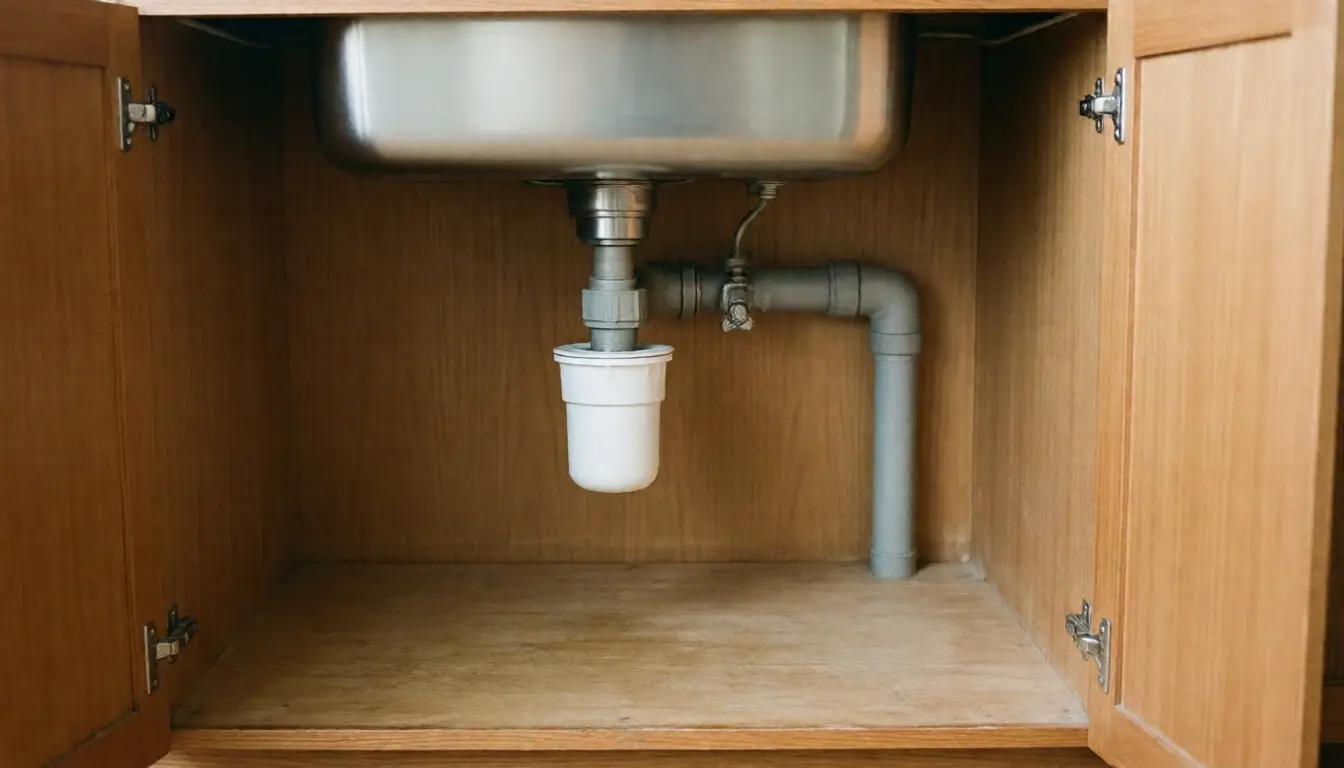
Under-sink traps are small plastic units plumbed between the sink waste and the drain. They install easily and break nothing.
They are cheapest, fit a finished house, and are easy to clean because they sit where you can see them.
The drawback is small capacity, so they need cleaning more often, and in a hard-working kitchen they fill faster than anybody stays diligent.
Freestanding outdoor traps are medium plastic or stainless units standing outside where the kitchen drain emerges.
They hold more, are easy to clean, and need nobody to crawl into a cupboard. The trade is that they take space and have to be allowed to stand there.
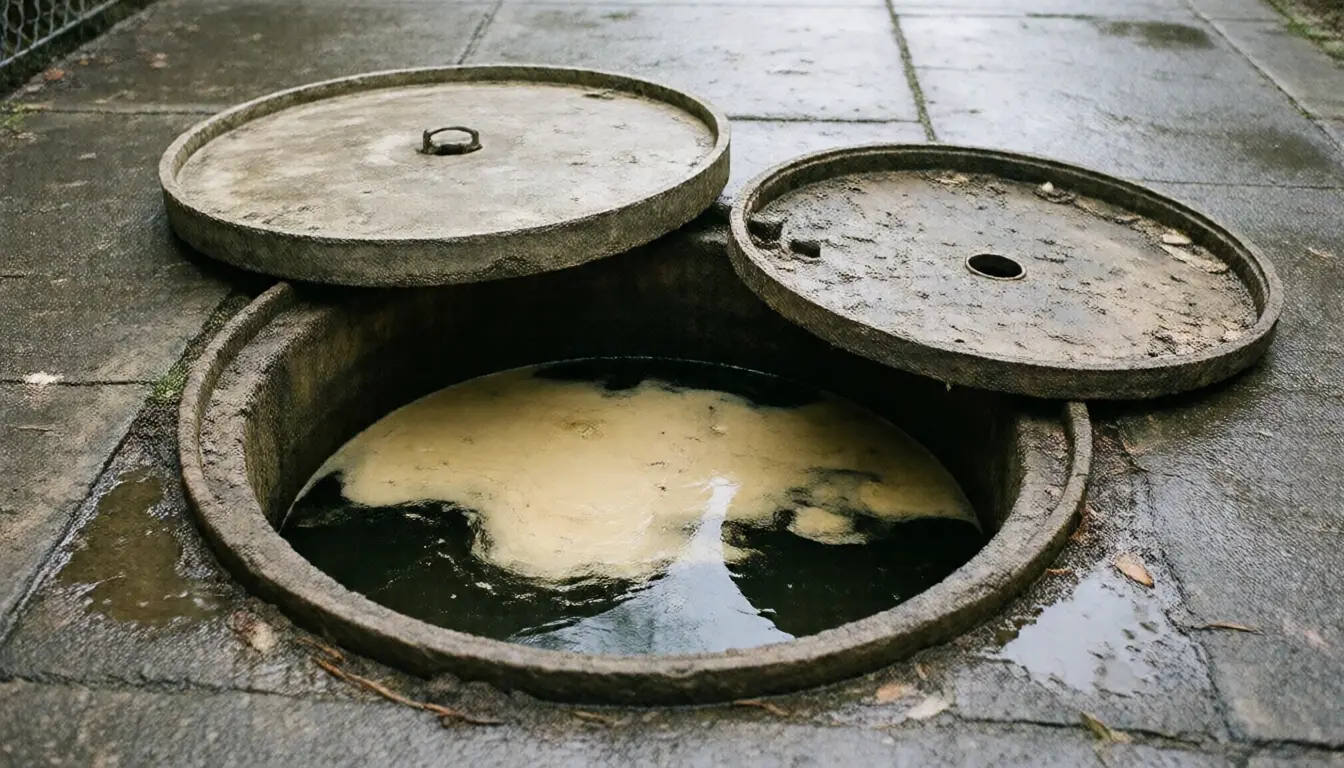
Buried traps are concrete chambers or prefabricated tanks under the paving, with a cover at ground level.
They hold the most and are out of the way. The risk is that if sited badly or paved over, they become something nobody cleans for the life of the house.
For an ordinary house cooking daily, the freestanding outdoor type is usually the best balance of capacity and ease of care.
The under-sink type suits a condominium, or a house with no route for the drain to run outside, and a kitchen that is not worked hard.
Size and position, the two things that stop a trap working
On size, the principle is that the trap must be large enough for water to stay in it long enough for grease to rise.
The practical way to think about it for a house is the flow during the heaviest period, which is washing up after the evening meal.
Running the tap continuously for ten minutes of washing up is a large volume passing through in a short window, and an undersized trap catches nothing during exactly that window.
Ask the supplier what flow rate the model handles and compare that with how your kitchen is actually used, rather than only looking at the litre figure.
The commonest mistake is buying the smallest under-sink trap for a kitchen that fries daily, then concluding that grease traps do not work.
On position, three things matter.
It has to be genuinely reachable. A trap whose lid is awkward to open is a trap nobody cleans. Put it where you can stand comfortably and set a bin bag down beside you.
It takes kitchen water only. Never connect bathroom or toilet waste to a grease trap. It was not designed for that and becomes a foul chamber immediately.
It always comes before the treatment tank. Where a house has a combined treatment tank, the kitchen flow passes through the grease trap first and then into the tank, never the other way round.
And site it as far as the plot allows from bedroom windows and outdoor seating, because it smells every time the lid comes off.
How to maintain it, and how often
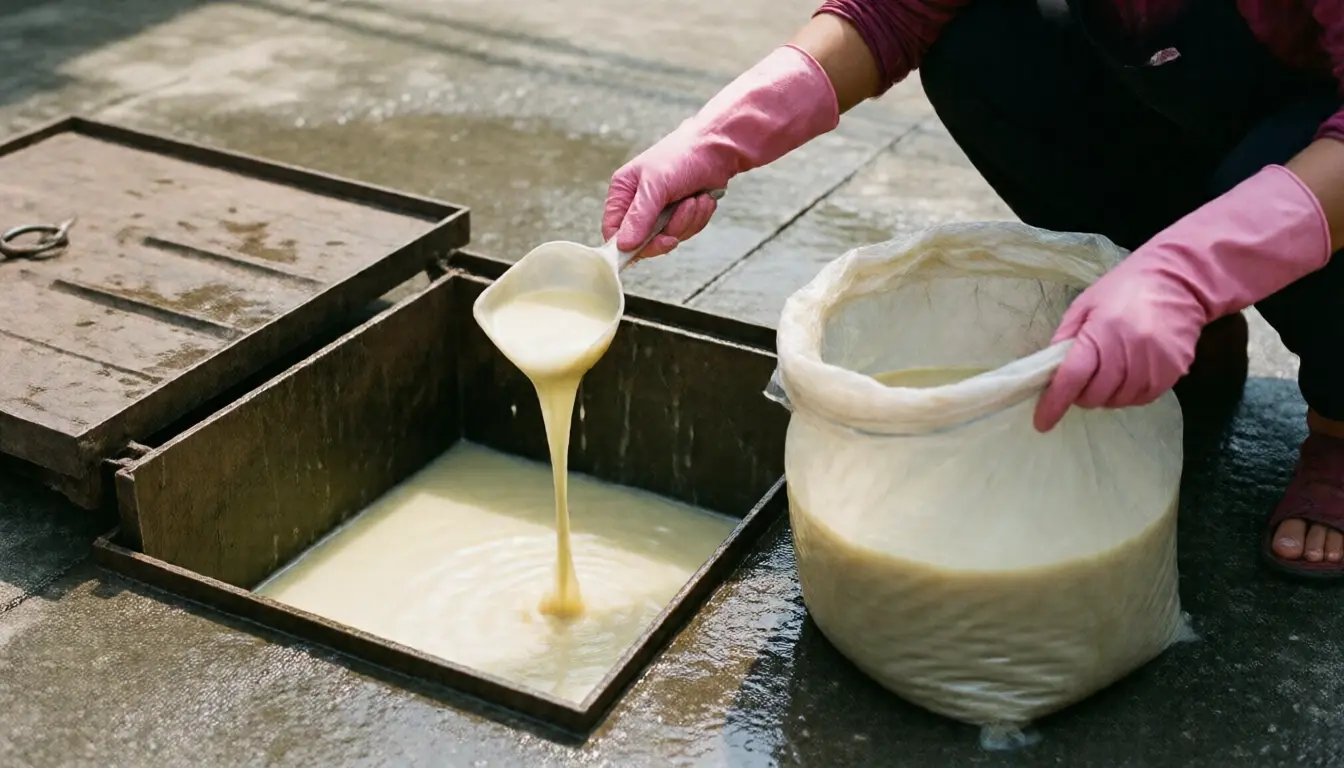
Maintaining a grease trap means removing the grease layer from the top, not scrubbing the trap clean.
The correct method is scooping the layer into a bag with a ladle or scoop, tying the bag, and putting it in the bin.
What must never happen is hosing the grease layer down the drain, because that sends everything the trap caught over a month down the pipe in one go.
After the grease layer, take out the food particles settled at the bottom too, because that is what produces the smell.
Frequency depends on real use, and the way to find yours is opening it weekly for the first month and seeing how fast the layer thickens.
A workable rule is never letting the grease layer exceed about a third of the water depth in the trap, because beyond that it starts reaching the outlet level.
Houses cooking daily often settle on once a week. Houses cooking rarely may find monthly is enough.
What matters is not waiting for a problem before cleaning, because by the time grease is passing through, it is already coating the pipe, and cleaning the trap then does nothing for a pipe already narrowed.
For an under-sink trap, have a container ready before undoing it, because the water inside runs out the moment the thread loosens.
What turns a trap into an ornament
Never cleaning it is the leading cause.
Once the grease layer reaches the outlet level, grease flows straight through with the water, and the trap may as well not exist.
Worse, people rarely know it has stopped working, because from outside it looks exactly the same.
Pouring boiling water down the sink keeps grease in a state where it travels through. Let water from boiling or blanching cool first, or pour it somewhere else where that is possible.
Using products that break grease up. Anything that disperses grease into the water carries all of it through the trap.
It looks effective because the trap stays cleaner, but the grease has not gone. It re-solidifies in pipework further along, where it is far harder to deal with.
Bacterial products that digest grease work more slowly and do not replace skimming the layer off. Treat them as help with smell rather than an alternative to maintenance.
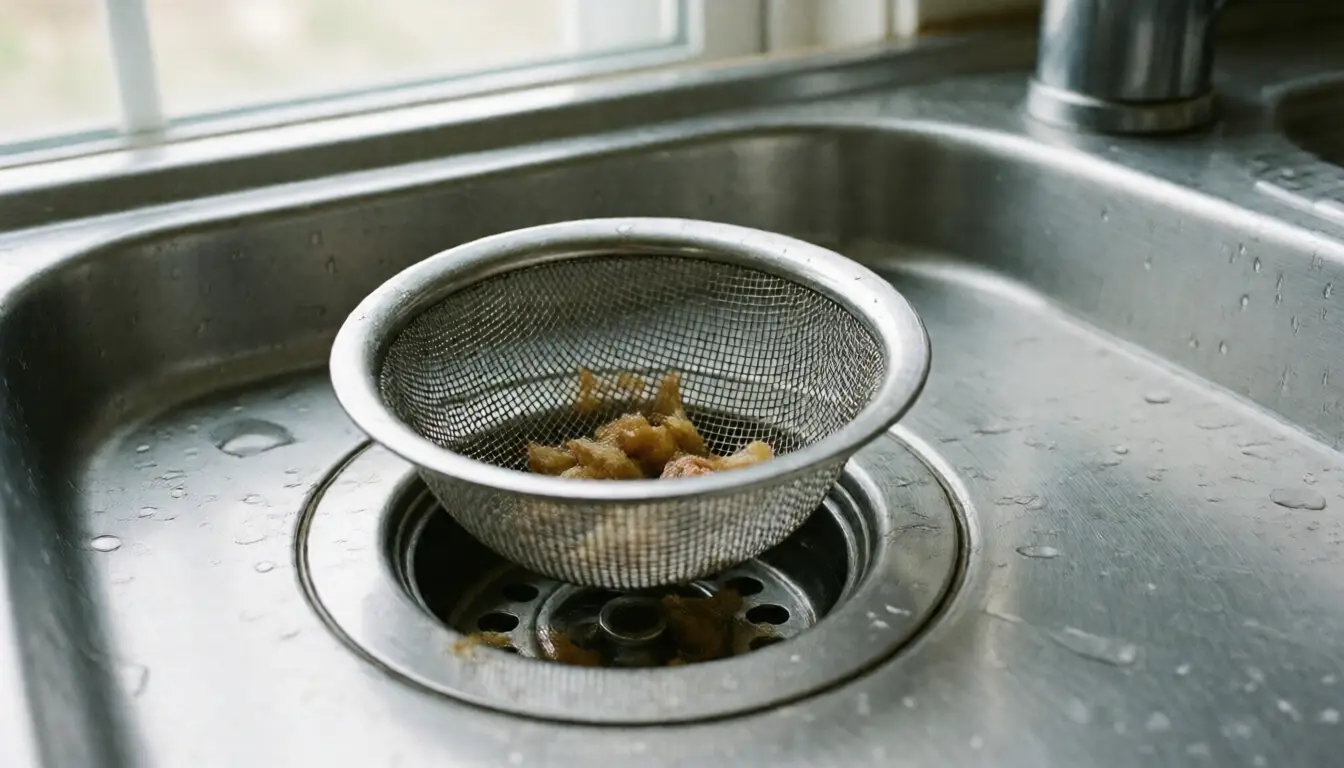
No strainer in the sink outlet. Every food particle then reaches the trap and settles at the bottom, filling it faster and making it smell sooner.
A strainer costing a few tens of baht is the highest-return item in this entire subject.
No trap seal after the unit, which lets drain odour come back up through it. Drain smells follow the same principle, covered in bathroom ventilation and the drain smell that comes back.
Houses, condominiums and restaurants have different rules
For an ordinary house, a grease trap is about looking after your own pipes and treatment tank rather than a requirement anybody inspects.
But in some housing estates the juristic person's rules require one in every house, because grease from one house blocks the shared drain everybody uses.
For a condominium, kitchen drains from every unit usually run into one shared stack, and an under-sink trap is written into many buildings' rules.
If your unit has none, ask the juristic person before fitting one, because some buildings specify the model and position.
For restaurants and food businesses this is a requirement rather than a choice, and the requirements come from local ordinances that vary by area.
If you plan to open a food business at home, ask the district or municipal office about grease trap requirements before designing the kitchen, not after it is installed.
More broadly, Thailand has a ministerial notification setting standards for wastewater discharge from certain types and sizes of building, and buildings within scope must control oil and grease in what they discharge.
A single detached house usually falls outside those categories, but the same principle is what keeps your own pipes clear.
Frequently asked questions
Does an ordinary house need a grease trap?
Yes where the kitchen fries and stir-fries regularly, and particularly where the house has a combined treatment tank taking the kitchen flow, because grease disrupts the bacteria in it.
How does a grease trap work?
Incoming water slows because the space widens, so lighter grease rises into a layer at the top while food particles sink. The outlet, below the surface and behind a baffle, releases only water from the middle.
How often should the grease be removed?
Open it weekly for the first month to find your own interval, never letting the layer exceed about a third of the water depth. Houses cooking daily often settle on weekly.
Can I hose the grease layer down the drain?
Never. That sends a month of trapped grease down the pipe at once. Scoop it into a bag and put it in the bin.
Does hot water dissolve grease in the pipes?
Only briefly. The dissolved grease solidifies further along where it is harder to reach, and pouring boiling water down the sink also defeats the trap.
Can degreasing products replace cleaning?
No. Products that disperse grease carry it through the trap to solidify in pipework beyond. Bacterial products help with smell but do not replace removing the layer.
Can bathroom waste be connected to a grease trap?
No. A grease trap is designed for kitchen water only. Connecting bathroom or toilet waste turns it into a foul chamber immediately.
In short
- Grease does not block the pipe where you poured it. It blocks it where the water has cooled.
- A trap works by slowing water so grease can rise and be held back.
- The two things that make it work are retention time and water that is not too hot.
- An undersized trap catches nothing during the after-dinner washing up.
- It must sit before the treatment tank and take kitchen water only.
- Maintenance means scooping the layer into a bag, never hosing it down the drain.
- Never let the grease layer exceed about a third of the water depth.
- A sink strainer costing a few tens of baht is the best value item here.
- Restaurants are governed by local ordinances, so ask the district before designing the kitchen.