

Three kinds of property a first-time buyer should slow down on
A condominium that has sold out but where few people actually live, a house freshly renovated for resale, and anything you can afford the instalments on but will struggle to sell. None of the three is off limits. Each simply needs more checking time than usual, because what goes wrong in these cases surfaces when you want to sell rather than when you buy.
Beginners are drawn to all three for the same reason: they look like better value than anything else in the same budget. And that better value is real. It is just being paid for by something.
One: the building sold out, but nobody is home
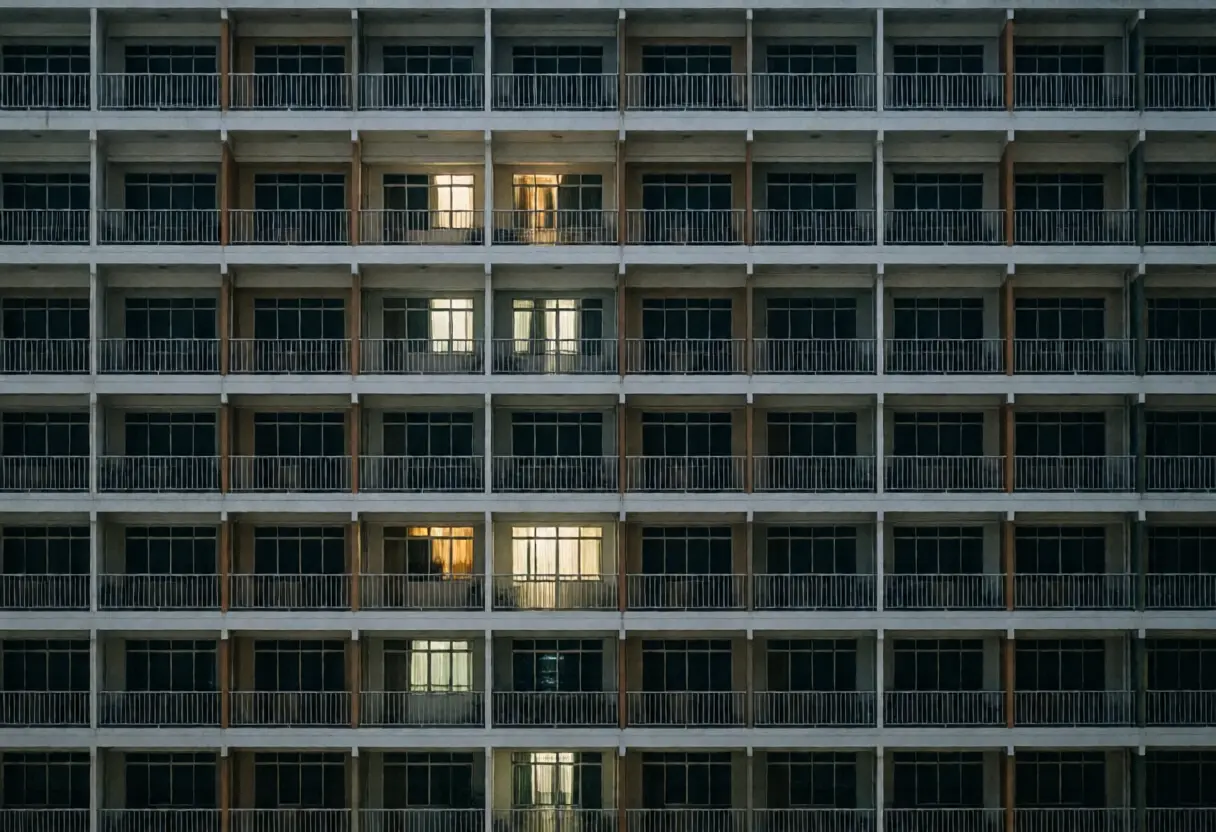
Every unit sold does not mean every unit occupied. Units bought as investments where the rental demand never arrived become dark windows that still owe common fees, and disappointed owners are the first group to fall behind on paying them.
The damage does not stay in their unit. It lands on the building's budget, which is what pays for the lift repairs, the electrical work and the security staff.
| What a beginner sees | What is actually happening |
|---|---|
| Price per square metre below the project next door | That gap is the market already pricing the risk |
| Impressive facilities, big pool, full gym | The more facilities there are, the more collected fees the building needs |
| Lots of units advertised for rent, so letting must be easy | It can mean the opposite: heavy competition pushing rents down |
How to check in fifteen minutes. Stand outside at eight in the evening on a weekday and count the lit windows. Look at which floor buttons in the lift are worn. Then ask the juristic person for the financial statements and the total common fee arrears. What arrears trigger is in what unpaid condo common fees lead to.
When it is fine to buy. When total arrears are low, the sinking fund is intact, and the occupancy figure matches the number of units sold. At that point the lower price is a genuine advantage rather than a trap.
Two: the house freshly renovated for resale
A resale house repainted throughout, new tiles, new kitchen, new bathrooms, at a price that still looks reasonable. It is the property that sells itself best, and the hardest one to inspect, at the same time.
This is not an accusation. Renovating to sell is an ordinary trade. But a good renovation and a renovation that is beautiful only where you can see it produce very different outcomes by year three.
- What usually does get fixed is what the buyer sees: floors, walls, paint, kitchen, sanitaryware.
- What usually does not get touched is what the buyer cannot see: pipework, old wiring, the roof, and whatever caused the original cracks.
- What to watch hardest is a new ceiling that hides evidence of leaks, and a wall that is perfectly smooth in only one patch.
There is a legal angle worth knowing. Section 485 of the Civil and Commercial Code provides that a clause excluding liability cannot cover the consequences of the seller's own acts, or facts the seller knew and concealed. Skimming over a crack you knew about is therefore not washed away by an "as is" clause. The detail is in the buyer found a crack after the sale.
How to check in fifteen minutes. Open every tap at once and listen to the pipes. Run the air conditioning and the appliances together and see whether the breakers hold. Put a torch up through the ceiling access hatch. Look for the corner where the paint is noticeably newer than everywhere else.
When it is fine to buy. When the seller has photographs from before the work, invoices for labour and materials, and can tell you what was replaced. Anyone who did the job properly has all of that already and is happy to show it.
Three: affordable to hold, difficult to sell
This is the most dangerous of the three because nothing looks wrong at the time. Documents complete, decent building, instalments comfortable. The problem arrives on the day you want to sell.
| The property | Why resale is hard |
|---|---|
| A very small unit in an area where buyers are families | The buyer pool in that area does not match what the unit is |
| A house in an estate far from a main road and from transit | The next buyer has closer options at a similar price |
| A shophouse bought to live in | Selling means finding someone who wants both the home and the commercial location, a much smaller group |
| A unit or house heavily altered from the original layout | What the previous owner loved is rarely what the next buyer wants |
The test that works is to ask who buys it if you had to sell tomorrow. If you can name that person immediately and believe they are out there looking, it passes. If you have to think about it for a while, selling it will take a while too.
There is a financing side to this as well. Anything the next buyer will struggle to borrow against sells more slowly. Why valuations differ between banks is in why banks value the same house differently.

Three questions that head off most of it
- If you had to sell tomorrow, who buys it? Name a person, not "anyone".
- Where does the discount come from? If you cannot answer, it means you have not finished checking, not that there is no reason.
- Does repairing it make the problem disappear? If yes, it is a question of price. If not, because the problem is outside your fence, it is a question of judgement.
That last question is the dividing line for almost any property. A problem inside the house is a discount. A problem outside it is a risk.
If you are looking now, see the listings for sale. If you are still at the budget and mortgage stage, start with the first home buying guide.
Frequently asked questions
What is wrong with a condominium that sold out but has few residents?
Empty units tend to fall behind on common fees before anyone else, which hits the building's budget for lift repairs, electrical work and security. It does not stay confined to those units.
How can I see the real occupancy?
Stand outside on a weekday evening and count the lit windows, and ask the condominium juristic person for the financial statements and total common fee arrears.
Should I avoid renovated-for-resale houses entirely?
No, provided the seller has before photographs, invoices for materials and labour, and can say what was replaced. The concern is a renovation that is beautiful only where it is visible.
What if the seller painted over a crack?
An "as is" clause does not cover it, because section 485 provides that such a clause cannot cover the consequences of the seller's own acts or facts the seller knew and concealed.
Which property is hardest to resell?
One where the buyer pool in that location does not match what the property is, such as a very small unit in a family area, or a shophouse bought as a home.
Is affording the instalments enough to decide?
No. The instalment tells you that you can hold it. It says nothing about whether someone will take it off you at an acceptable price.
Does a below-market price always mean a problem?
Not always, but if you cannot explain where the gap comes from, that means the checking is incomplete rather than that no reason exists.
What is the simplest rule for walking away?
Ask whether repairing it makes the problem disappear. Problems inside the house are about price. Problems outside it are about risk.
Key takeaways
- The three to slow down on are a low-occupancy condominium, a house freshly renovated for resale, and anything affordable to hold but hard to sell.
- Sold out does not mean occupied, and empty units fall behind on common fees first, which hits the whole building's budget.
- A good renovation and a cosmetic one diverge sharply by year three, so ask for before photographs and invoices.
- Painting over a known crack is not cured by an "as is" clause, under section 485.
- A property you can afford but with no obvious next buyer is a risk that appears at resale, not at purchase.
- The best single question is who buys it if you had to sell tomorrow, answered immediately.
- A problem repairs can fix is a discount. A problem outside your fence is a decision.