
A warehouse yields more than a condominium, but the risk sits somewhere else entirely
People who have rented out a condominium and then look at warehouses are drawn by the same two things: a higher yield on paper, and corporate tenants who look more solid than individuals.
Both are partly true, and both come with risk shaped completely differently.
An empty condominium costs you a month of rent. An empty warehouse usually costs several months to a year, because the number of tenants wanting that size in that location is small.
And when a tenant of five years moves out, you may have to demolish the office partitions they built before anybody new will even come and look.
So the return on a warehouse is not really about rent per square metre. It is about how little of the time it stands empty, and what determines that is the decision you make when buying the land, not the one you make when finding a tenant.
This article is written from the owner's side. The tenant's view of what they check is in what to check when renting a warehouse, which is worth reading alongside it, because the list tenants use to rule buildings out is the same list you have to pass.
A good location for a warehouse is not a good location for a house
A house has a good location when it is near transit, near shops, and in an area people want to live in.
A warehouse has a good location for an entirely different set of reasons, and the first is that lorries can actually reach it.
The road outside has to be wide enough for a six or ten wheeler to turn in without repeated reversing, and strong enough to carry it. Some concrete lanes deep inside a soi manage neither.
The thing people miss is bridges and underpasses between the main road and the gate. One height or weight restriction anywhere along that route and any tenant moving goods in large vehicles will rule you out immediately.
The second is flooding. Ask people who live there rather than reading the sales listing, and ask specifically: which years, how deep, and for how many days.
The goods stored inside are usually worth far more than the building, so tenants fear water more than you expect, and a warehouse that flooded once is remembered for a long time.
The third is distance to wherever the tenant needs to go: a port, an industrial estate, a distribution centre, or an expressway ramp. Ten minutes from a ramp against forty is not a fuel cost difference. It is a difference in how many trips one vehicle completes in a day.
The last is labour. A warehouse that needs people to move goods will choose a location workers can travel to, not just one that lorries reach easily.
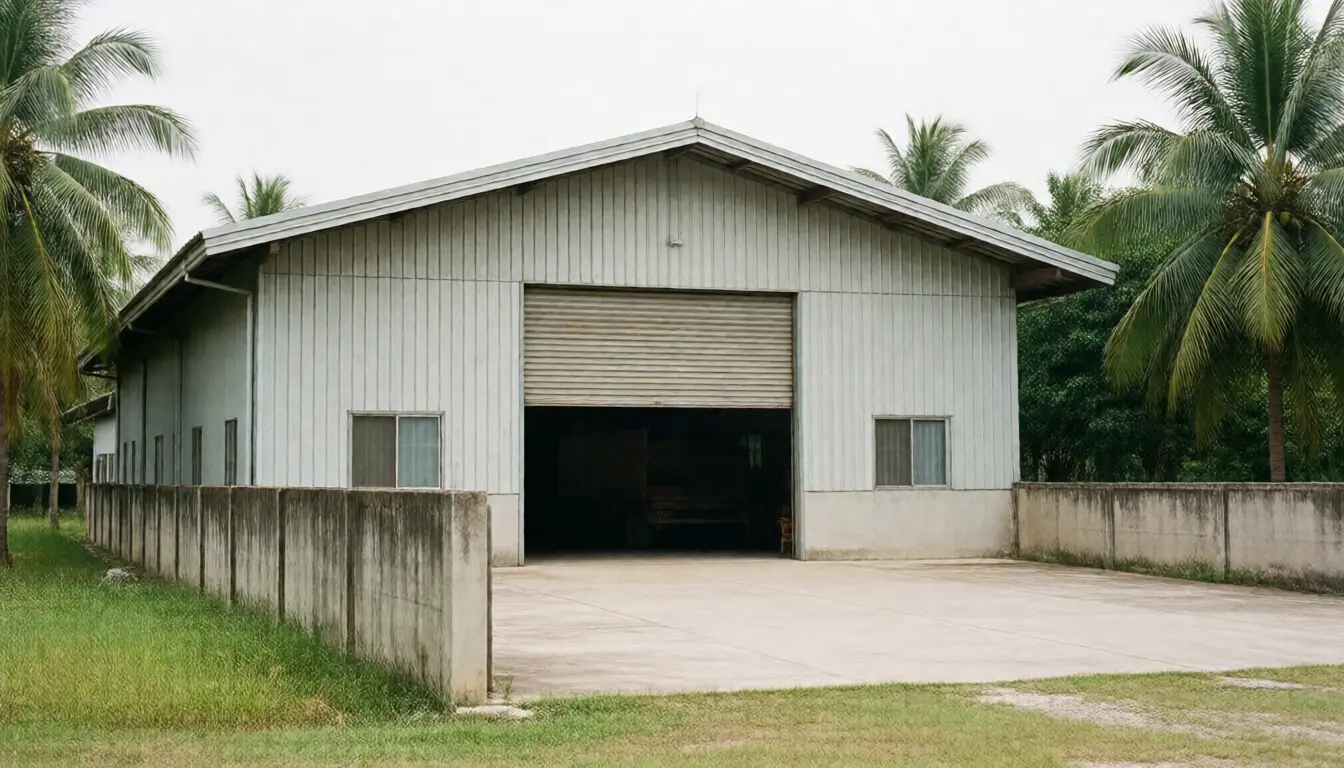
The land you need is much larger than the building you plan
This is where the arithmetic goes wrong most often, and it goes wrong before the land is even bought.
Ministerial Regulation No. 55 (2000), clause 38, sets the open space required around a warehouse:
- A warehouse with a total floor area of 100 to 500 square metres needs at least 6 metres of open space from the boundary on two sides, and at least 3 metres on the others.
- A warehouse exceeding 500 square metres in total needs at least 10 metres on two sides and at least 5 metres on the others.
Put numbers on it. A warehouse 20 metres wide by 30 long is 600 square metres, so it needs 10 metres clear on two sides and 5 on the other two.
The minimum plot that accommodates it is therefore roughly 30 by 50 metres, about 1,500 square metres of land for 600 square metres of building.
People who buy 400 square metres of land intending to build a warehouse of over 500 usually discover this when they submit the drawings.
The exception is a warehouse inside an industrial estate, where those distances do not apply, except on any side adjoining land outside the estate, which needs at least 10 metres.
The other hurdle comes first: zoning. Warehouses cannot be built in every colour, and land use conditions differ between provinces.
Check the zoning colour of that specific plot before paying a deposit, not after transfer. How to read it is in city plan zoning colours before buying land.
And remember the open space is not wasted. It is where lorries turn, which is something tenants want anyway. A yard wide enough for a ten wheeler to turn without reversing into the road is worth more than most owners realise.
What tenants ask before they ask the price
A serious tenant asks these six things first, and if any one fails, they will not come and see it at all.
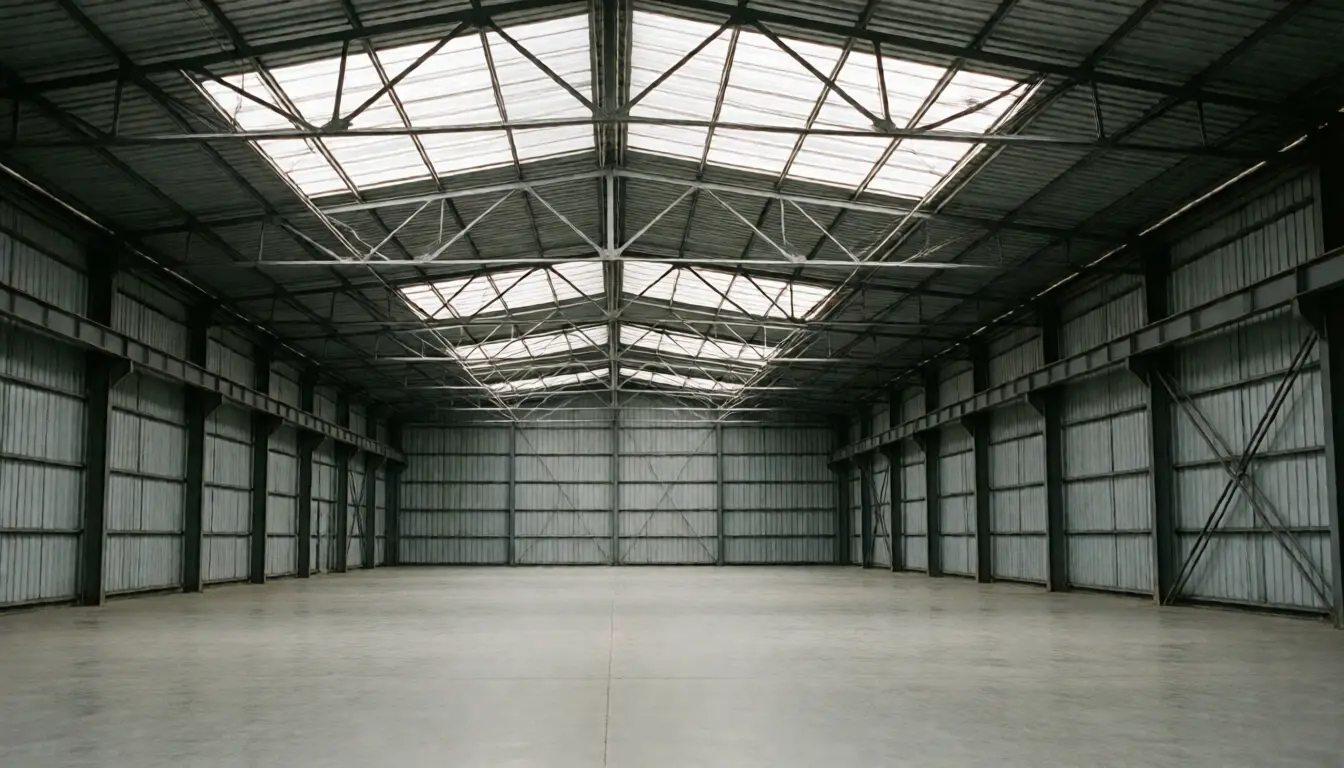
Clear height under the roof structure, because it determines how many racking levels fit. A low warehouse of the same floor area stores much less, and the rent per square metre follows.
Floor loading capacity, stated as a figure per square metre rather than as an assurance that the slab is strong. Tenants running high racking or forklifts need the number to calculate with.
Door size and number. One four-metre roller shutter and two four-metre shutters are very different for anybody receiving and dispatching at the same time.
The electrical supply: transformer size, number of phases, and available amps. A warehouse without enough power for machinery or a cold room rules out a whole category of tenant, and upgrading is not a one-week job. How business tariffs differ from domestic ones is in warehouse and factory electricity bills against a home.
The apron and turning radius. Measure it and state it in metres: whether a ten wheeler can turn inside the yard or has to reverse out.
Toilets, an office, and staff parking. These sound minor, but a warehouse with no office at all means the tenant invests before moving in, which is exactly why they will ask for a discount or a rent-free period.
One of the best returns on a small amount of money is finishing the toilets, a small office and the lighting before marketing it, because it makes the building ready to occupy and can cut months off the vacant period.
Three years is the line that changes everything in the lease
Section 538 of the Civil and Commercial Code provides that a lease of immovable property for more than three years is enforceable for only three years unless it is made in writing and registered with the competent official.
So a five-year lease signed privately between the two parties, without registration, is legally enforceable for three.
That cuts both ways. If you want long-term security, register it at the Land Office. If you would rather not tie yourself down, three-year terms renewed in stages are what many owners use.
The cost of registering is calculated on the total rent over the term, generally around 1 percent in registration fee plus around 0.1 percent in stamp duty, roughly 1.1 percent in total. Confirm the current figures with the local land office before agreeing with the tenant who pays it.
On duration, a lease of immovable property under the Civil and Commercial Code cannot exceed 30 years, and any longer term is reduced to 30. It can be renewed afterwards, again for no more than 30 years from the date of renewal.
For commercial and industrial leasing there is the Lease of Immovable Property for Commercial and Industrial Purposes Act of 1999, which allows longer terms under its own conditions and procedure. If the tenant intends to build on your land, that is the law to discuss with a lawyer first.
Terms worth writing plainly from the start, registered or not:
- The condition on return. Whether fit-out must be removed or handed over, and who pays for the removal.
- Alterations. Written consent required first, and nothing touching the main structure or the roof.
- Prohibited goods, particularly flammables and chemicals, which affect both the law and the insurance policy.
- Who maintains what. Roof, structure and slab belong to the owner. Lamps, shutters and daily upkeep belong to the tenant.
- The deposit, generally higher than for residential property, with clear conditions for its return.
- Right of inspection, with frequency and notice stated, because a warehouse nobody has walked into for five years usually contains something the owner would rather not find.

The taxes and costs that actually eat the return
The yield figure people quote is usually annual rent divided by the money invested, which is a number before anything at all is deducted.
Here is what disappears along the way.
Land and building tax. A warehouse for rent falls in the other category, covering commercial and industrial use, at 0.3 percent for value up to 50 million baht and 0.4 percent from 50 to 200 million, rising in bands above that.
Unlike a first home with its substantial exemption, this class pays from the first baht, and it is an annual cost that belongs in the plan before purchase.
Income tax on the rent. Rent is category 5 income, with two ways of deducting expenses.
The standard deduction is 30 percent for the letting of houses, buildings and other structures, and 15 percent for land not used for agriculture.
The alternative is deducting actual, necessary and reasonable expenses, which is worth using when you have the evidence and the real figure is higher. The year you replace the entire roof is usually one of those.
Withholding tax. Where the tenant is a juristic person, they withhold 5 percent from the rent and remit it. Keep every withholding certificate, because it is credit against your annual return.
So the amount reaching your account is less than the contractual rent from the first month, which is normal rather than an overcharge.
Maintenance arriving in lumps. A metal warehouse roof reaches the day it needs replacing all at once rather than gradually. Set money aside every year for it the way a condominium building funds its sinking fund.
Insurance. Premiums for this class of building differ from residential, and what the tenant stores affects them directly. Always declare it accurately, because storing flammables undeclared is exactly how a claim gets refused.
Calculating the return without fooling yourself
The straightforward method has two layers.
The first is gross yield: annual rent divided by everything invested, which means land, construction, transfer costs, design fees and the road and concrete yard, not just the land and the shed.
The second is net yield. From the annual rent, deduct land and building tax, insurance, an annual average for maintenance, and your estimated income tax.
Then add the assumption everybody skips: vacancy. Estimate how many months the building will genuinely stand empty in each lease cycle, and spread it across the years.
A more reasonable assumption than continuous occupancy is that every time a tenant leaves, you have both an empty period and a refurbishment cost before the next one arrives.
The net figure will always be lower than the one an agent quoted, and it is the figure to decide on.
The last question to ask yourself before buying is whether you could still service the loan if the building stood empty for twelve consecutive months.
If the answer is no, reduce the size of the project or increase the deposit, before signing for the land.
Frequently asked questions
Does a rental warehouse really beat a condominium?
Gross yield is usually higher, but the risk differs, because vacant periods are far longer and there are refurbishment costs between tenants. Compare on net yield with vacancy included.
How far must a warehouse sit from the boundary?
From 100 to 500 square metres of total floor area, 6 metres on two sides and 3 on the others. Above 500 square metres, 10 metres on two sides and 5 on the others, under clause 38 of Regulation No. 55.
Does a warehouse lease need registering?
Any term over three years must be in writing and registered, otherwise it is enforceable for only three. The cost is roughly 1.1 percent of the total rent over the term.
What is the longest possible lease?
Thirty years under the Civil and Commercial Code, renewable for up to another thirty. Commercial and industrial leasing has its own act allowing longer terms under its own conditions.
How is warehouse rent taxed?
As category 5 income, with a 30 percent standard deduction for buildings or actual expenses where evidenced. A corporate tenant withholds 5 percent, which you claim as credit.
How is land tax calculated on a warehouse?
Under the other category, at 0.3 percent up to 50 million baht of value and 0.4 percent from 50 to 200 million, payable from the first baht with no first-home style exemption.
Should I finish the office and toilets before letting?
Yes. It is a modest sum that makes the building ready to occupy, which can remove months from the vacant period, and vacancy is what eats the return.
In short
- The risk is not low rent. It is a vacant period far longer than residential property has.
- Location means lorry access, no flooding, and proximity to wherever the tenant has to go.
- Above 500 square metres a warehouse needs 10 metres clear on two sides and 5 on the others, so the plot is much larger than the building.
- Tenants ask about clear height, floor loading, doors, power and turning space before they ask the rent.
- A lease over three years must be registered or it is enforceable for only three.
- Land tax applies from the first baht at commercial rates, and corporate tenants withhold 5 percent.
- Decide on net yield with vacancy and refurbishment included, never on the gross figure.